A pay cut for final cut
Blue Velvet arrived in 1986 as David Lynch’s attempt to write himself out of the wreckage of Dune. He had a treatment born from an unlikely brief a producer had handed him, sneak into a girl’s room and watch her at night until you glimpse a murder, and he built it around a severed ear he had been picturing since the early 1970s. Dino De Laurentiis financed it on the condition Lynch take a salary cut, and gave him complete artistic freedom and final cut in return, on a budget of six million dollars, the smallest film on the studio’s slate that year. The result follows a college student home from school who finds that ear in a field and cannot leave the question of who it belonged to alone.
An ear, a closet, a singer
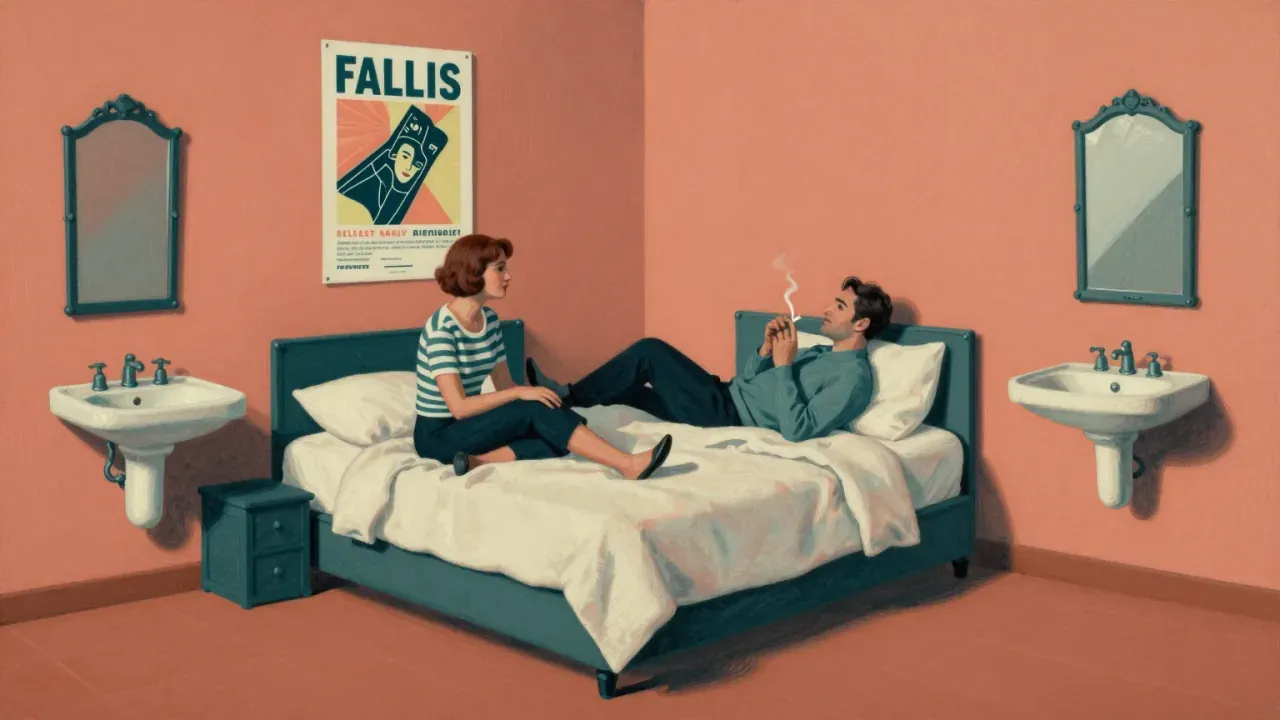
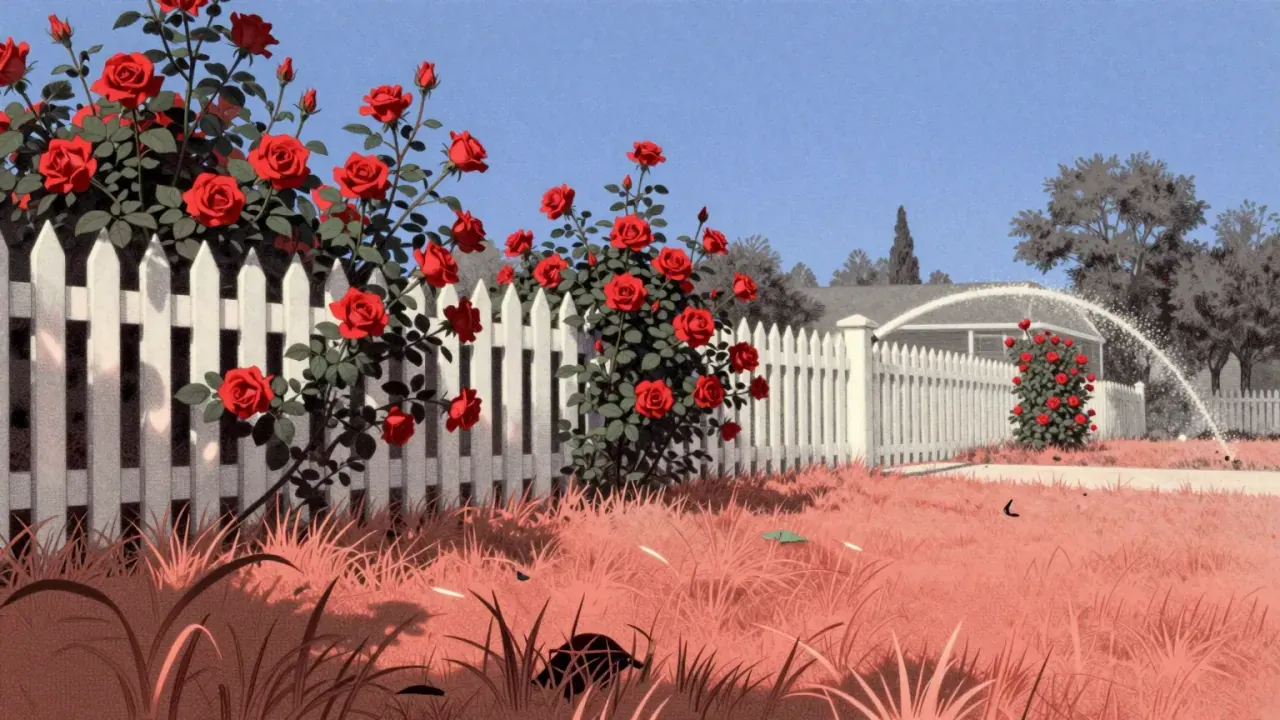
Kyle MacLachlan plays Jeffrey Beaumont, who takes his discovery to a police detective’s daughter, Laura Dern’s Sandy, and together they identify the ear as belonging to a nightclub singer, Isabella Rossellini’s Dorothy Vallens. Jeffrey breaks into her apartment to look around and ends up trapped in her closet when she comes home, watching her assaulted by Dennis Hopper’s Frank Booth. Frederick Elmes shoots Dorothy’s rooms in a lurid, saturated red against the white picket fences and clipped lawns of the town outside. Angelo Badalamenti’s score works around Bobby Vinton’s 1963 recording of the title song, the one Lynch had been carrying as an idea since before he had a story to put it in. Duwayne Dunham cut a four-hour assembly down to just over two, trimming subplots and, at the MPAA’s insistence, an assault scene reworked as a cutaway to Jeffrey’s face.
Hopper’s Frank Booth
Hopper is the reason the film still gets talked about. Frank Booth breathes from a gas mask, screams obscenities mid-sentence, and turns menace into something closer to a tantrum than a threat, which is worse. He was reportedly Lynch’s third choice for the part, after Harry Dean Stanton and Steven Berkoff both turned it down over its violence, and by his own account he pursued the role hard once he read it. Rossellini matches him by refusing to play Dorothy as a victim only; she plays a woman managing her own degradation, which is harder to watch than simple suffering would be. The film’s opening minutes, roses and a fireman waving from his truck, then a camera push into the grass to find insects, set up the trick the rest of the film keeps running: surface and interior side by side, in the same frame.
The teenage plot beside it
Where it strains is the Sandy plot, played by Dern and MacLachlan in the flattened, sincere register of a teen picture, sitting next to Frank Booth’s scenes without much modulation between them. At release, several critics took this as evidence the film’s explicit content had no real purpose beyond provocation, and the two registers do sit awkwardly rather than resolving into irony on cue. The ending, with a mechanical robin swallowing a bug on the windowsill, plays as a joke about the whole town’s denial, but it lands closer to smugness than to the dread the middle stretch built. Some of the violence, restaged for the MPAA as a cutaway rather than shown outright, also loses the force Lynch says he wanted, even if he later argued the substitution made the scene worse for the audience in a different way.
What the picket fences hide
The film keeps its attention on what a person is willing to watch happen to somebody else, and on what it costs Jeffrey to become the kind of man who watches from a closet rather than intervening. Dorothy’s arrangement with Frank runs on threats against her husband and son, which makes her compliance a survival strategy rather than a choice, and the film does not let Jeffrey, or the audience, off the hook for finding the situation exciting before finding it appalling. The suburb around them, with its fire trucks and flower beds, is not a contrast to that arrangement so much as its cover: the same streets that produced Sandy’s chaste courtship also produced Frank. Lynch stages both without judging either louder than the other, leaving the comparison for the viewer to sit with.
Who it asks a lot of
This suits viewers already curious about Lynch’s later work, since Blue Velvet is where his interest in decent towns with something rotten underneath first took full shape, and it rewards anyone interested in American genre cinema of the 1980s or in Hopper’s late-career turn. It asks a lot in return: prolonged sexual violence, much of it aimed at Rossellini’s character, filmed without the distancing devices some viewers rely on to get through such scenes. Anyone hoping for a mystery that resolves cleanly, or a tone that stays consistent scene to scene, will find the shifts between menace and deadpan teen romance jarring rather than purposeful. It is not a film to put on for background company, and it is not one to recommend to someone who has told you violence on screen upsets them.
The evening it buys you
At 121 minutes it does not overstay, and its six-million-dollar budget made back 8.6 million at the box office, a modest return that undersells how much the film’s standing has grown since. It picked up an Oscar nomination for Lynch, the National Society of Film Critics’ best film and director prizes, and a Sitges award the year it opened, and later rankings from Sight and Sound, Time and the AFI have only added to that. The scores published elsewhere, a 91 percent Tomatometer and a 75 on Metacritic, undersell a film that has aged into one of the more argued-over American pictures of its decade. Watch it for Hopper, for Elmes’s lighting, and for the closet scene, and go in accepting that not every choice Lynch makes here will sit comfortably by the end.