The shape of the story
Badlands is a 1973 American drama that reimagines the 1958 Starkweather–Fugate killings not as true crime but as a mythic, time-suspended fable. Terrence Malick’s debut does not reconstruct motive or psychology in realist terms; it constructs a visual and tonal world where violence is rendered with eerie detachment, romance with childlike solemnity, and landscape with the weight of parable. The film avoids courtroom exposition, police procedure or social diagnosis. Instead, it treats Kit and Holly’s flight as an anti-pastoral — a drift across plains and badlands that feels less like evasion than ritual departure. Malick said he wanted the picture to ‘set up like a fairy tale, outside time’, and the film sustains that intention by flattening period detail, muting moral framing, and letting action unfold without editorial emphasis. It is not interested in explaining why they kill, but in how they narrate themselves while doing so — how Holly’s voiceover, calm and uninflected, turns atrocity into anecdote, and how Kit’s gestures borrow from James Dean not for rebellion but for script. The ambition is structural and philosophical: to hold horror and innocence in the same frame without resolution. (158 words)
How it moves and speaks
The story follows Kit Carruthers and Holly Sargis across southeastern Colorado after Kit kills Holly’s father; five more deaths follow before their capture. Martin Sheen plays Kit with stillness and affectless precision — no rage, no panic, only a quiet certainty that things should end when he decides they do. Sissy Spacek’s Holly speaks in a flat, rhythmic voiceover that treats murder, romance and geography as equally neutral facts. Tak Fujimoto’s cinematography keeps compositions spare and frontal, often using long lenses to compress space and flatten depth, making the vast prairie feel both empty and claustrophobic. George Tipton’s score layers Carl Orff’s Gassenhauer — a simple, repeating melody — against Erik Satie’s piano pieces and Nat King Cole’s ‘Nature Boy’, creating a dissonance between innocence and unease. Robert Estrin’s editing avoids cross-cutting or urgency; scenes breathe, linger, repeat. Warren Oates gives Holly’s father a weary, grounded presence that makes his death land not as shock but as quiet erasure. The craft is unified in its refusal to dramatise: no close-ups on guilt, no music swells on violence, no flashbacks to trauma. Everything is presented as given, not interpreted. (159 words)
What stays quiet
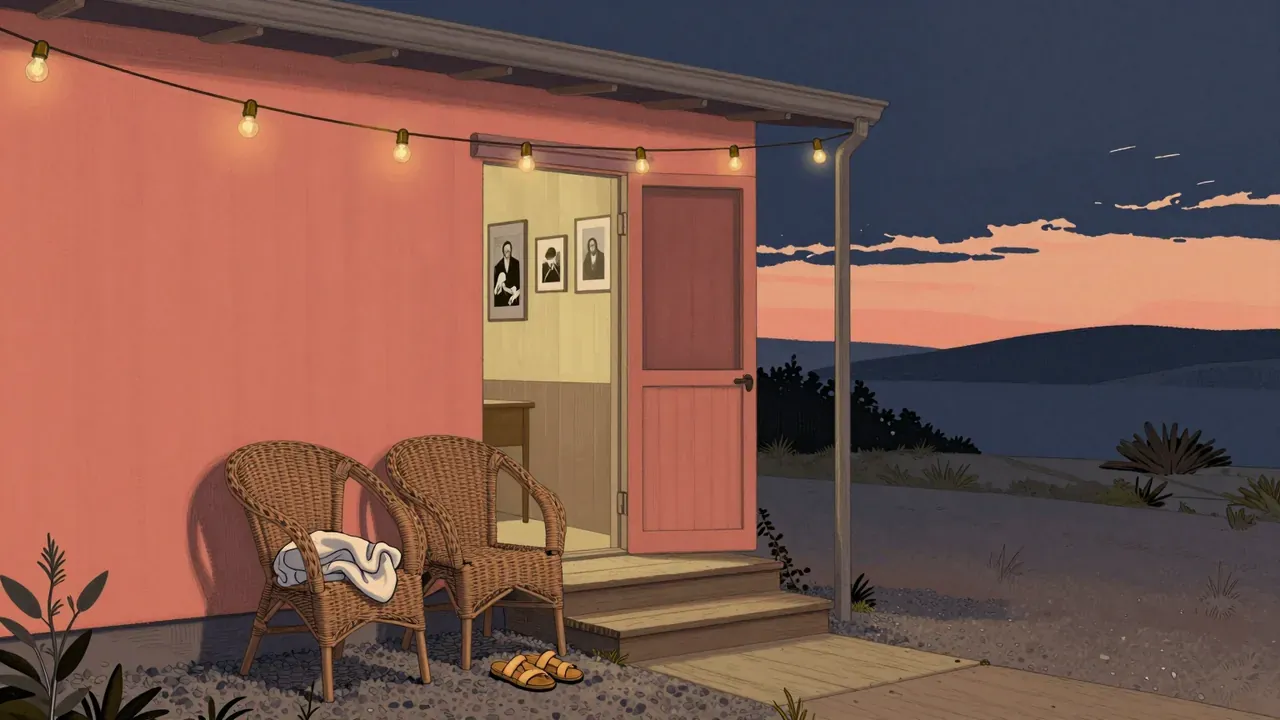
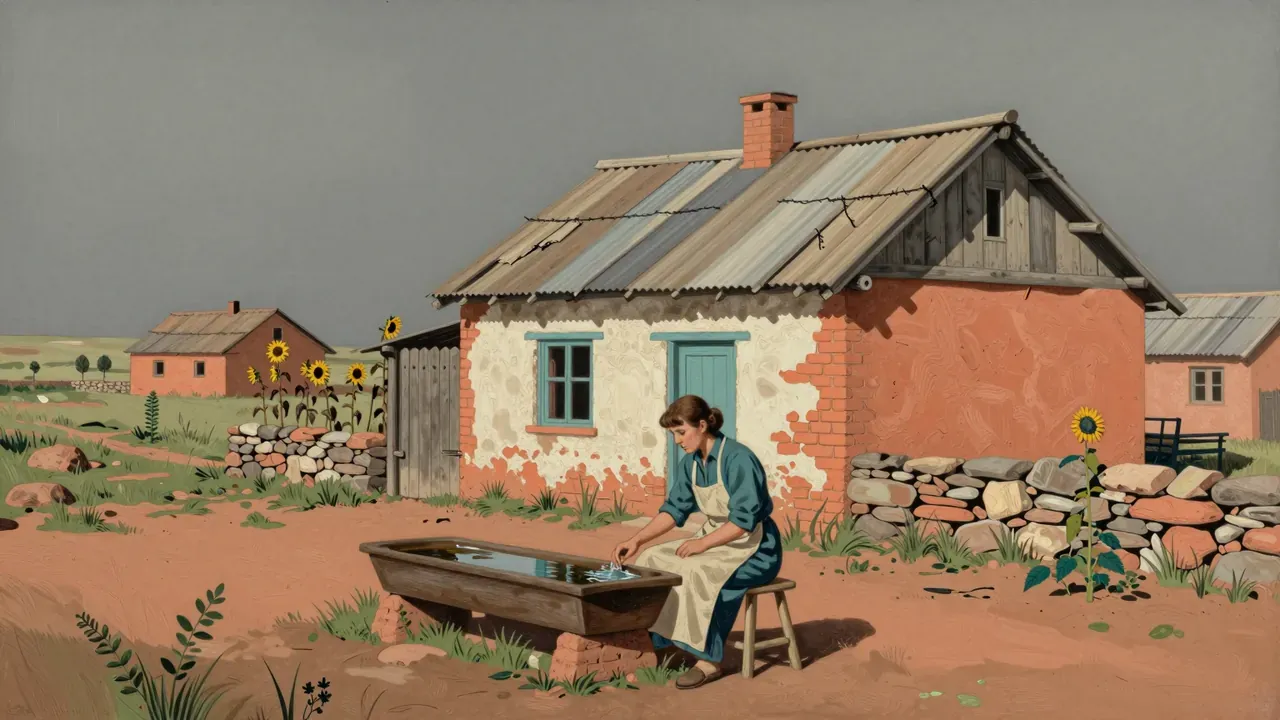
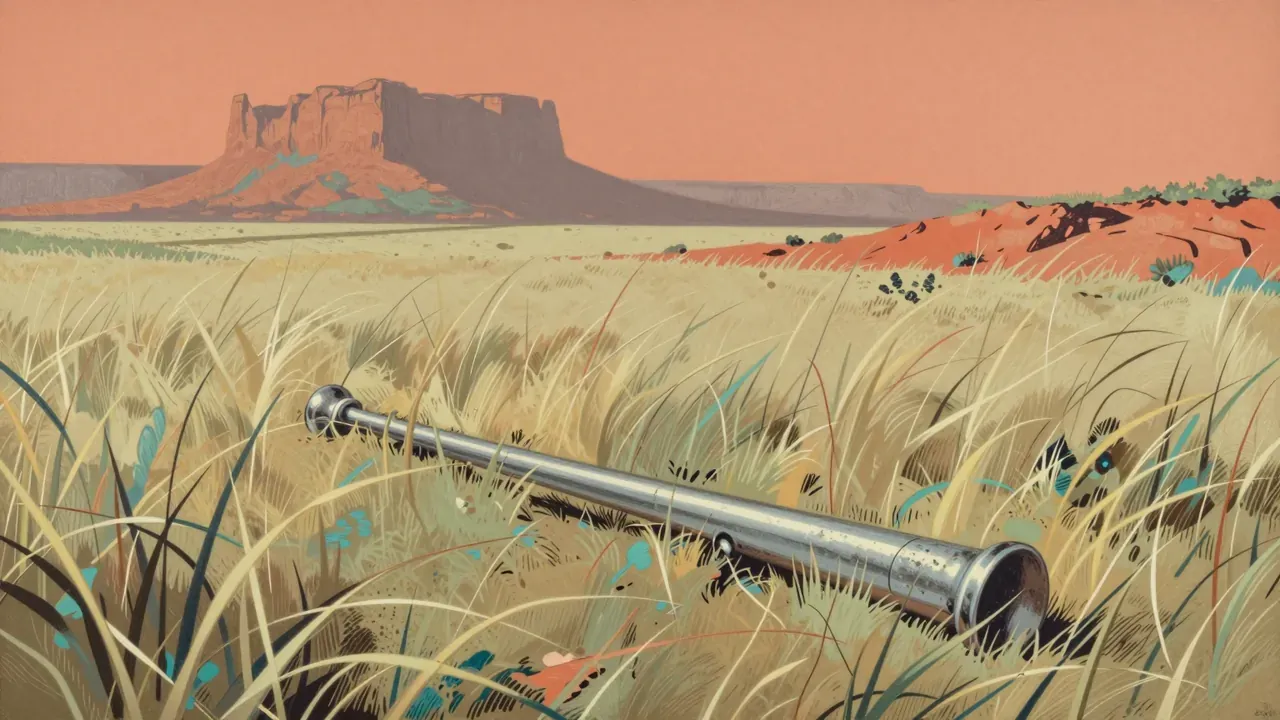
What lands is the film’s unwavering tone — a sustained, low-register calm that makes the violence feel inevitable rather than sensational. Holly’s narration, delivered with the cadence of a schoolgirl reciting poetry, creates distance without irony; it lets the audience observe rather than judge. The landscapes — sun-bleached plains, scrubby mesas, the stark geometry of the Bloom House — are not backdrops but silent participants, their scale dwarfing human action without diminishing its consequence. The use of Orff’s Gassenhauer, repeated like a nursery rhyme, works precisely because it refuses to signify: it is neither ironic nor sentimental, just present, like weather. Kit’s gun is never fetishised; it appears, is used, is put away, with the same economy as a cigarette or a suitcase. The film’s restraint allows small details to accrue meaning: Holly twirling her baton, Kit adjusting his jacket before shooting, the slow pan across a deserted roadside diner. These are not symbolic gestures but behavioural tics made monumental by repetition and silence. The result is a portrait of alienation that does not rely on expressionism or psychology — it emerges from rhythm, duration and placement alone. (157 words)
Where it holds the line
What does not land is the film’s resistance to emotional access — not as a flaw in itself, but as a barrier for viewers who expect narrative propulsion or moral scaffolding. The pacing, deliberate to the point of suspension, can read as inert rather than contemplative, especially in the middle stretch where the couple’s encampment in the badlands risks monotony without sufficient variation in texture or perspective. Holly’s voiceover, though central, occasionally flattens nuance: her detachment becomes so total it blurs motivation, leaving Kit’s actions unmoored from any discernible interior logic beyond mimicry. Some supporting characters — Ramon Bieri’s neighbour, Alan Vint’s reporter — exist only as functional silhouettes, their brevity feeling less like economy and more like omission. The decision to avoid period specificity also has costs: without stronger contextual markers, the 1950s setting recedes into generic Americana, weakening the contrast Malick intended between fairy-tale surface and historical violence. A viewer seeking psychological realism, procedural clarity or even conventional character arc will find little purchase here. That is by design, but it is also a limit — one that some critics, particularly in early reviews, mistook for emptiness rather than discipline. (159 words)
What it believes about people
The themes that matter are not crime or youth rebellion but the construction of self through narrative, the seduction of aesthetic distance, and the way landscape absorbs human consequence. Kit and Holly do not see themselves as criminals but as protagonists — their murders are footnotes in a story they believe is already written, one shaped by movies, radio, and children’s books. Malick treats this not as delusion but as a cultural condition: the film asks what happens when lived experience is filtered entirely through received forms. The badlands themselves become a figure for moral ambiguity — neither hostile nor benevolent, just indifferent, vast, and unchanging. Time is another theme: the film’s refusal of chronology, its looping motifs and static compositions suggest a world outside cause and effect, where actions have weight but no trajectory. Violence is not condemned or excused; it is observed as part of a pattern, like weather or migration. This is not nihilism but a kind of ontological neutrality — a view of human behaviour as neither exceptional nor aberrant, just recurrent, like seasons. The film’s enduring power lies in how thoroughly it sustains that perspective without winking, without retreat. (156 words)
Who it meets halfway
This film is for viewers who value formal coherence over narrative momentum, who find resonance in silence and repetition, and who trust that a director’s control over tone and texture can carry more meaning than exposition or catharsis. It rewards patience, attention to composition, and willingness to sit with ambiguity. It is not for those who require psychological explanation, moral framing or dramatic escalation — viewers who expect the film to clarify Kit’s pathology or Holly’s complicity will leave frustrated. Those drawn to crime films for suspense, procedural detail or social commentary will find Badlands withholding. Even fans of Malick’s later work may find this debut too austere: it lacks the lyrical digressions of Days of Heaven or the metaphysical scope of The Tree of Life. A viewer who values acting as emotional revelation rather than behavioural precision may also resist Sheen and Spacek’s restraint. The film assumes its audience shares its belief that how something is shown matters more than what is shown — a premise some will reject outright, preferring cinema that argues rather than embodies. (158 words)
Why it lasts
Yes, it is worth your evening — not as entertainment but as an encounter with a singular cinematic language fully formed at first attempt. Its ninety minutes pass with the gravity of something inevitable, not rushed or padded. You will not forget the long-lens shot of the train across the plain, the sound of Orff’s melody over an empty road, or the way Holly’s voice remains unchanged after each killing. It demands nothing but attention, and repays it with density: every frame, every cut, every pause serves the same idea. Some will call it cold; others, transcendent. The difference lies not in the film but in what the viewer brings — whether they see restraint as evasion or discipline, silence as absence or presence. It is not a film to be liked but absorbed; not watched but inhabited. Its value does not diminish with time — if anything, its rigour makes it more legible now, when so much cinema rushes to explain. To skip it is to miss one of the few American debuts that redefined what film grammar could do. (159 words)