The shape of the crime
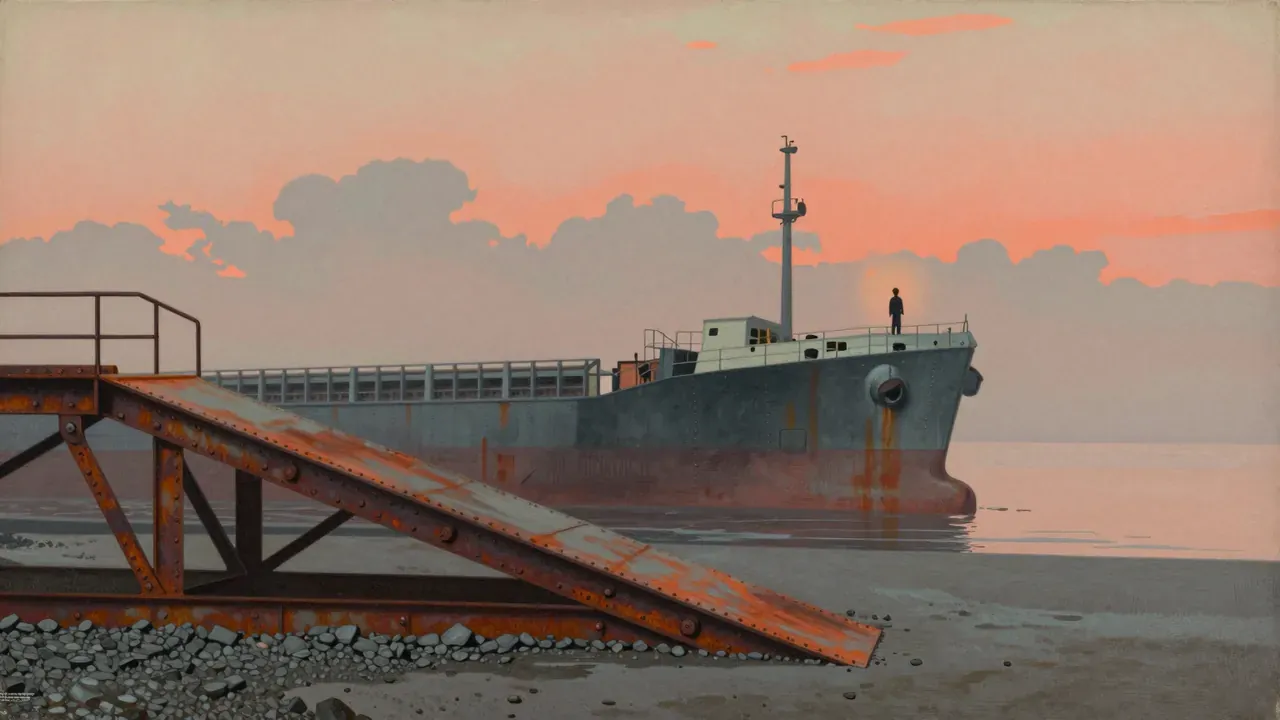
Humanité is a crime film that refuses the genre’s conventions: it has no procedural drive, no narrative payoff, no moral resolution. Bruno Dumont sets out not to solve a murder but to hold still before its aftermath — the weight of grief, the texture of rural silence, the slow erosion of a man’s composure. The film follows Lieutenant Pharaon de Winter as he investigates the rape and killing of an eleven-year-old girl near Bailleul in northern France, but the investigation is secondary to his interior state and the quiet rhythms of his life with his widowed mother. Dumont treats the case not as a puzzle but as a wound in the landscape, one that exposes the fragility of human connection and the limits of institutional response. Dialogue is sparse; exposition minimal. The camera lingers on faces, hands, empty roads, factory gates — not to build suspense but to register presence. This is not realism as reportage but realism as ritual: every shot asks the viewer to inhabit duration, not decode plot. It is a film about attention itself — what we look at, how long we look, and what looking does to us. (158 words)
The look of it
The story unfolds in long takes, often without cuts or score, relying on Yves Cape’s natural-light cinematography to anchor each scene in physical fact: overcast skies, damp brick, unvarnished skin. Emmanuel Schotté plays Pharaon with near-total restraint — his face rarely shifts, yet his posture, breathing, and pauses carry unbearable tension. Séverine Caneele’s Domino is equally unadorned: her warmth is tactile, her frustration palpable, her vulnerability never theatricalised. Philippe Tullier’s Joseph is less a suspect than a vessel for collective unease — his confession arrives not from pressure but collapse. Guy Lecorne’s editing avoids emphasis: scenes end when they exhaust their duration, not their meaning. William Christie and Richard Cuvillier’s music is sparse and choral, used only twice — once at the seaside, once in the final frame — as punctuation, not accompaniment. There are no flashbacks, no voiceover, no establishing shots that explain geography. The factory strike, the London trip, the police station beating — all are rendered with the same flat, uninflected gaze. Even the close-up of Domino’s vulva, filmed by a body double, is presented without erotic charge or shock value, as simply another part of the body in space. (159 words)
What stays with you
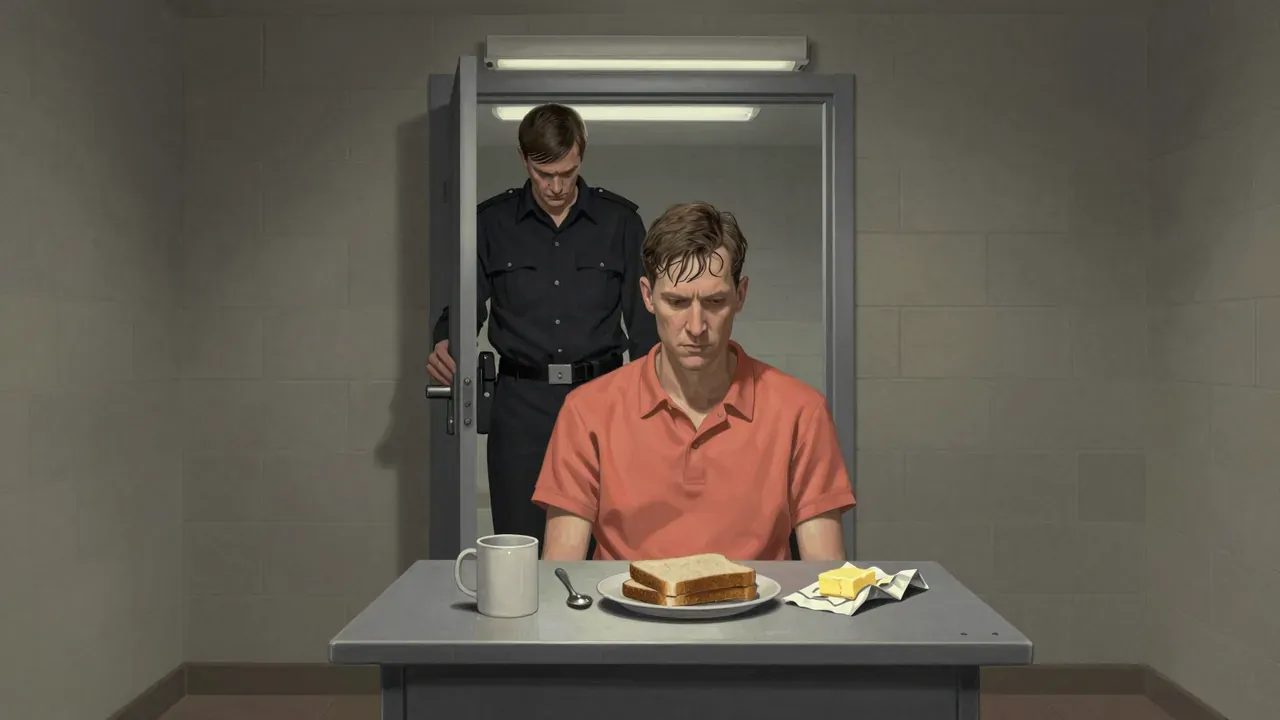
What lands is the film’s sustained refusal of comfort — emotional, narrative, or aesthetic. Its power lies in accumulation: the repeated image of Pharaon’s hands, the way light falls across Domino’s shoulder in the kitchen, the sound of boots on wet cobbles, the silence after Joseph’s confession. These are not ‘moments’ but residues — impressions that settle because they are allowed to persist. The final shot — Pharaon seated, handcuffed, staring out — lands not as irony or revelation but as quiet confirmation: the system has absorbed him, and he has absorbed its weight. The casting works because none of the leads are trained actors in the conventional sense; their gestures feel un-rehearsed, their silences unperformed. The north-French locations — the grey sky, the low horizon, the functional architecture — are not backdrop but participant. Even the Grand Prix win at Cannes feels earned not for brilliance but for rigour: Dumont holds the frame longer than feels necessary, and in that excess, something real emerges — not catharsis, but recognition. The film does not ask for empathy so much as endurance, and it rewards that endurance with a rare kind of honesty. (156 words)
Where it loosens its grip
What does not land is the film’s occasional drift into abstraction without sufficient grounding. The reference to Pharaon de Winter as a namesake of a painter — though noted in context — remains inert: it adds no visual or thematic resonance, and the museum curator appears only once, delivering exposition that feels tacked on rather than integrated. Some sequences — particularly the London interlude — lack narrative or psychological justification; they read as structural gambits rather than organic extensions of character or theme. The factory strike scene, while visually precise, carries little dramatic consequence beyond confirming Pharaon’s competence, which the film has already established through quieter means. A few supporting performances verge on caricature: the English cop, the angry worker — their lines and reactions feel schematic where others are granular. More problematically, the film’s commitment to austerity risks flattening moral distinction: Joseph’s confession is treated with the same visual neutrality as Domino’s offer of sex or the nurse’s routine check-up, making it harder to parse whether Dumont intends compassion, indictment, or indifference. That ambiguity is deliberate, but it leaves some viewers stranded without purchase. (157 words)
What it is really about
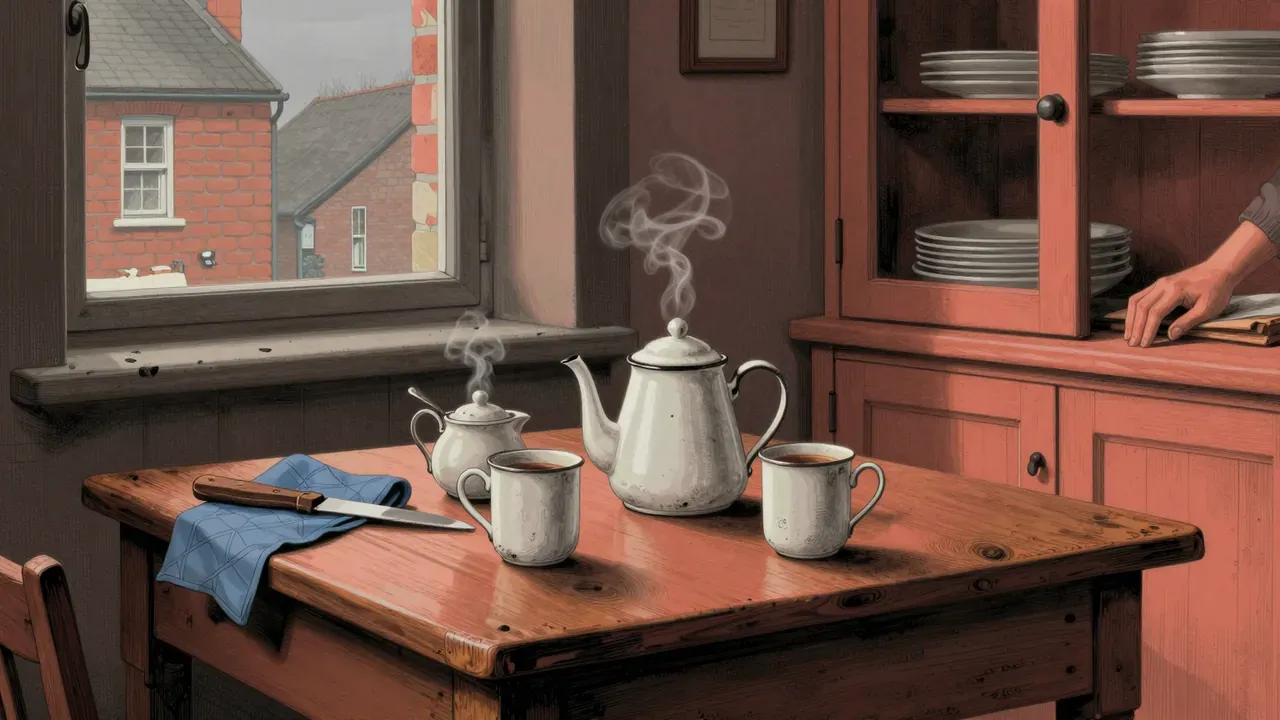
The themes that matter are grief as habit, policing as embodied labour, and human contact as both necessity and violation. Pharaon’s withdrawal is not stoicism but exhaustion — the residue of loss that reshapes perception. His work is not about justice but containment: of evidence, of emotion, of his own body in uniform. Domino’s advances are not romantic overtures but attempts to breach his isolation — and his rejection of her ‘not like that’ signals not prudishness but a refusal of transactional intimacy. The handcuffs in the final shot do not symbolise guilt or punishment but continuity: he is bound to the institution even as it fails him, bound to memory even as it erodes him. The film treats class not as politics but as texture — the factory, the bus route, the museum, the seaside restaurant — all occupy the same muted register, refusing hierarchy. Sexuality, trauma, and duty are not dramatised but absorbed into daily motion: the walk to the farm, the shift change, the cup of tea. Humanité insists that humanity is not revealed in crisis alone but in the intervals between — in waiting, watching, breathing, enduring. It is a film about what persists when story ends. (155 words)
Who it is for
This film is for viewers who value duration over disclosure, who find meaning in stillness, and who accept that some questions have no answer — least of all the question of why an eleven-year-old was killed. It suits those accustomed to arthouse pacing, to films where performance is measured in micro-gestures, and where silence carries more weight than dialogue. It will frustrate anyone expecting narrative propulsion, psychological exposition, or moral clarity — including fans of conventional crime drama, procedural television, or even Dumont’s later, more structured work. Those who rely on music or editing to guide emotional response may feel adrift; Humanité offers no cues, only space. It is not for viewers seeking catharsis, explanation, or relief. Someone who found Bresson’s Pickpocket or Tarkovsky’s Mirror impenetrable will likely find this equally resistant. But those who respond to the physicality of film — the grain of skin, the weight of a glance, the rhythm of footsteps — will find it deeply absorbing. Its demands are formal, not intellectual: it asks only that you stay present, and rewards that presence with uncommon gravity. (159 words)
Why it earns your time
Yes, it is worth your evening — if you are willing to surrender the expectation of narrative return and accept duration as its own reward. Humanité does not yield its effects quickly; its power accumulates over hours, sometimes days, after viewing. It repays rewatching not because it hides clues but because it reveals new textures — the way light changes on a wall, the shift in Domino’s posture across three scenes, the subtle variation in Pharaon’s breathing during interrogation. Those who dismiss it as ‘slow’ or ‘empty’ mistake austerity for absence: every frame is charged with unspoken history. It is not for casual viewing, nor for background consumption — it requires full attention. Anyone who values craft over convenience, precision over polish, or feeling over explanation will find it resonant. Those who prefer tightly plotted thrillers or emotionally guided dramas will likely leave unsatisfied. Nothing in the film would change that verdict — its rigour is its point. Its value lies not in what it says, but in how thoroughly it refuses to look away. (159 words)