The shape of it
Le Doulos is a French crime film from 1962, written and directed by Jean-Pierre Melville, adapted from Pierre Lesou’s novel. It works within the conventions of the policier — the French gangster thriller — but strips them down to their structural bones: loyalty, betrayal, misdirection, and the weight of a single lie. Melville does not aim for realism or social commentary; he builds a closed system where every gesture, pause, and hat tilt serves the logic of the plot’s double reversals. The film treats criminality as a profession governed by its own codes, less about motive than about timing, silence, and who sees what when. Its ambition is formal precision: to make narrative economy feel like moral gravity. It assumes familiarity with genre tropes — the informant, the botched job, the buried evidence — then reorders them so that cause and effect are legible only in retrospect. This is not a film about why men turn to crime, but how a chain of small decisions, each defensible in isolation, locks them into fatal symmetry. It asks the audience to track intention across gaps in dialogue and action, trusting that the frame contains nothing irrelevant. (158 words)
The look of it
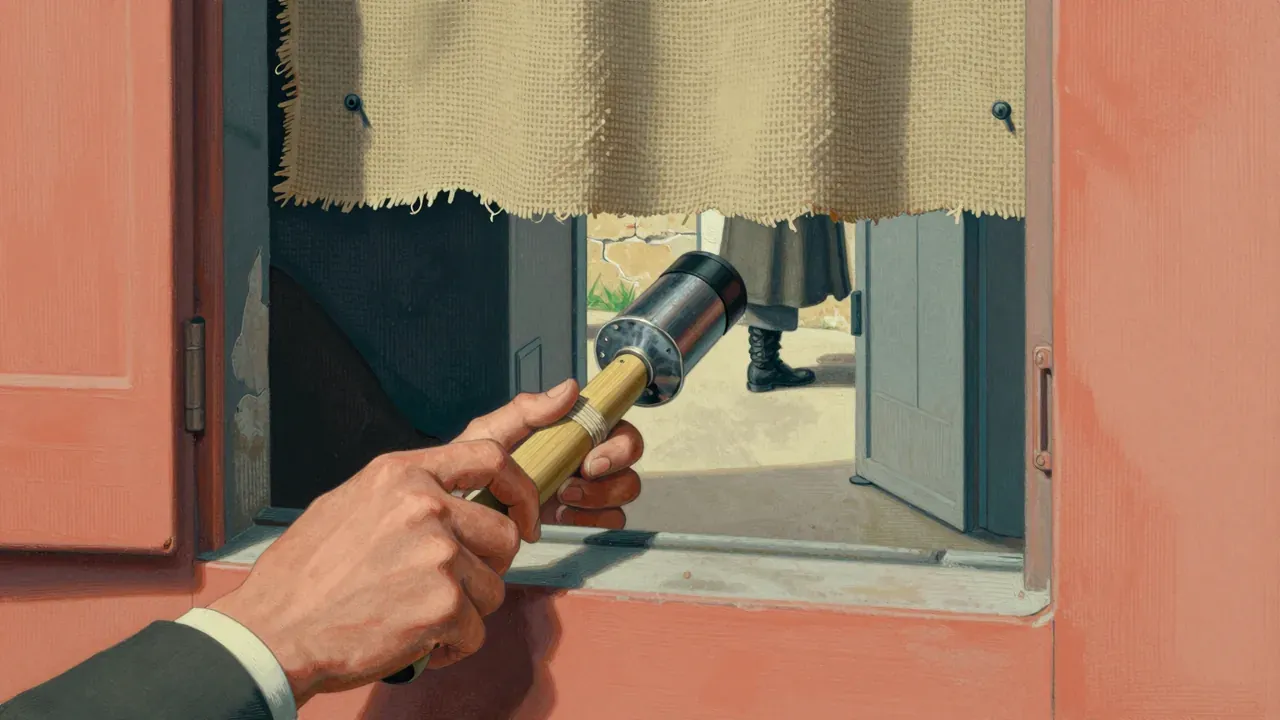
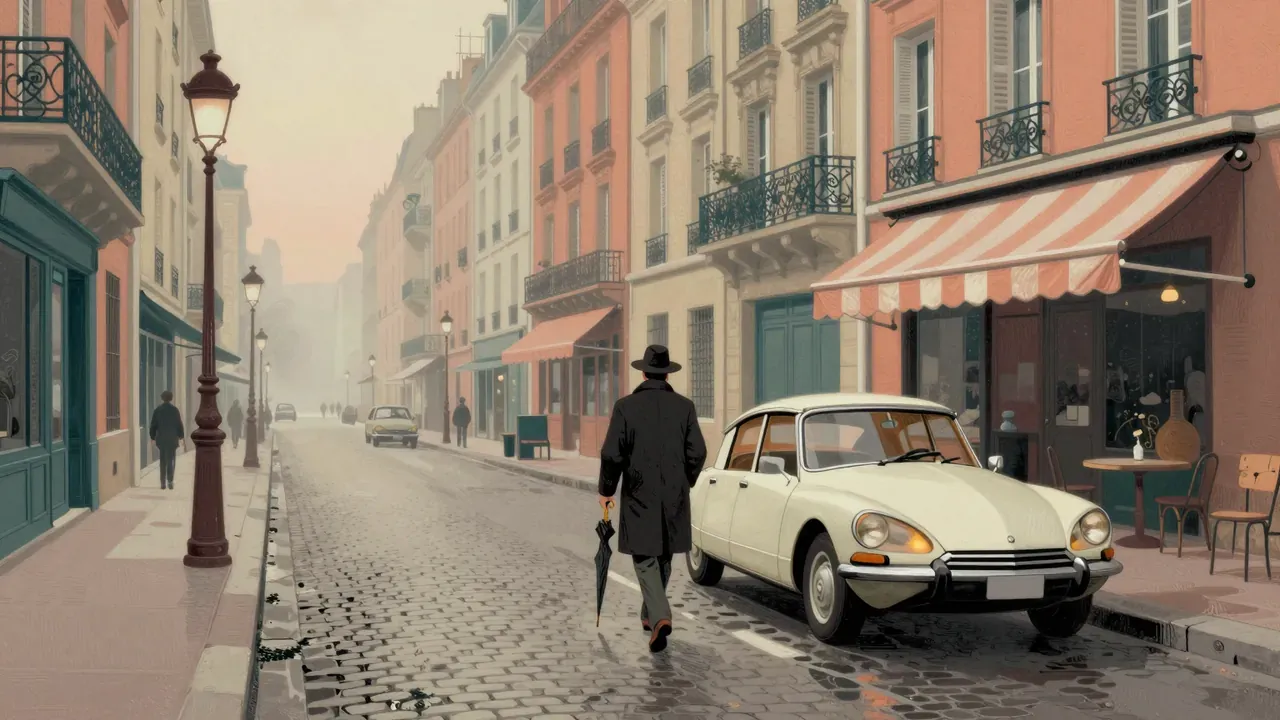
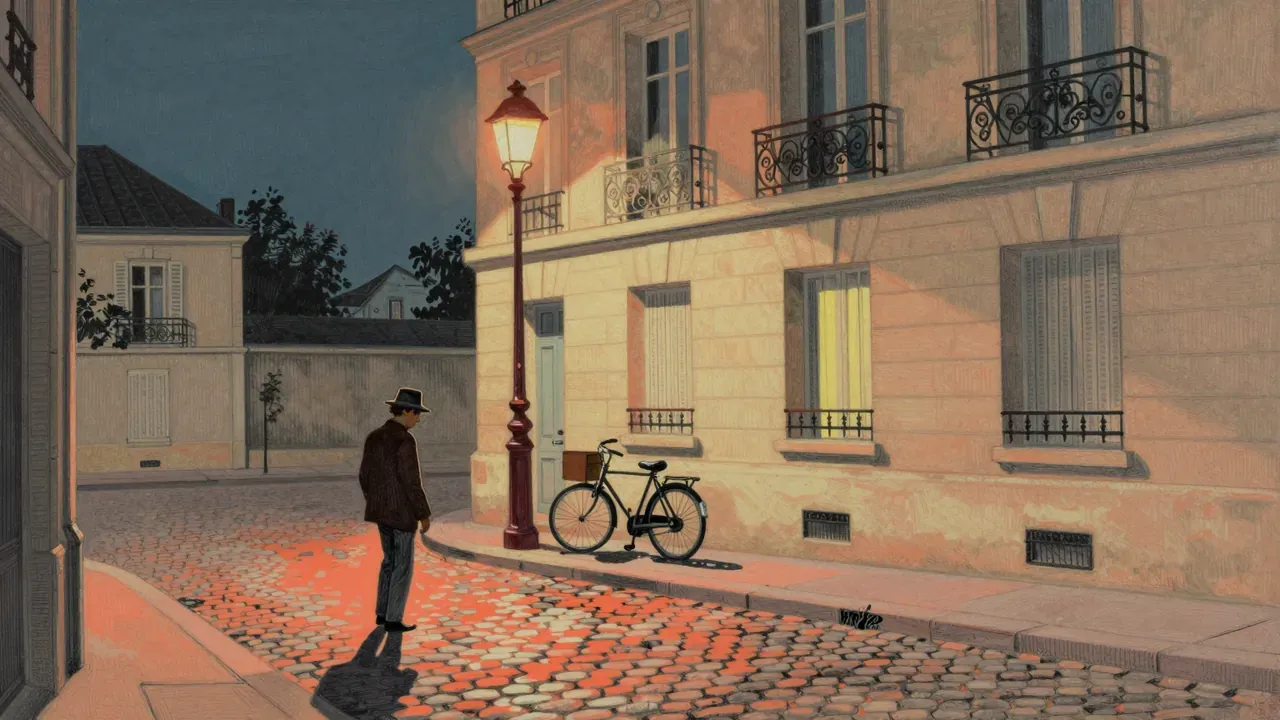
The story moves through tight, interlocking sequences: a murder, a robbery, a cover-up, a frame-up, and a final confrontation staged in domestic space. Jean-Paul Belmondo plays Maurice Faugel with restrained physicality — his injuries register in posture, not expression; his suspicion is held in the angle of his gaze. Serge Reggiani’s Silien is quieter still, his intelligence conveyed through hesitation and timing. Nicolas Hayer’s cinematography avoids flourish: interiors are lit with flat, even light, shadows kept shallow, faces rarely obscured. There are no tracking shots, no dramatic zooms — just steady frames that hold characters at medium distance, letting silence settle between lines. Jacques Loussier and Paul Misraki’s score is sparse, mostly piano motifs that recur without variation, reinforcing the film’s cyclical logic. Melville’s editing is elliptical but never obscure: scenes cut on action or implication, not rhythm. Dialogue is functional, often withholding information the viewer already possesses — not to confuse, but to test whether attention has been earned. Every prop — the hat, the lamppost, the radiator — appears twice, with altered meaning. (159 words)
The weight of it
What lands is the cumulative pressure of inevitability. The film’s power grows not from suspense about outcome — the ending is telegraphed early in tone and structure — but from watching characters misread one another with mounting certainty. Silien’s plan to clear Maurice’s name gains weight because it unfolds in fragments: a phone call, a visit to a club, a conversation with Fabienne, all presented without exposition. The final sequence in Ponthierry works because Melville has spent the preceding hour training the viewer to read space, timing, and misdirection. When Maurice mistakes Kern for Silien, it feels less like irony than arithmetic — the logical endpoint of a system where trust is always deferred and identity is provisional. The hat adjustment before Silien falls is not symbolism but punctuation: a final, deliberate act of self-presentation in a world where appearance is the only stable currency. Even minor performances — Charles Bayard’s weary Inspector Salignari, Michel Piccoli’s offhand menace as Nuttheccio — land because they occupy their roles without embellishment. The film’s austerity becomes its authority. (157 words)
The cost of it
What does not land is any attempt to locate emotional warmth or psychological depth outside the mechanics of the plot. Characters do not evolve; they pivot. Thérèse exists only as a vector for information and violence, her death reported second-hand, her body discovered in wreckage rather than mourned. Arlette’s murder is backstory, not motivation — Maurice’s grief is never shown, only cited. The film’s refusal to linger on consequence means some deaths register as plot points rather than losses. The American critic’s complaint about ‘excessive talk’ misses Melville’s purpose — dialogue here is transactional, not revelatory — but the film does ask the viewer to accept that moral ambiguity is expressed through omission, not confession. Those expecting interiority or catharsis will find the surface too smooth, the silences too absolute. The pacing, while deliberate, can feel inert in stretches where no new information arrives — particularly in the middle section, where Silien’s movements are recounted rather than dramatised. This is not a flaw in construction, but a limit of the mode: the film offers no access beyond the observable, and some viewers will want more. (159 words)
The meaning of it
The themes that matter are not crime or justice, but perception and delegation. Who sees whom, when, and under what conditions determines everything: Silien sees Thérèse as an informant; Maurice sees Silien as a traitor; the police see Silien as useful. Truth is never possessed — it is assigned, borrowed, or withheld. The title’s double meaning — hat and informant — anchors this: identity is worn, not inherent. The film treats language as unreliable, memory as unstable, and testimony as tactical. Loyalty is not emotional but procedural: Silien helps Maurice not out of affection, but because the system demands balance. The buried gun, jewels, and money function as objective correlatives — physical facts that remain constant while their meanings shift with each new claim upon them. There is no moral centre, only shifting centres of gravity: the lamppost, the radiator, the dressing screen. The film’s existential weight comes not from asking whether men are good or bad, but whether meaning can survive repeated acts of translation — from action to report, from witness to suspect, from life to corpse. (158 words)
The audience for it
This film is for viewers who value narrative architecture over emotional exposition, who find tension in withheld information rather than revealed backstories, and who accept that style is substance when both are rigorously maintained. It suits those familiar with mid-century French crime fiction or the work of directors like Dassin or Becker, where gesture supplants psychology. It is not for those who require character arcs, thematic resolution, or moral clarity — viewers who expect crime films to interrogate class, trauma, or systemic failure will find Le Doulos too detached. Those put off by static framing, minimal music, or long stretches without exposition should look elsewhere. A viewer who values emotional immediacy over structural elegance — or who prefers Tarantino’s referential energy to Melville’s ascetic control — would likely find it austere to the point of alienation. Nothing in the film softens its terms; its rigour is its condition of entry. (159 words)
The time for it
Yes, it is worth your evening — provided you watch it as Melville made it: not as a puzzle to be solved, but as a mechanism to be observed. Its 108 minutes pass without strain because every shot serves the same logic, every line advances the same calculus. It rewards attention, not interpretation. Those who dislike it tend to mistake its restraint for emptiness, its ellipses for evasion — but the film’s coherence is total, its control absolute. A viewer who finds it cold may warm to it on a second viewing, once the pattern is known and the pleasure shifts from ‘what happens next?’ to ‘how was that built?’. It is not a film that opens outward; it draws inward, tightening its grip with each repetition. Its value lies in its refusal to compromise its form — and that refusal remains persuasive, fifty years on. (158 words)