The shape of it
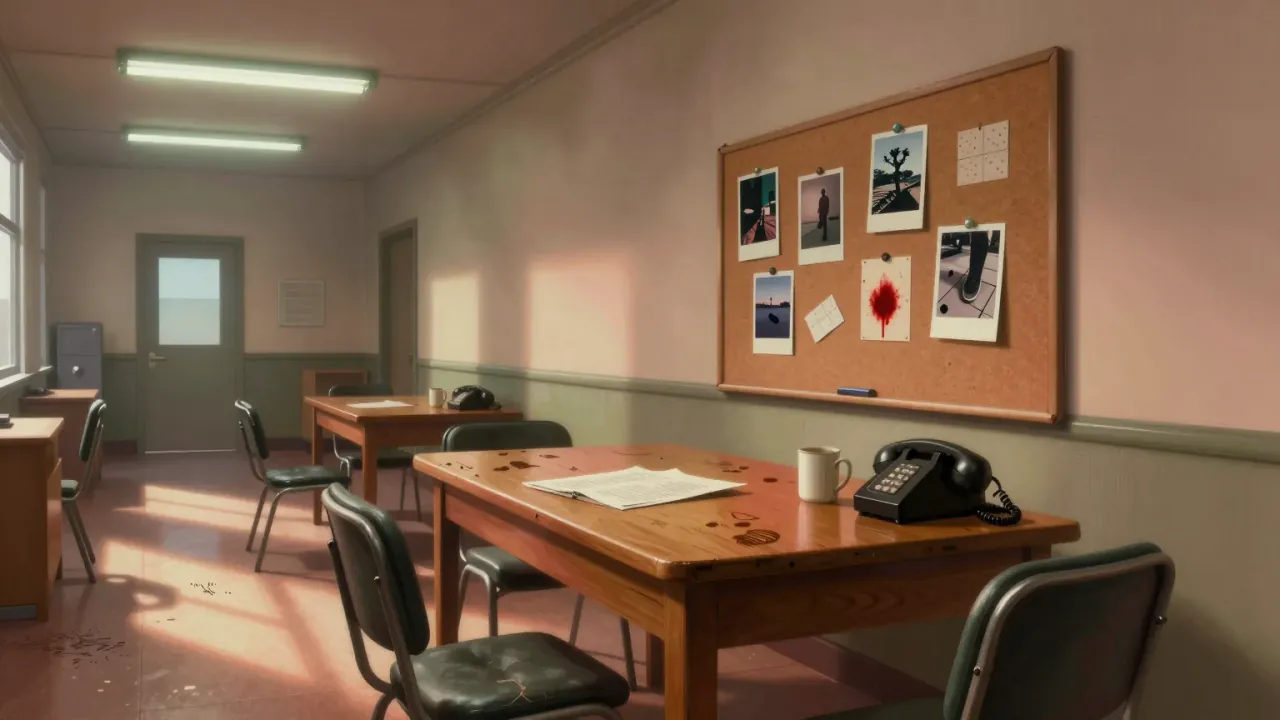
Public Enemies is a biographical crime film adapting Bryan Burrough’s 2004 non-fiction book about John Dillinger, Melvin Purvis, and the FBI’s formation during the Great Depression. Michael Mann directs with intent to ground myth in procedural detail: not myth-making, but myth-disassembling — showing how fame, surveillance, and institutional ambition coalesced around a few violent months in 1933–34. It avoids romantic shorthand; there are no lingering close-ups of Depp as outlaw poet, no slow-motion escapes scored to swelling strings. Instead, Mann treats the period as a hinge moment — when organised crime met centralised federal policing, and both were reshaped by technology, bureaucracy, and media. The film’s aim is structural, not psychological: to chart how power reconfigured itself across jurisdictions, jurisdictions that had previously treated bank robbery as a local matter. It privileges location, chronology, and chain-of-command over interiority. That ambition is clear in the decision to shoot digitally on Sony F23 cameras — not for convenience, but to capture texture without gloss, to keep the grain of wood panelling, the glare off chrome, the sweat on a collar under fluorescent light in a 1930s police station.
The rhythm of it
The story follows Dillinger’s final year with procedural fidelity: jailbreaks, safe houses, betrayals, failed ambushes, and incremental tightening of the net. Johnny Depp plays Dillinger with minimal inflection — voice low, gestures economical, eyes rarely widening beyond alertness. Christian Bale’s Purvis is less a man than a function: clipped diction, starched collars, a habit of standing just behind Hoover’s shoulder. Marion Cotillard’s Billie Frechette registers as presence more than character — her scenes are brief, grounded in physical detail (a fur coat’s weight, a cigarette’s drag), not exposition. Dante Spinotti’s cinematography uses shallow depth of field and tight framing to compress space, making rooms feel like holding cells. Paul Rubell’s editing favours abrupt cuts over dissolves, matching the film’s rhythm to radio static and typewriter clatter. Elliot Goldenthal’s score avoids period pastiche, opting instead for low drones and sparse piano figures that hover beneath dialogue rather than underscore it. The craft is unified: every department works to deny release, to withhold catharsis, to make narrative momentum feel like attrition.
The feel of it
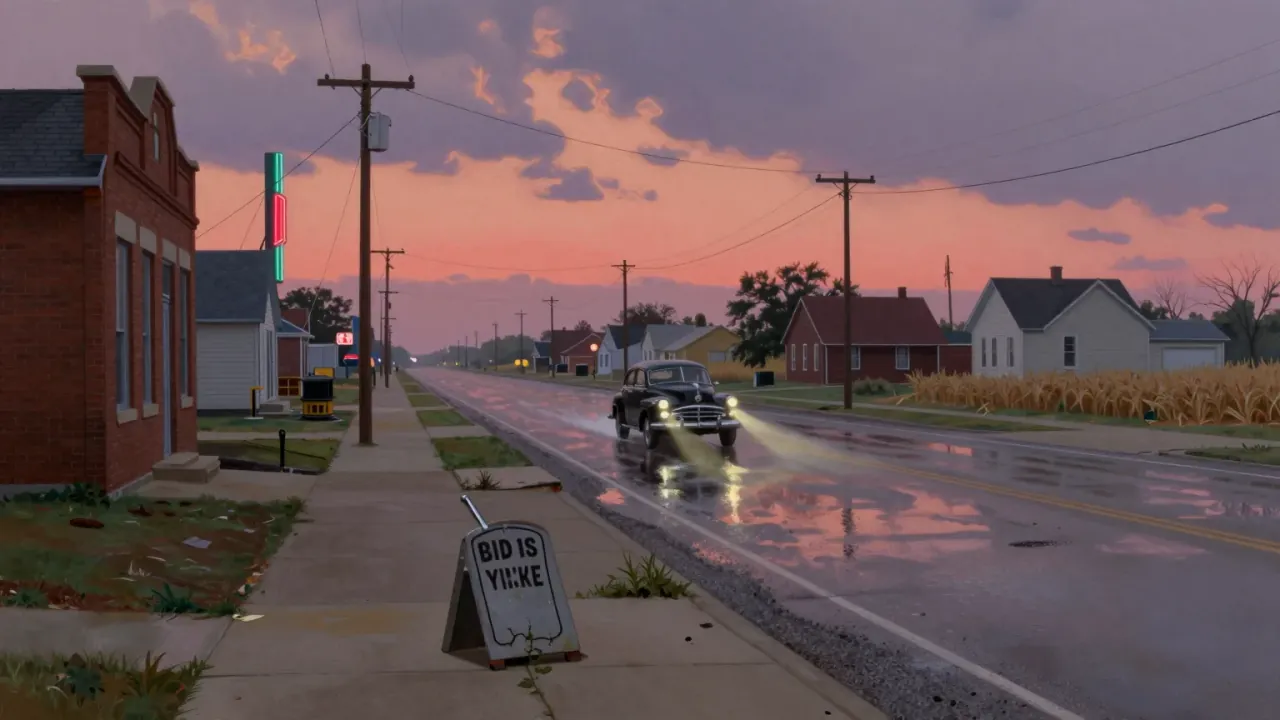
What lands is the film’s tactile authenticity — the creak of floorboards in the Little Bohemia Lodge, the muffled thud of a bullet hitting a doorframe, the way light falls across a Studebaker’s hood at dawn. Mann’s insistence on shooting at actual locations — Crown Point jail, Milwaukee’s former bank building, Pioneer Airport’s Ford Trimotor — gives the film a gravitational pull absent from studio-bound period pieces. The procedural rigour pays off in moments where process becomes drama: fingerprint cards being filed, wiretap transcripts typed, mugshots stacked in rows. These are not background details but structural motifs — the film’s real antagonists are not criminals or agents, but systems: filing cabinets, telephone exchanges, extradition paperwork. The performances land because they refuse interpretation: Depp doesn’t gesture toward ‘why’ Dillinger robbed banks; he simply moves through them, opens vaults, exits. Bale doesn’t signal Purvis’s ambition or doubt; he reports facts, adjusts his tie, waits. This restraint makes their final encounters — silent, unspoken, charged only by proximity — far heavier than any monologue could be.
The gaps in it
What does not land is the film’s attempt to imply thematic resonance beyond its own frame. The subplot involving Baby Face Nelson feels bolted on — Stephen Graham’s performance is vivid, but the character arrives late, departs abruptly, and serves no structural purpose beyond raising body count. The Chicago Outfit thread — Nitti’s associates refusing aid — is introduced then dropped, leaving Dillinger’s isolation unexamined. Jason Clarke’s Red Hamilton has presence but no arc; Channing Tatum’s Homer Van Meter appears in two scenes and vanishes. The film’s refusal to explain motivation extends to its women: Cotillard’s Billie is given no inner life beyond devotion, and Lili Taylor’s Anna Sage exists solely as a plot pivot. There is no reckoning with class, race, or gender beyond surface detail — the Depression is atmosphere, not analysis. Mann’s austerity becomes a limitation when characters are reduced to functions: Dillinger as fugitive, Purvis as tracker, Frechette as witness. Without psychological scaffolding, some sequences — particularly the extended Tucson arrest — risk monotony, their realism indistinguishable from inertia.
The point of it
The themes that matter are institutional emergence and erasure. Public Enemies is less about crime than about the birth of an apparatus: how the FBI codified methods, standardised evidence, and leveraged new technologies to assert federal authority over territory previously policed by counties and states. Dillinger is not defeated by virtue or strategy, but by infrastructure — telephones, fingerprints, interstate highways, press releases. The film treats fame as a vector: Dillinger’s notoriety draws crowds, which draw police, which draw Hoover’s attention, which draws budget and jurisdictional expansion. Erasure operates in parallel: Dietrich dies mid-escape, Hamilton vanishes mid-chase, Frechette is written out of the record almost as soon as she enters it. Even Dillinger’s death is rendered not as climax but as administrative footnote — a coroner’s report, a newspaper headline, a file stamped ‘CLOSED’. Mann frames this not as tragedy but as inevitability: the individual dissolves into the system that names, tracks, and archives him. The Great Depression is not backdrop but condition — scarcity sharpens the edges of power, making both crime and policing more efficient, more ruthless, more bureaucratic.
The audience for it
This film is for viewers who value precision over propulsion — those who watch Heat not for the shootouts but for the surveillance van’s dashboard lighting, or who linger on the sound design in Collateral more than the plot. It rewards attention to texture: the way a fedora casts shadow, how a revolver’s cylinder clicks shut, the cadence of 1930s radio announcements. It is not for those seeking moral clarity, emotional payoff, or narrative symmetry. Anyone expecting a conventional biopic — with childhood flashbacks, psychological turning points, or redemptive arcs — will find the film withholding. Those who dislike digital cinematography may object to Spinotti’s flat, high-resolution look, which lacks the grain and warmth of film stock. Historians may bristle at compressions — the real Purvis was younger, Dillinger’s relationship with Frechette more complex — but Mann’s fidelity is to structure, not biography. The film assumes patience; it does not court engagement. Its ideal viewer watches not to be moved, but to observe how systems absorb individuals.
The time it takes
Yes, it is worth your evening — provided you accept its terms. It is not entertainment in the conventional sense, but it is rigorously made, consistently coherent, and unusually attentive to how power operates in time and space. Its 140 minutes pass without bloat because every shot serves the central proposition: that history is written in files, not feelings. Those who disagree tend to judge it against genre expectations — calling it ‘cold’, ‘distant’, or ‘unengaging’ — but that distance is deliberate, not deficit. A tighter runtime would not improve it; what matters is the accumulation of detail, not pace. Change the verdict? Only if Mann had chosen to dramatise motive over method, or traded location authenticity for studio control. As it stands, Public Enemies remains one of the few American films to treat law enforcement not as heroism, but as infrastructure — and that alone makes it worth watching.