The look of it
Bob le flambeur is a French heist film from 1956 that treats crime as ritual, not rebellion. It does not aim to shock or moralise, nor to immerse in psychological realism; instead, it constructs a stylised, almost ceremonial world where gambling, loyalty, and timing govern fate more than motive or consequence. Jean-Pierre Melville frames the Montmartre quarter as both sacred and profane — heaven and hell in one breath — and sustains that duality through every choice: the narrator’s voiceover, the slow tracking shots across cobblestones and neon, the deliberate pacing of dialogue and silence. The film borrows the grammar of American gangster pictures — the lone operator, the tight crew, the doomed plan — but strips away their urgency and replaces it with a kind of weary elegance. Its ambition is structural and tonal: to make a genre film that feels like a fable, where the heist matters less than the posture assumed while preparing for it. It is not about money, nor even survival, but about maintaining form in the face of entropy. Word count: 142
The code of it
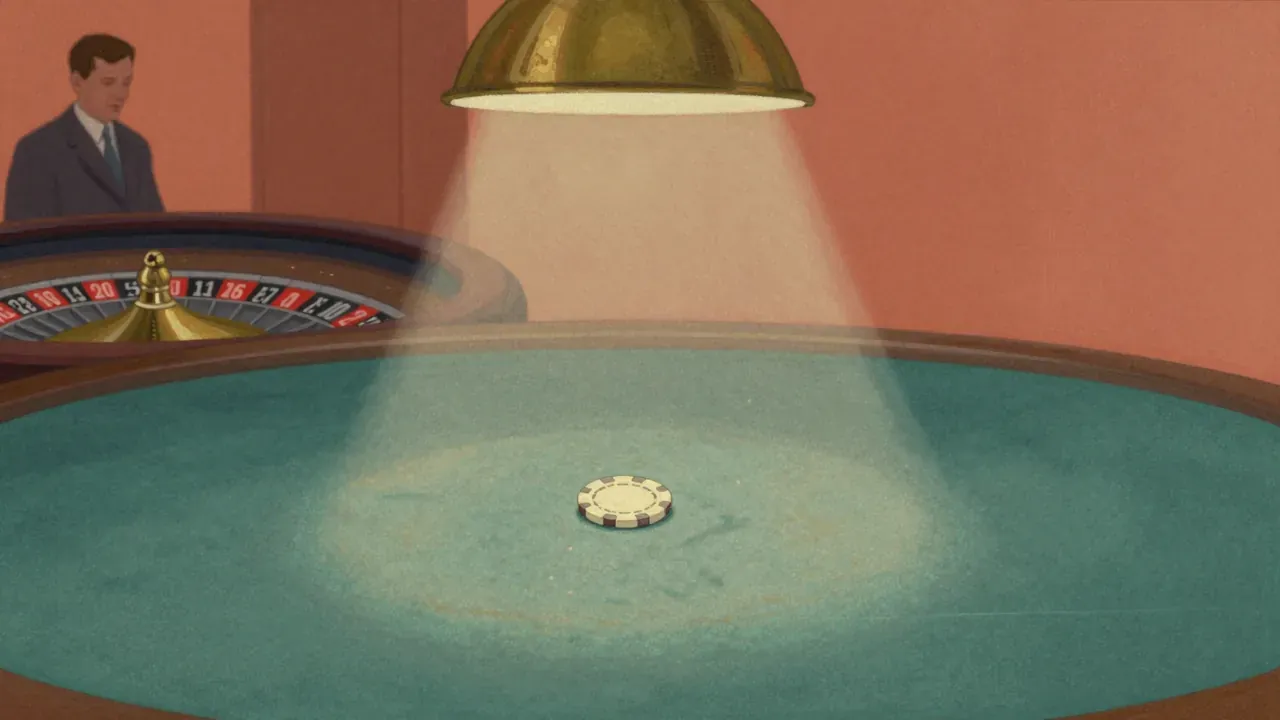
The story unfolds with unhurried precision: Bob, a gambler past his prime, assembles a team for a casino raid in Deauville after learning the safe will hold eight hundred million francs before dawn. Henri Decaë’s cinematography grounds the film in location — Pigalle’s rain-slicked streets, Deauville’s art deco façades — using available light to carve faces from shadow without theatricality. Roger Duchesne plays Bob with dry authority and quiet exhaustion; Isabelle Corey and Howard Vernon offer contrast without overstatement. There are no grand monologues or emotional crescendos: performances stay within the register of lived habit. The editing uses one jump cut — a formal gesture, not a flourish — and handheld work only where it serves movement, not mood. Eddie Barclay’s score is sparse, functional, never illustrative. Melville’s direction avoids emphasis: when Bob loses himself at the roulette table, the camera holds steady, watching him lose time rather than dramatising the loss. Word count: 150
The timing of it
What lands is the film’s unwavering consistency of tone — its refusal to hurry, explain, or soften. The opening sequence, circling Montmartre before naming it heaven and hell, establishes a worldview that never wavers: this is a place where grace and grift coexist without irony. Bob’s code — helping Anne, sparing Marc until forced, keeping his word to Roger — reads as coherent, not quaint. The heist’s failure feels inevitable not because of plot holes, but because the film has spent ninety minutes building a universe in which luck is cyclical and control illusory. Even the police, led by Ledru, operate within the same unspoken rules: they do not ambush, they wait; they do not arrest on suspicion, but only after confirmation. The final image — Bob handcuffed, chips in the boot, joking about suing — lands because it follows logically from everything that precedes it. There is no rupture between character and consequence, only alignment. Word count: 148
The gaps in it
What does not land is the subplot involving Suzanne’s betrayal. Her decision to tip off Ledru arrives without sufficient weight: her resentment feels underwritten, her agency under-anchored in earlier scenes. The film gives her little screen time, and her motivation — jealousy mixed with financial grievance — lacks the texture afforded to Bob’s habits or Paolo’s impulsiveness. Similarly, Anne’s role remains schematic: she is catalyst, not character. Her slip to Marc functions narratively, but her interior life is left blank, making her remorse feel abrupt rather than earned. The film’s restraint works against itself here — what might have been given nuance through dialogue or glance is withheld, leaving gaps that the structure does not fill. A viewer expecting cause-and-effect causality may find these turns arbitrary, not elliptical. The film assumes familiarity with its moral shorthand; those unfamiliar may read ambiguity as omission. Word count: 147
The shape of it
The themes that matter are time, form, and the illusion of autonomy. Bob’s gambling is not addiction but calibration: each bet tests whether the world still obeys its own rhythms. The heist is timed to the minute — 5 a.m., the horse race, the safe’s contents — yet collapses not through miscalculation but through distraction, a human flaw the film treats with neither pity nor scorn. Loyalty is presented as practice, not principle: Bob shelters Anne not out of chivalry but because it is what he does; Paolo shoots Marc not from rage but because the action fits the script he believes he’s in. The film questions whether identity is sustained by repetition — the way Bob walks, speaks, dresses — and whether breaking form (like gambling before the heist) is a lapse or a return to self. There is no redemption arc, no revelation — only the quiet insistence that character is habit made visible. Word count: 145
The audience for it
This film is for viewers who value rhythm over revelation, who follow a film not for what it explains but for how it holds its shape. It suits those familiar with mid-century French cinema or American noir, and those willing to sit with silence and implication. It is not for viewers who require clear motivation, emotional exposition, or narrative propulsion — the pacing assumes patience, not persuasion. Those expecting thriller mechanics or psychological depth will find it withholding. A viewer who dislikes ambiguity in character or resists films that treat plot as secondary to tone may leave unsatisfied. The verdict would change if the film offered more texture to its supporting figures — Suzanne’s grievance, Anne’s agency — but its austerity is intentional, not accidental. Word count: 144
The worth of it
Yes, it is worth your evening — provided you watch it as a composition, not a chronicle. Its ninety-eight minutes move with the weight of a well-worn coat: familiar, deliberate, quietly authoritative. It repays attention not through surprise but through accumulation: the way Decaë lights a doorway, the cadence of Melville’s narration, the exact moment Bob glances at his watch. It is not demanding, but it is uncompromising — no concessions to pace, exposition, or emotional signposting. Someone who watches for story alone may feel adrift; someone who watches for texture, timing, and tone will find it richly sustained. Its influence on the New Wave is visible not in flash but in discipline: every shot serves the film’s internal logic, nothing more. Word count: 143