What it is
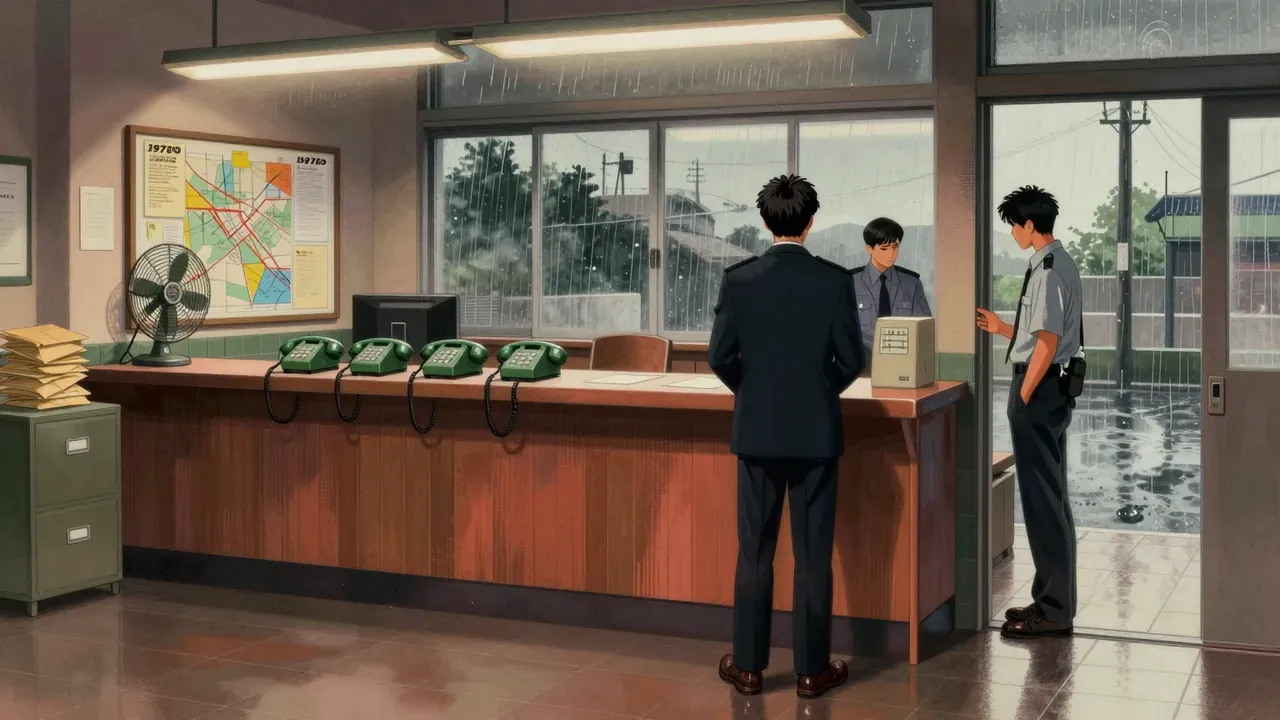
Carlos is a three-hour-and-thirty-eight-minute French drama film directed by Olivier Assayas and released in 2010. It is a biographical dramatisation of the life and activities of Ilich Ramírez Sánchez — known as Carlos the Jackal — a Venezuelan militant active across Europe and the Middle East between the early 1970s and mid-1990s. The film does not aim to explain him psychologically, nor does it offer moral arbitration; instead, it reconstructs his operational world with procedural fidelity: safe houses, intercepted radio traffic, botched raids, bureaucratic friction between intelligence services, and the slow erosion of ideological coherence under pressure of exile and paranoia. It treats terrorism not as spectacle but as labour — logistical, linguistic, interpersonal — and anchors its scale not in grand pronouncements but in the weight of time spent waiting, travelling, mistrusting, and adapting. Its ambition is structural: to map how a single actor moved through overlapping geopolitical fault lines during the Cold War’s final decade.
How it moves
The narrative unfolds in three distinct acts: the rise (1973–75), the drift (1976–82), and the collapse (1985–94). Édgar Ramírez plays Carlos with physical command and minimal interiority — his performance registers shifts in posture, gait, and vocal register rather than confession or crisis. Supporting actors — Abbes Zahmani as Ahmed, Alexander Beyer as Klaus Croissant, Udo Samel as Otto — ground each sequence in lived texture, never caricature. Yorick Le Saux and Denis Lenoir shoot in natural light where possible, favouring medium shots and shallow focus that keep faces legible but environments ambiguous. Luc Barnier and Marion Monnier’s editing sustains duration without indulgence: a 47-minute PLO training camp sequence feels neither rushed nor padded, because every cut serves geography or hierarchy. Dialogue is functional, often untranslated, and rarely expository. The film’s craft lies in its refusal to simplify context — it assumes the viewer will track shifting alliances between the PFLP, Stasi, KGB, and Syrian intelligence without gloss.
Where it holds
What lands is the cumulative effect of temporal density. The film’s length is not rhetorical; it is diagnostic. By holding scenes past comfort — a car journey across Beirut, a silent interrogation in Khartoum, the interminable wait before the OPEC raid — it conveys how ideology hardens into routine, then habit, then inertia. The OPEC siege sequence works because it avoids heroics: the tension comes from miscommunication, fatigue, and the visible strain on Carlos’s face as he realises control is slipping. Later, the 1982 Beirut apartment sequence lands precisely because nothing happens — just men smoking, checking watches, listening to shortwave static — yet the dread is palpable. The editing wins the European Film Award for good reason: cuts are timed to breath, not beat. Even minor characters retain specificity: Julia Hummer’s Anna is never reduced to ‘the girlfriend’ but functions as a node of logistical support, linguistic mediation, and quiet disillusionment. Nothing here feels staged for impact; everything feels observed.
Where it slips
What does not land is the film’s treatment of women beyond functional roles. Razane Jammal’s Magdalena and Martha Higareda’s Magdalena (a different character, same name) both vanish without narrative consequence or psychological follow-up; their exits feel like plot holes rather than omissions. The film’s refusal to psychologise extends too far in these cases — it leaves no space for their agency or perspective, reducing them to props in Carlos’s orbit. Similarly, the 1994 Sudan arrest sequence lacks dramatic counterweight: after two and a half hours of meticulous build, the capture feels abrupt, almost perfunctory, with no sense of institutional effort behind it. The film also struggles with tonal consistency in its third act — the shift from operational thriller to bureaucratic farce (as Carlos bickers with Sudanese officials over passports) risks undercutting its own gravity. Some viewers will find the pacing monotonous not because it is slow, but because the rhythm flattens in the final hour, losing the earlier textural variety of light, language, and location.
What it thinks about
The themes that matter are not terrorism or revolution in the abstract, but the corrosion of purpose under conditions of prolonged illegality. The film charts how political conviction becomes self-reinvention, then performance, then survival instinct. It treats ideology as infrastructure — something you maintain, repair, and occasionally abandon when the wiring fails. Loyalty is shown as transactional and temporary: alliances shift with funding, visas, and safe-house availability. Language itself is thematic — English, Arabic, German, French, Spanish all appear without subtitles, forcing the viewer to parse meaning from gesture, tone, and context, mirroring Carlos’s own navigational work. The film also interrogates the myth of the lone operator: every action depends on networks — of translators, forgers, drivers, informants — whose names are never recorded. What endures is not ideology but bureaucracy: filing systems, radio frequencies, flight manifests. The Cold War here is less a clash of systems than a shared administrative logic — one that absorbs, repurposes, and discards militants with equal indifference.
Who it is for
This film is for viewers who value historical texture over emotional payoff, who can sit with ambiguity and resist the urge to assign motive or redemption. It suits those familiar with 1970s European leftist militancy or willing to research alongside viewing — the film offers no glossary, no voiceover, no recap. It is not for viewers seeking catharsis, moral clarity, or tightly wound plotting; those expecting a conventional biopic or thriller will find its pace and restraint alienating. People who rely on subtitles for non-English dialogue may struggle, as the film deliberately withholds translation in key scenes. Those who dislike long takes, muted performances, or films that treat ideology as process rather than belief will leave unsatisfied. A viewer who values visual storytelling over exposition, or who finds tension in silence and waiting, will respond more readily. The verdict changes only if the viewer prioritises narrative propulsion over structural fidelity — in which case, this is not the film they need.
What it costs
Yes, it is worth your evening — provided you set aside the full 338 minutes without interruption and accept that ‘worth’ here means immersion, not entertainment. It rewards attention with granularity: the way a cigarette ash falls, the sound of a typewriter in a Damascus flat, the shift in a border guard’s posture when a passport is handed over. It is not ‘enjoyable’ in the conventional sense, but it is rigorously sustained and intellectually honest about its subject’s limitations and contradictions. Those who expect resolution or closure will be disappointed; those who value precision of period detail, performance restraint, and editorial discipline will find it absorbing. It is not for casual viewing, nor for background consumption. It demands presence — and repays it with a rare kind of historical gravity. To dismiss it as ‘too long’ mistakes duration for dilution; its length is its argument.