The shape of it
High Sierra is a 1941 Warner Bros. crime film directed by Raoul Walsh, adapted from W. R. Burnett’s novel by Burnett and John Huston. It sets out to tell the story of Roy Earle — an ageing, physically marked gangster released from prison to lead a jewel heist — not as a spectacle of violence or moral instruction, but as a slow, weathered descent toward inevitability. The film does not aim to glamorise crime, nor to indict it with sermonising; instead, it treats Earle’s choices, attachments, and limitations as grounded in temperament and circumstance. Its ambition is structural and psychological: to compress a lifetime of regret, loyalty, and misjudgement into a tight, location-bound arc across California’s high desert and mountains. It works within studio-era constraints — a $491,000 budget, a ten-day shooting schedule for the climax at Whitney Portal — yet insists on physical texture: dust, altitude, dog hair, the weight of a suitcase full of stolen gems. It is not a procedural, not a satire, not a romance first — it is a character study wrapped in genre scaffolding, where the crime serves only to set the clock ticking. (158 words)
The look of it
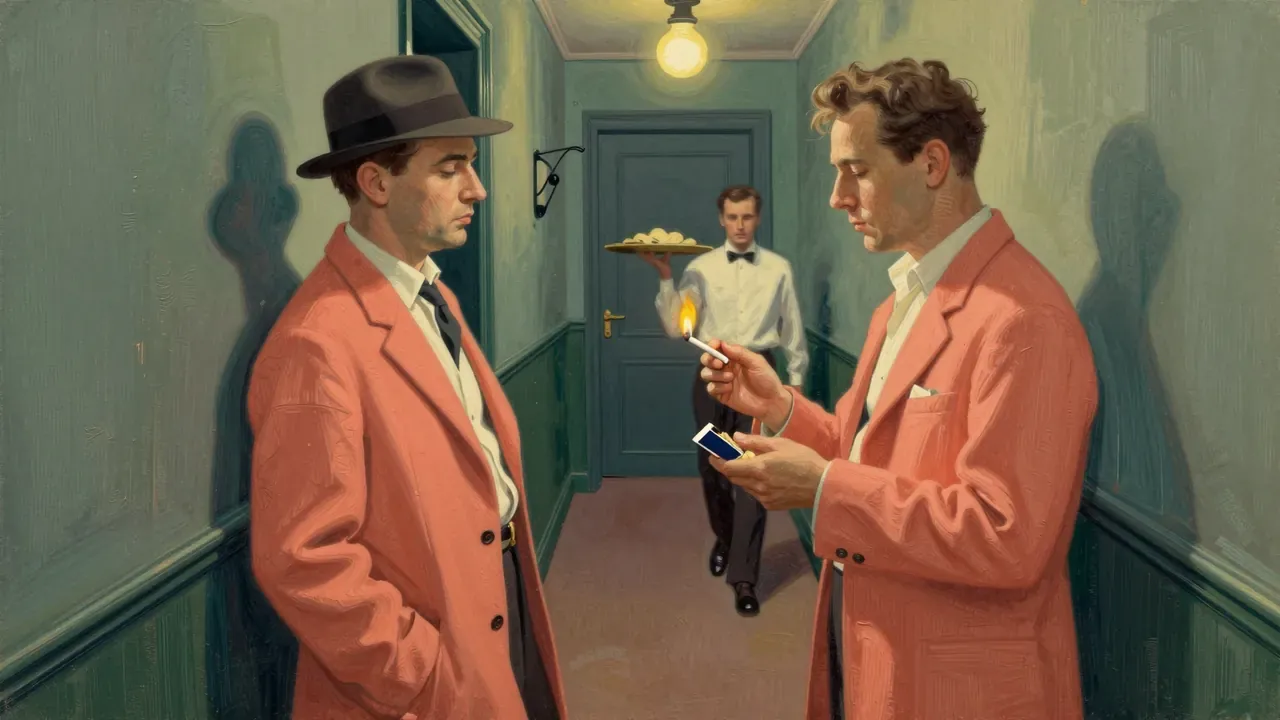
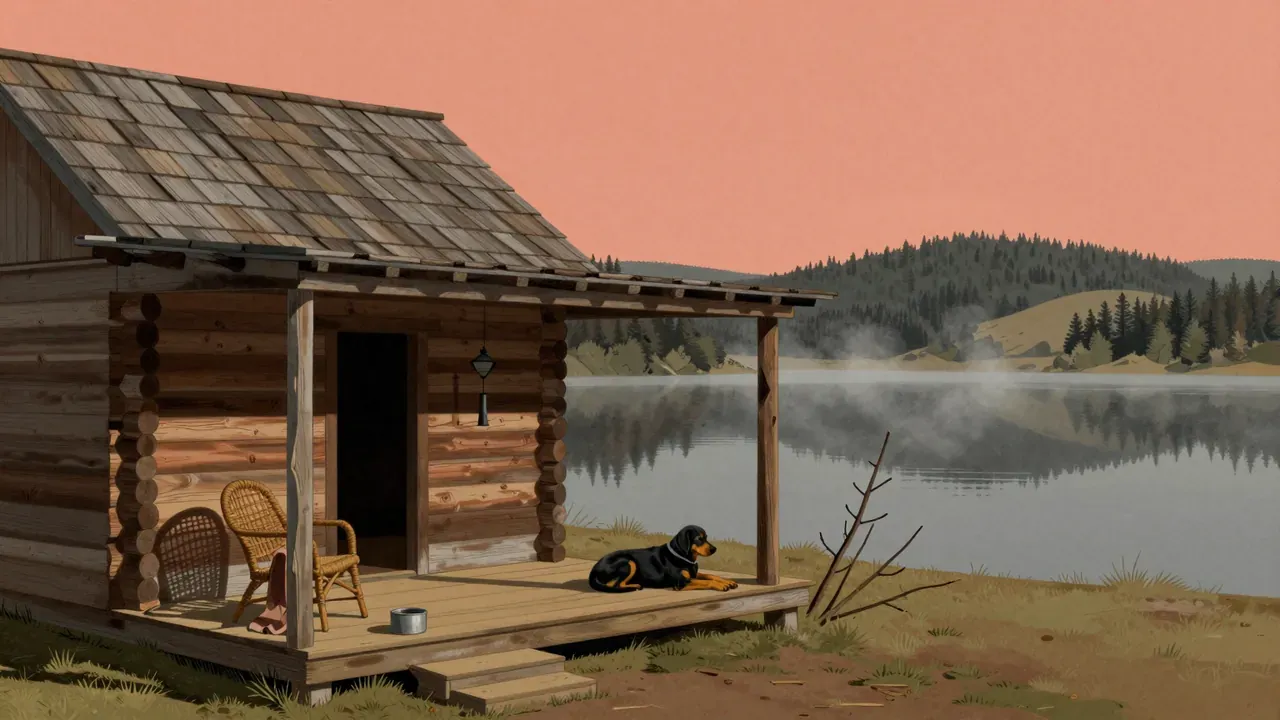
The plot follows Roy Earle’s cross-country journey to a logging camp, the botched heist at Tropico Springs, and his flight back into the Sierra Nevada, culminating in a fatal mountain chase. Humphrey Bogart plays Earle with restraint: no snarling, no grand monologues, just a low register of fatigue and flickers of tenderness — toward Pard the dog, Velma the crippled girl, even Marie Garson, whom he keeps at arm’s length until it is too late. Ida Lupino’s Marie is neither decorative nor hysterical; her devotion is quiet, persistent, edged with realism. Tony Gaudio’s cinematography avoids noir’s usual high-contrast shadows in favour of natural light — sun-bleached exteriors, dim cabin interiors lit by single bulbs. Adolph Deutsch’s score is functional, not intrusive. Jack Killifer’s editing sustains pace without flash: cuts are clean, timed to breath and motion, especially in the final pursuit. The location work — Big Bear Lake, Lone Pine, Whitney Portal — gives geography real consequence: slopes are steep, air is thin, escape is physically implausible. There is no stylisation for its own sake; every craft decision serves the narrowing of options. (159 words)
The weight of it
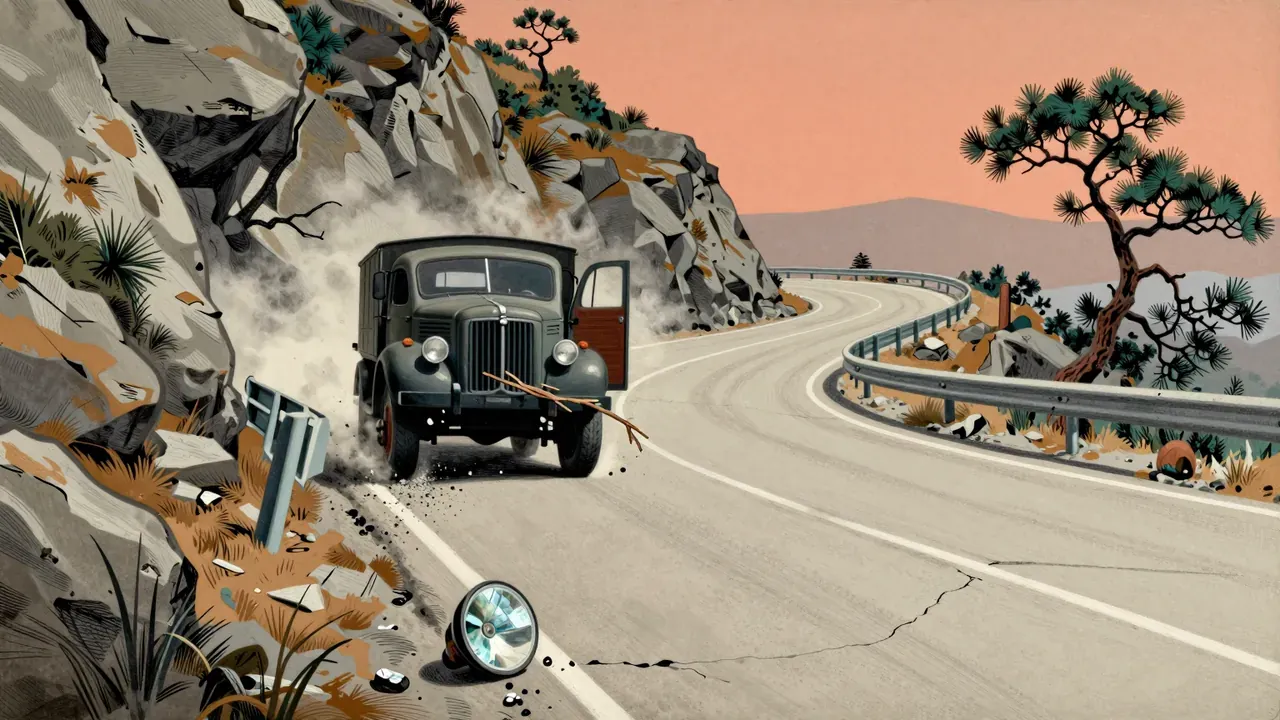
What lands is the cumulative weight of small, unremarkable gestures: Roy paying for Velma’s surgery without expectation, handing Marie an engagement ring while knowing he will not live to use it, letting Pard lick his hand in the final shot. These moments do not ask for sympathy; they simply register as fact. The film’s emotional logic holds because it refuses to overstate. Bogart’s performance lands precisely because it avoids the theatricality expected of leading men in 1941 — his Roy is less charismatic than stubborn, less commanding than worn-down. Lupino matches him beat for beat: her stillness when Roy leaves her on the bus carries more tension than any argument could. The mountain climax lands not through stunt spectacle — though Buster Wiles’ 90-foot slide is undeniably visceral — but because the terrain itself becomes antagonistic: rocks shift, footing fails, breath shortens. Even the dog feels like part of the world, not a prop: Zero’s presence is unforced, his licking of Roy’s biscuit-filled hand a quiet, animal punctuation to human futility. The film earns its pity not by pleading, but by showing how little control Roy ever had — over his past, his body, or the road ahead. (157 words)
The gaps in it
What does not land is the framing of Velma’s subplot. Her clubfoot, corrective surgery, and refusal to marry Roy are introduced with narrative urgency but resolved too tidily — her gratitude feels dutiful rather than earned, her fiancé off-screen and abstract. The film assumes her significance without giving her interior life beyond reaction. Similarly, the supporting gang members — Red, Babe, Mendoza — remain types: loyal, reckless, treacherous. Their deaths serve plot function, not emotional consequence. The studio-era compression also flattens some moral ambiguity: Jake Kranmer’s takeover and murder happen off-screen, reducing institutional corruption to a single, convenient bullet. The script’s fidelity to Burnett’s novel means certain period details — the ‘dime-a-dance’ economy, the politics of parole — are present but not interrogated; they hang as backdrop, not context. And while the location shooting grounds the film, some interior scenes — particularly in the Los Angeles hotel and Art’s fence office — revert to flat, stagey lighting and static blocking, breaking the film’s spatial continuity. These are not failures of intent, but limits of production scale and mid-century studio convention: the film cannot linger where it must move. (156 words)
The ground of it
The themes that matter are freedom as illusion, time as erosion, and dignity as persistence. Roy Earle wants only to be left alone — not wealth, not power, not revenge — and every choice he makes pulls him further from that possibility. His body betrays him: stiff knees, a cough, the way he leans on doorframes. The Sierra Nevada is not a refuge but a mirror: vast, indifferent, beautiful in a way that heightens human smallness. Loyalty is shown as habit, not virtue — Roy stays with Marie not out of love but because she is there, because Pard is there, because leaving would require more energy than he has. The film treats class without rhetoric: Roy’s origins as a ‘farmer boy’ are mentioned once, then folded into posture and speech, not exposition. Ageing is physical, not metaphorical — it is in the way he adjusts his hat, the pause before climbing stairs, the exhaustion in his voice when he tells Marie, ‘I’m tired.’ There is no redemption arc, no last-minute conversion — only the quiet insistence that a man who has lived by violence can still act with care, and that care, however minor, is not erased by the ending. (154 words)
The audience for it
This film is for viewers who value precision over flourish, who find tension in stillness and pathos in routine. It suits those accustomed to classical studio pacing, willing to sit with unspoken feeling and trust subtext over dialogue. It rewards attention to gesture, to light on skin, to the rhythm of footsteps on gravel. It is not for viewers who require clear moral binaries, rapid plot escalation, or psychological exposition. Those expecting noir’s visual abstraction or crime thrillers’ procedural rigour may find its tempo too deliberate, its stakes too personal. Someone who values thematic density over incident — or who sees Bogart not as icon but as actor — will connect more readily than someone seeking catharsis or closure. A viewer who dislikes ambiguity in motivation or finds melancholy unrewarding may leave impatient. The verdict does not change if the film were longer or shorter; its power lies in its compression. Remove ten minutes, and Roy’s exhaustion loses weight. Add ten, and the mountain chase loses inevitability. Its form is inseparable from its argument. (159 words)
The cost of it
Yes, it is worth your evening — provided you watch it as it asks to be watched: without haste, without demand for explanation, with tolerance for silence and respect for understatement. It repays attention not with revelation but with accumulation: each small moment gains resonance in retrospect. Its 100 minutes pass without strain because the film never rushes to convince, only to show. You do not need to love gangster films, or Bogart, or 1940s Hollywood to respond — but you do need to accept that some stories are about diminishment, not ascent. Those who prefer narrative propulsion over psychological gravity may feel adrift; those who mistake stillness for emptiness will miss the film’s quiet insistence on humanity within constraint. It is not ‘important’ because it changed cinema — though it did help pivot Bogart and Huston into new roles — but because it remains exact, unsentimental, and deeply felt. Its worth lies in how little it wastes, and how much it implies. (158 words)