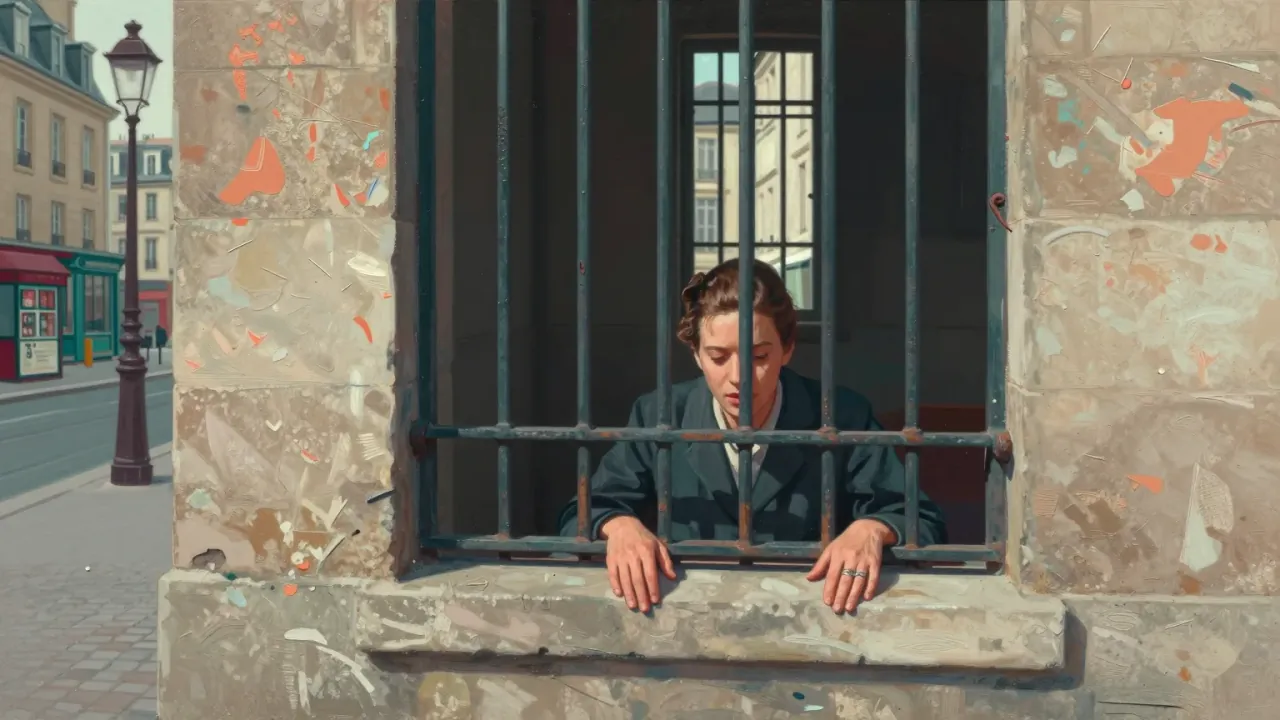
The idea behind it
Pickpocket is a French drama from 1959, written and directed by Robert Bresson, that traces the moral and psychological drift of Michel, an unemployed Parisian who turns to theft not for need but as an assertion of will. It does not aim to explain crime sociologically or dramatise it sensationally; instead, it treats pickpocketing as a disciplined, almost liturgical act — one that isolates the practitioner from others while sharpening his attention to gesture, rhythm, and proximity. The film adapts no novel directly but draws structural and ethical tension from Dostoyevsky’s Crime and Punishment, particularly in Michel’s belief that certain men stand outside moral law. Bresson avoids psychological exposition: there are no flashbacks, no voiceover justification beyond sparse narration, no music that cues emotion. What it tries to do is narrower and sterner than most dramas: to show how a person becomes estranged from himself through repeated, self-chosen acts — and whether that estrangement can be undone without recourse to confession, punishment, or redemption as conventionally understood. It is a study in volition, not motive.
The shape of it
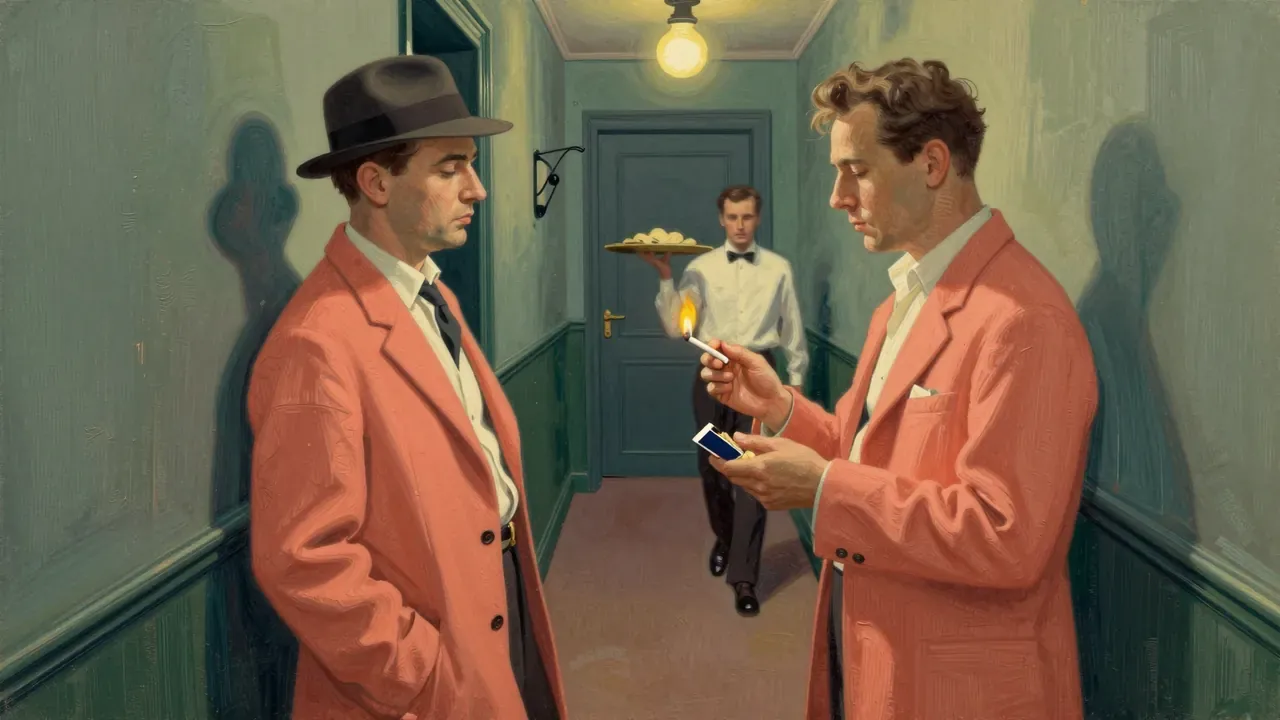
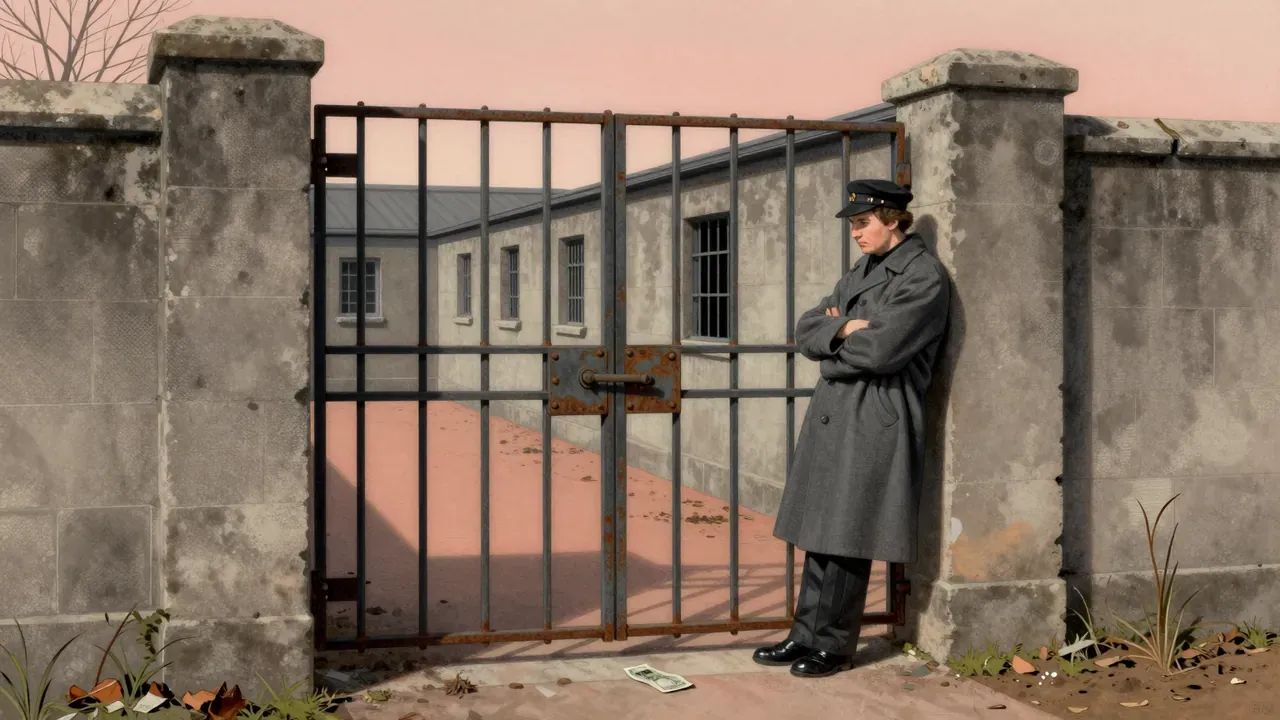
The story unfolds in tight, unadorned episodes: a failed job search, a first theft at Longchamp, apprenticeship under a real-life pickpocket (Henri Kassagi, who appears on screen and advised the production), arrest, evasion, betrayal, and eventual imprisonment. Martin LaSalle’s performance as Michel is deliberately neutral — no tremor, no flourish — his face rarely registering more than mild curiosity or fatigue. Marika Green as Jeanne holds her lines with quiet gravity, never pleading or scolding, even when confronting Michel’s theft from his dying mother. Léonce-Henri Burel’s cinematography uses shallow focus, muted contrast, and static framing; interiors are dim, exteriors often overcast, and crowd scenes shot at shoulder height to flatten hierarchy. Jean-Baptiste Lully’s music appears only twice — both times diegetically, as source music from a record player — denying emotional scaffolding. Editing is precise but unobtrusive: cuts land on hands, door handles, train platforms, never on faces mid-revelation. Every technical choice serves restraint: no emphasis is placed where Bresson does not wish the viewer to look, and nothing is allowed to linger longer than its functional weight in the sequence.
The look of it
What lands is the physical grammar of theft: the tilt of a wrist, the brush of a sleeve, the delayed reaction of a victim whose wallet has vanished before he feels the loss. These moments accumulate with the quiet insistence of ritual, making the act feel less like transgression than calibration — a way of measuring oneself against the world’s surfaces and silences. The Gare de Lyon sequence, shot amid actual commuters, achieves a documentary density without sacrificing formal control; the camera observes but never interprets. Michel’s final line — spoken to himself in prison, not to Jeanne — lands because it arrives after eighty minutes of withheld intimacy, and because it names a path rather than a destination. The film’s austerity makes its few emotional releases — Jeanne’s tearful embrace, the unspoken understanding when she resumes visiting — register with disproportionate force. Even the absence of score works: silence here is not emptiness but pressure, a space in which the viewer must attend to breath, footsteps, the rustle of cloth. This is not minimalism for its own sake; it is minimalism as method, stripping away everything that does not serve the central question of agency and consequence.
The gap in it
What does not land is any attempt to read Michel as psychologically legible in conventional terms. His motivations remain opaque, his interiority inaccessible — not because Bresson withholds clues, but because he refuses to supply them. Viewers expecting narrative cause-and-effect, or a clear arc from alienation to integration, will find the film withholding, even obstinate. The relationship between Michel and Jeanne lacks conventional romantic development; their bond emerges through repetition of gesture — her visits, his waiting — rather than dialogue or shared history. Jacques’ role as friend and foil remains underwritten, his scepticism never deepened into conflict or resolution. The chief inspector’s moral authority is asserted but not debated; his final warning carries weight because it is delivered plainly, not because the film justifies his worldview. Some may find the pacing glacial, the repetitions mechanical, the ending spiritually ambiguous rather than cathartic. It offers no diagnosis of Michel’s condition, no social critique of poverty or policing, no stylistic flourish to ease the viewer into its rigour. Its refusal to translate itself is deliberate — and for some, intolerable.
The weight of it
The themes that matter are free will as burden rather than privilege, the body as instrument and archive of choice, and silence as both evasion and honesty. Michel’s thefts are not about money but about testing a hypothesis: that he can move through the world unseen, unbound, unaccountable — and still remain intact. His mother’s deathbed remark — that he has ‘enough talent to succeed in life whenever you want’ — is not forgiveness but recognition of his capacity for self-determination, even when misapplied. The film treats morality not as a set of rules but as a practice sustained through daily attention: Jeanne’s fidelity, the inspector’s patience, even Kassagi’s instruction all imply forms of discipline that mirror Michel’s own, albeit directed elsewhere. Sexuality is present only as subtext — in the proximity of bodies, the tactility of stolen objects, the charged stillness before a lift — never named or resolved. There is no theology here, only a stark anthropology: what happens when a person stops believing in anything except the evidence of his own hands? The film’s enduring power lies in how little it says about belief, and how much it shows about action.
The audience for it
This film is for viewers who accept that meaning resides in pattern, not explanation; who find tension in stillness and revelation in repetition; who value precision of craft over emotional signposting. It suits those already familiar with Bresson’s other work, or with the stripped-down aesthetics of Ozu, Dreyer, or early Tarkovsky. It is not for viewers who require psychological motivation, narrative momentum, or moral clarity — nor for those who expect cinema to comfort, flatter, or resolve. A viewer who finds Dostoyevsky dense or Bergman opaque may struggle here, not because Pickpocket is obscure, but because it demands sustained attention to what is shown, not what is implied. Someone who values character growth as visible transformation will leave unsatisfied: Michel changes only in degree, not kind. That verdict would shift if the film were approached not as a story about reform, but as a demonstration of how habit shapes perception — and how perception, once altered, cannot be unaltered. It asks for patience, not sympathy.
The time it takes
Yes, it is worth your evening — provided you watch it on its own terms, without expectation of payoff or release. Seventy-five minutes is enough time to absorb its rhythms, to notice how Burel frames a doorway or how LaSalle blinks before a theft. It rewards rewatching not because it hides clues, but because its economy means every detail bears weight: the texture of a coat, the duration of a pause, the exact moment Jeanne’s hand rests on Michel’s arm. Those who find it cold or remote are not wrong — it is deliberately uninviting — but their discomfort is part of its design. It is not for casual viewing, nor for background consumption; it requires presence. A viewer who watches it while distracted will see only austerity, not architecture. But for anyone willing to meet it with equal stillness, it delivers something rare: the sensation of witnessing thought made physical, not through speech or expression, but through motion, timing, and refusal. That is not entertainment. It is encounter.