The first step
The Tale of Zatoichi is the first film in a long-running Japanese samurai series, adapting Kan Shimozawa’s 1948 essay into a jidaigeki framework centred on a blind itinerant masseur who is also a master swordsman. It sets out to establish Zatoichi not as myth or spectacle but as a quiet, morally anchored figure moving through a world governed by yakuza rivalries, rigid social hierarchy, and unspoken codes of honour. The film avoids heroic posturing: Zatoichi’s blindness is neither metaphor nor handicap but a condition that shapes his perception, his restraint, and the way others misread him. It aims for economy — introducing character, conflict and consequence within ninety-five minutes — and grounds its action in cause and effect rather than stylised escalation. Kenji Misumi directs with deliberate pacing, letting silence and stillness carry weight. This is not a film about winning battles; it is about what remains after one man chooses not to be owned by any side.
The weight of silence
The story follows Zatoichi’s brief employment by the Iioka yakuza boss Sukegoro, whose fear of war with rival Shigezo leads him to hire the blind swordsman as insurance. When Shigezo responds by retaining the terminally ill ronin Hirate, the film pivots from transactional tension to a study in mutual recognition between two outcasts. Shintarō Katsu’s performance is understated: he holds his shoulders low, speaks softly, blinks slowly — never playing blindness as limitation but as a different kind of attention. Akira Ifukube’s score uses percussive restraint, favouring taiko pulses over melody, while Kan Shimozawa’s script gives each yakuza faction distinct rhythms of speech and gesture. The fight choreography is economical — no flourishes, no prolonged duels — and the final confrontation between Zatoichi and Hirate lasts under two minutes, resolved not by speed but by timing and inevitability.
Two outcasts, one understanding
What lands most firmly is the film’s refusal to flatter its protagonist. Zatoichi does not seek redemption, nor does he offer it to others; he accepts payment, keeps his word, and walks away. His relationship with Hirate works because it is built on parity, not pity: both men are excluded by status — one by disability, the other by unemployment — and both understand the cost of being useful only until the moment passes. The temple sequence, where a boy relays Hirate’s illness and intent, carries quiet gravity without exposition. The film’s moral architecture rests on small choices — declining Otane’s offer, refusing Sukegoro’s renewed contract — that accumulate without fanfare. Even the violence feels grounded: swordplay is swift, decisive, and followed by silence, not music or slow motion. These choices cohere into something rare for 1962: a samurai film that treats honour as practice, not proclamation.
The edges of the frame
What does not land is the peripheral yakuza ensemble. Though the cast list runs to seventeen named roles, most function as positional markers — ‘Sasagawa lieutenant’, ‘Iioka treasurer’ — with little differentiation in dialogue or motivation. Several characters appear only to deliver exposition or die off-screen, and their collective presence dilutes focus without adding thematic texture. The film’s runtime does not permit development of the broader power structure it gestures toward: we see rivalry, but not its economic roots or social consequences beyond personal loyalty. The subplot involving Hanji’s wife Yoshi and her quiet resentment of her husband’s subservience is introduced then abandoned. Similarly, Otane’s disillusionment is stated rather than shown; her final approach to Zatoichi feels abrupt, not earned. These are not flaws of ambition but of compression — the film tries to hold too much world in too little time, and some corners remain schematic.
What dignity looks like
The themes that matter are solitude as discipline, competence as quiet resistance, and dignity as non-transactional. Zatoichi’s blindness reframes perception: he hears footsteps before seeing faces, senses hesitation before reading expression, and moves through spaces others treat as hostile without needing to claim them. His profession as a masseur — low-status, intimate, tactile — becomes a vessel for ethical proximity: he touches people without judging them, serves without allegiance. The film treats illness (Hirate’s tuberculosis) and disability (Zatoichi’s blindness) not as metaphors for moral failing or spiritual ascent but as material conditions shaping agency. Honour here is not inherited or declared but enacted in refusal: refusing payment after betrayal, refusing comfort after violence, refusing permanence after connection. There is no utopia implied, only the possibility of walking away — intact, unbroken, unowned — as an act of continuity.
Who it waits for
This film is for viewers who value precision over propulsion, who find tension in withheld action and meaning in unspoken gesture. It suits those accustomed to classical Japanese narrative pacing and willing to sit with stillness as narrative device. It is not for viewers expecting exposition-driven plotting, psychological interiority via monologue, or action sequences built for spectacle. Those who require clear moral binaries or emotional payoff in the form of resolution or romance will find it withholding. A viewer who values strong female characters with narrative agency may find Otane and Yoshi underwritten — their arcs serve atmosphere, not argument. That said, the film’s austerity is not indifference: it assumes attention, rewards patience, and repays rewatching. To dismiss it as ‘slow’ is to mistake economy for emptiness — a view likely held by those trained to equate screen time with significance.
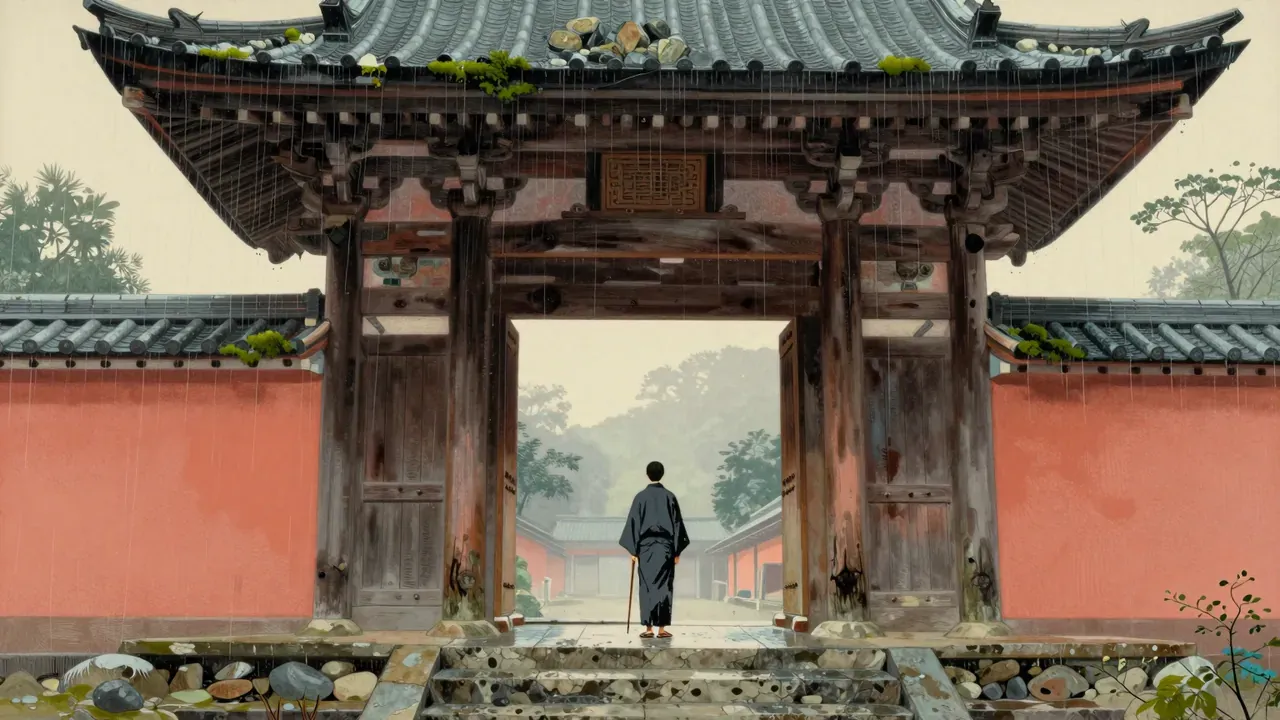
The walk away
Yes, it is worth your evening — not as diversion but as calibration. Its ninety-five minutes ask you to recalibrate how you read intention, how you weigh silence against speech, how you register moral weight in a glance or a pause. It works best when watched without interruption, in a room with low light and no subtitles that distract from the rhythm of speech and step. It is not for those seeking catharsis or closure: Zatoichi walks away, as he always will, and the world continues unchanged. But that is the point — the film refuses to resolve the contradictions it presents, and in doing so, it honours the complexity of living ethically in compromised systems. Anyone who has ever chosen restraint over reaction, or walked away from a situation they could have won, will recognise its quiet insistence. That resonance does not fade with time; it deepens.