The time and place
Devil in a Blue Dress is a 1995 crime film that adapts Walter Mosley’s 1990 novel as a neo-noir set in Los Angeles in the summer of 1948. It follows Ezekiel ‘Easy’ Rawlins, a Black World War II veteran newly unemployed and financially strained, who accepts a missing-person assignment from a white investigator — only to find himself drawn into layers of racial tension, political corruption, and personal danger. Carl Franklin both wrote and directed the film, aiming not just to replicate hard-boiled conventions but to reposition them through a historically grounded Black protagonist whose agency is constrained by systemic forces, not moral ambiguity alone. The film treats its genre scaffolding seriously while insisting on specificity: postwar housing insecurity, Central Avenue’s jazz-club ecosystem, LAPD brutality, and the precariousness of light-skinned Creole identity all shape plot and character. It is less about reinventing noir than about restoring what noir often omitted — the material conditions under which Black men navigated mid-century American cities. (159 words)
The man in the middle
The story unfolds with procedural clarity, each clue anchoring Easy more firmly in a web where murder, blackmail, and electoral sabotage converge. Denzel Washington’s performance grounds the film: he conveys calculation, weariness, and quiet dignity without overstatement; his reactions are measured, his silences weighted. Don Cheadle’s Mouse operates with volatile charisma, a counterpoint that never slips into caricature. Tak Fujimoto’s cinematography uses deep focus and low-key lighting to evoke period texture without fetishising decay — the Griffith Park Observatory appears not as backdrop but as a place Easy walks through, breath visible in the cool air. Elmer Bernstein’s score blends noir strings with blues-inflected motifs, underscoring mood rather than dictating it. Franklin’s editing avoids flourish: cuts land cleanly, scenes breathe, and exposition is embedded in gesture — a glance at a mortgage bill, the way Easy adjusts his collar before entering a white-owned bar. The craft serves narrative economy, not stylistic display. (158 words)
The city as character
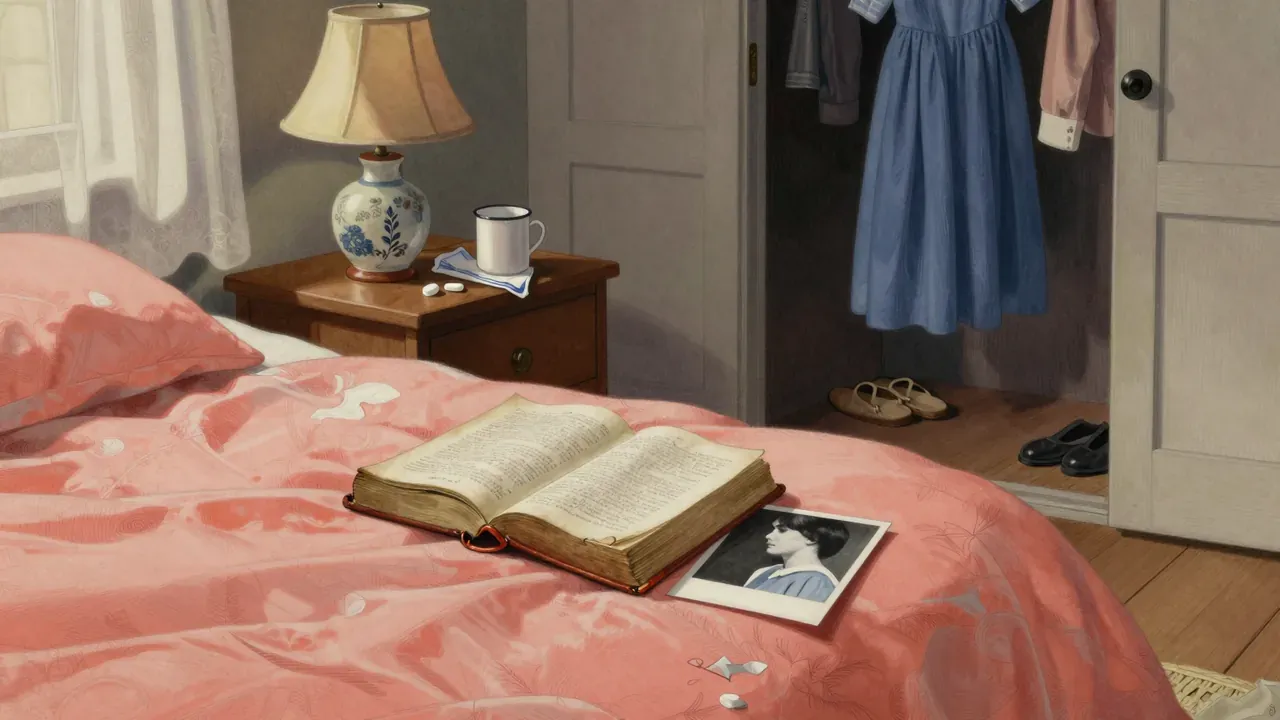
What lands most decisively is the film’s sense of place and consequence. Los Angeles feels inhabited, not curated: the Malibu pier scene carries physical threat because the youths’ racism is casual, unremarkable, and therefore chilling; the Ambassador Hotel lobby is opulent but indifferent, its grandeur irrelevant to Easy’s standing. The moral architecture holds: no one acts without motive rooted in survival or power — Albright’s violence stems from political expediency, Daphne’s deception from self-preservation, even Mouse’s lethality from a lifetime of enforced improvisation. The film trusts its audience to follow cause and effect without exposition dumps: when Easy finds photographs hidden in Coretta’s Bible, the revelation reads as earned, not contrived. The period detail — clothing, cars, radio static, the weight of a .38 — accumulates without fanfare. This consistency makes the stakes feel real: Easy’s risk isn’t abstract danger but eviction, incarceration, erasure. The film’s restraint allows those stakes to settle, not shout. (157 words)
The cost of clarity
What does not land is the resolution’s emotional weight. Once the photographs are recovered and Terell’s paedophilic scandal exposed, the mechanics of closure accelerate: Daphne departs, Carter wins, Easy walks free — all with little psychological residue. The final shot of him considering private investigation feels less like earned ambition than narrative convenience. The relationship between Easy and Daphne lacks sufficient development to sustain its pivotal role; their intimacy remains transactional, its emotional contours vague. Some secondary characters — particularly Joppy and Dupree — function more as plot vectors than people, their motivations flattened by narrative necessity. The film’s commitment to procedural logic occasionally overrides character logic: Easy’s decision to involve Mouse, for instance, carries little internal hesitation despite Mouse’s known volatility. A few scenes — notably the confrontation at Frank Green’s liquor stall — rely on coincidence rather than escalation, weakening the cause-and-effect chain. These are not flaws in execution but in structural emphasis: the film prioritises coherence over complexity in its human relationships. (156 words)
What the light reveals
The themes that matter are inheritance and visibility. Easy inherits not just debt and responsibility, but a history of compromised choices — his past with Mouse, his wartime service, his father’s absence — none of which are resolved but all of which inform his present conduct. The film treats race not as subtext but as infrastructure: housing covenants determine where Easy lives, police procedure determines how he is questioned, skin tone determines how Daphne moves between worlds. Visibility operates on multiple levels — Daphne’s light skin grants her access but denies her safety; Easy’s competence makes him useful to white power brokers yet never grants him immunity. Corruption here is not exceptional but ambient: Terell’s crimes are hidden in plain sight, Albright’s violence sanctioned by political need, the LAPD’s brutality routine. The film refuses redemption arcs or cathartic justice. Instead, it shows how survival demands constant recalibration — of loyalty, silence, and self-presentation — and how those calculations leave marks no camera can erase. (159 words)
Who it is for
This film is for viewers who value atmosphere anchored in historical precision, who respond to performances built on implication rather than declaration, and who approach genre not as formula but as a lens for social observation. It rewards patience with slow-burn causality and attention to spatial and tonal nuance. It is not for those who require rapid plot propulsion, psychological exposition, or morally unambiguous protagonists. Viewers expecting a conventional detective arc — with a clear villain, a climactic confrontation, or emotional release — may find the ending underwhelming. Those who prioritise thematic density over narrative surprise will engage more deeply than those seeking puzzle-box plotting. A viewer who disliked Roger Ebert’s reservation about the story’s arbitrariness — that it functions like ‘an elegant solution to a chess problem’ — would likely find the film unsatisfying. Change the emphasis from procedural fidelity to interiority, deepen the Easy-Daphne dynamic, and the verdict shifts. (159 words)
The last frame
Yes, it is worth your evening — provided you watch it as a study in calibrated restraint, not as a thriller with payoff. Its ninety-seven minutes move deliberately, trusting the viewer to sit with Easy’s fatigue, his caution, his incremental realisations. The film’s power lies in accumulation: the weight of a mortgage payment, the sound of a car door closing too loudly, the way light falls across a hallway at dawn. It repays attention to composition, rhythm, and subtext — not to twists or revelations. Those who prefer faster pacing, explicit character arcs, or heightened emotional stakes may leave unmoved. But for anyone interested in how mid-century Black life was lived, policed, and negotiated — and how cinema can render that without didacticism — this remains a benchmark. Its endurance is not in spectacle but in its refusal to simplify. To dismiss it as ‘just a noir’ is to miss how thoroughly it rewrites the terms. (159 words)