The shape of the past
Infernal Affairs II is a prequel to the 2002 Hong Kong crime thriller Infernal Affairs, set between 1991 and 1997. It traces the parallel ascents of two men—Lau Kin-ming, a triad mole embedded in the Hong Kong Police Force, and Chan Wing-yan, an undercover cop infiltrating the Ngai family triad—while mapping the collapse of old triad hierarchies and the moral corrosion of institutional loyalty. Unlike the original’s tightly coiled dual identity structure, this film expands outward: it builds a generational saga of power, betrayal and succession, centring on the Ngai family’s internal fractures after the assassination of boss Ngai Kwun. Its ambition is structural as much as thematic: to treat the underworld and the police force not as binary opposites but as mirrored institutions, each breeding informants, silencing dissent and rewriting history. It attempts continuity without repetition—replacing Andy Lau and Tony Leung with Edison Chen and Shawn Yue, casting Anthony Wong and Eric Tsang in younger versions of their prior roles, and anchoring the narrative in the political and social shifts preceding Hong Kong’s 1997 handover. Word count: 148
The weight of stillness
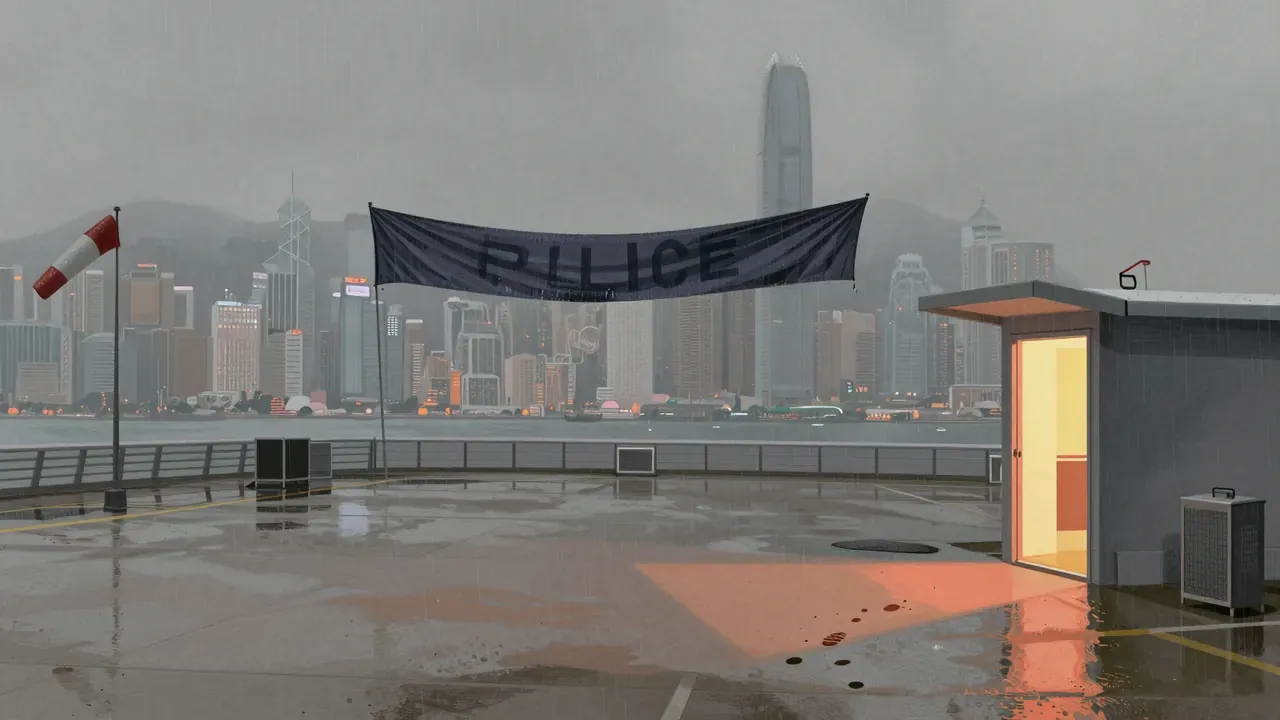
The film works through accumulation rather than acceleration: layered exposition, overlapping loyalties, and slow-burn character pivots replace the first film’s taut suspense. Francis Ng’s performance as Ngai Wing-hau—a cerebral, restrained triad leader who governs through blackmail and silence—gives the film its gravitas; his stillness contrasts with Carina Lau’s Mary, whose quiet agency unravels across years until her airport death becomes both inevitable and devastating. Andrew Lau’s cinematography favours muted interiors and rain-slicked night streets, holding frames longer than necessary to let tension settle rather than spike. The Pang brothers’ editing sustains rhythm across time jumps, though not always clarity: transitions between 1991, 1995 and 1997 rely on costume, haircuts and title cards more than visual or tonal cues. Chan Kwong-wing’s score is atmospheric but unobtrusive, avoiding leitmotifs in favour of ambient dread. The script by Alan Mak and Felix Chong layers plot points densely—Wing-Hau’s video evidence, Law’s wire, Luk’s car bomb—but trusts the audience to hold them without recap. Word count: 156
The cost of exposure
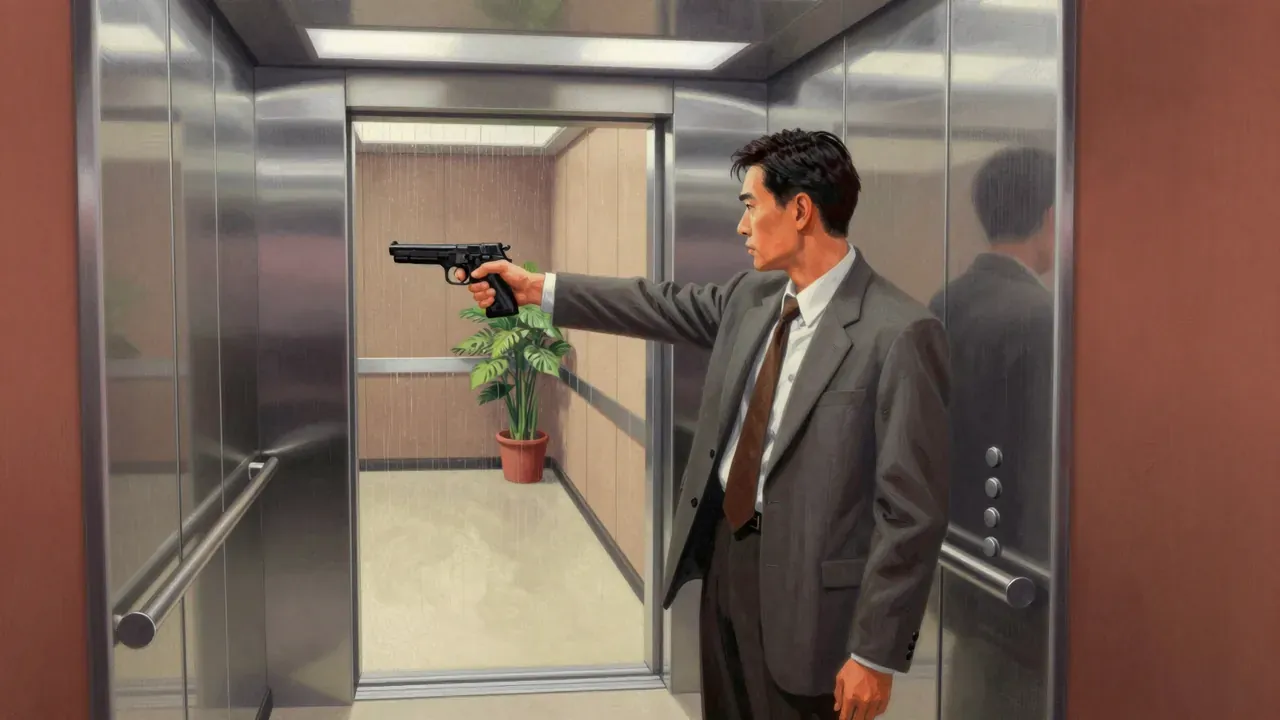
What lands most firmly is the film’s sense of institutional decay: the police force’s complicity in murder, the triad’s reliance on surveillance and forensic counter-surveillance, the way loyalty curdles into self-preservation. The scene where Wing-Hau releases incriminating footage to the police—not to expose corruption but to weaponise it—feels less like plot convenience and more like a logical endpoint of systemic rot. Likewise, Mary’s arc lands because it refuses redemption: her manipulation of Lau, her confession to Hon, her rejection of Lau’s protection—all are decisions made within narrowing constraints, not for dramatic effect. The final sequence, where Wong shoots Wing-Hau to save Hon while Chan listens to the dying man discover his wire, crystallises the film’s central irony: truth arrives too late to serve justice, only to confirm futility. Even the supporting performances land with precision—Chapman To’s ‘Silly’ Keung is comic relief that never softens the stakes, and Roy Cheung’s Law dies not as a martyr but as collateral in a war no one declared. Word count: 152
The limits of pattern
What does not land is the emotional weight of Lau and Chan’s duality. Without the sustained, intimate point-of-view focus of the original, their parallel paths feel schematic rather than soulful; we watch them become what they pretend to be, but rarely feel the cost in their bodies or voices. The 1991 police academy scenes lack the visceral pressure of training; the 1995 prison release feels narratively expedient, not earned. Some characters vanish mid-arc—Hu Jun’s Superintendent Luk dies off-screen, Liu Kai-chi’s Uncle John appears only to be killed—and their absences weaken the web of consequence. The Thai subplot, introduced late and resolved abruptly, strains credibility without adding thematic heft. The film’s insistence on symmetry—Hon’s return mirroring Wong’s moral compromise, Wing-Hau’s downfall echoing Kwun’s—sometimes reads as mechanical rather than inevitable. And while the ending sets up Infernal Affairs, it does so at the expense of closure: the final shot of Lau meeting Mary in the station feels less like resonance and more like contractual obligation. Word count: 154
What gets erased
The themes that matter are inheritance and erasure: how power passes not through blood alone but through silence, omission and selective memory. Wing-Hau inherits his father’s empire but dismantles its old rules; Lau inherits the role of mole but rewrites its ethics; Wong inherits the duty to uphold law but chooses to break it. The film treats the 1997 handover not as backdrop but as structural metaphor—the transfer of sovereignty mirrors the transfer of criminal authority, both negotiated in private, both justified by stability over truth. Loyalty is shown as a transactional language, spoken in coded phone calls and withheld evidence. Identity is not fixed but delegated: Chan wears gangster clothes, Lau wears a uniform, Mary wears grief like armour, Wing-Hau wears calm like a mask. The film’s most persistent motif is the camera—not as tool of truth but of control: the video of Kwun’s murder, the private investigators’ surveillance, the wire recordings—all images that record but do not judge, that expose but do not convict. Word count: 150
Who the film assumes
It is for viewers who value structural ambition over emotional immediacy, who follow plot not for catharsis but for pattern, and who find tension in bureaucratic inertia as much as in gunfights. It rewards patience with density: those familiar with the first film will recognise echoes in gesture and line reading, but newcomers may struggle with the sheer volume of names, factions and dates. It is not for those who require clear moral anchors or linear cause-and-effect; the film’s refusal to clarify who initiated which betrayal—or whether any choice was truly free—will frustrate viewers seeking resolution. Anyone expecting the tight pacing or psychological intimacy of Infernal Affairs will find this slower, colder, more procedural. A viewer who values thematic rigour over visceral payoff will stay engaged; one who relies on character empathy as their entry point may disengage by the second act. Word count: 150
Where it belongs
Yes, it is worth your evening—if you watch it as a companion piece, not a replacement. Its 115 minutes unfold deliberately, asking you to sit with ambiguity rather than resolve it. It deepens the world of Infernal Affairs not by repeating its mechanics but by showing how its foundations were laid: the compromises, the accidents, the quiet betrayals that made the original’s crisis possible. Those who skip it miss the architecture behind the tension—the reason Lau lies so easily, why Chan’s wire feels like both lifeline and cage. It is not essential viewing on its own terms, but it is indispensable context. Someone who watches only the first and third films will grasp the plot but miss the historical gravity—the sense that this is not just about two men, but about an entire system calcifying under pressure. Word count: 150