The look of it
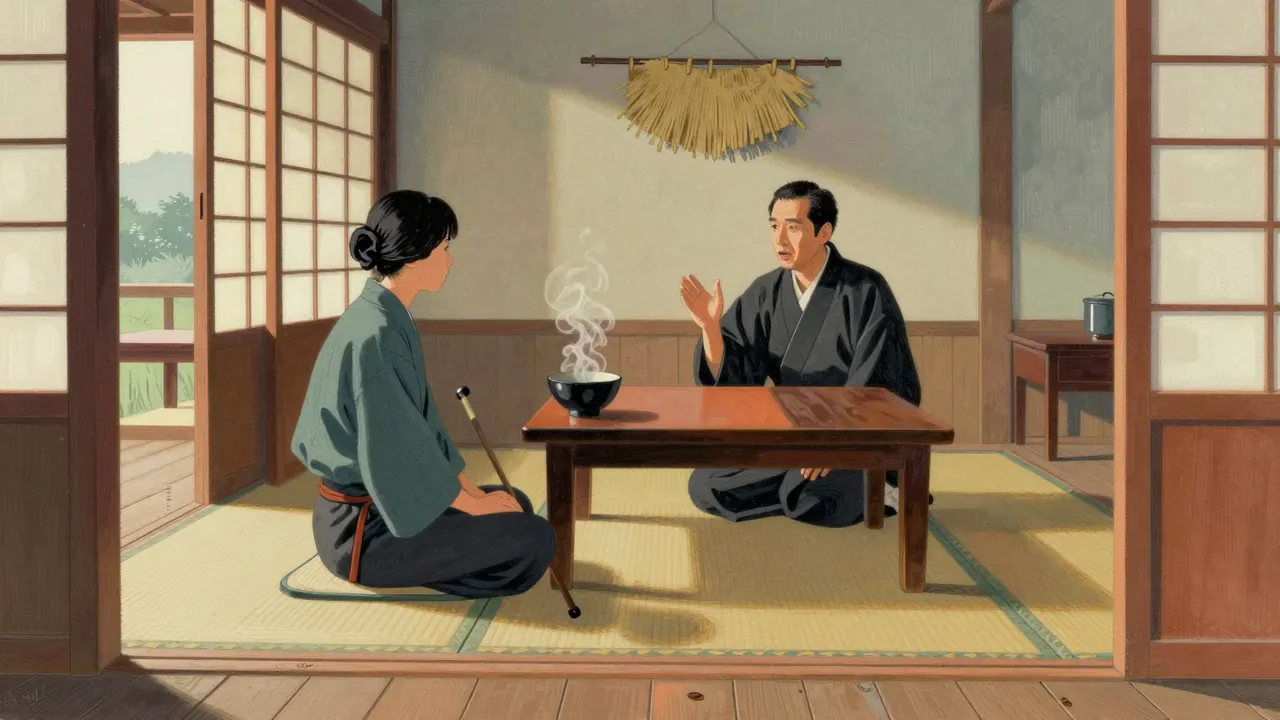
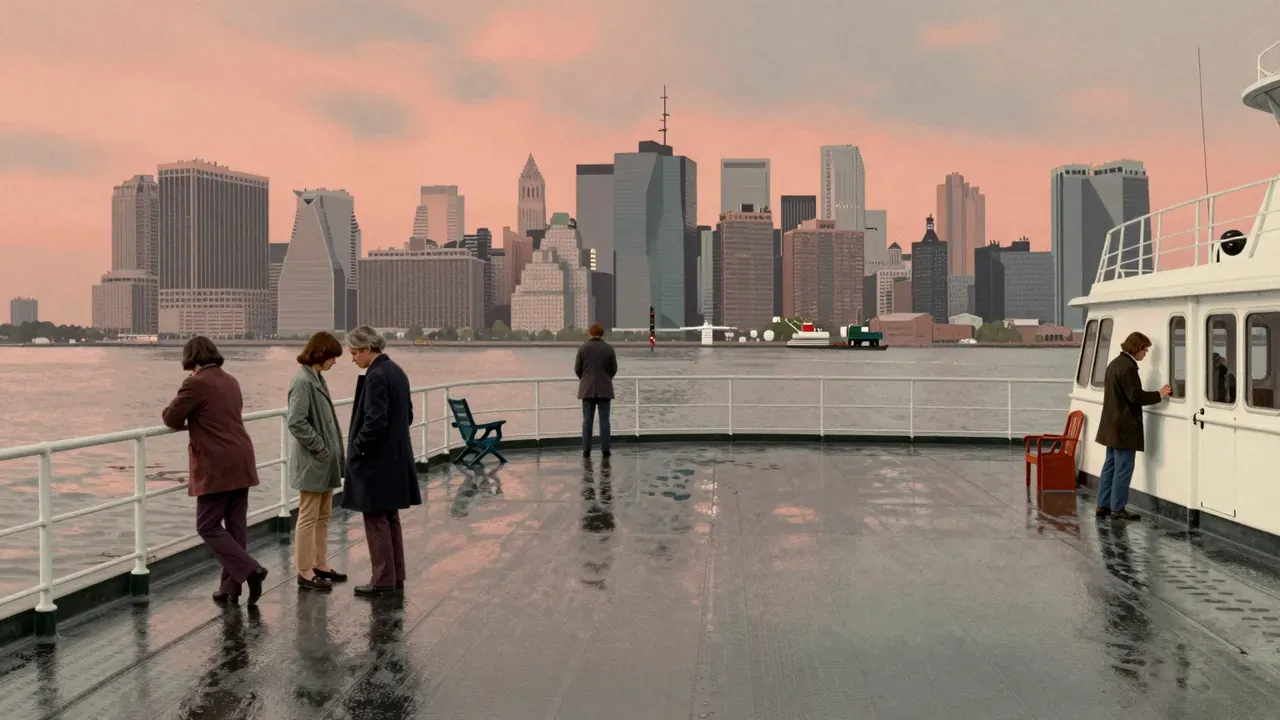
New Tale of Zatoichi is the third film in Daiei Film’s Zatoichi series and its first in colour — a formal shift that signals neither reinvention nor departure, but consolidation. It seeks to deepen the character of Ichi not through exposition or backstory, but through sustained moral pressure: his vow to renounce violence, the weight of inherited loyalty, and the quiet erosion of principle among those he once trusted. Unlike the first two entries, which foregrounded episodic justice and swordplay as ritual, this film structures itself around restraint — what happens when a man known for cutting down opponents chooses not to draw. It does not attempt to broaden the jidaigeki form, nor to interrogate feudal hierarchy as such; rather, it tightens the focus on one man’s internal contract with himself, tested across three converging lines: filial duty, romantic possibility, and professional reputation. The colour is muted — no lacquered kimonos or sunlit rice fields — and serves less as spectacle than as a subtle register of decay: faded tatami, dusty roadside shrines, the dull gleam of a parasol’s bamboo ribs. Word count: 142
The weight of stillness
The story moves with deliberate, unadorned economy: Ichi arrives, observes, delays, then acts — too late, or too early, or just enough. Shintarō Katsu’s performance rests in stillness — the tilt of his head when listening, the way his fingers rest on the parasol’s shaft, the slight pause before he speaks. There are no monologues, no flashbacks, no voiceover; motivation is inferred from gesture and silence. Tokuzō Tanaka directs without flourish: compositions are frontal or slightly low, interiors lit by practical sources only, action staged in medium shot so that swordplay remains legible but never balletic. Akira Ifukube’s score avoids leitmotif; strings enter only when tension has already settled into the frame, and fade before resolution. Minoru Inuzuka’s script gives Yayoi agency without granting her narrative control — her proposal, her witnessing, her silence after the dice roll all land because they are underwritten, not underlined. The craft does not call attention to itself; it holds space for consequence. Word count: 153
The dice roll
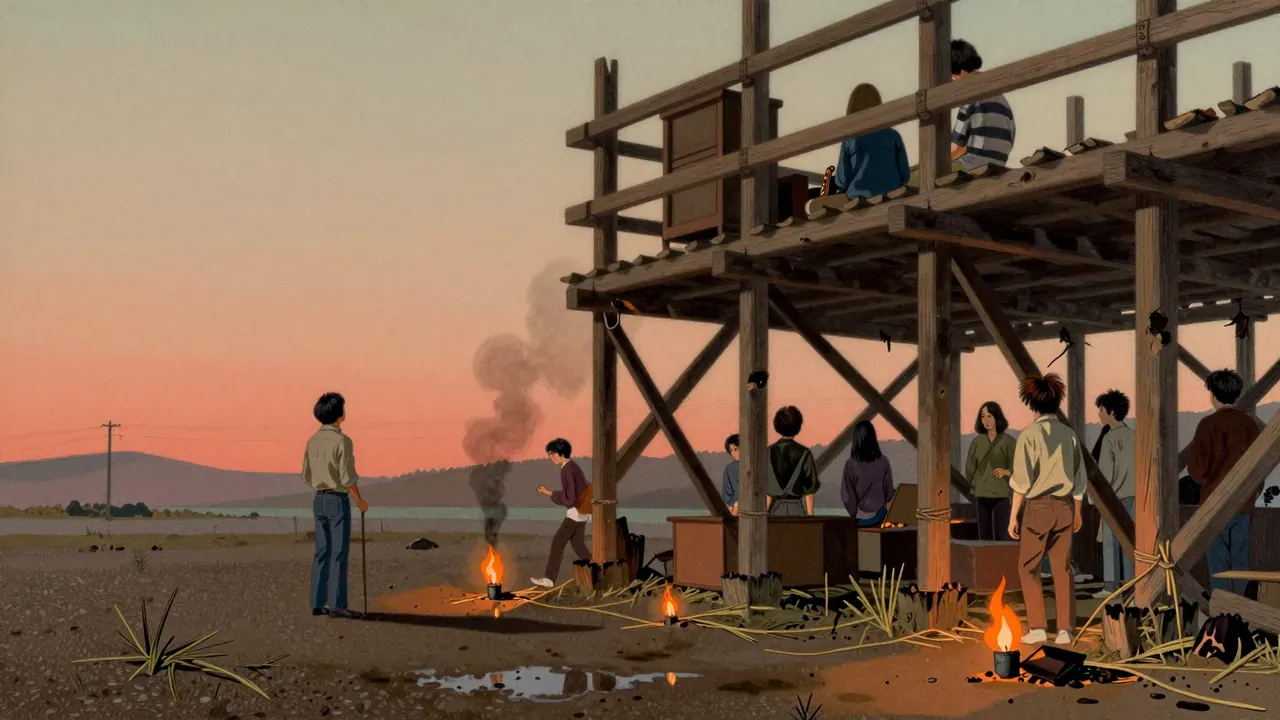
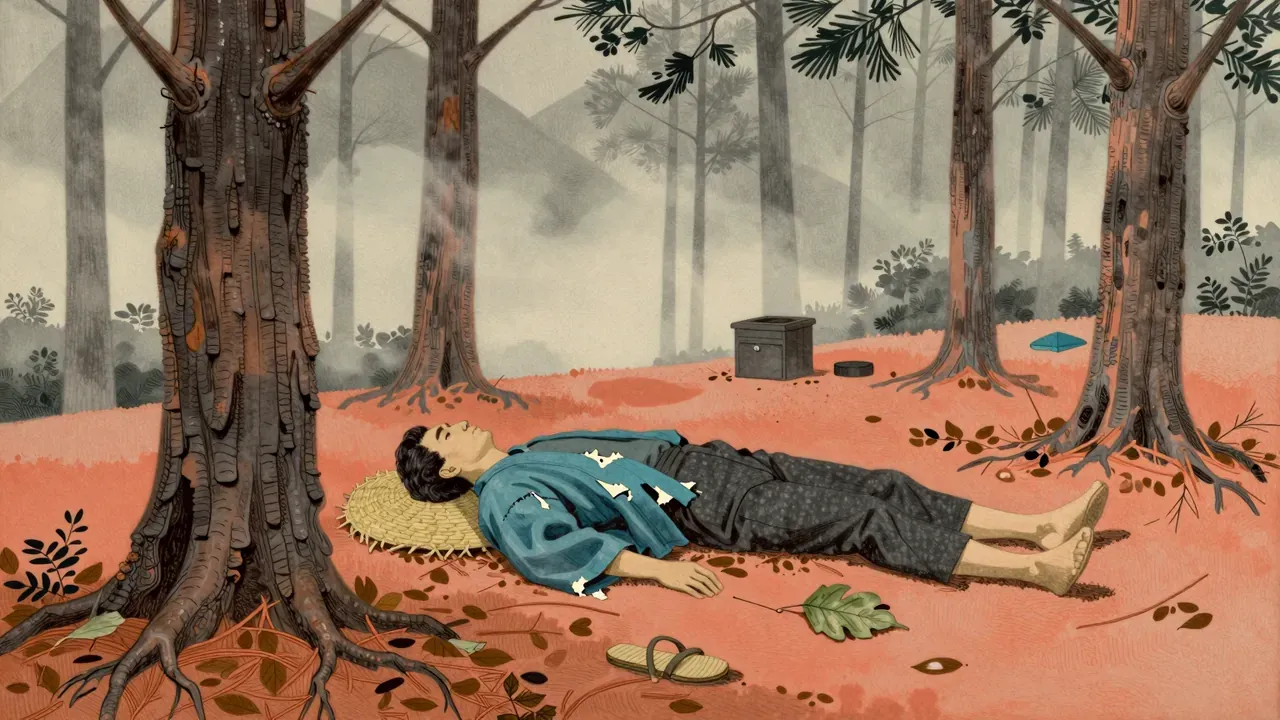
What lands is the cumulative weight of small betrayals — not grand treachery, but the slow slide of a respected master into collusion, the way a brother’s grief curdles into performative honour, the quiet disappointment in Yayoi’s voice when she says ‘you are that kind of man’. The forest sequence works because it is not choreographed as climax but as collapse: Ichi kills the Tengu gang not in fury but in exhaustion, and Banno’s death feels less like justice than the final punctuation of a sentence written long before. The dice scene lands precisely because it refuses catharsis — the gangster cheats, but not to win; he tips the die to spare Ichi, then walks away without acknowledgement. That ambiguity — the unspoken mercy, the withheld gratitude — is the film’s moral centre. Even the colour registers here: the forest greens are desaturated, the blood on Kanbei’s brother’s back is dark and thin, the dawn light at the end is grey, not golden. Nothing is redeemed; something is simply witnessed. Word count: 156
The slow fall
What does not land is the structural reliance on prior knowledge — not of plot, but of tone. Without having seen the first two films, the gravity of Ichi’s promise to Yayoi lacks its full resonance; his refusal to fight feels less like moral courage and more like narrative inertia. The subplot involving Tamekichi and his family introduces poverty as texture, not tension, and vanishes without consequence — their presence establishes atmosphere but contributes no thematic or emotional return. The Tengu gang themselves are functionally anonymous; their deaths are efficient but unmemorable, lacking the individuated menace of earlier antagonists. There is also a tonal inconsistency in the inn scenes — moments of gentle humour between Ichi and the innkeeper’s wife sit uneasily beside the cold-blooded murder of the elderly father in the woods, and the film makes no effort to reconcile them. The pacing, while unhurried, occasionally stalls: two full minutes pass with Ichi walking alone down a road, no music, no cutaways — a choice that reads as austerity in context, but risks monotony out of it. Word count: 158
The proposal
The themes that matter are fidelity to self versus fidelity to role, the corrosion of authority through material need, and the asymmetry of mercy — how it can be given without being named, received without being acknowledged, and withdrawn without explanation. The film treats blindness not as metaphor but as condition: Ichi sees less than others assume, and others see less than they claim. His parasol-sword is not disguise but equivalence — both objects serve protection, both conceal intent. Banno’s fall is not sudden but incremental: first he arranges a marriage for profit, then accepts gang money, then kills an unarmed man in private. There is no villainy, only compromise, repeated until it becomes habit. Yayoi’s love is not idealised; it is pragmatic, persistent, and ultimately futile — she asks Ichi to become ‘a new person’, but the film insists he cannot, and will not. The ending offers no transformation, only confirmation: he walks away alone because solitude is the only consistent posture available to him. This is not nihilism, but realism rooted in the jidaigeki tradition’s understanding of duty as burden, not virtue. Word count: 157
The killing ground
This film is for viewers who value moral ambiguity over resolution, who find tension in restraint rather than release, and who accept that a character’s consistency may lie in their inability to change. It rewards patience with density, not payoff. It is not for those who expect forward momentum, psychological exposition, or even clear stakes — the ransom plot exists only to trigger Banno’s final act, not to drive suspense. Fans of the later, more flamboyant Zatoichi films may find this one austere to the point of withholding; viewers accustomed to Western genre logic — where revenge arcs conclude or romances resolve — will likely feel adrift. A viewer who values cinematography as visual argument, not decoration, will notice how Tanaka keeps faces half in shadow during confrontations, or how Ifukube’s strings drop out entirely during the dice roll. Those who require narrative efficiency or emotional clarity should look elsewhere. Word count: 150
The grey light
Yes, it is worth your evening — provided you watch it as a single, unbroken act of attention, not as background or diversion. Its ninety-one minutes accumulate meaning slowly, like sediment, and the final image — Ichi walking into grey dawn — only settles if you let the silence after the credits linger. It is not ‘entertaining’ in the conventional sense, but it is rigorously coherent in its ethics and execution. Someone who prefers tightly plotted thrillers or emotionally explicit drama would fairly call it inert; someone who values craft as quiet intention rather than visible technique would call it essential. What would change the verdict? A different aspect ratio — the original TohoScope framing is lost in most digital transfers, flattening the composition’s spatial tension — or a restoration that recovers Ifukube’s original dynamic range, now often compressed in streaming versions. Word count: 149