The opening shot
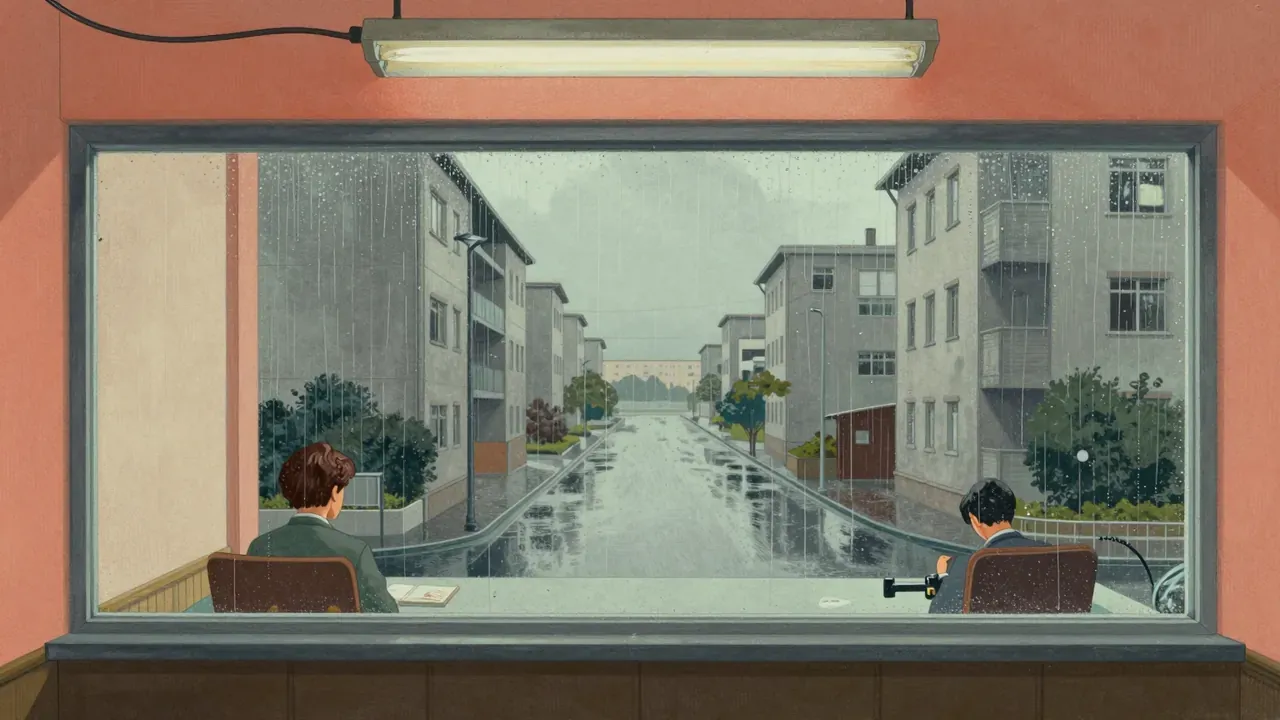
Touch of Evil is a crime film set on the US–Mexico border, attempting to fuse noir aesthetics with moral and procedural ambiguity. Orson Welles conceived it as a critique of institutional corruption, using the border not as backdrop but as pressure point where jurisdiction, language, and power collapse into farce and violence. The script — co-written by Welles, Paul Monash, and Whit Masterson — adapts Whit Masterson’s novel Badge of Evil, but Welles radically restructured it in production, discarding much of the source’s procedural clarity in favour of disorientation and layered irony. It tries to do two things at once: sustain the mechanics of a murder investigation while dismantling the investigator’s authority, both legally and morally. Its ambition lies less in solving the crime than in exposing how the act of solving becomes another form of coercion. The film opens with a three-minute unbroken take — not for show, but to establish surveillance as narrative logic: what is seen, who sees it, and what remains outside the frame are all part of the same failing system. Word count: 142
The look of it
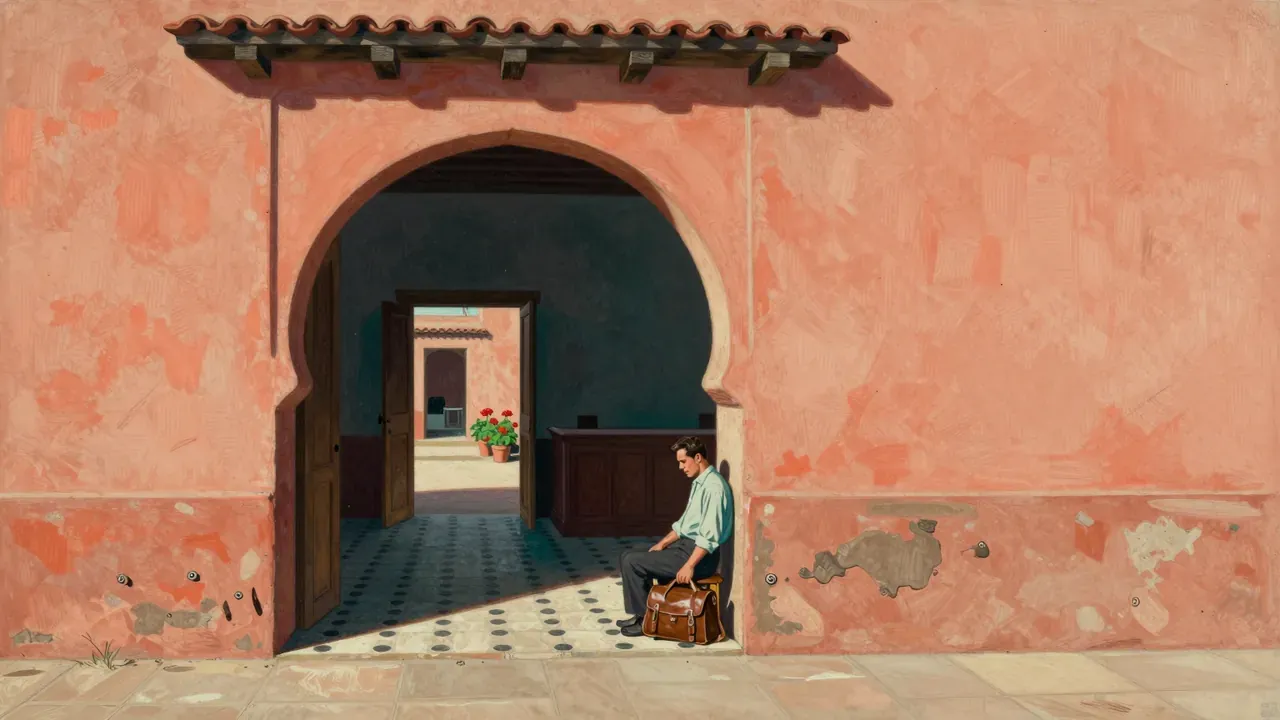
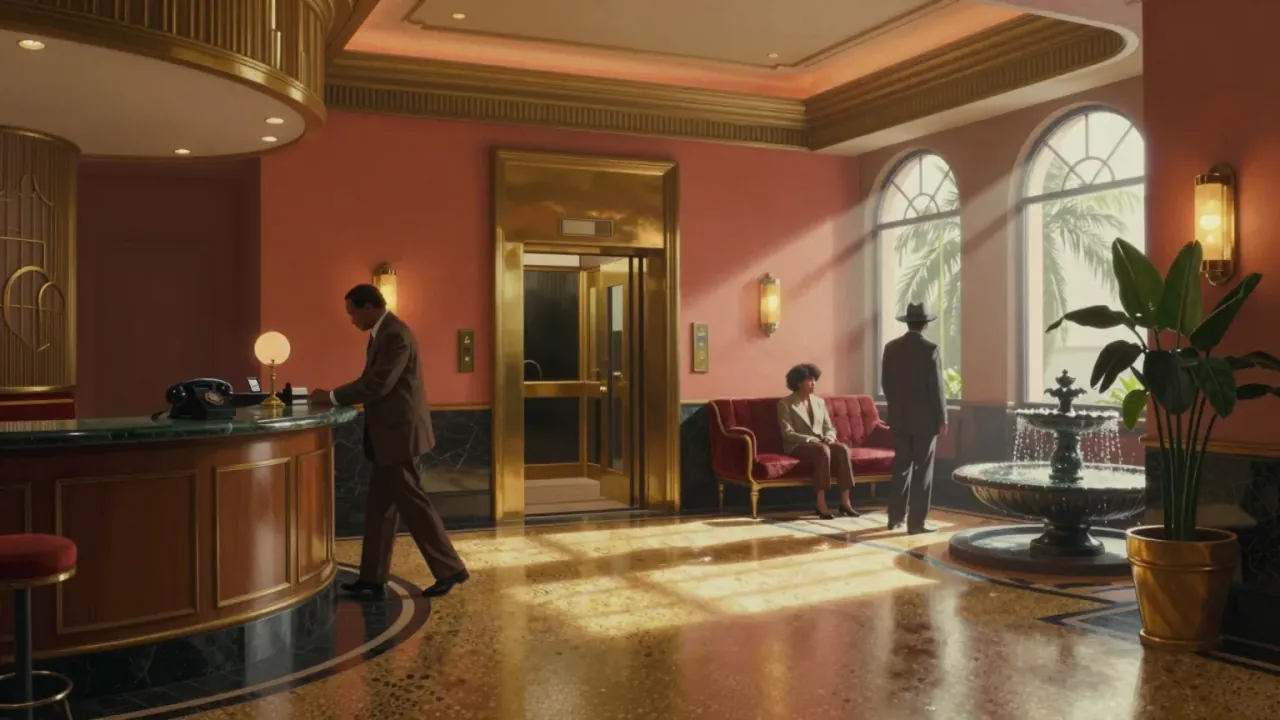
The story follows Mexican narcotics officer Miguel Vargas as he investigates a car bombing that kills an American businessman, only to find his wife targeted and his credibility undermined by local US authorities. Charlton Heston plays Vargas with deliberate stillness, anchoring the film’s chaos; Janet Leigh’s Susie Vargas is drawn with quiet dread rather than exposition, her vulnerability made physical through framing and pacing. Orson Welles’s Hank Quinlan dominates the frame not just in size but in weight — his gait, voice, and shadow operate as separate characters. Russell Metty’s cinematography uses deep focus, skewed angles, and abrupt shifts between high- and low-key lighting to make architecture itself complicit: doorways loom, ceilings press down, corridors recede without resolution. Henry Mancini’s score avoids leitmotif in favour of rhythmic unease — bass lines throb like pulse rates, percussion stutters like faulty evidence. Editing, though constrained by studio interference, retains Welles’s preference for duration over cut: scenes breathe until they suffocate. Word count: 153
The weight of procedure
What lands is the film’s sustained atmosphere of institutional rot — not as metaphor but as texture. The opening tracking shot works because it establishes spatial and ethical confusion before any dialogue begins: the bomb is planted off-screen, the couple unaware, the camera indifferent. Welles’s performance lands precisely because it refuses caricature; Quinlan’s corruption is banal, habitual, even weary — his racism and brutality are folded into routine, not grand pronouncements. The border setting functions concretely: bilingual signage, jurisdictional squabbles, and customs checkpoints are plot points, not colour. Marlene Dietrich’s Tanya, though brief, lands as a counterweight — her world-weariness isn’t theatrical but archival, as if she has witnessed every iteration of this decay. The film’s moral centre isn’t virtue but consistency: Vargas’s integrity is tested not by temptation but by exhaustion, and his persistence feels earned because it is never heroic — just stubborn, procedural, and quietly furious. Word count: 150
The border as system
What does not land is the late-act pivot toward melodrama involving Susie Vargas’s drugging and confinement. The sequence strains credulity not because it is implausible in context, but because its pacing and tone break the film’s established rhythm: sudden close-ups, heightened music, and fragmented editing replace the earlier deliberation, making it feel imposed rather than inevitable. Some supporting performances — particularly Zsa Zsa Gabor’s Tanya’s sister and Joseph Cotten’s cameo as a lawyer — remain underwritten, their presence more contractual than compositional. The studio-mandated reshoots (led by Albert Zugsmith) diluted Welles’s original cut, flattening key ambiguities — notably around whether Quinlan plants evidence or merely misreads it — and softening the ending’s bleak symmetry. These aren’t flaws of intent but of compromise: the film’s vision is coherent, but its execution bears the scars of mid-production intervention. Word count: 151
The sound of suspicion
The themes that matter are jurisdictional futility, the seduction of certainty, and the violence embedded in bureaucratic procedure. The border is not a line on a map but a zone where law dissolves into custom, testimony into hearsay, and justice into negotiation. Welles treats racism not as individual malice but as administrative habit — Quinlan doesn’t hate Mexicans; he assumes their guilt as baseline data. The film interrogates how institutions preserve themselves by absorbing dissent: Vargas’s official status grants him access, but also makes him legible to the system he opposes, limiting his leverage. Memory is treated as unstable evidence — flashbacks contradict each other, alibis collapse under scrutiny, and even the bomb’s origin remains unresolved. There is no ‘truth’ uncovered, only layers of interpretation, each with its own vested interest. This is not relativism but realism: the film insists that moral clarity is often the first casualty of power. Word count: 149
The break in tone
This film is for viewers who tolerate — and value — formal discomfort: those who find meaning in asymmetrical framing, in dialogue that trails off, in endings that refuse catharsis. It rewards attention to composition, to pauses, to what characters withhold. It is not for viewers who require narrative propulsion, clear moral binaries, or psychological exposition; those expecting a tidy whodunnit or a character study with interior monologue will find it withholding. Some critics of the 1958 release objected to its lack of conventional heroism — a view still held by viewers who equate dramatic satisfaction with resolution. A different cut — Welles’s 1998 reconstructed version — mitigates some pacing issues, but does not erase the film’s deliberate resistance to comfort. If you need your villains punished and your heroes affirmed, this will frustrate. Word count: 148
The absence of resolution
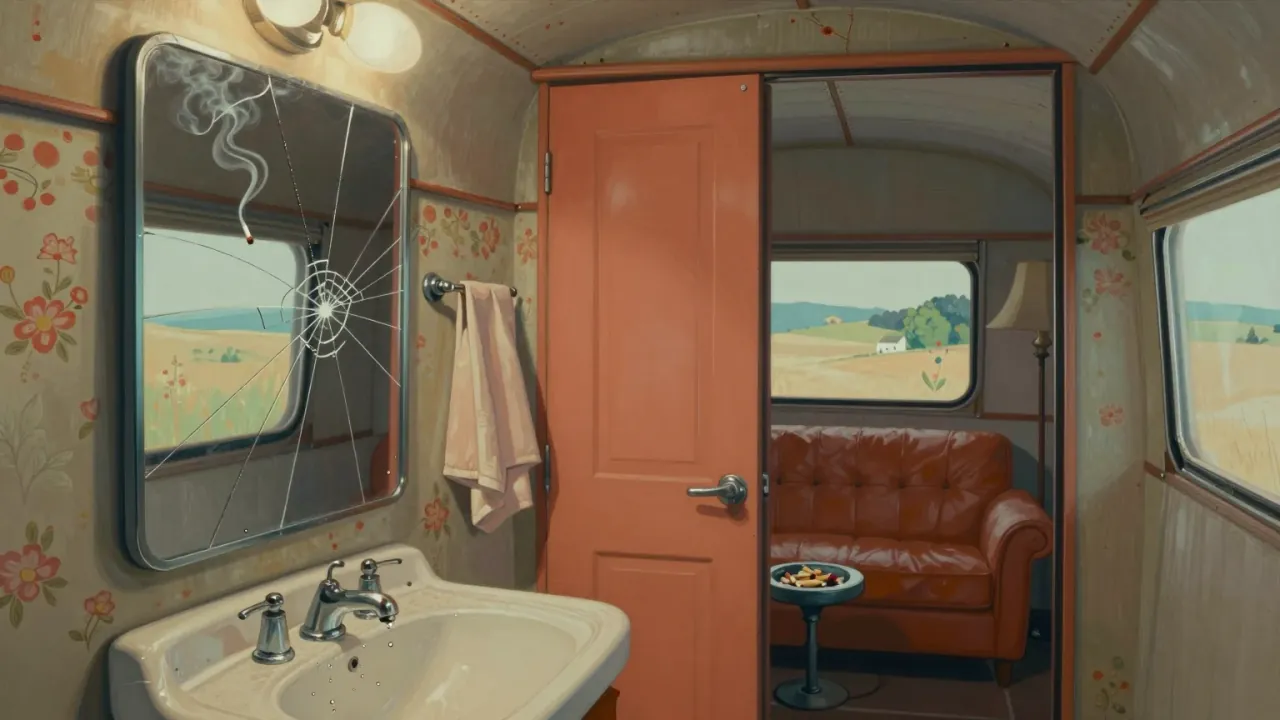
Yes, it is worth your evening — not as entertainment but as calibration. Watching Touch of Evil recalibrates expectations of how crime films construct authority, how cinematography can encode ideology, and how sound design can imply threat without showing it. Its 93 minutes pass with accumulating gravity, not momentum, and its impact lingers in the gaps between scenes, not in their climaxes. Those who dismiss it as ‘slow’ or ‘dated’ mistake its restraint for inertia; its pacing is forensic, not lethargic. It demands patience, but repays it with density: every object in frame — a cigarette butt, a cracked mirror, a half-open door — carries narrative and thematic weight. To skip it is to miss a foundational text in the grammar of cinematic suspicion. Word count: 147