The premise
Man on Fire is a 2004 crime thriller directed by Tony Scott, adapting A. J. Quinnell’s 1980 novel. It relocates the story from Naples to Mexico City, framing a revenge narrative around John Creasy — a broken, alcoholic former intelligence operative who becomes the bodyguard of nine-year-old Lupita ‘Pita’ Ramos. The film aims to fuse visceral action with moral gravity: it treats vengeance not as catharsis but as a slow, methodical descent into sanctioned violence, calibrated against institutional corruption. Its ambition lies in sustaining emotional intimacy amid escalating brutality — using the bond between Denzel Washington’s Creasy and Dakota Fanning’s Pita as both anchor and catalyst. The script by Brian Helgeland retains much of the novel’s dialogue, and the production, backed by Regency Enterprises and released by 20th Century Fox, commits fully to its grim register: no tonal compromise, no narrative detour. It is not a procedural, nor a redemption arc in the conventional sense; it is a tightly wound mechanism designed to test how long an audience will follow a man who kills not for justice, but because he has run out of alternatives. (158 words)
The relationship
The story unfolds in two distinct halves: the quiet, sun-bleached build-up of trust between Creasy and Pita, then the jagged, rain-slicked collapse into retribution. Washington modulates his performance with minimal inflection — fatigue in the shoulders, hesitation before drawing a weapon, a pause before speaking that feels less like acting than withholding. Fanning matches him beat for beat, never sentimentalising childhood but grounding it in physical detail: the way she adjusts her goggles, the weight of her small hand on his arm. Paul Cameron’s cinematography favours shallow focus and handheld urgency, especially in the kidnapping sequence, where composition fractures as control does. Christian Wagner’s editing sustains momentum without sacrificing coherence, even during the extended montage of Creasy’s killings — each cut precise, none gratuitous. Harry Gregson-Williams’ score blends orchestral dread with Nine Inch Nails’ industrial textures, reinforcing the film’s duality: sacred and profane, disciplined and deranged. The craft serves the premise without ornament: every frame tightens the vise. (159 words)
The place
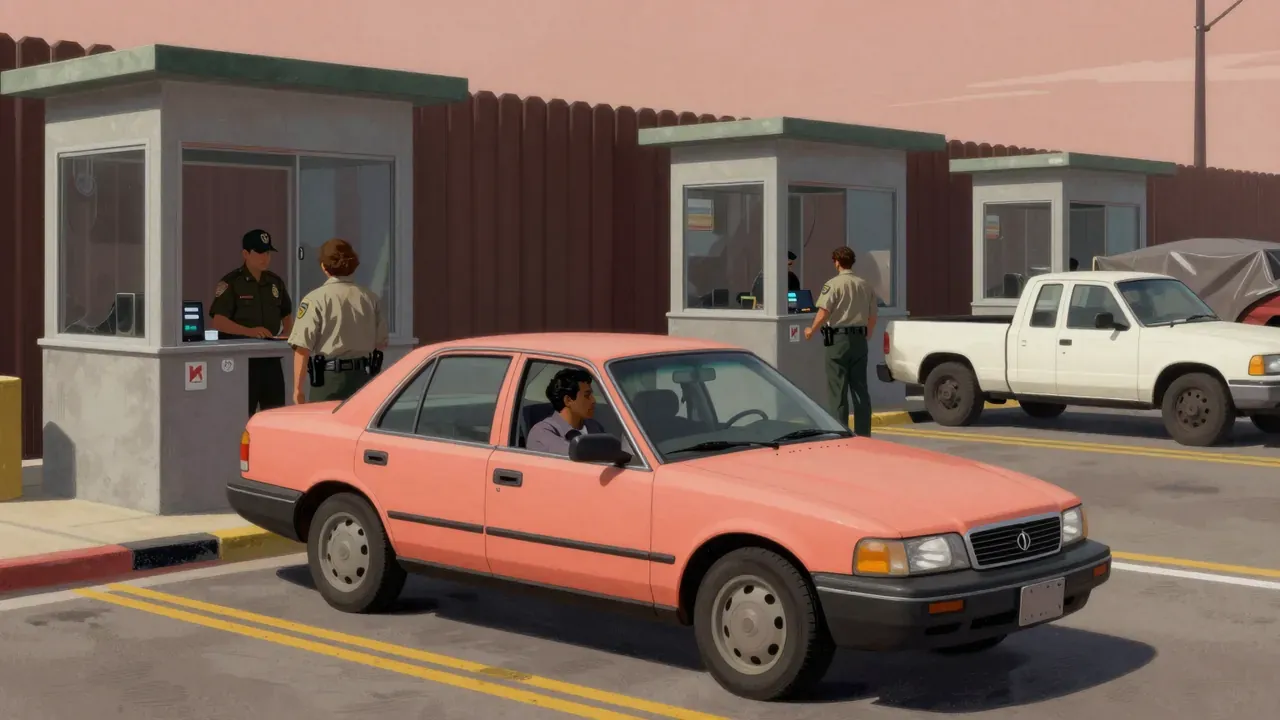
What lands is the relationship. Not as sentiment, but as rhythm: the shared silences in the car, the unspoken understanding when Creasy watches Pita swim, the way she calls him ‘Crazy’ without irony. That intimacy makes the kidnapping land with physical force — not shock, but violation. The Mexico City setting also works decisively: the traffic, the heat haze off tarmac, the layered bureaucracy of police and insurance firms all feel lived-in, not exoticised. Scott avoids caricature in the antagonists — Miguel Manzano (Giancarlo Giannini) is weary, not noble; Mariana Garcia Guerrero (Rachel Ticotin) is tenacious, not quixotic. Even the violence lands with purpose: it is neither stylised nor euphoric, but functional, weary, often off-centre in the frame. When Creasy interrogates the getaway driver, the camera stays on his face, not the blood — the horror is in the stillness, not the spectacle. The film’s moral ambiguity is sustained, not resolved: there is no triumph, only exhaustion and consequence. That consistency gives weight to moments that could easily slip into cliché — the Bible reading, the failed suicide, the preserved bullet — because they are treated as behavioural facts, not symbolic gestures. (157 words)
The violence
What does not land is the structural imbalance between the first and second halves. The early scenes, though carefully observed, lack forward propulsion — they establish mood but not momentum, and the shift into revenge mode arrives without sufficient narrative pressure to justify its relentlessness. Some supporting characters blur: Rayburn (Christopher Walken) remains cryptic to the point of opacity, and the ‘Voice’ functions more as plot device than presence. The film’s refusal to explain the brotherhood’s hierarchy or motives leaves key motivations vague — not enigmatic, but underdeveloped. While the Mexico City setting is authentic, the political context remains surface-level: Marcelo Ebrard’s consultancy did not translate into granular depiction of how kidnapping syndicates operate within state structures. The soundtrack’s repeated use of Nine Inch Nails, though thematically apt, begins to feel like sonic shorthand rather than integration — a stylistic tic that accumulates rather than deepens. And while the film avoids glorifying vigilantism, it also avoids reckoning with its cost beyond Creasy’s psyche: there is no collateral damage shown, no civilian consequence, no institutional aftermath — the world resets once the last name is crossed off. That omission narrows the film’s moral scope. (156 words)
The system
The themes that matter are accountability and endurance. Not justice, but the labour of holding people to account when institutions refuse to do so — a labour that wears down the body, dulls the conscience, and hollows out language until only action remains. The film treats trauma as cumulative, not episodic: Creasy’s alcoholism, his failed suicide, his reliance on scripture — these are not backstory flourishes but symptoms of a system that discards its operatives and expects them to vanish quietly. Pita’s childhood is framed not as innocence but as competence — she learns Spanish quickly, navigates adult spaces with quiet authority, and names her own fear without dramatising it. That makes her abduction not a loss of purity but a theft of agency, which Creasy seeks to restore through violence — a flawed, unsustainable, yet emotionally legible logic. The film also engages with translation: between languages, between roles (agent to guardian to executioner), between moral registers (duty, loyalty, rage). Corruption is not personified but ambient — in the uniformed officers blocking streets, the insurance policy requiring armed guards, the newspaper editor who hesitates before publishing. It is systemic, not sensational. (155 words)
The pace
This film is for viewers who tolerate sustained moral discomfort and value precision over pace. It suits those familiar with Tony Scott’s late style — the saturated colour, the percussive editing, the emphasis on tactile detail — and who accept that character development may be conveyed through gesture rather than exposition. It is not for viewers seeking resolution, levity, or narrative symmetry; nor for those who require clear ethical signposting or who find prolonged depictions of procedural violence emotionally inaccessible. Critics who judged it too grim — such as those whose reviews contributed to its 39% Tomatometer — often expected genre conventions it deliberately subverts: no final showdown, no courtroom reckoning, no reformist epilogue. A different verdict would follow if the film had clarified the institutional mechanics behind the kidnapping ring, or if it had allowed Pita’s perspective to shape more than the opening act. As it stands, its rigour is also its limitation. (158 words)
The commitment
Yes, it is worth your evening — provided you watch it whole, without pause, and without expectation of uplift. Its 141 minutes accumulate weight precisely because it refuses distraction: no subplot diversions, no comic relief, no tonal softening. The performances, particularly Washington’s and Fanning’s, hold attention not through charisma but through restraint — their chemistry is built on duration, not fireworks. The Mexico City locations ground the story in texture, not tourism. Those who dismiss it as ‘relentlessly grim’ miss how carefully the film calibrates that grimness: each killing advances the plot, each silence deepens the stakes, each visual motif — the bullet, the swimming pool, the Bible — returns with altered meaning. It is not entertainment in the passive sense, but engagement on its own terms. Anyone expecting catharsis will leave unsettled; anyone open to sustained emotional gravity will find it unusually committed. Its value lies in what it refuses to do as much as what it achieves. (159 words)