The look of it
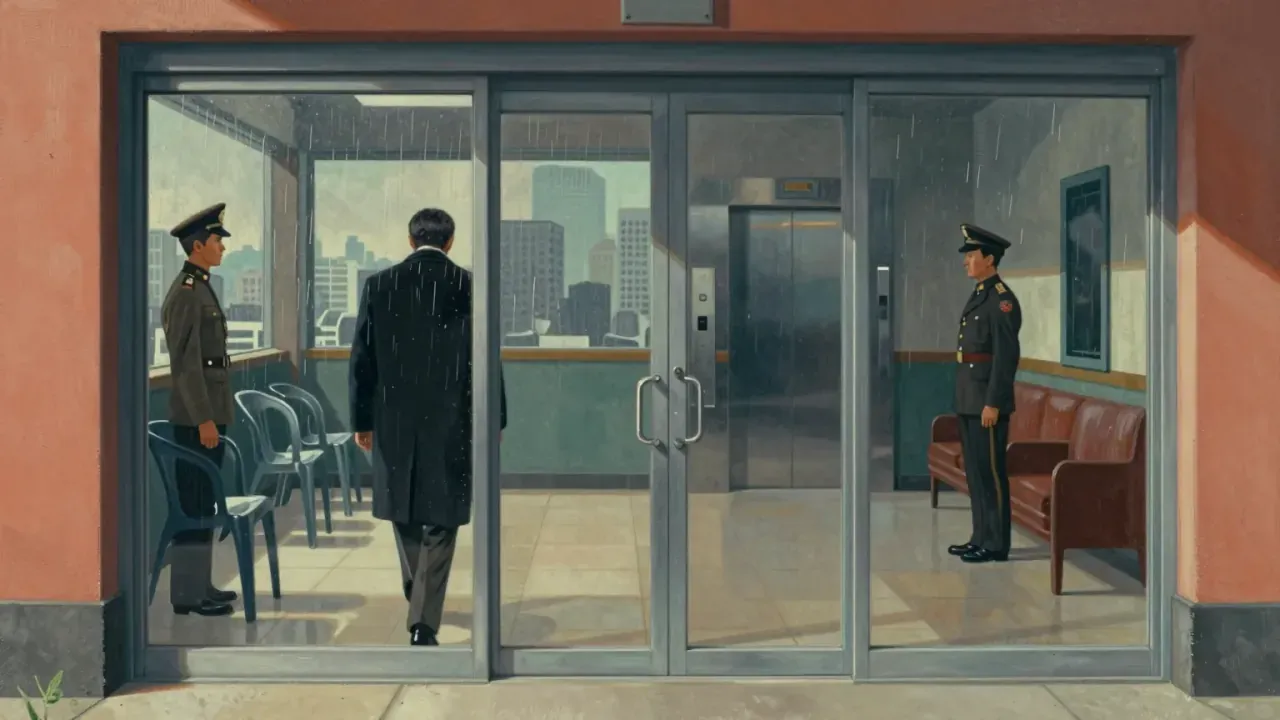
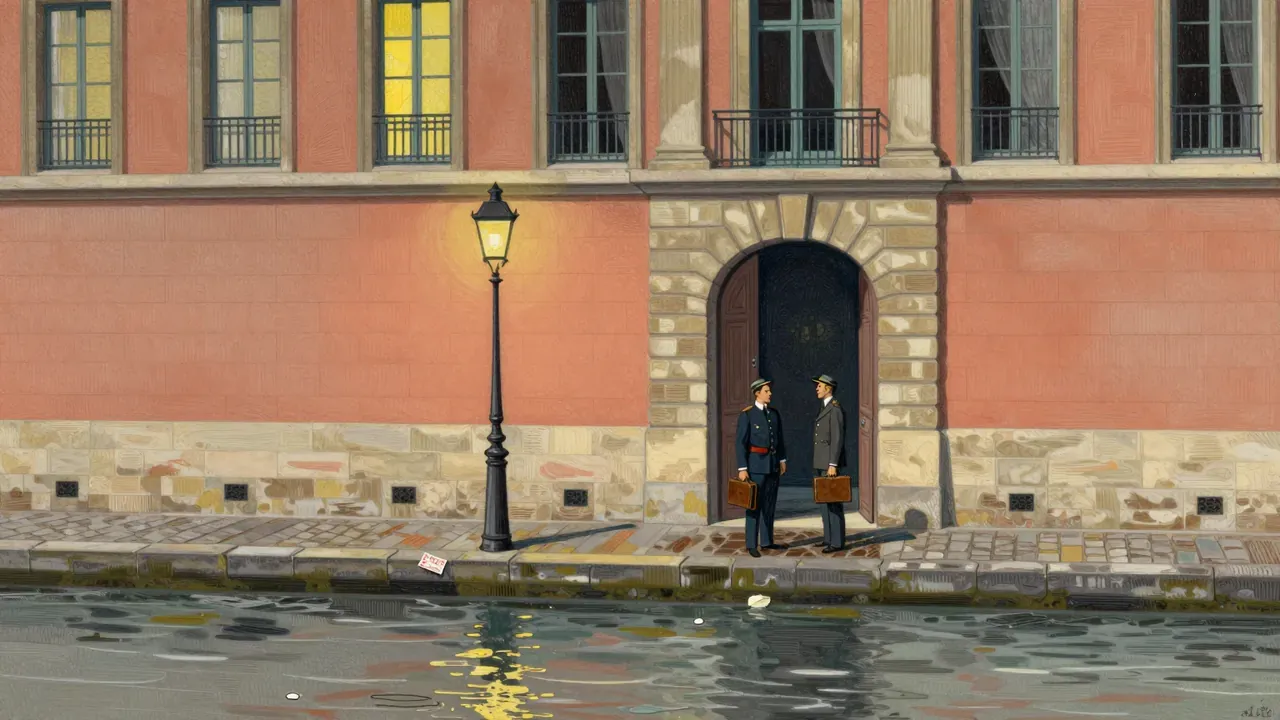
The Friends of Eddie Coyle is a neo-noir crime film adapted from George V. Higgins’s 1970 novel, aiming to render Boston’s underworld with procedural fidelity and moral flatness. It does not seek suspense through plot twists or catharsis through justice, but through the accumulation of small, consequential choices made under pressure — a gun deal, a phone call, a nod across a bar. Its ambition is structural and tonal: to strip away genre ornamentation and show how power circulates not through bosses or bullets, but through information, debt, and silence. It treats criminality as routine labour, law enforcement as bureaucratic arbitrage, and loyalty as a liability. There are no heroes, no villains in the operatic sense — only people occupying positions in a network where every connection carries risk and every favour accrues interest. The film avoids exposition, backstory, or psychological justification; characters speak in clipped, idiomatic English that reveals motive only in retrospect. Its realism is not documentary but linguistic and behavioural: it trusts the audience to infer hierarchy from who pours the coffee, who waits for permission to light a cigarette, who leaves a room first.
The talk of it
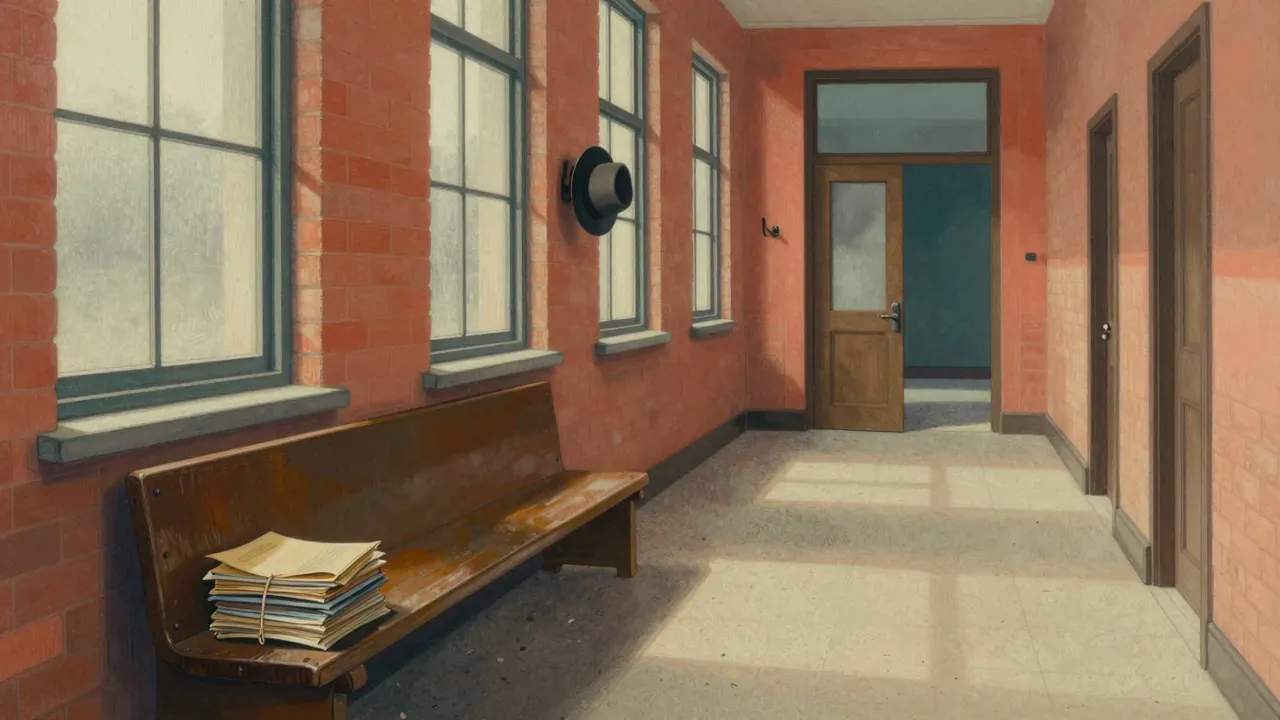
It works through restraint: Victor J. Kemper’s cinematography keeps Boston’s winter light grey and unflattering, framing characters in tight two-shots or static medium shots that deny dramatic emphasis. Peter Yates directs without flourish — no tracking shots, no score swells, no slow motion. Dave Grusin’s music appears sparingly, mostly as diegetic barroom piano or distant radio static. Robert Mitchum plays Eddie Coyle with minimal inflection, his voice gravelled but precise, his posture slack but never passive; he conveys exhaustion not as weakness but as calibrated economy. Peter Boyle’s Dillon is all stillness and sideways glances, his menace rooted in what he omits. Alex Rocco, Joe Santos, and Helena Carroll ground the supporting roles in regional cadence and lived-in weariness. Paul Monash’s script preserves Higgins’s dialogue-driven structure: scenes pivot on misdirection, hesitation, or an unspoken implication. The editing, by Frank Morriss, holds on faces just long enough to register doubt, then cuts — never explaining, only presenting consequence.
The weight of it
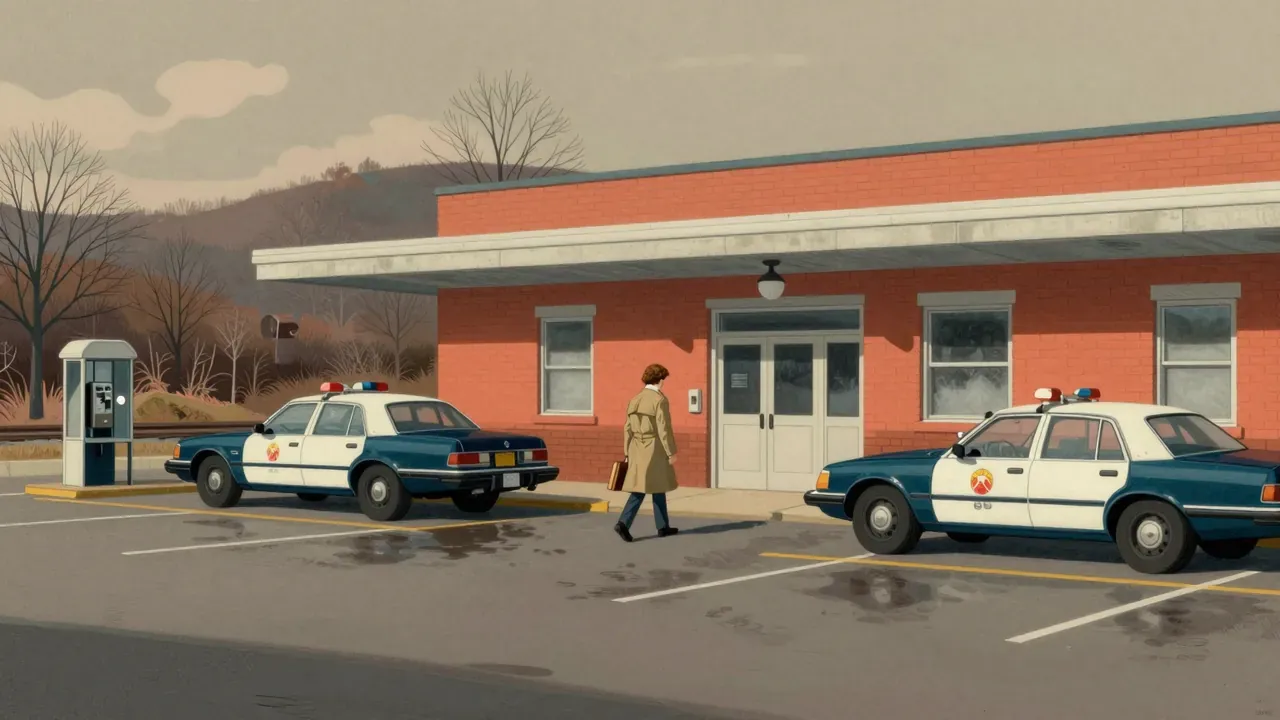
What lands is the cumulative weight of inevitability. The film’s power builds not in set pieces but in the quiet moments where characters realise they have already lost: Eddie staring at a payphone after tipping off the ATF, Dillon adjusting his coat before stepping into the Garden crowd, Jackie Brown’s face tightening as he spots the unmarked cars at Sharon station. Mitchum’s performance lands because it refuses pathos — he makes Coyle neither noble nor pitiable, but stubbornly, unglamorously human. The Boston locations land too: Dedham Square’s storefronts, the fluorescent hum of a Weymouth bank lobby, the echo of footsteps in Government Center — all feel inhabited, not dressed. The film’s refusal to moralise lands as integrity: when Dillon kills Coyle, there is no music, no reaction shot, no aftermath beyond a car swap in a bowling alley car park. That austerity gives the violence its force. The film’s credibility rests on this consistency — every choice, from costume to line reading to pacing, serves the same low-register truth.
The gaps in it
What does not land is any sense of stakes beyond survival. The bank robberies lack urgency or spatial clarity; the second heist dissolves into a blur of shouting and screeching tyres, sacrificing coherence for grit. The hippie subplot feels underdeveloped — their motives and fate remain opaque, serving only as narrative bait for Jackie’s arrest. Some performances drift toward caricature: Richard Jordan’s Jimmy Scalise has energy but little dimension, and Steven Keats’ Artie Van registers more as type than person. The film’s commitment to opacity occasionally crosses into obscurity: viewers unfamiliar with Boston geography or 1970s ATF procedure may struggle to track jurisdictional tensions or why certain betrayals carry specific weight. Its resistance to exposition means emotional arcs are implied rather than traced — Coyle’s isolation reads as fact, not tragedy, which some audiences may mistake for indifference. The ending offers no resolution, only erasure, and that refusal — while thematically sound — can leave a viewer feeling stranded rather than stirred.
The shape of it
The themes that matter are betrayal as infrastructure, information as currency, and loyalty as a failure of imagination. The film treats informants not as moral anomalies but as logical outcomes of a system where every relationship is transactional and every promise revocable. Coyle’s fatal error is not trusting Dillon, but believing trust matters at all. Power here flows not through violence but through asymmetry: Foley knows more than Dillon, Dillon knows more than Coyle, Coyle knows more than Jackie — and each level up trades certainty for safety. Ageing is another quiet theme: Mitchum, fifty-six, embodies a man whose body remembers every loss but whose mind still calculates odds. Class is rendered through detail — the worn wool of Coyle’s coat, the vinyl booth at the diner, the way Dillon’s bar smells of stale beer and floor wax — not through speechifying. The film’s central irony — that ‘friends’ are merely people you haven’t yet betrayed — is structural, not rhetorical: every scene confirms it, without ever naming it.
The pace of it
This film is for viewers who value precision over propulsion, who find tension in silence and character in syntax, and who accept that moral ambiguity need not be resolved to be felt. It suits those familiar with 1970s American crime fiction or Boston’s real-world underworld, though neither is required — the film’s logic is self-contained. It is not for viewers who require narrative momentum, emotional signposting, or clear distinctions between right and wrong. Those who expect redemption arcs, thematic closure, or even a coherent visual grammar for action sequences will find it withholding. It also assumes patience: scenes linger on empty streets, on half-finished coffees, on the space between lines. A viewer who values efficiency over atmosphere, or catharsis over accumulation, will likely disengage. The film’s virtues are its rigour and restraint — remove either, and it collapses. That is not a flaw in the work, but a condition of its form.
The end of it
Yes, it is worth your evening — provided you watch it on its own terms, not as entertainment but as immersion. Its 102 minutes pass without hurry but never drag, because every frame serves the same unblinking gaze. You do not leave energised, but unsettled in a precise way: aware of how thin the line is between caution and cowardice, between duty and complicity. Those who found it tedious — like Pauline Kael, who called it shallow — likely expected drama where the film offers documentation. Change the expectation — from ‘story about crime’ to ‘study of consequence’ — and the verdict shifts. It rewards attention, not interpretation. It does not ask you to care about Eddie Coyle, but makes it impossible to forget him. That is not sentimentality. It is craft.