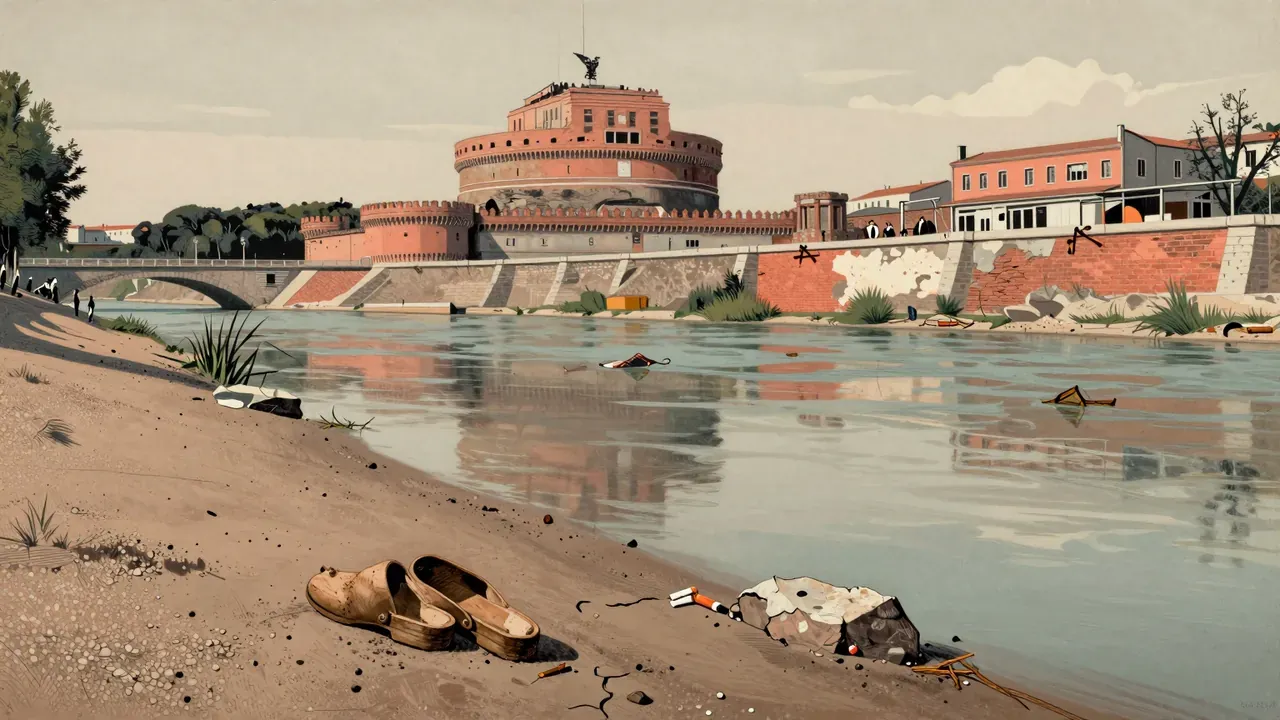
The look of it
Mafioso is a 1962 Italian drama that uses deadpan irony to dissect the persistence of Sicilian mafioso structures beneath the surface of postwar modernity. It does not aim to thrill, expose or moralise in conventional terms, but to stage a quiet collision between industrial northern Italy and ancestral southern codes — one where loyalty is inherited, not chosen, and violence is delegated like clerical work. The film treats the Mafia not as a criminal aberration but as a parallel bureaucracy, embedded in kinship, land, and silence. Its ambition is structural rather than psychological: to show how a man who has spent years calibrating torque on a Milanese assembly line can be recalibrated, without fuss, to calibrate a bullet. It avoids caricature by refusing to dramatise Antonio’s internal conflict until it is too late — the horror arrives not in the act, but in its seamless erasure. This is not satire with punchlines, but satire with receipts: property deeds, airline manifests, factory timecards.
How it works
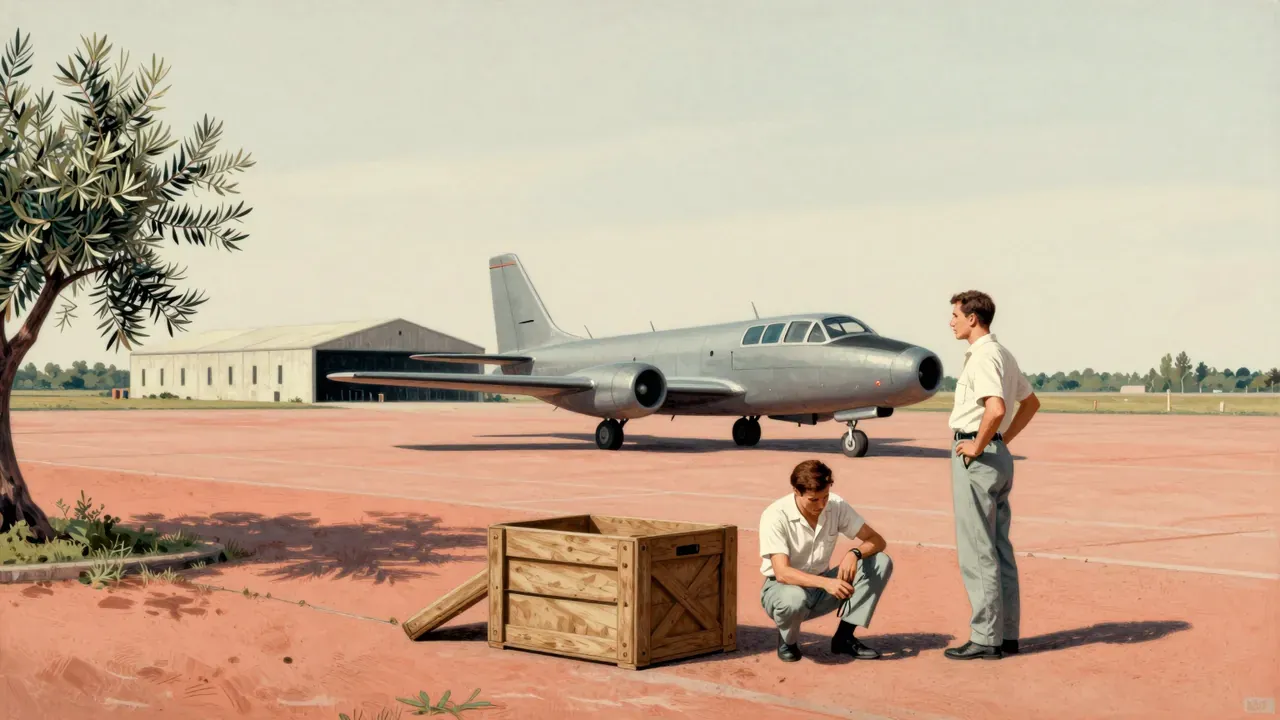
The story follows Antonio Badalamenti’s return to Sicily with his northern wife Marta, a trip that unfolds with the rhythm of a minor administrative procedure. Alberto Sordi plays Antonio with minimal inflection — his face registers fatigue before fear, resignation before guilt. Norma Bengell’s Marta is not comic relief but a counterweight: her discomfort is literal, physical, untranslatable. Armando Nannuzzi’s cinematography keeps the Sicilian interiors sun-bleached and flat, avoiding chiaroscuro; the Milan scenes are cooler, sharper, more precisely framed. Piero Piccioni’s score is sparse, often absent — when music appears, it is diegetic, played on a gramophone or sung off-key at a family meal. Nino Baragli’s editing sustains a deliberate slackness: cuts linger just past comfort, especially in the airport sequence, where Antonio’s crate is loaded with bureaucratic indifference. The writing — by Azcona, Ferreri, Incrocci and Scarpelli — builds irony through understatement: Don Vincenzo thanks Antonio for ‘helping with the land matter’ before assigning murder as a favour.
What lands
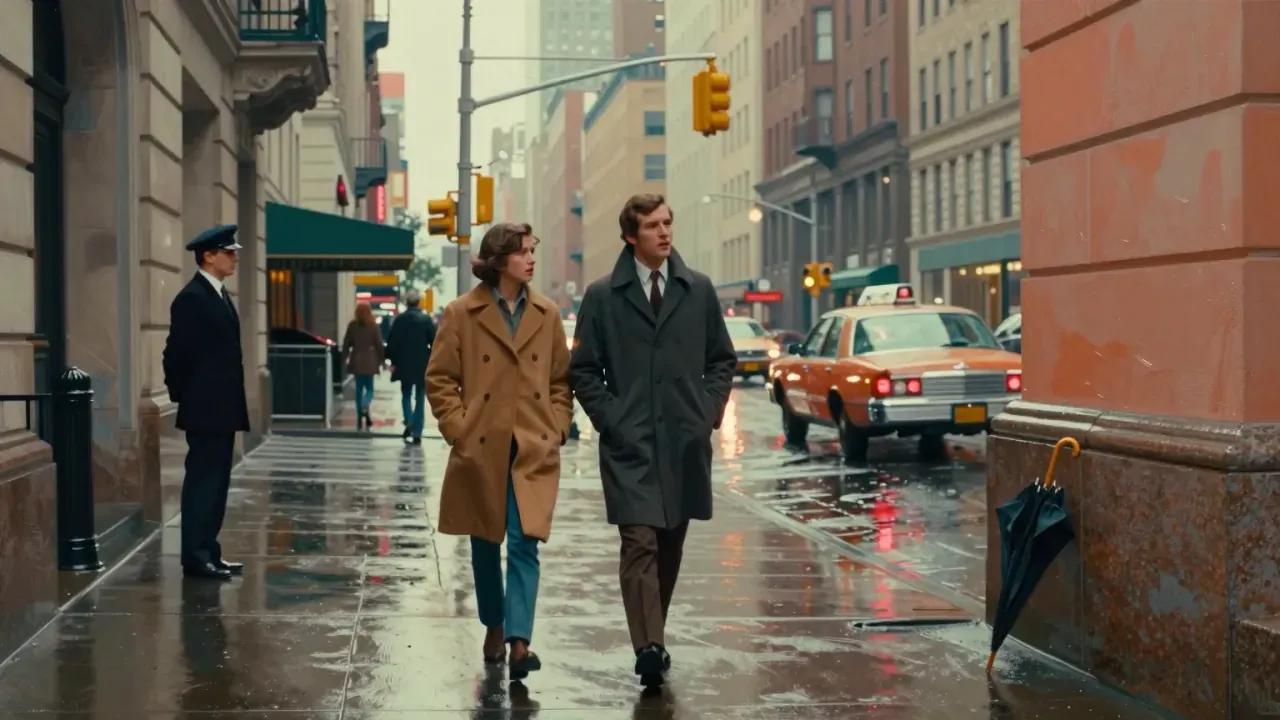
What lands is the film’s tonal consistency: its refusal to underline the absurdity, which makes the absurdity inescapable. The scene where Antonio returns from New York and resumes his factory shift — adjusting his tie, checking his watch, reporting to his foreman — lands with quiet force because nothing marks the rupture. The contrast between Marta’s baffled pragmatism and the villagers’ unspoken consensus lands too: she asks why the don’s wife never speaks; no one answers, and the question hangs without resolution. The visual grammar lands — the way the camera holds on empty doorways in Sicily, or lingers on factory conveyor belts in Milan, suggesting both places operate on unseen protocols. Even the casting lands: Sordi’s everyman presence makes the transition from manager to hitman plausible not because he changes, but because he doesn’t. The film trusts the audience to notice what isn’t said, and that trust is repaid in cumulative unease.
What does not
What does not land is the underwritten role of Marta beyond her function as cultural foil. Her arc stops at bewilderment; we see her discomfort but not her processing of it, and her final silence feels less like complexity and more like omission. The American interlude — Antonio’s flight, the hit, the return — is deliberately vague, but its vagueness tips into opacity: the mechanics of the assassination remain abstract, robbing the act of concrete weight. Some supporting characters blur into regional type — the young baroness, the doctor’s secretary — their lines functional rather than revealing. The film’s restraint occasionally reads as evasion: when Antonio vomits after returning home, it is the only physical sign of trauma, and it passes in one unemphasised shot. There is no aftermath, no reckoning, no conversation — only the resumption of routine. That choice is coherent, but it denies the viewer any anchor for emotional response beyond numbness.
The themes that matter
The themes that matter are continuity and complicity. Not the Mafia as an external threat, but as a dormant infrastructure activated by proximity, blood, and silence. The film treats modernisation not as liberation but as relocation: Antonio trades one hierarchy — the factory — for another — the clan — without ever leaving the system. Class is not economic but geographic: north versus south, concrete versus stone, clock-time versus feast-time. Loyalty is shown not as devotion but as inertia — the default setting when no alternative is offered. The film also interrogates masculinity as performance: Antonio’s competence with machinery mirrors his competence with firearms, both learned, both neutral, both socially sanctioned. What matters most is the film’s refusal to locate evil in individuals: Don Vincenzo is courteous, patient, even grateful; the hit is arranged over coffee, with paperwork. Evil here is procedural, inherited, and utterly banal.
Who should watch it
This is for viewers who tolerate slow accrual over exposition, who find tension in withheld information and moral ambiguity in unbroken routine. It suits those familiar with mid-century Italian cinema’s preference for implication over declaration — fans of Germi or early Visconti will recognise the method. It is not for viewers who require narrative propulsion, clear stakes, or psychological exposition; those expecting a crime thriller or a character study with catharsis will find it withholding to the point of frustration. Anyone needing moral clarity — a villain to condemn, a hero to root for — will leave unsatisfied. The film assumes patience with stillness and rewards attention to texture over plot. A viewer who values thematic density over emotional payoff, or who finds dread in the ordinary, will respond; one who needs resolution, explanation or emotional release will not.
Is it worth your evening
Yes, it is worth your evening — not as entertainment but as calibration. Ninety-eight minutes spent with Mafioso recalibrates how you read compliance, how you register coercion disguised as courtesy, how you spot power operating without fanfare. It demands no suspension of disbelief because it offers no fantasy: the world it shows is recognisable, contiguous with our own. Those who dismiss it as ‘too dry’ or ‘too slow’ are not wrong — they simply value different kinds of engagement. A viewer who prefers active storytelling over ambient unease, or who finds moral ambiguity exhausting rather than clarifying, would be better served elsewhere. But if you accept that some films work like a thermometer — registering temperature without comment — then this one reads true. Its value lies not in what it says, but in how precisely it measures the chill.