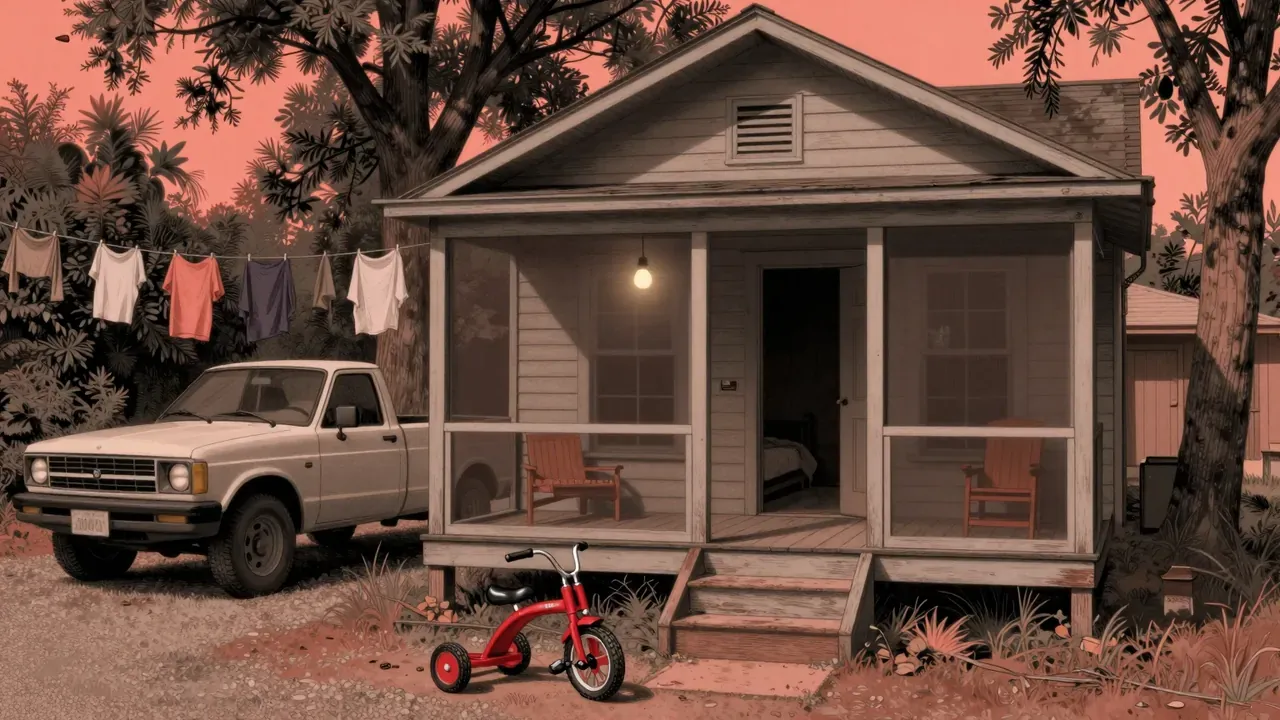
The look of it
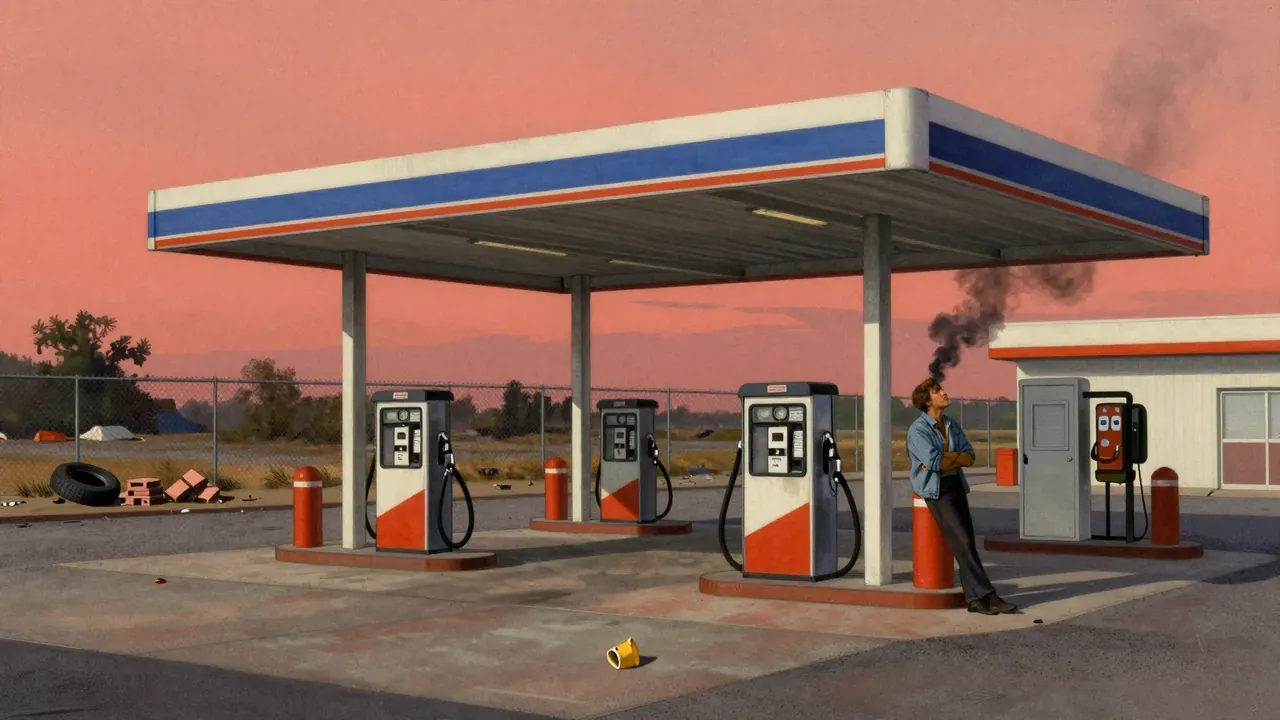
One False Move is a neo-noir crime film set in the American South, built around a collision between urban violence and rural quiet. It follows three Los Angeles criminals — Ray, Pluto, and Fantasia — who flee after a spree of murders, heading toward Star City, Arkansas, where Fantasia was raised. The film’s aim is not to mythologise crime but to hold it steady under a low-wattage light: to show how motive, memory, and geography shape action; how a small-town police chief’s sense of duty is tangled with personal history; how race, class, and gender operate without exposition. It avoids genre shorthand — no voiceover, no stylised shadows for effect — and instead treats its characters as people whose choices are constrained, not defined, by circumstance. Carl Franklin directs with restraint, trusting the script’s structure and the actors’ calibration over momentum or spectacle. The film tries to do one thing precisely: make moral ambiguity feel lived-in, not theoretical. It is neither a procedural nor a tragedy, but something tighter — a reckoning staged in real time, across two states and three generations. (159 words)
How it works
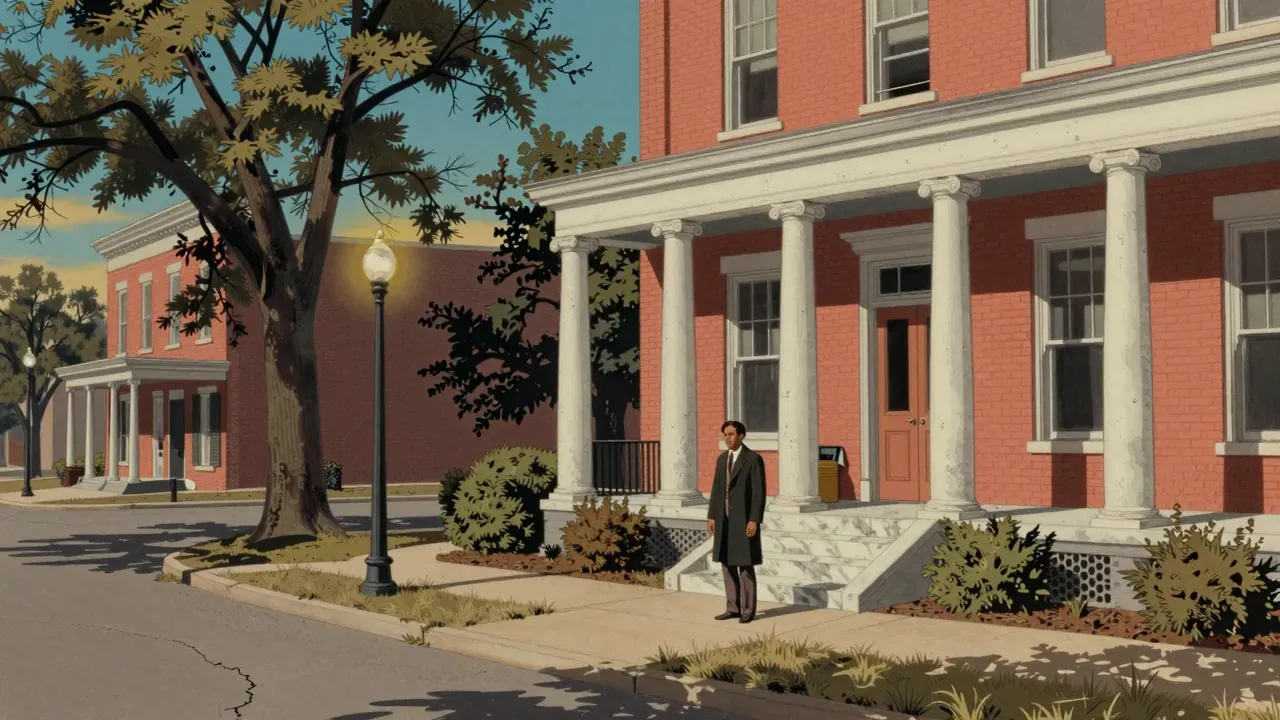
The story unfolds in parallel lines that converge without fanfare: the criminals’ journey, the detectives’ pursuit, and Dale Dixon’s quiet stewardship of a town he knows too well. Billy Bob Thornton’s screenplay moves with surgical economy — no scene overstays, no character speaks to fill silence. Bill Paxton plays Ray with coiled menace and unvarnished fatigue; Cynda Williams gives Fantasia a watchful stillness that carries years of calculation and regret; Billy Bob Thornton’s Pluto is all nervous volatility, never cartoonish. James L. Carter’s cinematography avoids contrast for its own sake: interiors are lit like rooms actually lit, exteriors like places actually seen at dusk. Pete Haycock’s score uses blues-inflected guitar motifs sparingly, letting ambient sound — cicadas, distant radios, gravel under tyres — carry weight. Editing by Michael Jablow tightens tension without rushing it; a five-minute sequence of Dale walking through town establishes more about power and belonging than a dozen exposition scenes could. There is no music cue when Fantasia steps off the bus — just the hiss of brakes and the thud of her suitcase hitting pavement. (158 words)
What lands
What lands most firmly is the film’s refusal to flinch from consequence. Fantasia’s return to Star City does not trigger nostalgia but recalibration — her mother’s guarded silence, her son’s uncomprehending gaze, Dale’s quiet shame all register with physical weight. The final confrontation at the rural house gains force from what precedes it: the slow accumulation of small truths, not plot twists. Dale’s authority is credible because we have seen him negotiate a dispute over a stolen chicken and calm a teenager’s panic — not because he draws a gun first. The violence is abrupt, inelegant, and consequential: Pluto stabs Dale not in a flourish but in panic; Ray fires wildly, killing Fantasia by accident, not design. Even the humour lands without undercutting — Dale’s dry self-awareness about his ‘Hurricane’ nickname, the detectives’ polite condescension, the way Byron recites multiplication tables while standing over a dying man. These are not flourishes but textures, woven into the film’s grain. The pacing holds — 105 minutes feels necessary, not padded — and the ending lingers not because it is ambiguous, but because it refuses resolution: Dale bleeds, Byron speaks, and nothing is fixed. (157 words)
What does not
What does not land is the LAPD detectives’ function within the narrative. Dud Cole and John McFeely exist primarily to frame Dale’s competence and expose his provincialism, yet their motivations remain thin — they admire procedure but lack interiority beyond professional pride. Their banter feels like scaffolding, not character. Similarly, the film’s treatment of race operates through implication rather than engagement: Dale’s position as a Black chief in a white-majority Arkansas town matters, but the script does not explore how that shapes his decisions beyond the personal revelation about Fantasia. A subplot involving Fantasia’s brother Ronnie dissolves without payoff, and the Houston drug deal — though crucial to the trio’s trajectory — feels narratively expedient rather than thematically anchored. The film trusts its audience to infer meaning, but on these points, inference risks vacancy. Some viewers may find the absence of explanation frustrating, particularly where social friction is implied but left unexamined. The film’s strength is its specificity, yet here specificity gives way to omission — not as restraint, but as underdevelopment. This is not fatal, but it leaves gaps where the film’s moral architecture might have been reinforced. (156 words)
The themes that matter
The themes that matter are inheritance and accountability — not as abstractions, but as forces embedded in place and person. Star City is not backdrop but participant: its rhythms, its silences, its unspoken hierarchies condition every choice. Fantasia returns not to reclaim a past but to navigate its residue — her son, her mother’s disappointment, Dale’s unresolved claim on her life. Ray and Pluto carry Los Angeles not as a city but as a condition: dispossession, transactional loyalty, the exhaustion of perpetual motion. Dale’s authority rests on continuity — he knows who owes whom, who remembers what, who stays and who leaves — yet he cannot escape his own entanglements. The film treats class not as income bracket but as grammar: the way Dale orders coffee, the way Ray counts cash, the way Fantasia hesitates before knocking on her mother’s door. Race functions similarly — not as subject but syntax, shaping access, assumption, and consequence without needing declaration. There is no speech about justice, only the weight of a radio call unanswered, a child’s question met with silence, a wound dressed with gauze pulled from a glovebox. These are not themes argued, but conditions observed. (159 words)
Who should watch it, and who should not
This film is for viewers who value precision over propulsion, who prefer moral texture to moral clarity, and who trust that silence can be louder than exposition. It rewards attention to gesture, to timing, to what characters withhold. It is not for those who require clear heroes or villains, or who expect crime narratives to resolve in catharsis or punishment alone. Viewers expecting thriller pacing — chases, countdowns, last-minute reversals — will find its rhythm too deliberate. Those seeking sociological analysis of the American South may find its approach too elliptical; those wanting psychological excavation of the criminals may find it too detached. The film assumes familiarity with noir conventions but subverts them quietly — it has no femme fatale, no corrupt system, no existential monologue. Its realism is grounded, not gritty; its tension comes from waiting, not chasing. Someone who disliked Carl Franklin’s later films for their polish or pacing might find this rawer, more urgent. But someone who needs narrative signposting — chapter headings, musical cues, visual metaphors — will likely feel adrift. (158 words)
Is it worth your evening
Yes, it is worth your evening — not as diversion, but as calibration. Its 105 minutes ask for patience, not endurance; its lack of bombast is not austerity but discipline. It repays rewatching not for hidden clues but for shifts in emphasis: how Dale’s posture changes across scenes, how Fantasia’s eyes narrow when she hears her son’s name, how the camera holds on an empty chair after a character leaves. Some will argue it is too lean, too withholding — critics who valued Thornton’s later scripts for their baroque dialogue or Franklin’s subsequent studio work for its scale may find this underpowered. Others may miss the warmth of ensemble drama or the release of genre payoff. But its value lies in its refusal to simplify: it treats violence as exhausting, authority as fragile, and homecoming as arithmetic without answers. If you measure a film by how long its silences stay with you, this one lasts. (159 words)