The making of it
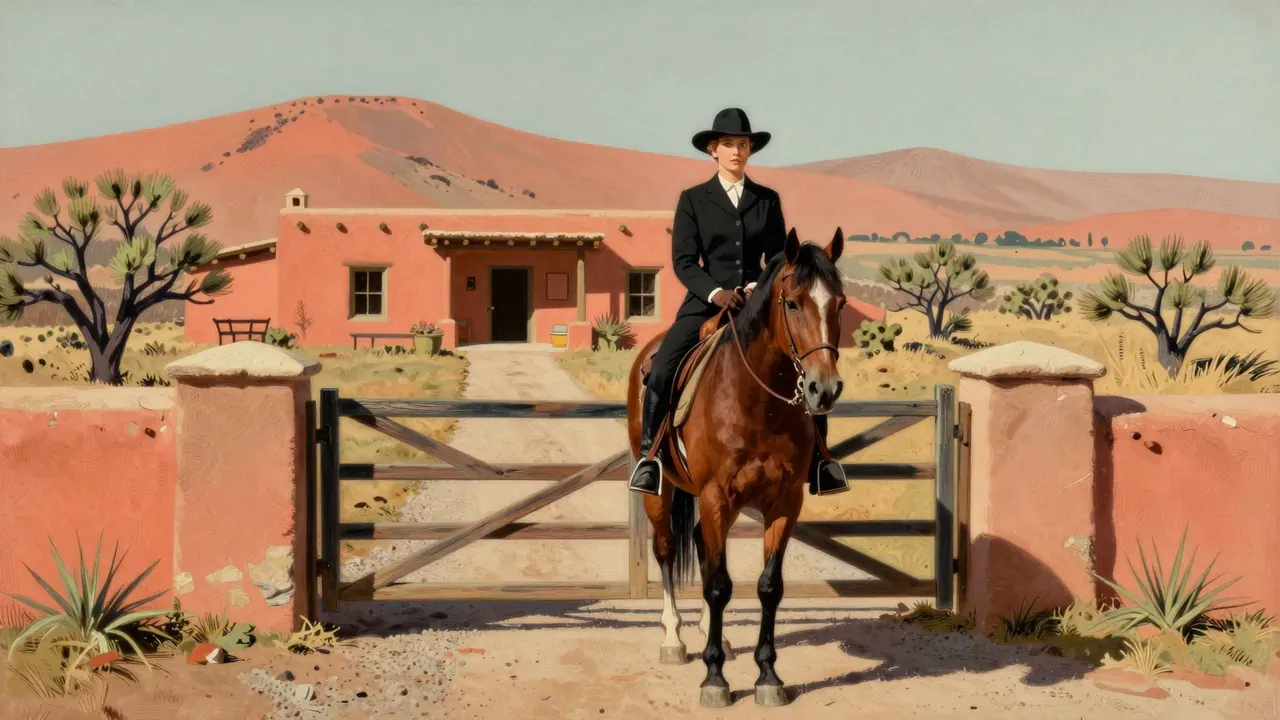
I Shot Jesse James is Samuel Fuller’s debut feature, a low-budget biographical Western made for Robert L. Lippert in 1948 and released in February 1949. It sets out to dramatise the moral collapse of Bob Ford—not as a mythic outlaw but as a man whose ambition, jealousy and self-deception curdle into irreversible violence. Fuller wrote the script himself and insisted on directing, accepting a $5,000 fee to retain control. The film does not aim for historical fidelity: it compresses timelines, invents characters like John Kelley and Cynthy Waters, and reshapes motive around romantic rivalry and financial desperation rather than political grievance or gang fracture. Its project is psychological portraiture within genre constraints—using the Western’s sparse settings and terse dialogue to expose how cowardice wears the mask of calculation, and how fame corrodes remorse. It treats the Jesse James legend not as folklore to be preserved but as scaffolding to hang a study of compromised agency. The film’s modest runtime—81 minutes—reflects its tight focus: less on action than on the quiet, accumulating weight of consequence.
The look of it
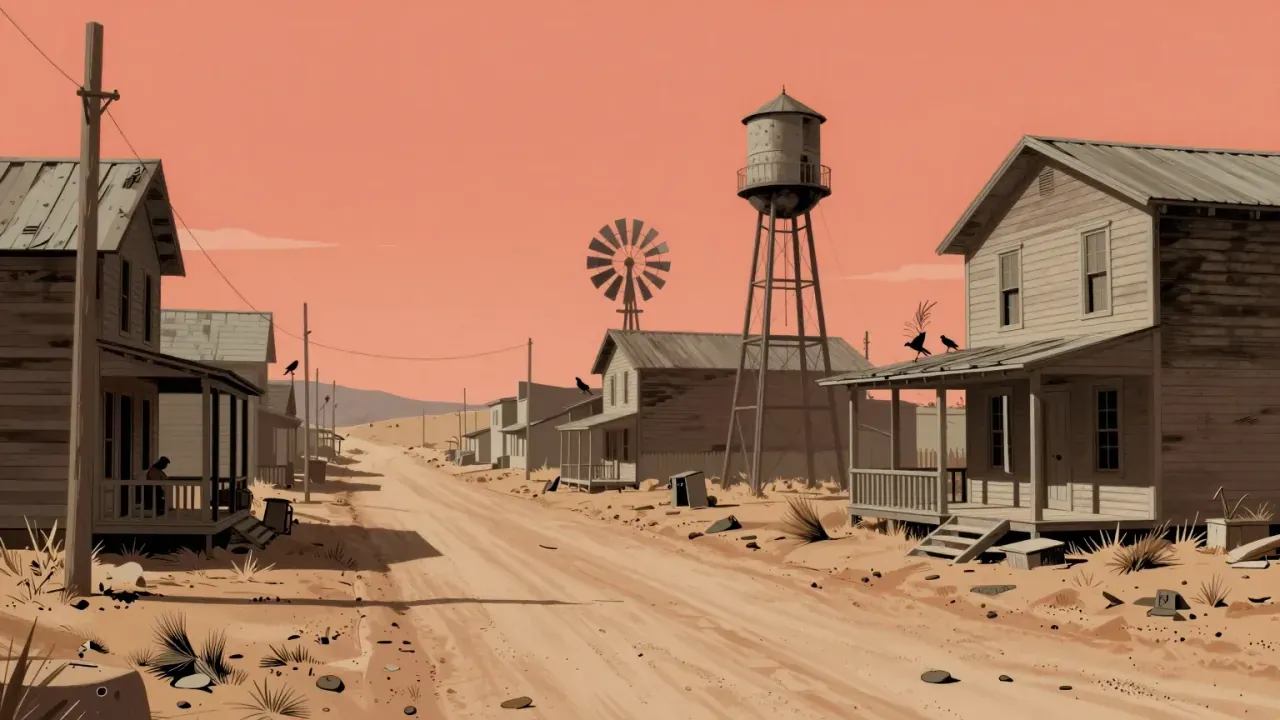
The story moves with deliberate economy, anchored by John Ireland’s performance as Bob Ford: watchful, physically contained, his voice low and hesitant even when asserting control. Preston Foster plays Jesse James with weary authority, never flamboyant, his death occurring off-centre, unheroic, while turning a picture frame. Ernest Miller’s cinematography avoids grandeur—interiors are dim, exteriors flat and sun-bleached; compositions often isolate Ford in doorways or behind bars, visually reinforcing his entrapment in his own choices. Albert Glasser’s score is functional, sparing, rarely underlining emotion. Barbara Britton’s Cynthy is neither idealised nor villainous—her ambivalence is rendered through pauses and withheld glances. Reed Hadley’s Jesse appears only briefly, but his presence lingers in Ford’s posture and silences. Fuller’s direction favours medium shots and static framing, letting scenes play out without editorial interference. Dialogue is clipped, often elliptical: motivations are implied, not explained. There are no flashbacks, no voiceover, no exposition beyond what the characters say—or refuse to say—to each other.
The moment it breaks
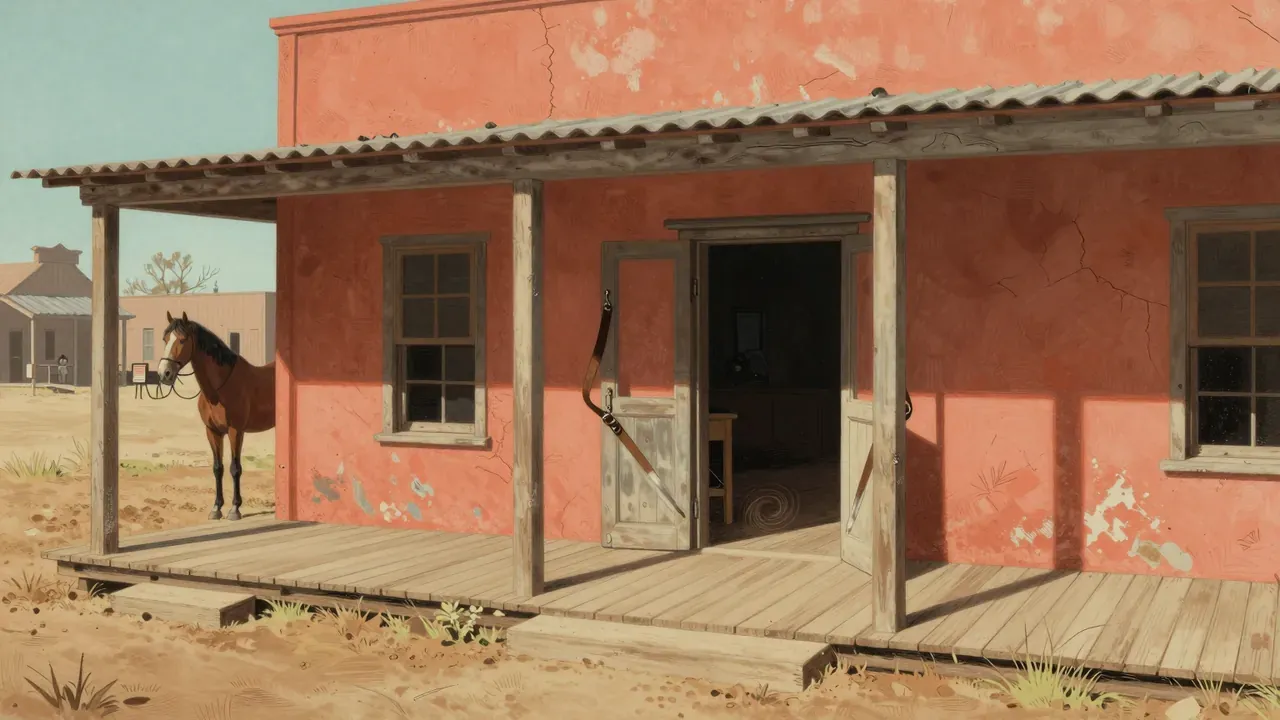
What lands is the film’s unblinking restraint. Ford’s murder of Jesse is not staged for shock but for discomfort: the camera stays level, the gunshot abrupt, the aftermath silent except for Ford’s ragged breathing. His subsequent descent is charted not in grand gestures but in small failures—the rejected ring, the abandoned stage act, the hollow promise of Colorado silver. The tavern scene where Ford forces the balladeer to sing feels less like bravado than compulsion, a man trying to hear his own story told back to him, only to find it unbearable. The final duel with Kelley works because it refuses catharsis: both men fire, Ford dies, and Cynthy’s kiss offers no redemption—only pity. Fuller’s refusal to moralise gives the film its gravity. The performances hold this tone: Ireland never winks at the audience, Britton never softens Cynthy’s revulsion, and Tom Tyler’s Frank James arrives late but carries the full, unspoken weight of inherited grief. The film’s power lies in what it withholds—the absence of justification, the lack of redemption, the quiet certainty that Ford’s fate was chosen long before the trigger was pulled.
The thing that bends
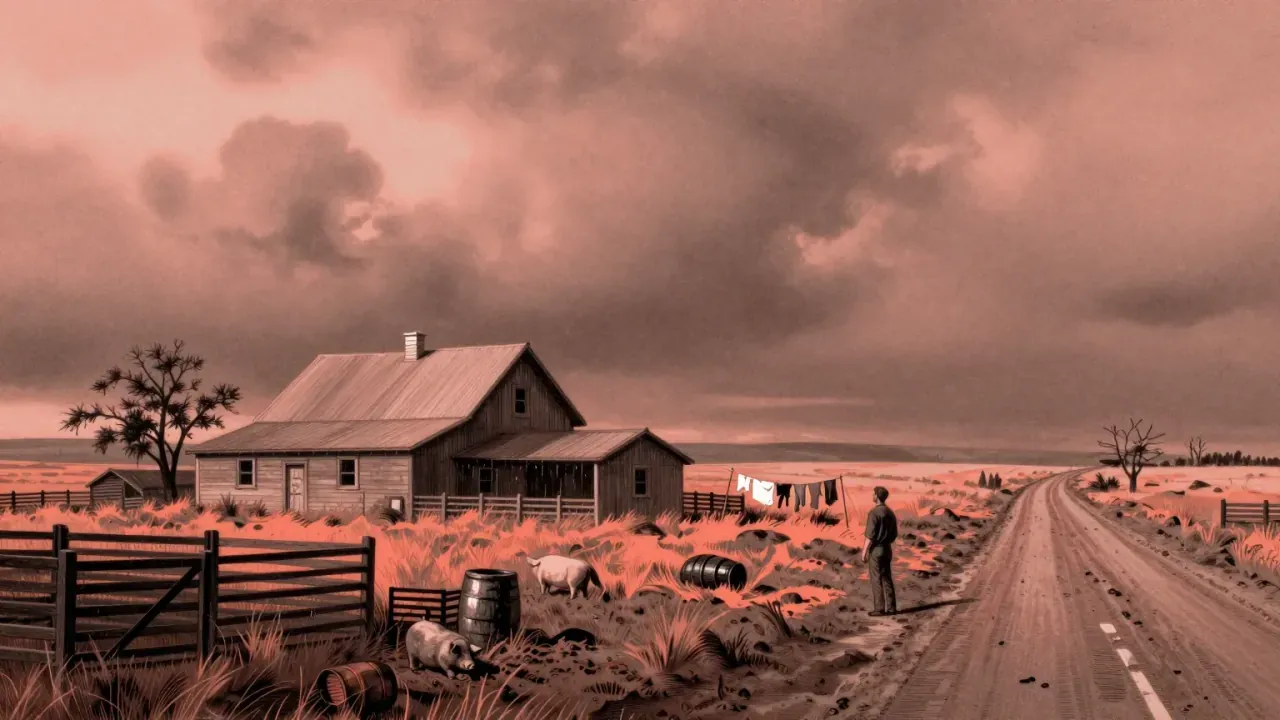
What does not land is the structural strain of its invented romance subplot. The rivalry between Ford and Kelley over Cynthy feels grafted on, its motivations thin and its resolution arbitrary—Kelley’s sudden shift from rival to reluctant marshal lacks grounding in character or history. The Creede sequence, meant to mirror Ford’s earlier betrayal, instead dilutes momentum: the prospector Soapy, the stolen ring, the silver strike—all feel like narrative detours rather than deepening. Some supporting performances verge on caricature: Byron Foulger’s Harry Kane is all bluster and no subtext, and Jeni Le Gon’s role as a saloon singer has no discernible function beyond period colour. The film’s pacing sags in the middle third, where exposition about mining claims and town politics displaces psychological tension. Fuller’s script occasionally leans on exposition that the actors cannot fully absorb—lines about reward money or land deeds sound like plot mechanics rather than lived concerns. The film’s ambition to compress biography into moral fable means some historical texture is lost, and what remains feels selectively flattened rather than distilled.
The price of being known
The themes that matter are reputation, complicity, and the impossibility of self-reinvention. Ford believes killing Jesse will buy him legitimacy—as a husband, a landowner, a man—but every attempt to claim that identity collapses under scrutiny. The film treats fame not as reward but as exposure: the stage re-enactments, the ballad, the crowds who want to kill him for the chance to become famous themselves—all expose how violently society commodifies moral failure. Fuller interrogates the idea of ‘choice’ in constrained circumstances: Ford is not coerced, but he is hemmed in by poverty, jealousy, and the narrow scripts available to him in 1882 Missouri. The film also examines masculinity as performance—Ford’s insistence on fairness (shooting a man only when armed) sits uneasily beside his assassination of an unarmed friend. There is no external villain; the antagonism is internal and social, sustained by expectation, rumour, and the stories people tell to make sense of violence they did not commit but cannot disown.
Who it keeps company with
This film is for viewers who value precision over spectacle, who find tension in silence and moral ambiguity more compelling than clear-cut justice. It suits those familiar with early post-war American cinema—particularly the lean, dialogue-driven Westerns of Anthony Mann or the psychological noirs of Fritz Lang—and who appreciate Fuller’s later work as context. It is not for viewers seeking historical accuracy, kinetic action, or emotional uplift. Those who require narrative symmetry or redemptive arcs will find its ending unsatisfying; those expecting mythic scale will be disappointed by its domestic claustrophobia. A viewer who values lush production design or musical elaboration will find little here to engage them. Someone who prefers exposition over implication may struggle with its ellipses. But for those willing to sit with Ford’s quiet unraveling—and to accept that some consequences have no resolution beyond a single, fatal shot—this remains a tightly wound, morally rigorous study.
Why it lasts
Yes, it is worth your evening—if you approach it as a character study dressed in Western clothes, not as a genre piece. Its 81 minutes pass without bloat, its performances remain grounded, and its central question—how a man lives after choosing infamy—still resonates. It rewards attention to gesture and silence, not just plot. Someone who dislikes low-budget black-and-white filmmaking or finds mid-century American diction stilted may feel detached, but that is a matter of taste, not flaw. A viewer who expects fuller historical context might prefer a documentary, but this is not that. Its value lies in its discipline: every scene serves Ford’s erosion. To dismiss it as ‘dated’ or ‘underproduced’ misses Fuller’s intent—to use constraint as a tool, not a limitation. Given its focused execution and enduring thematic rigour, it earns its place as a significant debut, not a curiosity.