The look of it
Read My Lips is a French thriller set in the overlapping margins of Parisian office life and its underworld, built around two people whose mutual dependence grows from transactional necessity into something more ambiguous and intimate. It does not aim for genre purity or moral clarity, but instead sustains tension through asymmetry: Carla Behm’s near-deafness and Paul Angeli’s parole status make each reliant on what the other lacks — her lip-reading, his physical presence and nerve. The film avoids psychological exposition, preferring to let motive accrue through gesture, silence, and withheld sound. Its structure follows no conventional heist arc; the robbery is less a climax than a pivot, exposing how both characters recalibrate agency once they stop performing roles assigned by others — secretary, ex-con, victim, helper. Audiard and Benacquista treat class, disability, and gender not as themes to be stated but as conditions that shape every decision, every line of dialogue, every cut. The film’s ambition is modest in scale but precise in execution: to show how dignity can be reclaimed not through triumph, but through complicity.
The sound of it
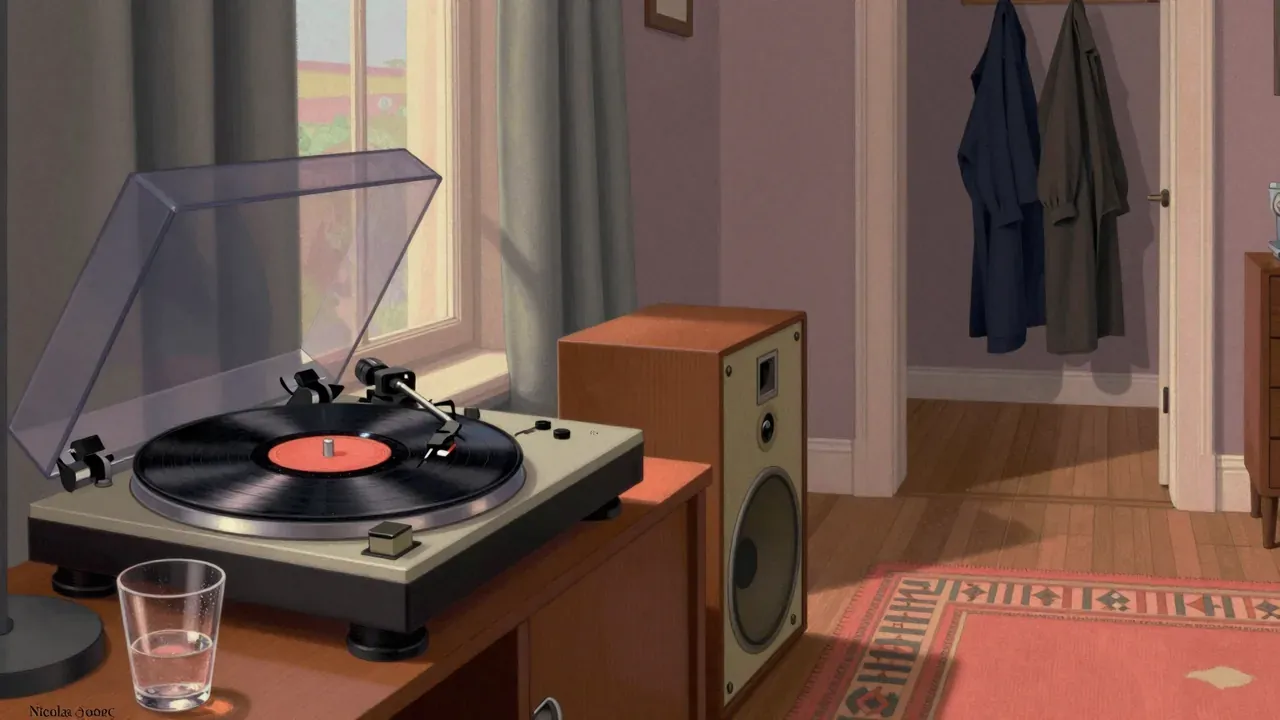
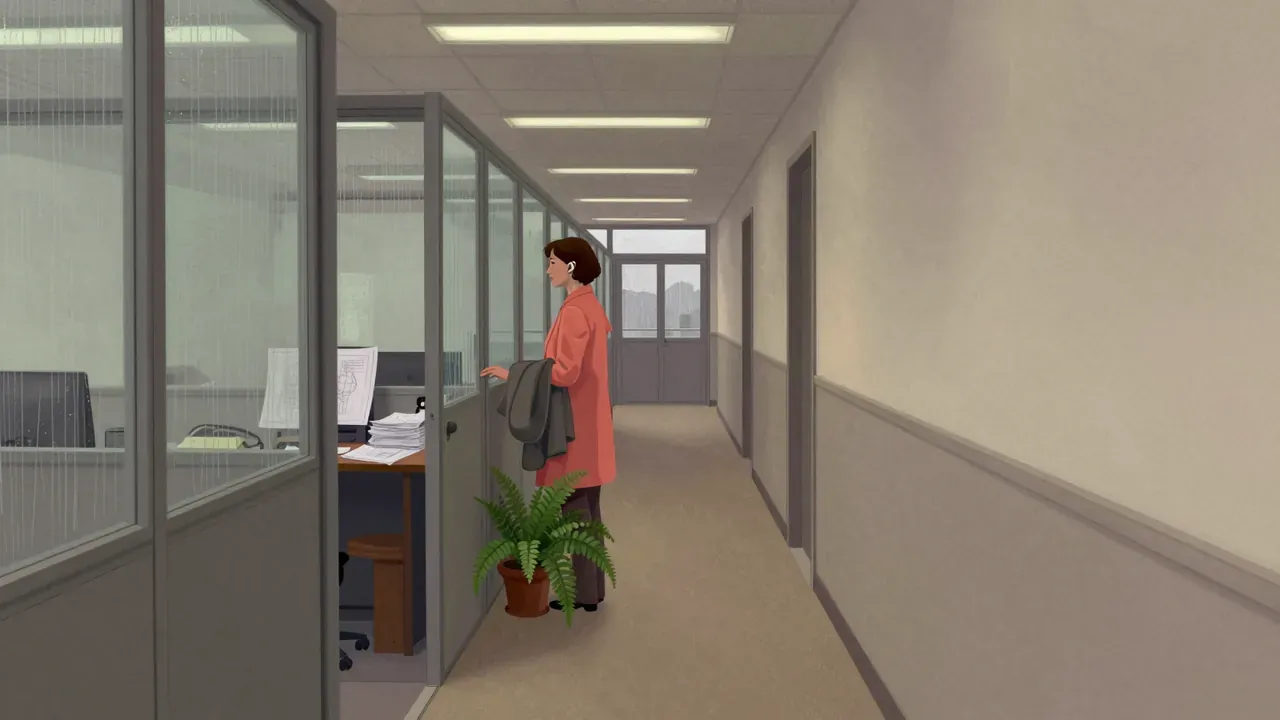
The story unfolds in tight, unembellished sequences, anchored by Emmanuelle Devos’s performance as Carla — restrained, watchful, physically precise in her use of hearing aids and body language. Vincent Cassel plays Paul with a lack of swagger that feels earned, not studied: his charm is intermittent, his competence unreliable, his loyalty conditional. Mathieu Vadepied’s cinematography avoids stylisation; interiors are lit with flat, functional light, exteriors shot in overcast daylight, reinforcing the film’s resistance to romanticism. Juliette Welfling’s editing keeps pace without emphasis — cuts land where attention shifts, not where drama demands. Alexandre Desplat’s score is sparse, often absent, letting acoustics do narrative work: muffled voices, amplified breath, the low hum of office equipment. Sound design, credited to Cyril Holtz and Pascal Villard, is integral: Carla’s subjective audio drops out at key moments, not as effect but as fact. The script gives neither character an origin story, trusting the actors to imply history through hesitation, posture, and the weight of unspoken refusal.
The rhythm of it
What lands is the quiet accumulation of small reversals: Carla’s first deliberate lie to her employer, her calm redirection of Paul’s aggression toward Marchand, the way she holds the car door open just long enough for him to register her authority before closing it. These moments gain force because they are never framed as victories — they are simply actions taken, without fanfare or internal monologue. Devos’s physicality grounds the film: the tilt of her head when listening, the slight delay before she responds, the way she uses her hands not for expression but for orientation. Cassel’s stillness in scenes where Paul is being watched — not acting, just waiting — carries more tension than any chase sequence. The robbery itself works because its mechanics are mundane: freezer doors, ill-fitting gloves, a borrowed car with a faulty lock. Even the final kiss is underplayed — initiated by Carla, but cut short by the engine starting, leaving intention unresolved. Nothing here feels inflated; everything feels tested against plausibility, and most of it passes.
The looseness in it
What does not land is the peripheral cast’s function as shorthand: Annie exists only to be dismissed, Masson and Morel serve as interchangeable office antagonists, and Marchand remains a surface-level threat, defined more by Olivier Gourmet’s physical presence than by any interior logic. The construction company setting is never made materially specific — we learn nothing about its projects, finances, or hierarchy beyond what Carla’s workload implies. Some plot turns rely on convenience rather than causality: Paul’s access to Marchand’s nightclub feels unearned, and the ease with which Carla locates the money in the freezer strains credulity without compensating irony or thematic payoff. The film’s resistance to exposition occasionally becomes opacity: Paul’s debt, his parole conditions, even the nature of his prior crime remain vague, not as mystery but as omission. This isn’t ambiguity by design — it’s information withheld without narrative return. A viewer seeking coherence in motivation or consequence may find the second half drifting, not deepening.
The weight of it
The themes that matter are those embedded in routine: the labour of being unseen, the exhaustion of compensating for difference, the slow erosion of self-worth in environments that offer no feedback loop except dismissal. Carla’s deafness is not metaphorical — it shapes how she moves through space, how she misreads intent, how she must anticipate speech before it begins. Paul’s parole status operates similarly: his freedom is conditional, surveilled, constantly at risk of revocation. Their alliance is not redemptive but pragmatic — a temporary alignment of vulnerabilities. Class is treated as infrastructure: Carla’s office job offers no mobility, only endurance; Paul’s options are limited to night work or crime, with no third path visible. Gender enters not through dialogue but through distribution of labour: Carla organises, remembers, interprets; Paul executes, confronts, absorbs violence. Neither is idealised. Neither is absolved. The film refuses to resolve these tensions, suggesting that dignity in such circumstances is not won, but temporarily held — like breath before speaking.
The audience for it
This film is for viewers who value precision over propulsion, who find tension in withheld sound and significance in a glance held half a second too long. It suits those accustomed to French-language cinema that trusts silence, and those interested in disability as lived condition rather than narrative device. It is not for viewers who require clear moral framing, escalating stakes, or character arcs that resolve into growth or punishment. Those expecting a conventional thriller will find its pacing inert; those looking for romance will find its intimacy too transactional; those needing exposition will be frustrated by its ellipses. A viewer who values emotional realism over dramatic symmetry — who finds more truth in Carla adjusting her hearing aid than in a climactic confrontation — will respond strongly. Someone who needs cause-and-effect clarity, or who reads ambiguity as evasion, will leave unconvinced. Change the sound design to foreground music, or add voiceover explaining Paul’s past, and the film’s central proposition — that agency emerges in the gaps — would collapse.
The time it takes
Yes, it is worth your evening — provided you approach it without expectation of resolution or reward. Its 115 minutes unfold with the weight of ordinary time: fatigue accumulates, decisions are made without fanfare, consequences arrive without emphasis. It earns its runtime not through incident but through sustained attention to how two people recalibrate their relationship to power, one small act at a time. You will not leave energised, nor will you feel instructed — but you may notice, afterwards, how much you rely on auditory cues you’ve never named, or how often you mistake compliance for consent. That shift in perception is the film’s quiet achievement. It is not for those who measure value in plot density or emotional catharsis. But for those who accept that some films work like a tuning fork — not by making noise, but by changing how you hear the world — this one resonates cleanly. It asks for patience, and repays it with precision.