A crime career told like a job
Goodfellas is Martin Scorsese’s 1990 account of Henry Hill’s twenty-five years inside the Lucchese crime family, adapted with journalist Nicholas Pileggi from Pileggi’s book Wiseguy. It runs from Hill’s boyhood fascination with the wiseguys across the street to his exit through witness protection in 1980. Scorsese has described wanting the picture to open abruptly and keep accelerating from there, so that watching it feels closer to a compressed trailer than a conventional drama. The ambition is not to glamorise the Mafia but to document its routines: the sit-downs, the shakedowns, the wives kept separate from the girlfriends, the constant low hum of money changing hands. It is a film about work, told at the pace of the men doing it, treating spectacle and tedium as two sides of the same job rather than opposites.
Broken chronology, unbroken camera moves
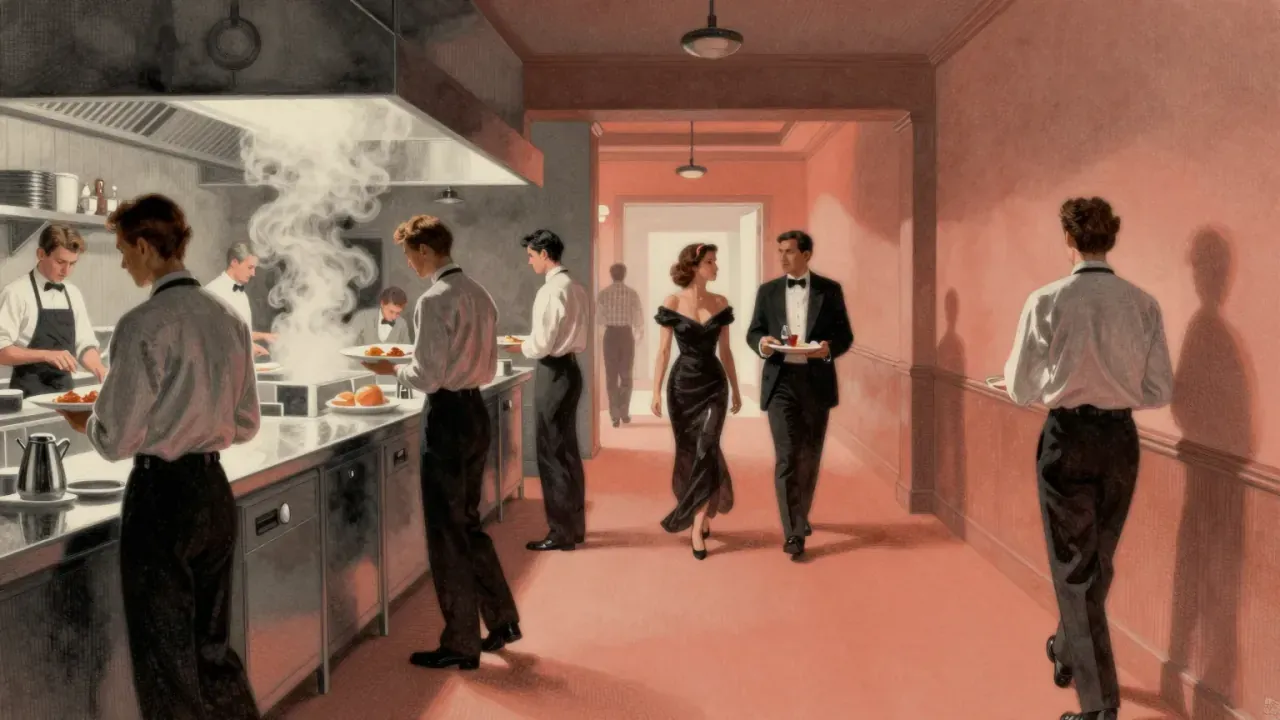
The script went through twelve drafts as Scorsese and Pileggi abandoned strict chronology, opening mid-scene with a killing before doubling back to Henry’s childhood. Ray Liotta’s narration, delivered in a flat, confiding register, carries the episodic structure, while Joe Pesci’s Tommy DeVito supplies the unpredictable violence that keeps every scene tensed. Robert De Niro plays Jimmy Conway with a stillness that reads as control until it curdles into paranoia. Michael Ballhaus’s camera tracks characters through kitchens, clubs and prison cells in long unbroken movements, most famously the Copacabana entrance, while Thelma Schoonmaker’s editing compresses years into minutes through freeze frames and abrupt cuts. The film’s music, credited to Pete Townshend, leans on period pop and rock rather than a conventional score, functioning as chapter markers as much as mood-setting.
Where the craft pays off
The Copacabana tracking shot earns its reputation: it sells Henry’s intoxication with access more efficiently than any line of dialogue could, gliding through a kitchen and past a maître d’ to a table conjured from nowhere. Pesci’s Tommy is the film’s most quoted element for good reason, turning a bar joke about his own sense of humour into a genuine, unresolved threat without a single cut. Bracco’s Karen supplies the outsider’s eye the film needs, her fascination with Henry’s money curdling into complicity and then fear. The use of narration from both Henry and, later, Karen gives the film a doubled perspective most gangster pictures skip. And the final act, as Henry’s cocaine use accelerates the cutting rate while helicopter surveillance closes in, matches technique to psychological state in a way that has been widely imitated since.
What gets short-changed
The women beyond Karen remain thin, present mainly to register disapproval or fear at the edges of scenes built around the men. The stretch covering the aftermath of the Lufthansa heist and the string of murders that follows moves through victims quickly enough that some register only as names ticked off in narration rather than people the film has let us know. Paul Sorvino’s Paulie Cicero, meant to anchor the film’s sense of hierarchy, is given comparatively little to do once the plot moves past its opening act, his authority more asserted through Henry’s narration than dramatised on screen. Anyone hoping for a reckoning, moral or narrative, will not find one; Henry’s closing complaint about now eating ordinary food like an average person is played for irony rather than consequence, which leaves little room for judgement.
Money, loyalty and belonging
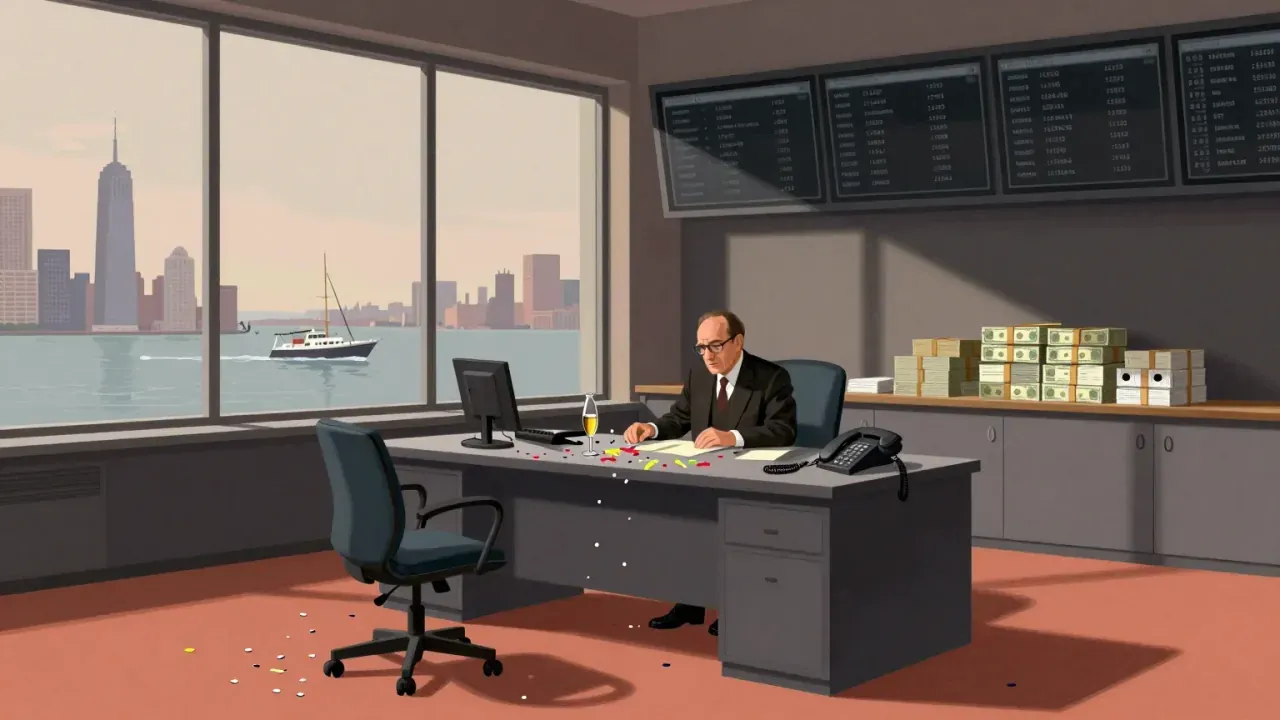
The film keeps returning to money as its actual subject rather than violence for its own sake, following the arithmetic of envelopes, kickbacks and skimmed casino profits that make the lifestyle function day to day. Loyalty is treated as a transaction rather than a virtue: Henry’s affection for Jimmy and Tommy survives right up until his own life is at risk, at which point it evaporates without much ceremony. New York is rendered as a set of interiors, clubs, kitchens, prison visiting rooms, rather than skylines, keeping the focus on proximity and hierarchy among men who all know each other’s business. There is also a quieter thread about assimilation: Henry, half Irish and half Sicilian, wants entry into a closed Italian world, and the film tracks what that partial belonging costs him even at the height of his success.
Who the film is built for
This suits viewers who want a crime film more interested in the mechanics of an enterprise than in shootouts, watching a criminal operation run like a business with its own middle management and office politics. Anyone drawn to unreliable narration, or to editing and camera movement doing dramatic work dialogue usually carries, will find plenty to study, and it rewards a second viewing once the timeline’s tricks are known. It is not for viewers uncomfortable with sustained, casual violence played for shock rather than catharsis, including scenes that treat murder as a punchline. Those wanting a female lead with real narrative agency should look elsewhere, since Karen’s arc, however well acted, stays reactive to Henry’s choices throughout, and viewers wanting clear moral consequence by the end will also come away unsatisfied.
Whether the two and a half hours pay off
At 146 minutes it asks for a real commitment, but the pace Scorsese set out to achieve holds up; the film rarely drags even on repeat viewings, because incident is so densely packed into the first two acts. It arrived on a $25 million budget against which its $46.8 million gross looks modest for a film now considered one of the genre’s high points, and that gap between commercial performance and reputation is worth knowing before watching. Critics have been near-unanimous in its favour, and the Academy recognised Pesci even if the film itself went unrewarded for its bigger prizes. Whether it belongs among the best American films ever made is a separate question from whether it is worth an evening, and on the narrower one the answer is straightforward: the craft is dense enough, and the performances sharp enough, to earn back the two and a half hours.