The look of it
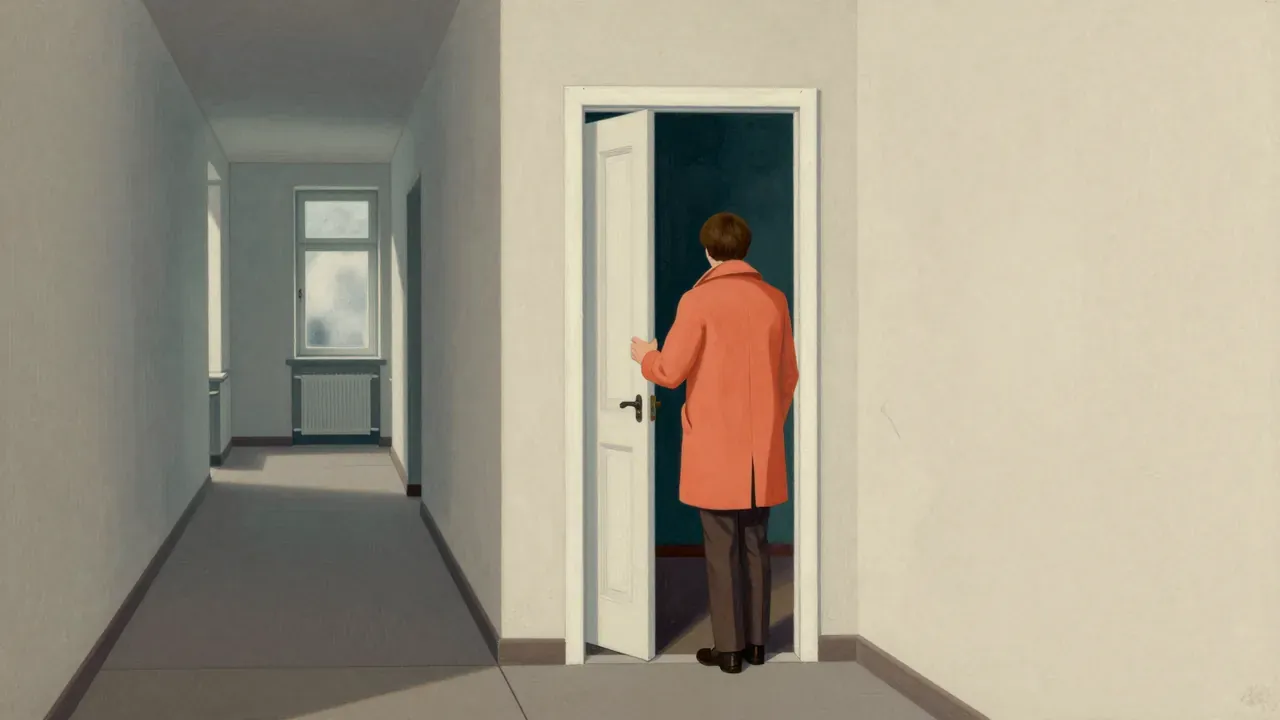
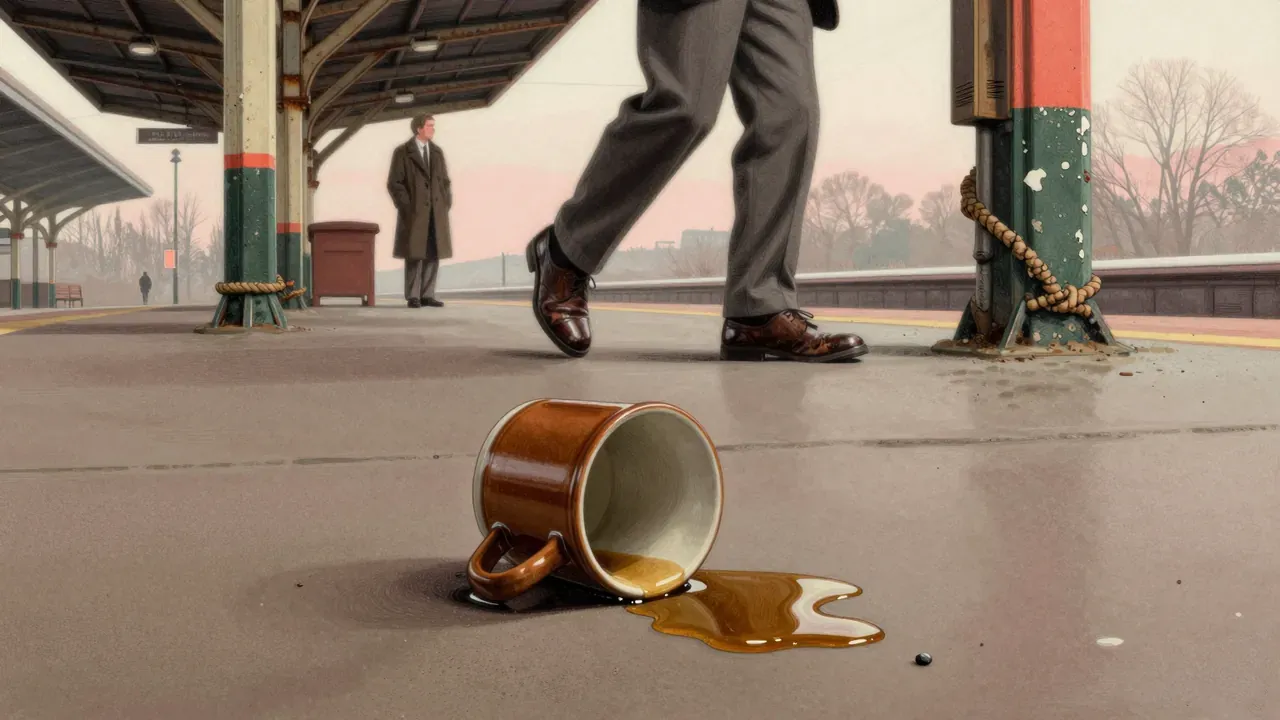
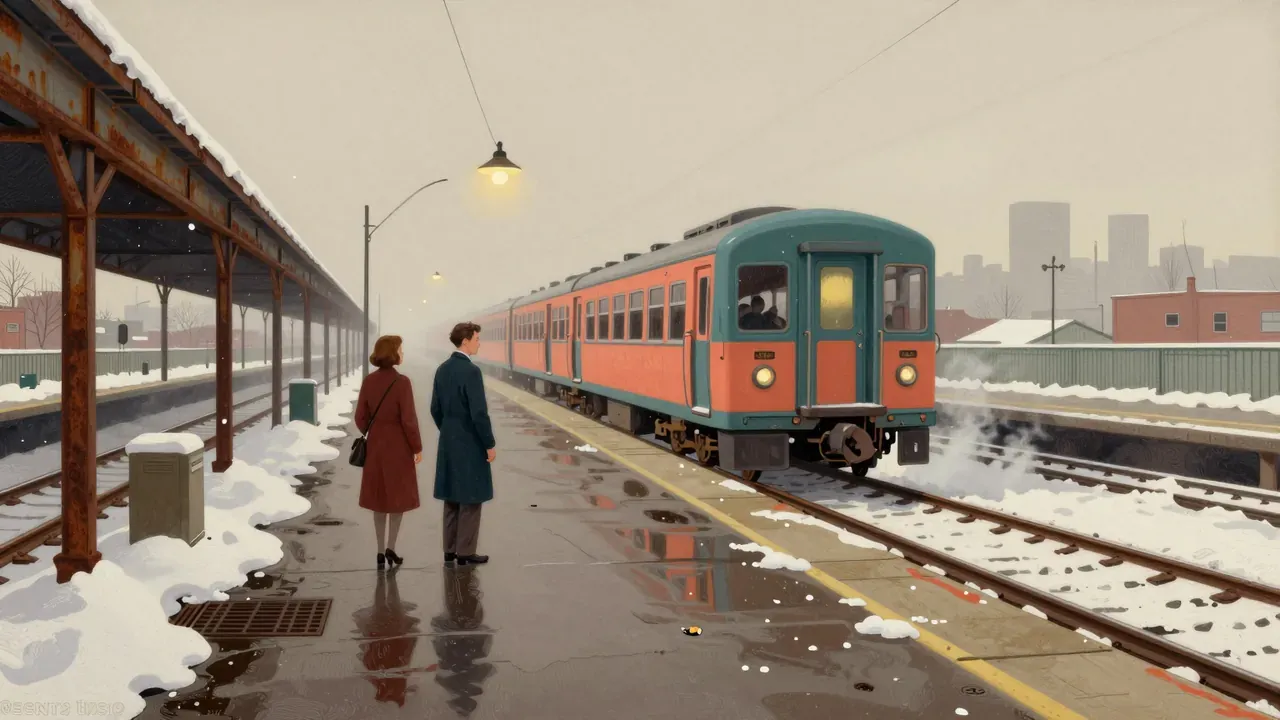
Blast of Silence is a low-budget American crime film from 1961 that attempts to fuse noir fatalism with existential introspection, using New York City as both setting and psychological landscape. It is not a procedural or a thriller in the conventional sense, but a character study built around silence, memory, and moral erosion — structured less by plot mechanics than by the protagonist’s internal drift. Allen Baron, who wrote, directed, and stars, treats the hitman Frankie Bono not as a genre archetype but as a man unmoored by his own past, returning to a city that refuses to recognise him. The film’s ambition lies in its restraint: minimal dialogue, sparse scoring, voiceover narration added late in post-production to impose coherence on what was originally a fragmented, location-driven shoot. Its formal choices — handheld camerawork, unpermitted street filming, raw interiors — are not stylistic flourishes but necessities turned into aesthetic logic. It tries, deliberately and without apology, to be a small, hard, unsentimental thing: a portrait of alienation dressed in trenchcoat and snow.
How it holds its breath
The story unfolds over Christmas week in New York, following Frankie Bono as he stalks a target, revisits old haunts, and fails at human connection. Baron’s performance is physically contained and emotionally recessive — he rarely raises his voice or makes eye contact, which suits a man whose profession depends on invisibility. Lionel Stander’s uncredited narration (written by blacklisted Waldo Salt under a pseudonym) adds a layer of literary irony, its clipped, stylised cadence contrasting with the film’s visual plainness. Merrill Brody’s cinematography favours available light and tight framing; exteriors are shot on real streets without permits, giving them a documentary grain, while interiors — some filmed on West 45th Street — feel cramped and airless. Meyer Kupferman’s score is sparse, often absent, letting traffic, wind, and silence carry weight. The final chase, shot during Hurricane Donna at a derelict Jamaica Bay site, uses weather and geography as narrative agents: rain slicks pavement, wind distorts sound, and isolation becomes literal. Every technical decision serves the central idea: that this man has no place left to stand.
What sticks to the skin
What lands most firmly is the texture of New York in winter — the steam rising from grates, the glare off wet pavement, the way shop windows reflect passers-by who do not look back. These images hold up not because they are beautiful but because they are precise and unvarnished. The film’s moral ambiguity also registers clearly: Frankie is neither heroic nor monstrous, but a man whose capacity for empathy has atrophied through repetition. His awkwardness at Petey’s Christmas party, his failed attempt to kiss Lorrie, his sudden violence against Big Ralph — these moments avoid melodrama by refusing explanation. The narration, though written under constraint, works because it does not interpret Frankie’s actions so much as observe them with weary detachment. The final sequence — the ambush by the water, the single-take fall into the estuary — lands with physical and symbolic finality. There is no music, no close-up on a face, no lingering on death: just a body disappearing into dark water, then cut to black. That economy gives the ending its quiet authority.
Where the gears grind
What does not land is the tonal friction between the narration and the visuals. Salt’s writing is dense, alliterative, and self-consciously literary — ‘a blast of silence’ is a phrase that belongs in a poem, not a street-level crime film — and it occasionally overwhelms the understated performances and locations. The film’s attempt to balance noir convention with existential abstraction creates slippage: some scenes feel undermotivated, others overburdened by implication. Frankie’s trauma remains vague, his motivations thin beyond professional obligation and residual guilt. The supporting characters — Petey, Lorrie, Troiano — exist primarily as mirrors or obstacles, not as people with interior lives. The film’s refusal to explain leaves room for resonance, but also for disengagement: viewers expecting narrative propulsion or psychological exposition may find the pacing inert, the characterisation opaque. The lack of permits, while resourceful, sometimes shows in inconsistent lighting or muffled sound — not as charm, but as limitation.
What it is really about
The themes that matter are rooted in place and erasure: how cities absorb and discard people, how violence becomes habitual, how memory functions not as narrative but as sensory intrusion — a smell, a street corner, a voice. It is a film about the impossibility of return: Frankie cannot go home, not because the city has changed, but because he has become incompatible with it. Class is present but unspoken — in the cramped apartments, the greasy spoons, the way Frankie moves through spaces he once belonged to but now observes like a tourist. Existential dread is not philosophical posturing here but physiological: the cold, the fatigue, the hollow echo of footsteps in empty corridors. The Christmas setting is not ironic decoration but structural — a time of enforced togetherness that throws Frankie’s solitude into sharper relief. There is no redemption arc, no catharsis, only consequence: the contract must be fulfilled, the debt paid, the body disposed of. The film treats fate not as destiny but as logistics.
Who it lets in, and who it keeps out
This film is for viewers who value atmosphere over exposition, who respond to visual precision and moral ambiguity, and who are comfortable sitting with unresolved tension. It rewards patience, attention to detail, and familiarity with mid-century American urban realism — fans of Shadows, Pickup on South Street, or early Cassavetes will likely find common ground. It is not for those who require clear motivation, narrative momentum, or emotional resolution. Viewers expecting genre satisfaction — suspense, clever plotting, charismatic villainy — will leave frustrated. Those who dislike voiceover, or who find stylised narration alienating, may struggle with its rhythm. A viewer who values craft over comfort, or who finds meaning in absence rather than abundance, will connect more readily. Someone who prefers tightly plotted thrillers — say, The Killing or Point Blank — would reasonably disagree with this verdict; had the script tightened its psychological throughline or reduced the narration’s density, the film might have broadened its appeal without sacrificing its rigour.
Whether it earns your time
Yes, it is worth your evening — provided you approach it as a singular artefact rather than a conventional narrative. Its seventy-seven minutes move deliberately, but never waste time: every shot serves the central preoccupation with displacement and consequence. It repays rewatching, not for hidden clues, but for shifts in emphasis — how a glance lingers longer on a window reflection, how silence deepens in the second half, how the city itself seems to tighten its grip. It is not entertaining in the usual sense, but it is absorbing: a compact, unsparing study of a man who has forgotten how to be seen. Those who find value in films that resist easy interpretation, that privilege mood and texture over exposition, will find it richly sustained. It is not for casual viewing, but for attentive watching — the kind where you notice the rain on a coat collar, or the way a cigarette smoke curls upward and vanishes. That level of attention is its price of admission — and its reward.