A case that was still unsolved when the film was made
Memories of Murder is Bong Joon-ho’s 2003 film, co-written with Shim Sung-bo, its plot drawn from Kim Kwang-lim’s 1996 stage play Come to See Me, following two detectives investigating a series of rapes and murders in a small South Korean town in October 1986. Park Doo-man, played by Song Kang-ho, is a local detective who relies on intuition, superstition and coerced confessions; Seo Tae-yoon, sent from Seoul, arrives with more rigorous method and quickly proves the local force’s first suspect, a cognitively disabled young man, could not have committed the crimes. Bong drew the script from real case reports and interviews with a detective who had actually worked the investigation, which was based on South Korea’s real, unsolved hunt for a serial killer active in Hwaseong through the 1980s, later identified in 2019 as Lee Choon-jae, long after the film was made.
Filming everywhere except the real crime scenes
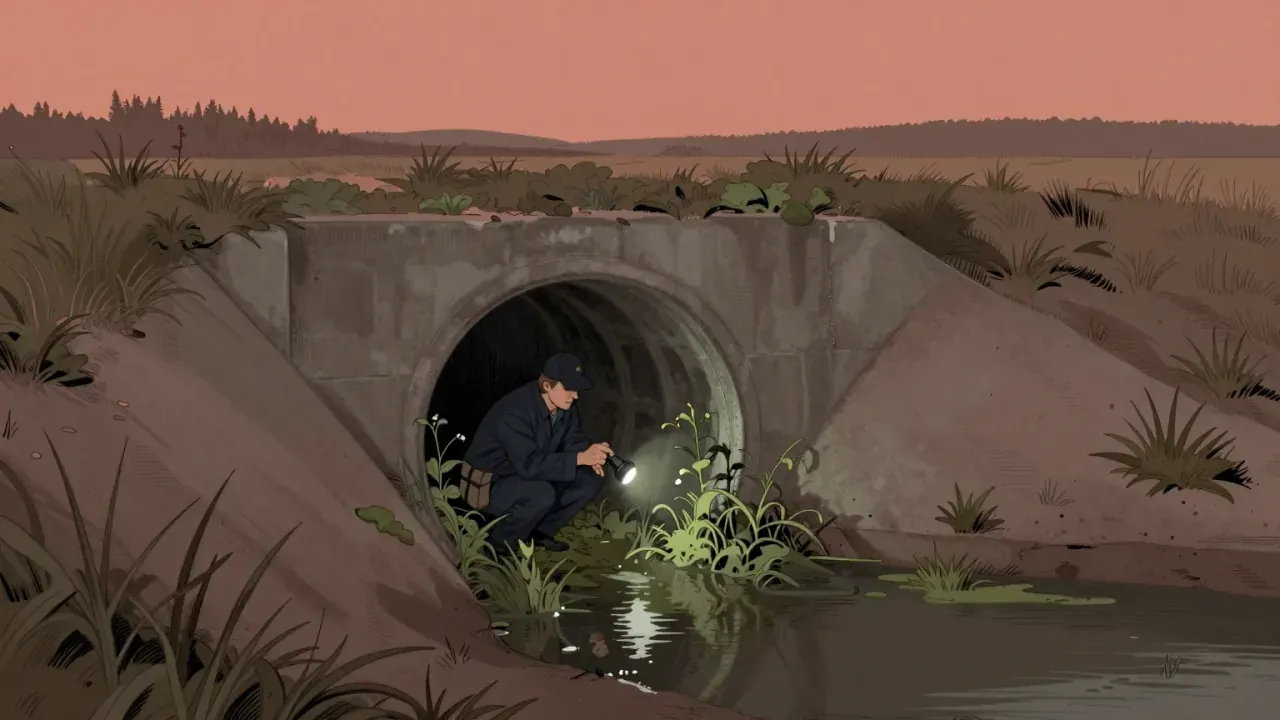
Bong avoided filming in Hwaseong itself out of consideration for the victims’ families, who were still alive at the time of production, and shot instead in Jangseong and Haenam counties, with the tunnel sequences filmed near Jinju. Composer Taro Iwashiro, chosen after Bong decided a more famous name might overwhelm the film, built a score around rhythms that feel almost, but not quite, connected, meant to mirror the blank spaces and missing information running through the investigation itself. Song’s performance carries the film’s tonal shifts, moving between broad physical comedy in the early interrogation scenes and a much bleaker register once the case’s real difficulty becomes clear, without ever feeling like two different characters.
A closing shot that earns its discomfort
The film’s structural gamble, opening with scenes closer to farce, coerced confessions, botched stakeouts, a suspect apprehended for an unrelated crime, before tightening steadily into genuine dread, works because neither register undercuts the other; the comedy is what makes the eventual violence land harder rather than softer. Kim Sang-kyung’s Seo, initially presented as the reliable, modern counterweight to Park’s crude methods, is allowed to unravel just as completely once his own theory about the killer collides with a system that lacks the forensic tools, like DNA testing, to actually confirm it. The film’s final image, Song’s character staring directly into the camera after realising the killer was never caught, is the rare closing shot that earns the discomfort it’s clearly aiming for.
Red herrings that repeat a little too often
The middle stretch, which cycles through several red herrings including a masturbating miner and an accused man cleared by an alibi, occasionally repeats its own rhythm of false hope and collapse more times than the plot strictly needs, testing patience before the Hyeon-gyu suspect finally emerges as the film’s real focus. Some of the period comedy around Park and his partner’s investigative methods, while purposeful, sits at a slight tonal remove from the film’s later, much grimmer sequences involving the surviving traumatised victim, and the shift between them can feel abrupt on first viewing. The Seoul-versus-provincial rivalry between the two detectives, while effective early on, becomes less central once the film settles into a straighter procedural mode.
Justice blocked by what the police couldn’t do
Justice in the film is structurally unavailable rather than simply delayed: the local police lack the forensic capacity to test the one piece of physical evidence that might have confirmed a suspect, and have to send it to the United States, a delay the story treats as symptomatic of the era’s broader institutional limits rather than as a plot obstacle. Memory operates as the film’s real ending, since the case is never solved within the story, and the film closes not on resolution but on Park’s memory of the crime scene resurfacing decades later, unprompted, when a stranger mentions a similarly ordinary-looking man. Crime, treated at the level of a whole community rather than an individual act, becomes a portrait of a country whose institutions, at that specific historical moment, were not yet equipped to catch the killer in its midst.
Who the unresolved case suits
This suits viewers who want a procedural that refuses the genre’s usual resolution, anyone interested in South Korean cinema before its recent international profile, and admirers of Song Kang-ho’s ability to shift between comic and genuinely disturbing registers within a single performance. It is a difficult match for viewers who need a case actually solved by the closing credits, since the film’s entire final act is built around the investigation’s failure rather than its success. The material involving violence against women and a cognitively disabled suspect’s coerced confession is also handled with a bluntness that some viewers will find hard going.
A cult film that grew into a genre landmark
Reviews remain strongly positive: a 95 percent Tomatometer score, an 82 Metascore and an average rating above 8 out of 10, figures that have held up as the film’s reputation has grown internationally well past its original cult following in Korea. At 132 minutes it never feels padded despite its unresolved structure, since Bong uses the case’s failure itself as the film’s actual destination rather than as a withheld payoff. It is worth an evening for anyone willing to accept a crime film whose entire achievement is refusing to give its investigators, or its audience, the resolution the genre usually promises.