The weight of a glance
A Better Tomorrow is a Hong Kong crime film that sets out to reassert chivalric values — loyalty, honour, sacrifice — within the collapsing moral landscape of mid-1980s British Hong Kong. It does so not through sermonising but through a tightly wound triadic structure: a disgraced triad elder (Ti Lung), his idealistic cop brother (Leslie Cheung), and a charismatic, morally unmoored friend (Chow Yun-fat) who becomes both catalyst and conscience. The film’s ambition is formal as well as thematic: to fuse the stoic fatalism of Melville’s Le Samouraï with the emotional register of wuxia, translating swordplay codes into pistol duels and brotherly duty into bullet-riddled catharsis. Its conception was reactive — John Woo returned from Taiwan disillusioned by studio constraints and cultural drift, and saw the project as his first opportunity to direct something personal, not contractual. That intent is legible in every frame: this is not a genre exercise dressed up as meaning, but a meaning-driven film that uses genre as its grammar. It treats melodrama seriously, violence ritually, and redemption as conditional — earned only in blood, not declared. Word count: 148
The shape of the story
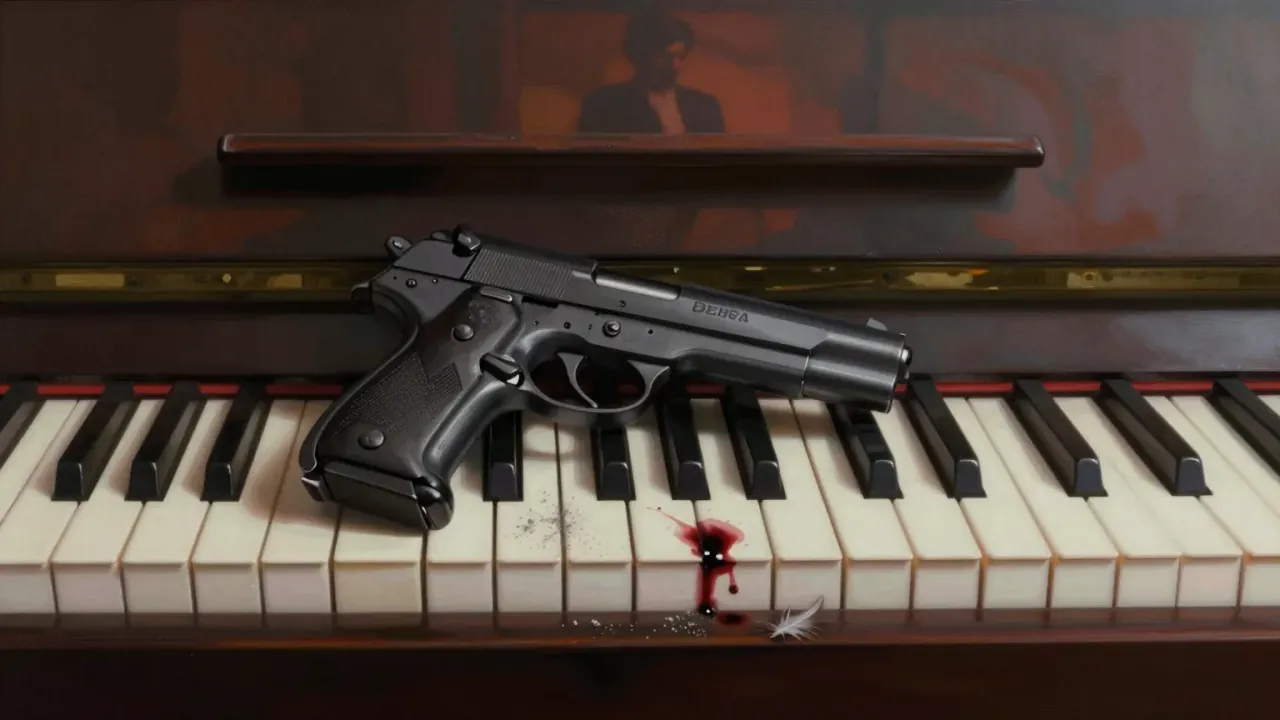
The story hinges on Ho’s return from prison and his failed attempts at reconciliation — with Kit, with society, with himself — while Mark steers him back toward vengeance and self-annihilation. Performances are anchored in physical restraint: Ti Lung carries Ho’s shame in his posture, Cheung’s Kit vibrates with suppressed grief and rigid principle, and Chow Yun-fat’s Mark moves like smoke — charming, lethal, emotionally porous. Horace Wong Wing-Hang’s cinematography favours medium shots and shallow focus, keeping faces lit but backgrounds submerged; interiors feel airless, exteriors sun-bleached and indifferent. Kam Ma and David Wu’s editing sustains rhythm without flash — cuts land cleanly, action sequences unfold with spatial clarity, and silence is used as punctuation, not pause. Joseph Koo’s score is elegiac brass and piano, underscoring loss rather than triumph. The gunplay — slow-motion, dual-wielding, rain-slicked — is choreographed not for spectacle alone, but as stylised ritual: each shot a vow, each reload a hesitation before fate. Word count: 152
What lands
What lands most decisively is the film’s emotional architecture: the unbearable tension between duty and love, law and loyalty, reform and retribution. The final confrontation — not between rivals but between brothers, one in uniform, one in blood — lands with cumulative force because every prior scene has calibrated their distance with precision. Chow Yun-fat’s star-making turn works because Mark is never reduced to quip or charisma; his charm is weaponised, his vulnerability deferred until it can no longer be contained. The film’s visual language also coheres: the recurring motif of mirrored surfaces — shop windows, car windshields, rain puddles — reflects fractured identity without explanation. Even minor roles hold weight: Waise Lee’s Shing is chillingly banal, not cartoonishly evil; Emily Chu’s Jackie provides quiet counterpoint, her presence underscoring what Kit stands to lose beyond ideology. The pacing, though deliberate, never drags — each scene serves the central triangle, and nothing lingers past its emotional utility. Word count: 156
What does not
What does not land is the romantic subplot between Kit and Jackie. It exists primarily to give Cheung’s character domestic stakes, but feels grafted on rather than grown — their scenes lack the same psychological density as the male relationships, and Jackie’s agency is limited to waiting, worrying, and reacting. The film’s gender politics are of their time and place: women occupy supportive or decorative roles, and while this reflects the triad world it depicts, it also limits the scope of its moral inquiry. Some supporting characters — Sek Yin-Tsi’s detective, Kenneth Tsang’s boss — remain functionally opaque, serving plot mechanics more than thematic resonance. The film’s reliance on archetypal roles occasionally flattens nuance: Kit’s rigidity borders on dogma, and Ho’s arc risks simplification if read as pure redemption rather than tragic recalibration. These are not flaws in execution — the craft is consistent — but structural choices that narrow the film’s emotional bandwidth. Word count: 154
The cost of chivalry
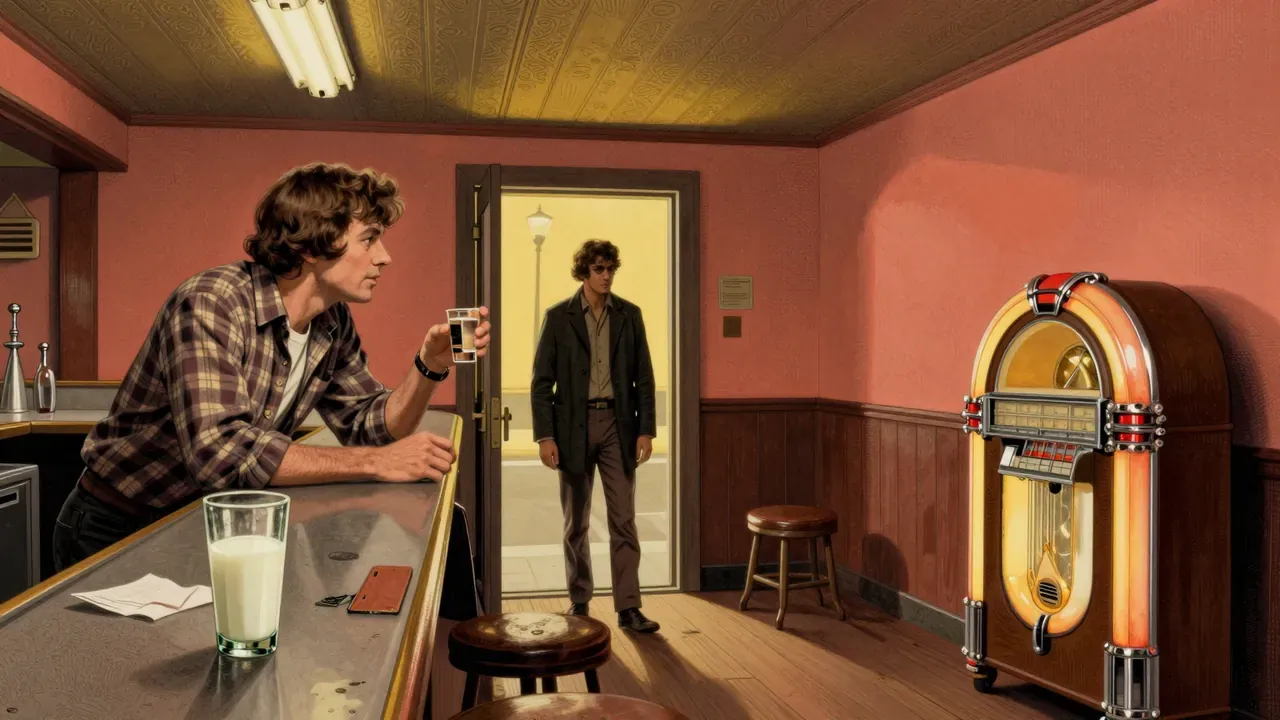
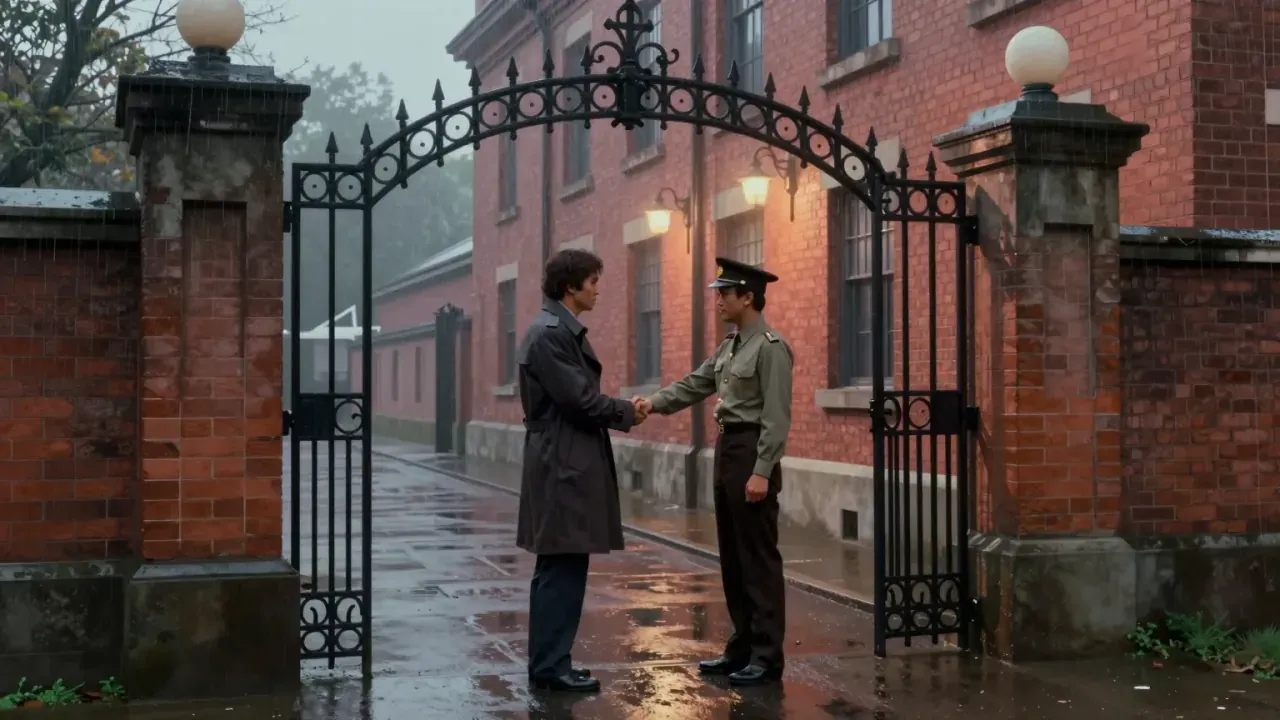
The themes that matter are filial duty as moral compass, honour as performance under pressure, and masculinity as a set of binding contracts — with family, with code, with self. The film treats loyalty not as abstract virtue but as daily practice: Ho’s refusal to betray Mark even when it costs him Kit’s trust; Mark’s insistence on standing beside Ho despite knowing where it leads. There is no moral neutrality — every character chooses alignment, and those choices accrue consequence. The setting matters too: British Hong Kong in 1986 is not backdrop but pressure chamber — the looming 1997 handover haunts the film’s preoccupation with legacy, transition, and irreversible decisions. The title’s irony is structural: there is no ‘better tomorrow’ promised, only the possibility of dying with integrity today. This is not optimism, but dignity as last recourse. The film’s enduring power lies in how it frames ethics as embodied, not theoretical — worn in a coat, held in a gaze, sealed in a handshake before gunfire. Word count: 150
Who walks with it
This film is for viewers who value moral complexity over resolution, who respond to physical acting over exposition, and who accept that catharsis may arrive soaked in blood rather than light. It rewards attention to gesture, framing, and silence — not just what is said, but how a glance shifts, how a door closes, how long a pause lasts. It is not for those who require psychological realism in motivation, who find stylised violence alienating, or who expect female characters to drive narrative agency. Anyone expecting procedural authenticity or sociological critique will be disappointed: this is myth-making, not reportage. Those who dismiss melodrama as inherently shallow will miss its discipline — every tear here is earned, every betrayal calculated. A viewer who prefers irony over sincerity, or ambiguity over conviction, may find its moral gravity oppressive. Word count: 152
Is it worth your evening
Yes, it is worth your evening — provided you watch it as a crafted object, not a historical document or a template for modern storytelling. Its 95 minutes move with purpose, its performances remain vivid decades on, and its visual grammar still feels urgent, not dated. To dismiss it as ‘old-school’ is to mistake coherence for convention. Those who find it inert likely expect faster pacing or more explicit subtext — but its power resides in what is withheld. Someone who values naturalism over symbolism, or prefers ensemble dynamics over triangular intensity, may leave unmoved. A different verdict would follow if the film were remade with contemporary pacing or gender-balanced roles — but then it would be another film entirely. Its worth lies precisely in its unapologetic singularity. Word count: 150