The look of it
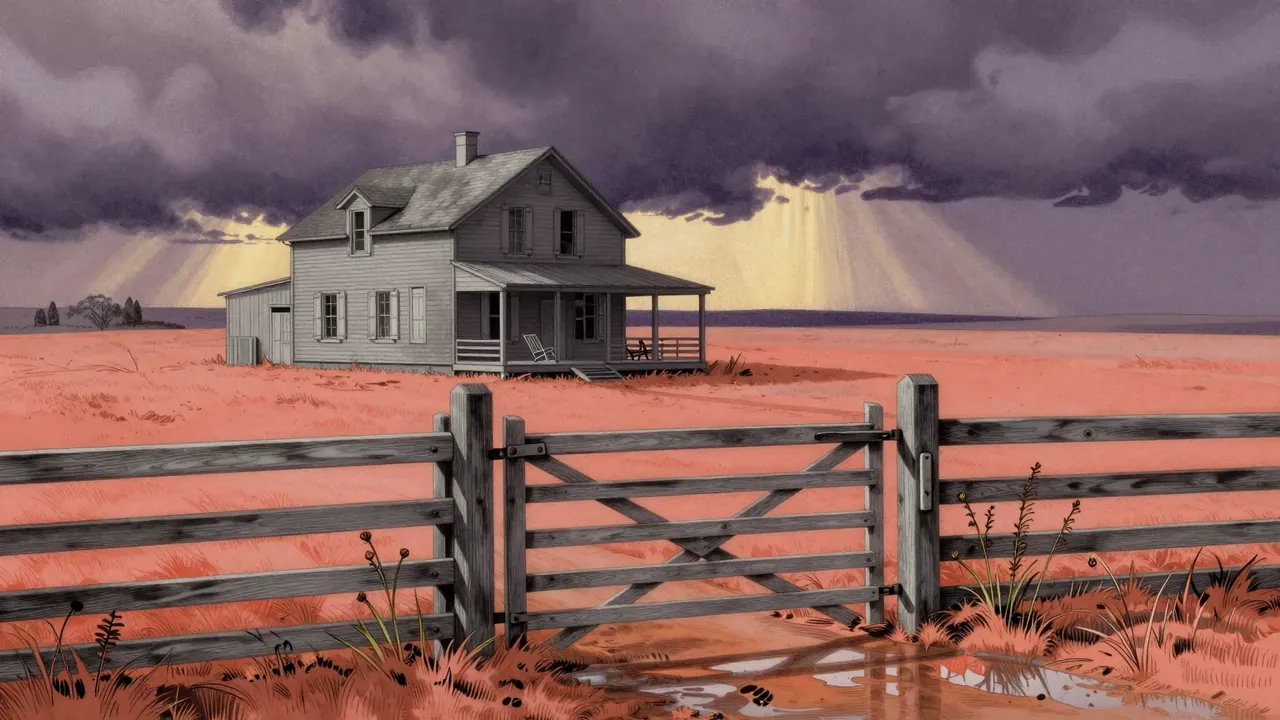
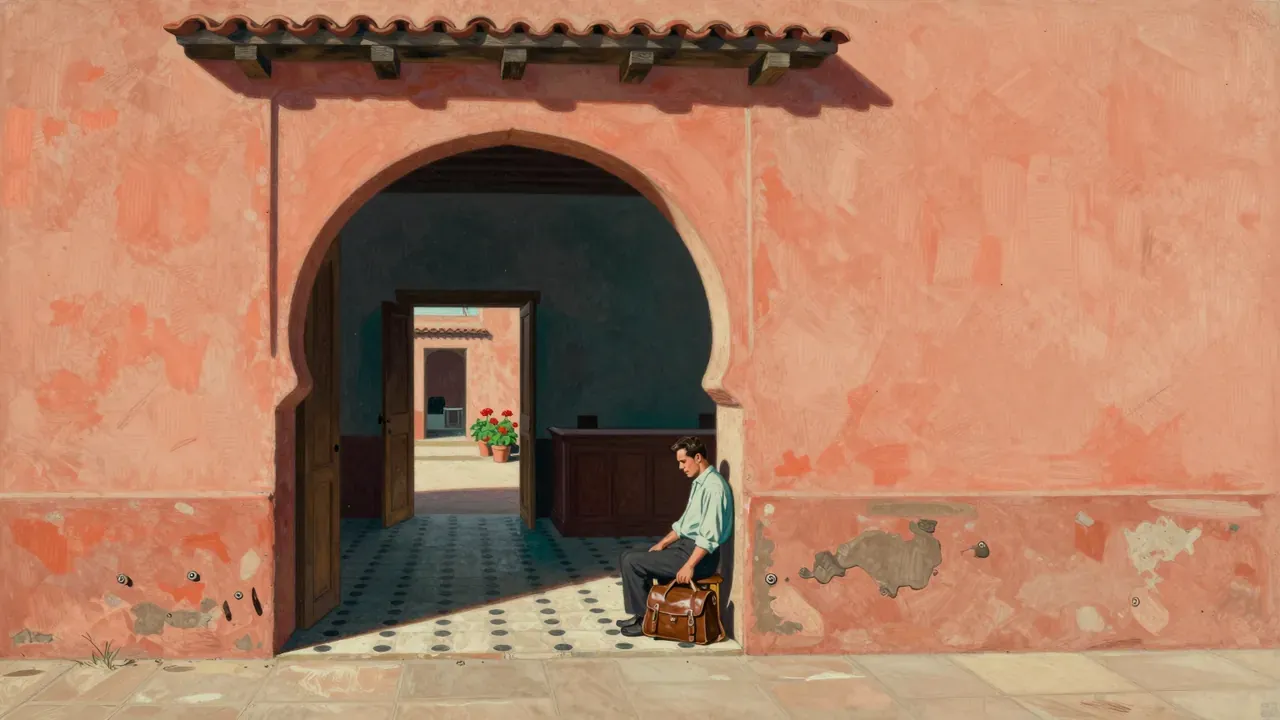
Ride the Pink Horse is a film noir set not in rain-slicked city streets but in the sun-bleached, fiesta-drenched towns of northern New Mexico — San Pablo and Santa Fe — during early September. It attempts something rare for 1947 Hollywood: to transpose noir’s moral claustrophobia and post-war alienation into a rural, bilingual, binational landscape where Anglo outsiders are outnumbered and culturally unmoored. The film does not disguise its source material’s literary roots; it leans into the novel’s deliberate pacing, its emphasis on ritual and place, and its refusal to resolve Gagin’s trauma through catharsis or justice. Its ambition lies in using genre scaffolding — blackmail, mobsters, a wounded veteran — to test whether noir’s fatalism can hold when transplanted from urban corruption to communal loyalty, where vengeance is less a legal transaction than a breach of social silence. It asks whether a man with no place can find one without becoming complicit — or simply vanishing. Word count: 132
How it moves
The story unfolds with methodical restraint: Gagin’s arrival, his failed lodging, his uneasy integration into Pancho’s world, and the slow tightening of pressure from Hugo, Retz, and Marjorie. Robert Montgomery directs with a steady hand — no showy flourishes, but precise framing that isolates characters within wide shots of adobe walls or carousel horses. Russell Metty’s cinematography avoids noir’s high-contrast shadows in favour of flat, dusty light, making menace feel ambient rather than stylised. Thomas Gomez gives Pancho quiet gravity; Wanda Hendrix’s Pila is neither naive nor exoticised, her agency rooted in local knowledge and physical composure. Fred Clark’s Hugo is all clipped menace and hearing-aid fragility; Art Smith’s Retz operates in bureaucratic ambiguity, never quite ally or adversary. The editing by Ralph Dawson sustains tension without hurry, letting silences settle and gestures linger — a glance across a cantina, fingers tracing a map behind glass. Word count: 147
The weight of place
What lands is the film’s sense of place as character: the La Fonda Hotel’s tiled lobby, the bus depot’s peeling posters, the tiovivo’s painted horses turning under open sky. These are not backdrops but active participants — the carousel becomes both sanctuary and stage, its motion a counterpoint to Gagin’s stillness and pain. The bilingual exchanges feel unforced, embedded rather than translated; Spanish is spoken without subtitles or explanation, trusting the viewer to grasp meaning from context and tone. The film’s refusal to romanticise or simplify its Mexican and Indigenous characters — their loyalty, suspicion, humour, and pragmatism — remains striking. So too does its treatment of trauma: Gagin’s wound is not just physical but cognitive, his memory fraying under stress, making his final incoherence feel earned, not contrived. The ending offers no redemption, only departure — a quiet, unresolved exit that honours the novel’s ambivalence. Word count: 146
Where the thread loosens
What does not land is the structural looseness of the second act, where Gagin’s drift between locations — hotel, cantina, carousel, alley — risks diffusing momentum without deepening psychological insight. Marjorie Lundeen’s subplot feels underdeveloped, her motives shifting without sufficient grounding in either script or performance. The FBI agent Retz remains ambiguously drawn: his interventions lack clear motive or institutional logic, leaving his role more functional than persuasive. Some supporting performances — particularly Edward Earle’s Locke and Andrea King’s Marjorie — hover at the edge of caricature, their menace or sophistication sketched in broad strokes. The fiesta backdrop, while vivid, occasionally flattens into scenic decoration rather than lived rhythm; the Zozobra burning sets time but contributes little to Gagin’s internal clock. And the title’s pink horse — a literal carousel mount — never acquires symbolic weight beyond its visual recurrence. Word count: 148
What balance means
The themes that matter are displacement and reciprocity. Gagin arrives as a man defined by loss — of his friend, of military certainty, of civilian belonging — and finds himself dependent on people whose language, customs, and loyalties he does not share. His attempt to extract money from Hugo is less about greed than about restoring balance in a system that killed Shorty without consequence. But the film insists that justice cannot be transacted across cultural lines without cost — to dignity, to truth, to self. Pancho’s beating and silence, Pila’s charm and care, the children riding the carousel while violence unfolds nearby: these affirm community as both refuge and boundary. The film also interrogates American mythmaking — the lone avenger, the frontier town, the ‘good’ outsider — by placing them in a setting where Anglo authority is provisional and local knowledge is sovereign. Word count: 140
Who it meets
This film is for viewers who value atmosphere over exposition, who tolerate narrative patience and trust visual storytelling to carry thematic weight. It suits those familiar with noir’s conventions but curious about its geographical and ethical expansions — readers of Dorothy B. Hughes, admirers of early Universal noir, or students of mid-century representations of Mexico and the Southwest. It is not for those who require tight plotting, clear moral binaries, or rapid pacing; fans of Montgomery’s later, slicker TV work may find its pacing archaic. Those expecting a conventional revenge thriller will be frustrated by its refusal to deliver catharsis or closure. A viewer who values historical specificity over genre fidelity — say, someone drawn to films like Salt of the Earth or The Night of the Hunter — will likely engage more deeply than one seeking pure suspense. Word count: 145
Why it stays
Yes, it is worth your evening — but only if you watch it without expectation of resolution or reward. Its ninety-five minutes unfold like a slow immersion: heat, dust, untranslated conversation, the creak of carousel gears, the weight of a knife wound that refuses to heal cleanly. It repays attention to detail — the way Pancho folds a dollar bill before handing it over, how Pila’s hands move when she pulls the blade from Gagin’s back, the exact shade of pink on the horse’s flank. It is not entertainment in the usual sense, nor is it arthouse abstraction; it occupies a narrow, deliberate middle ground. Those who dismiss it as dated or meandering — like Leslie Halliwell, who called it ‘dour’ — mistake its restraint for emptiness. What changes the verdict is willingness to sit with ambiguity: this film does not ask to be liked, only witnessed. Word count: 144