The look of it
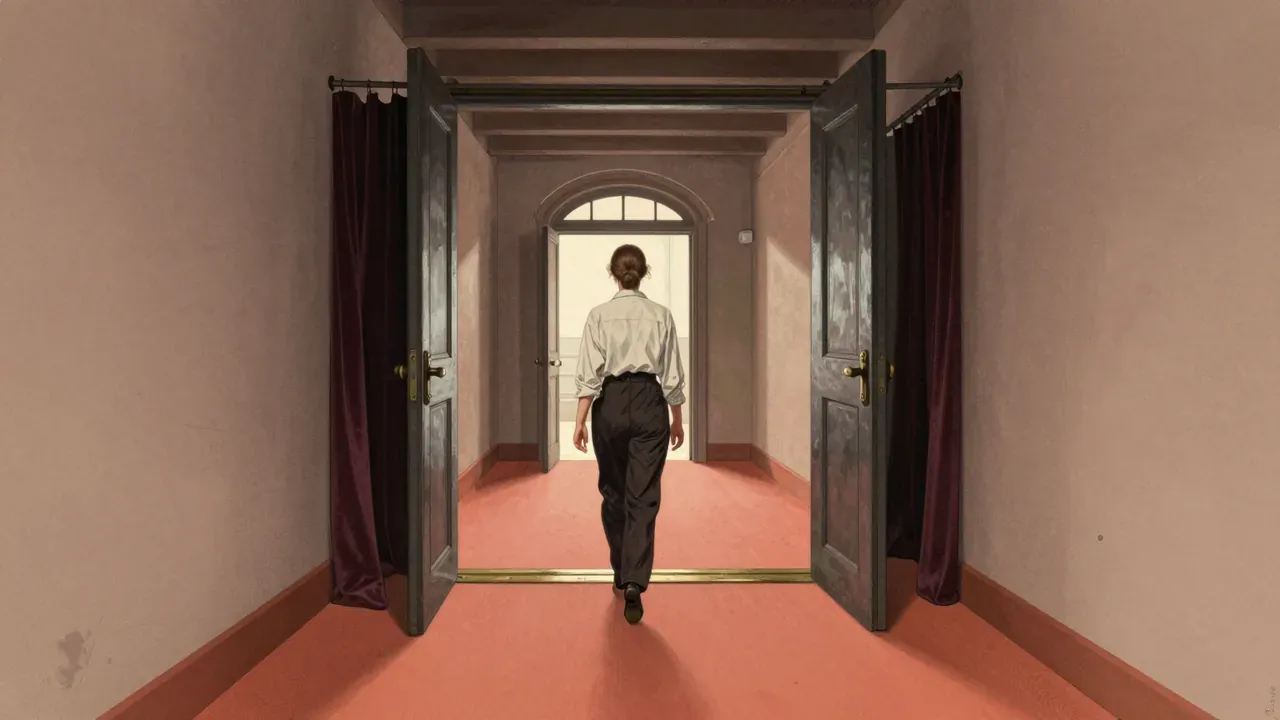
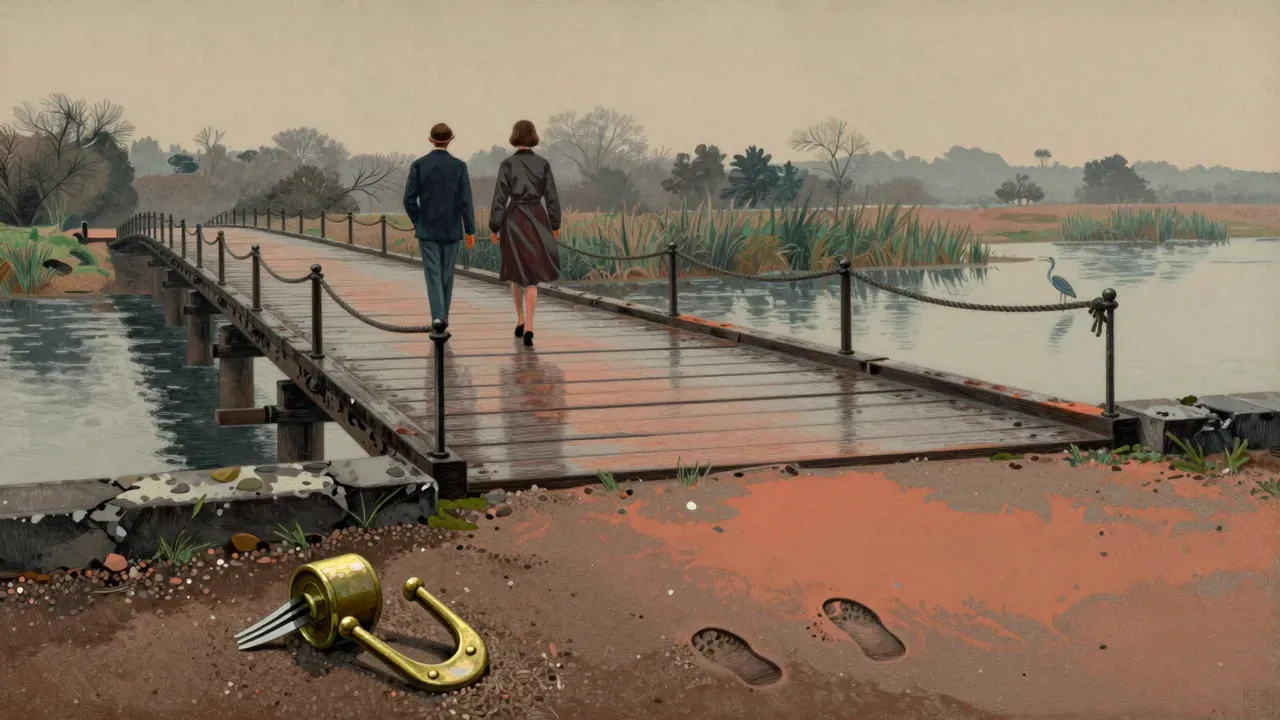
Casque d’Or is a French historical drama set in the Belle Époque, aiming to render a specific social world — the Parisian demimonde and its criminal fringes — with psychological fidelity rather than period spectacle. It does not seek to reconstruct 1902 as museum piece or allegory, but to treat its milieu as lived terrain: cramped bars, riverside taverns, cheap hotels, prison courtyards. Jacques Becker’s intention, evident in every compositional choice, is to anchor emotion in physical reality — a glance held too long, a knife dropped on packed earth, a pair of slippers left behind. The film avoids moral framing; it neither condemns nor romanticises Marie or Manda, nor does it elevate Leca to villainy so much as present him as a function of the system he navigates. Its project is restrained realism: showing how desire, loyalty, and fear operate under pressure, without recourse to exposition or interior monologue. The historical setting is not backdrop but condition — shaping what choices are possible, how quickly they must be made, and how little room there is for reversal. (158 words)
The weight of presence
The story unfolds with surgical economy: each scene advances character or consequence, never exposition. Simone Signoret’s Marie moves through the frame with contained volatility — her posture shifts with each new man’s claim on her, her silence more decisive than dialogue. Serge Reggiani’s Manda carries physical certainty that unravels only when love overrides instinct. Claude Dauphin’s Leca is all measured gesture and withheld reaction, his authority sustained by stillness. Robert Lefebvre’s cinematography keeps interiors dim and textured, favouring shallow focus and tight framings that isolate faces in lamplight or smoke. Jean d’Eaubonne’s sets avoid ornamentation; walls are chipped, floors uneven, furniture worn thin. Georges Van Parys’s score is sparse — strings enter only at moments of irreversible departure. Marguerite Renoir’s editing refuses emphasis: cuts land where breath would pause, not where music swells. There are no establishing shots to orient; we learn Joinville by walking into its tavern with Raymond, not by seeing it from above. Every craft decision serves duration over flourish, presence over punctuation. (159 words)
The moment it tilts
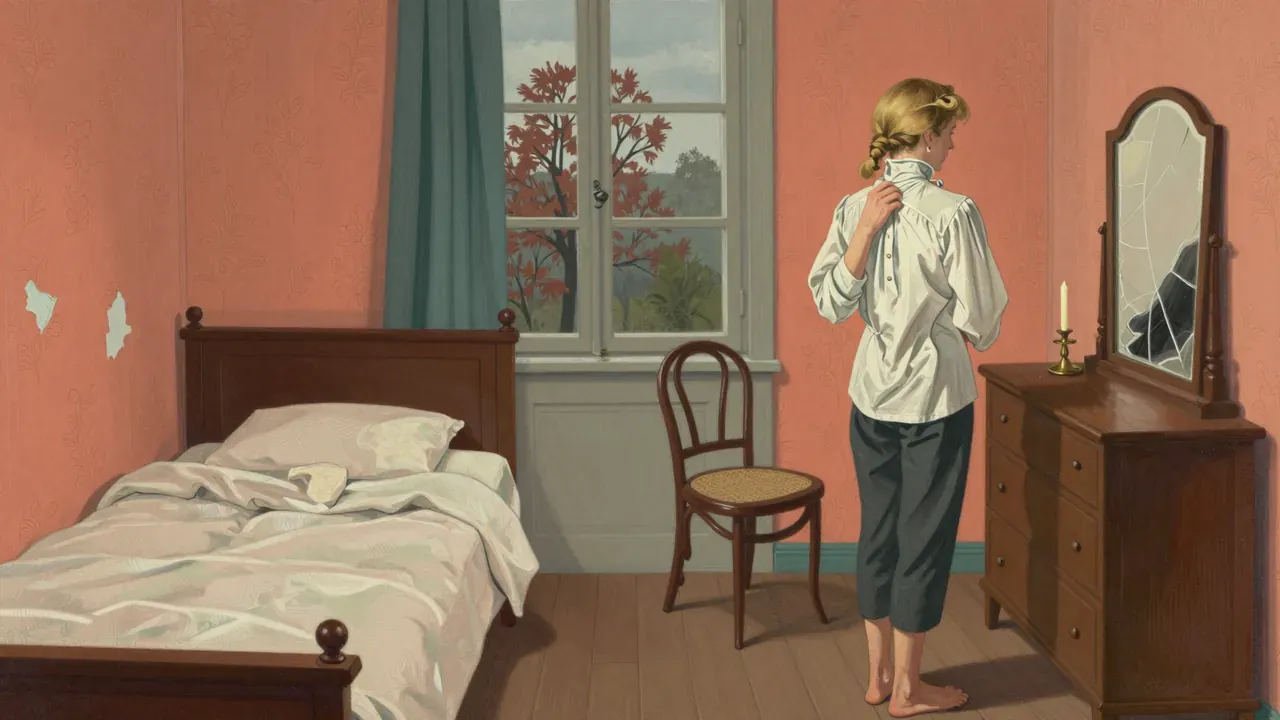
What lands is the weight of small decisions made under constraint. Marie’s choice to go to Leca’s room is not dramatised as capitulation but registered in the slow lift of her hand to unfasten her collar — a gesture repeated earlier when she first entered Roland’s orbit. The final hotel sequence works because Becker withholds explanation until the window opens onto the courtyard: the audience grasps the geography only when Marie does, making her shock ours. Signoret’s performance sustains this — her face registers comprehension before her body does, and her grief at the guillotine is not in tears but in the slackening of her jaw as she watches. The film’s rhythm — unhurried but never slack — allows time for these micro-shifts to settle. Even minor roles land: Gaston Modot’s Anatole dies off-screen, yet his absence lingers in the way the gang members avoid looking at his empty stool. The exteriors — sunlit orchards, mist on the Marne — do not contrast with the interiors so much as extend their emotional logic: beauty persists, but it is indifferent to human consequence. Nothing feels imposed; everything accrues. (157 words)
Where it holds back
What does not land is the framing of Raymond’s betrayal. His sudden shift from loyal friend to sacrificial pawn lacks sufficient groundwork; his confession scene reads as narrative necessity rather than psychological inevitability. The inspector remains a cipher — a function of plot, not character — and his crookedness is asserted rather than shown. Some transitions feel abrupt not by design but by omission: Manda’s decision to surrender arrives without the internal markers that anchor other turning points, relying instead on Reggiani’s physical collapse, which risks reading as exhaustion rather than resolve. The film’s refusal to explain Leca’s motives beyond self-interest leaves his final passivity — declining to ambush the prison transport — underdeveloped. A viewer expecting cause-and-effect causality may find these gaps frustrating, not elliptical. The film assumes familiarity with the conventions of poetic realism; those unfamiliar with its economy may mistake restraint for omission. It does not fail in execution, but it demands patience with ambiguity — a demand some viewers will meet with resistance, not recognition. (156 words)
The walls around them
The themes that matter are not love or fate, but the limits of agency within fixed structures: class, gender, law, and reputation. Marie’s golden hair — the ‘casque d’or’ — is both asset and cage: it draws attention but offers no leverage beyond transaction. Manda’s carpentry skills grant him dignity but no protection; his physical strength wins a fight but cannot alter the verdict. Leca operates within the same constraints — his power depends on police collusion, not autonomy. The film treats the Belle Époque not as gilded age but as tightening net: railways, telegraphs, and centralised policing shrink the space for evasion. Even the countryside retreat proves temporary, its idyll sustained only by ignorance. Justice is procedural, not moral: Raymond’s glimpse of Leca’s name matters less than the fact that it changes nothing for him. The guillotine is not symbolic but logistical — a municipal fixture, like the tram lines that run past L’Ange Gabriel. What endures is not tragedy but the texture of daily life: the weight of a coat, the smell of sawdust, the sound of a door closing behind someone who will not return. (159 words)
Who it is for
This film is for viewers who value precision over propulsion, who find tension in stillness and revelation in repetition. It suits those accustomed to mid-century European cinema — Bresson, Duvivier, early Resnais — where meaning accumulates in glances and silences. It is not for viewers who require clear moral alignment, causal clarity, or narrative momentum that builds toward catharsis. Those who expect genre signposts — gangster tropes, romance arcs, or courtroom confrontations — will find Casque d’Or withholding. Its pace may frustrate anyone used to contemporary editing rhythms or exposition-driven storytelling. A viewer who values thematic resonance over plot resolution will find it rich; one who measures a film by incident count will find it sparse. It rewards attention to craft, not just content. Someone who dislikes Signoret’s restrained style or finds Reggiani’s physicality too laconic may struggle to engage. The film does not ask for sympathy — it asks for observation. That distinction determines whether it holds or eludes. (158 words)
Why it stays
Yes, it is worth your evening — provided you watch it as a study in cinematic economy, not as entertainment. Its ninety-six minutes unfold with the quiet insistence of a clockwork mechanism: each gear turns only when necessary, and none spins for show. It repays close viewing not because it hides secrets, but because it places meaning in the interval between actions — the pause before Marie lifts her head, the beat after Manda drops the gun. Those who approach it expecting lush period detail or emotional crescendo will leave unsatisfied; those who attend to how light falls across Signoret’s cheekbone or how Renoir holds a shot two seconds past comfort will find it exacting and generous. Its endurance lies not in spectacle but in consistency: every frame honours its own logic. To dismiss it as ‘slow’ mistakes discipline for inertia. It is not for everyone — but for those it is for, it remains indispensable. (157 words)