What it is trying to do
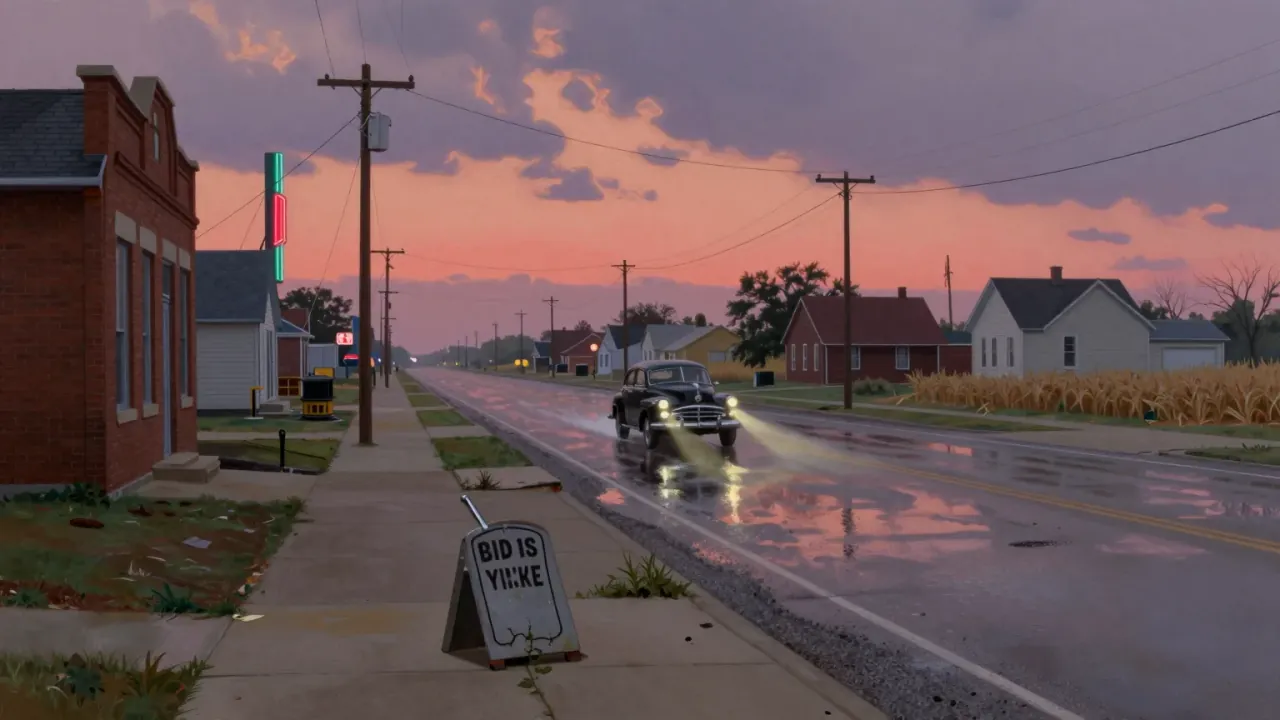
The Naked Kiss is a 1964 American crime film written and directed by Samuel Fuller, produced under his own banner for Allied Artists. It attempts to fuse pulp melodrama with moral inquiry, using the arc of a reformed sex worker to test the limits of small-town tolerance, institutional hypocrisy, and the fragility of redemption. Fuller treats Grantville not as a pastoral idyll but as a pressure chamber where respectability masks predation, and where social rehabilitation is conditional on silence. The film’s ambition lies in its structural pivot: it begins as a noir-tinged social problem picture — Kelly’s arrival, her nursing work among disabled children, her courtship with the town’s heir — then fractures into something more unsettling, where the central act of violence is not vengeance or passion but a desperate, literal blow against concealed abuse. It does not ask whether Kelly is ‘good’ or ‘bad’, but whether the town’s moral vocabulary has room for either term once its foundations are exposed.
How it works
The story moves with deliberate, almost theatrical economy: each scene serves exposition, character revelation or thematic escalation, rarely both. Constance Towers carries the film with physical precision — her posture shifts from defensive slouch to clinical composure to raw recoil — while Anthony Eisley’s Griff remains ambiguously principled, neither villain nor ally. Stanley Cortez’s cinematography avoids expressionist distortion; instead, he frames interiors with shallow depth and flat lighting, letting the script’s blunt dialogue and Fuller’s staging do the work. Paul Dunlap’s score is sparse, functional, never emotive. Jerome Thoms’ editing tightens scenes without flourish: cuts land like door slams, especially in the hospital and jail sequences. Fuller’s writing favours confrontation over subtext — Kelly names her past plainly, Grant states his sickness without metaphor, Griff refuses to look away from consequences. There is no voiceover, no flashback, no musical cue to signal irony. The craft serves clarity, not ornament.
What lands
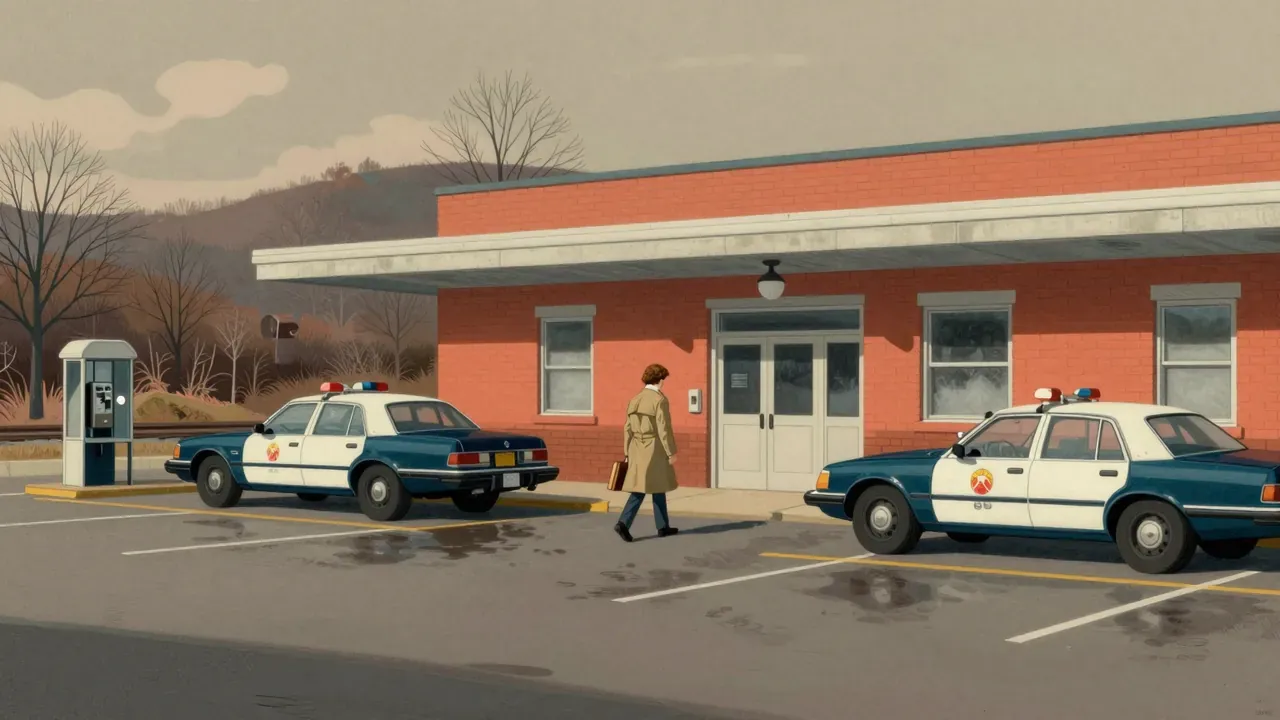
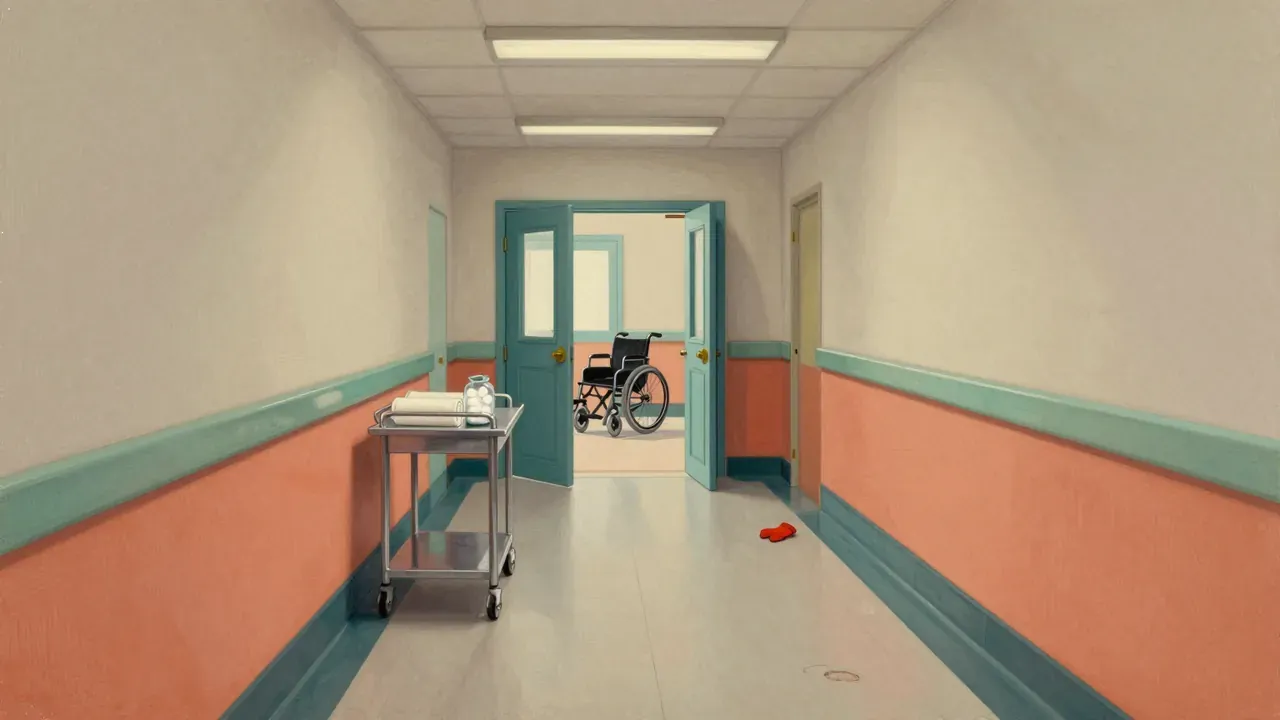
What lands is the film’s unblinking refusal to sentimentalise either Kelly’s reform or the town’s corruption. Her work at the children’s hospital feels earned, not redemptive — she handles wheelchairs, changes dressings, listens without condescension, and the film shows this without scoring it with uplift. The contrast between her quiet competence and Grant’s polished menace is stark and sustained. The final confrontation in his mansion works because it arrives without warning and without justification: Kelly does not pause to weigh options, and the camera does not linger on her face afterwards. The jail sequence, too, lands — not as courtroom drama but as procedural exhaustion, where truth emerges not through testimony but through observation and quiet persuasion. Even the bus departure at the end avoids pathos; it is logistical, weary, inevitable. These moments succeed because they resist interpretation, trusting the viewer to sit with discomfort rather than resolve it.
What does not
What does not land is the film’s handling of secondary characters beyond their functional roles. Buff’s abrupt recruitment into prostitution lacks psychological grounding; her denial under interrogation feels less like fear than narrative convenience. Candy’s antagonism reads as caricature — her flamboyance and venom serve plot mechanics but little else. The supporting nurses and townsfolk remain types: the gossipy seamstress, the stern matron, the affable cop — all drawn with Fuller’s trademark economy but none granted interiority. The film’s moral architecture depends on Grantville feeling lived-in, yet its social texture stays thin. When Kelly tries to coax the molested girl, the moment hinges on empathy, but the girl herself is a cipher — her silence and eventual speech feel dictated by narrative need, not character logic. Fuller’s style privileges velocity over nuance here, and the cost is a slight hollowness around the edges of what should be a densely populated moral world.
The themes that matter
The themes that matter are not those of surface-level ‘prostitution versus virtue’ but of institutional complicity and the violence of exposure. The film interrogates how systems — law enforcement, medicine, philanthropy — absorb and neutralise threat by recasting it as scandal. Grant’s wealth and lineage insulate him not just from prosecution but from being named: his abuse is framed as ‘sickness’, not crime, and his death becomes a problem of optics, not justice. Kelly’s nursing work is tolerated only so long as it remains apolitical; once she threatens Candy’s operation, she reverts to ‘prostitute’ in the eyes of authority. The disabled children are not symbols of innocence but reminders of bodily vulnerability — a counterpoint to Grant’s predatory control over bodies he deems disposable. Fuller treats class not as backdrop but as grammar: Griff’s authority rests on enforcing boundaries, not protecting people; Grant’s power lies in defining what counts as deviance — and who gets to name it.
Who should watch it
This film is for viewers who value moral ambiguity over resolution, who respond to stylistic restraint rather than rhetorical flourish, and who can sit with endings that offer no catharsis — only consequence. It rewards attention to gesture, framing, and pacing, not just plot. Those who require psychological realism in supporting characters, or who expect social problem films to propose solutions, will find it unsatisfying. Critics who called it ‘sensational nonsense’ were not wrong about its leaps — but they mistook those leaps for carelessness rather than calculation. A viewer who needs the film to explain why Grant is monstrous, or why Griff relents, or why Kelly cannot recall the girl’s name, will leave frustrated. Its power depends on accepting that some truths are acted upon before they are understood — and that institutions rarely change, only recalibrate.
Is it worth your evening
Yes, it is worth your evening — not as entertainment but as a compact, unvarnished study in how power hides in plain sight. Its ninety minutes move with purpose, never padding, never digressing. It asks more of the viewer than most films of its budget and era: to hold two contradictory ideas at once — that Kelly is both capable of violence and morally grounded; that Griff is both obstructive and ultimately instrumental in revealing truth; that Grantville is both specific and archetypal. Those who dismiss it as ‘enjoyably bad’ mistake its roughness for incompetence. Its flaws are structural, not technical — choices made to keep the focus narrow, the tone dry, the stakes human-scale. Anyone willing to watch a film that ends not with justice but with a bus pulling away, and to sit with that image without needing to resolve it, will find it time well spent.