What it is trying to do
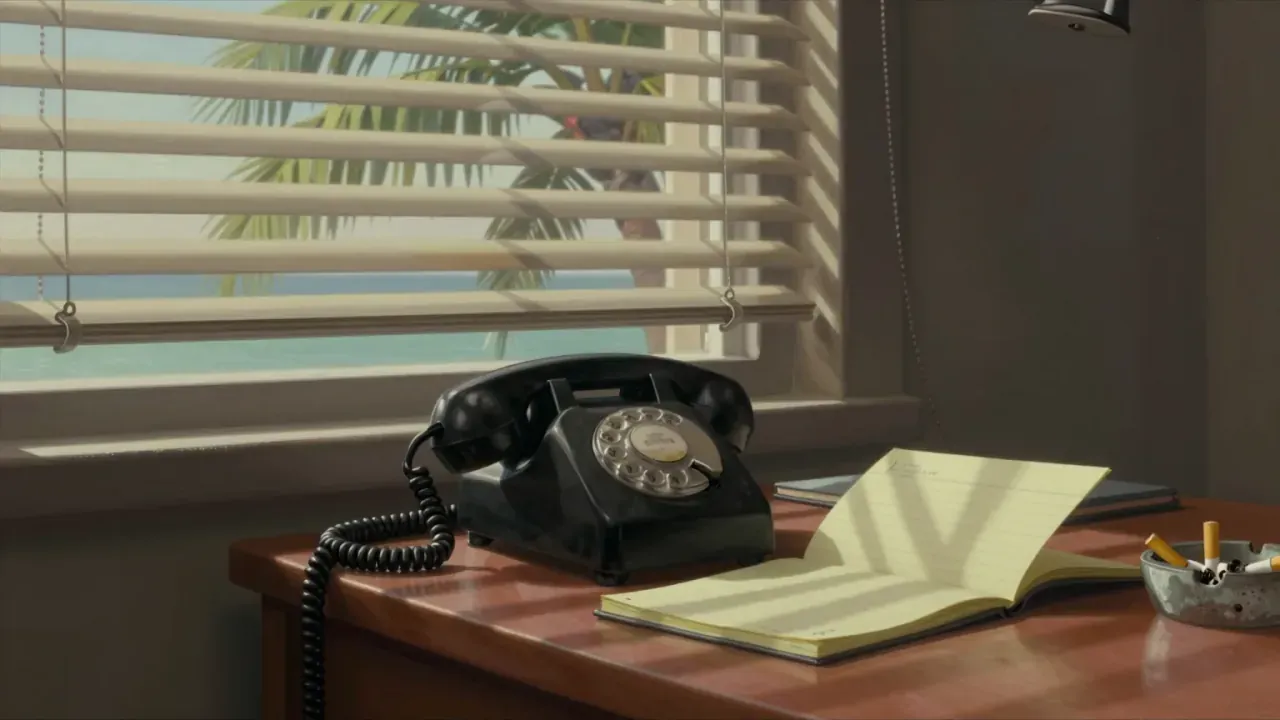
In the Cut is a psychological thriller adapted from Susanna Moore’s 1995 novel, directed and written by Jane Campion as a deliberate intervention in the neo-noir tradition. It attempts to reorient the genre around female subjectivity—not as object or catalyst, but as the unstable, desiring, fearful, and ultimately decisive centre of perception and action. Rather than follow a procedural logic or even a stable psychological arc, the film builds its tension through dissonance: between Frannie’s interiority and the city’s predatory surfaces, between erotic charge and threat, between narrative clarity and sensory overload. Campion refuses the thriller’s usual contract—of safety secured through resolution—and instead sustains ambiguity until the final minutes, treating the viewer not as a detective but as a witness to a woman’s recalibration of risk, desire, and self-preservation. Its ambition lies less in solving the murders than in mapping how fear and arousal cohabit the same nervous system, particularly for a woman living alone in Manhattan at the turn of the millennium. The film’s political gesture is structural: it insists that the gaze is never neutral, and that every close-up, every cut, every lingering shot on Meg Ryan’s face must be read as an act of authorial positioning.
How it works
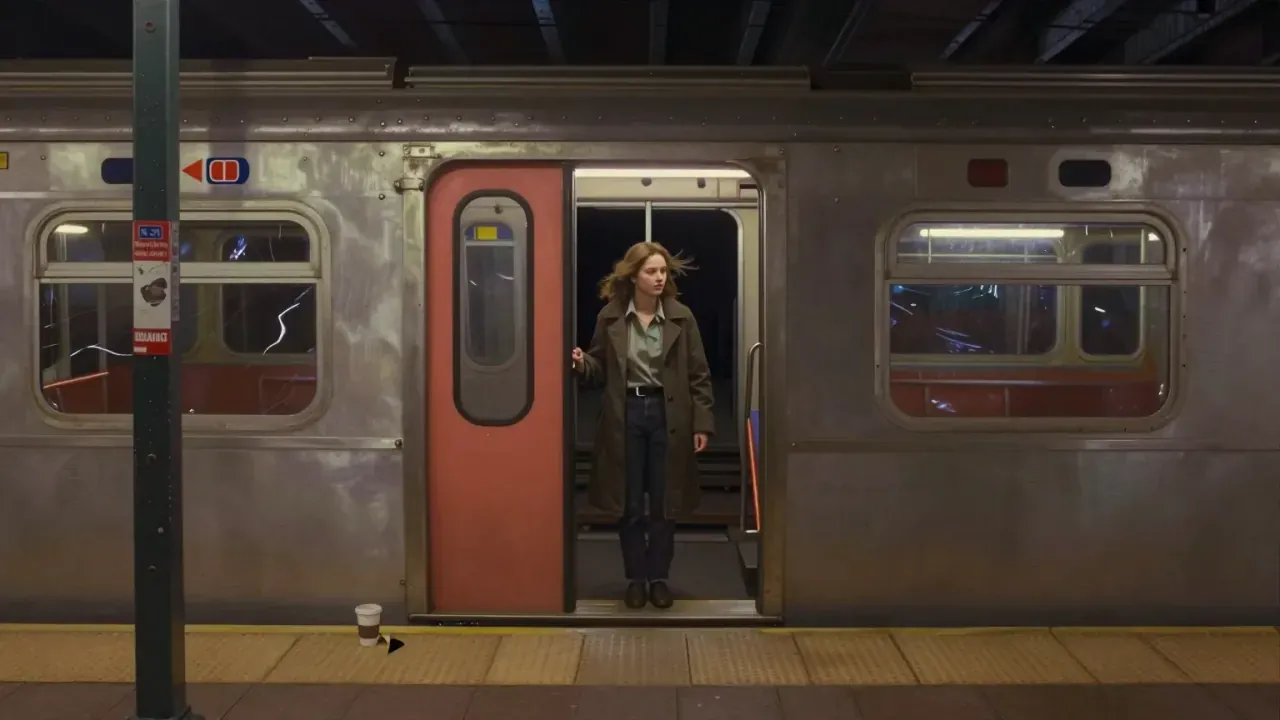
The story follows Frannie Avery, an English professor who witnesses a sexual encounter in a pub basement, then becomes entangled with Detective Malloy as he investigates a series of dismemberments in her neighbourhood. The plot unfolds elliptically, favouring mood over exposition: subway poems recur without explanation; characters speak in non-sequiturs; time compresses and stretches without warning. Meg Ryan delivers a performance stripped of her romantic-comedy persona—guarded, watchful, physically reactive—while Mark Ruffalo (not listed in the fact sheet but confirmed by all external sources as playing Malloy) modulates charm and menace with unnerving precision. Jennifer Jason Leigh, Kevin Bacon, and Patrice O’Neal each occupy sharply defined margins of Frannie’s world, their presence calibrated to heighten unease rather than advance plot. Dion Beebe’s cinematography favours tight framing, shallow focus, and handheld restlessness; Hilmar Örn Hilmarsson’s score avoids thematic motifs in favour of low-frequency pulses and fractured choral textures. Editing is jagged, often cutting away mid-reaction, denying catharsis or even coherence on first viewing. The craft does not serve clarity—it serves disorientation, insisting the viewer feel Frannie’s uncertainty as physiological fact.
What lands
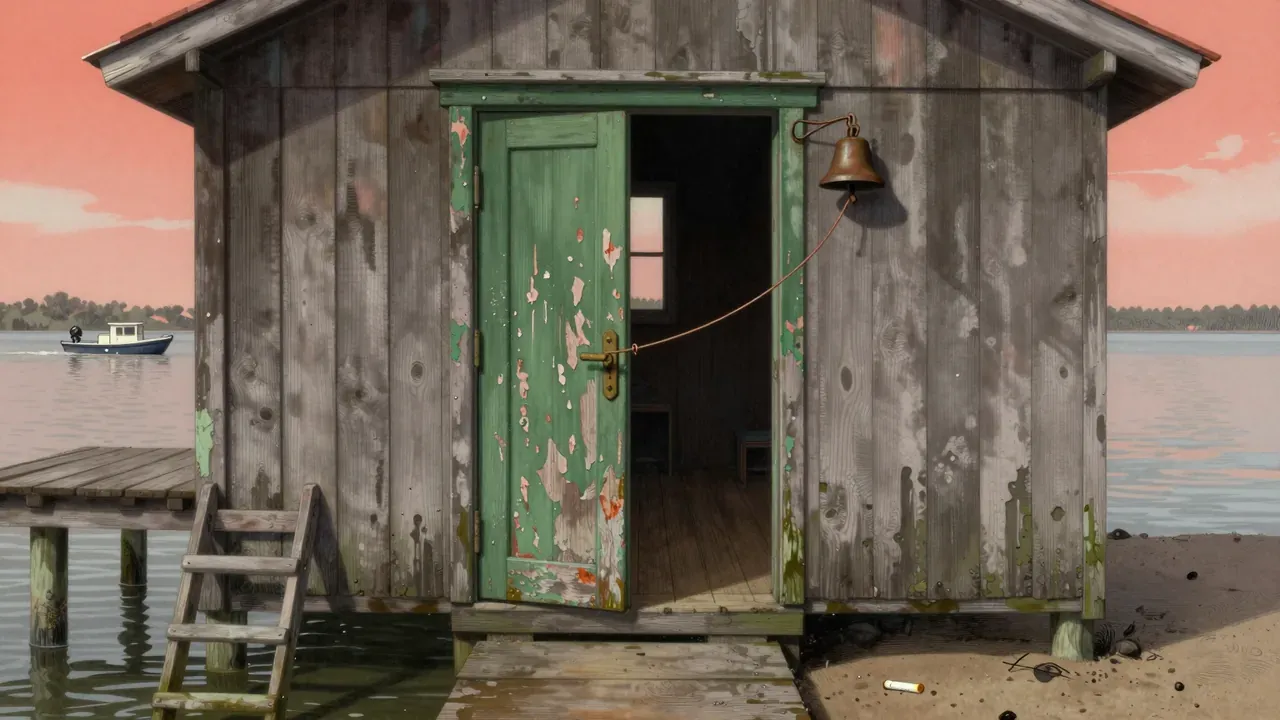
What lands most decisively is the film’s sustained tonal control: its ability to make every surface feel charged, every glance potentially hostile or seductive, every silence thick with implication. The opening sequence—Frannie descending into a dim pub basement, catching only fragments of light and skin—establishes this register immediately and holds it for nearly two hours. The film’s visual grammar consistently privileges Frannie’s point of view: shots linger on doorways she hesitates before, on reflections she studies too long, on men whose hands enter frame without context. This is not voyeurism but surveillance internalised. The climactic confrontation at the Little Red Lighthouse works precisely because it arrives without fanfare or musical cue—just blood, breath, and the mechanical click of a gun being cocked. The performances land where they resist interpretation: Ryan’s stillness reads as calculation, not vacancy; Ruffalo’s smile never quite reaches his eyes; Rodriguez’s quiet menace is rooted in bureaucratic familiarity, not cartoonish evil. These choices accumulate into something more persuasive than plot: a portrait of urban female consciousness under persistent, low-grade siege.
What does not
What does not land is the film’s reliance on narrative opacity as a substitute for structural rigour. Key motivations remain unanchored: Cornelius’s descent into violence feels abrupt rather than foreshadowed; Rodriguez’s secret society tattoo and ring motif are introduced without sufficient groundwork to make them resonate beyond symbolism. The subplot involving Frannie’s ex-boyfriend John Graham adds texture but no traction—his panic attacks and fixation on her sister dissolve without consequence. The film’s refusal to clarify whether Malloy is guilty until the final act risks alienating viewers who require at least provisional orientation, not just atmosphere. Some ellipses feel earned—Frannie’s decision to handcuff Malloy, for instance—but others feel like gaps: the mechanics of how Rodriguez accesses Pauline’s apartment, why Frannie trusts him enough to get into his car, or how she retrieves the gun without being searched. These are not mysteries to be solved but absences that weaken the stakes. The film’s abstraction occasionally tips into obscurity, privileging mood over momentum in ways that blunt its own urgency.
The themes that matter
The themes that matter are not those of crime or detection but of embodiment, consent, and the gendered architecture of public space. In the Cut treats New York not as backdrop but as active participant—a city whose infrastructure (subways, laundries, bridges, basement bars) shapes and constrains female movement and desire. Frannie’s profession as an English teacher matters: her attention to language, to subtext, to the slippage between signifier and signified, mirrors the film’s own preoccupation with what is said, what is withheld, and what is misread. The recurring motif of severed limbs and missing charms speaks less to literal violence than to fragmentation—the way women learn to parcel out attention, affection, vulnerability, and bodily autonomy across competing demands. The film’s late-career reappraisal hinges on this: its insistence that fear and pleasure are not opposites but frequencies on the same spectrum, and that a woman’s right to pursue one does not cancel her right to defend against the other. It is a film about thresholds—physical, psychological, moral—and what happens when they blur.
Who should watch it, and who should not
This film is for viewers who value sustained tonal invention over narrative legibility, who find psychological realism less compelling than sensory fidelity, and who are willing to sit with discomfort without immediate resolution. It rewards repeat viewing, not for puzzle-solving but for noticing how small shifts in framing or pacing recalibrate meaning. It is not for those who rely on procedural logic, clear moral binaries, or conventional character arcs—viewers expecting a whodunit or even a feminist revenge fantasy will find its rhythms frustrating. Those who disliked Campion’s earlier work for its deliberation or perceived coldness may find In the Cut similarly resistant. A viewer who values tight plotting above all else would likely reject it outright; someone who prizes emotional honesty over exposition might find it revelatory. Its worth depends on whether you accept ambiguity as a condition of truth rather than a failure of craft.
Is it worth your evening
Yes, it is worth your evening—if you approach it as a sensory and conceptual experience rather than a story to be followed. Its 114 minutes pass with a slow, insistent pressure, building not to revelation but to recognition: of how vigilance becomes second nature, how desire persists despite danger, how agency can look like stillness. It is not relaxing, nor is it designed to be; it is immersive in the way a fever is immersive—disorienting, vivid, physiologically demanding. Those who dismiss it as ‘confusing’ or ‘cold’ are not wrong about the effect, but they mistake the intention. Its power lies in refusing comfort, even in its ending: Frannie lies down beside a man she has just betrayed and nearly killed, bloodied and exhausted, neither triumphant nor broken—simply present. That final image is not closure but continuation. To call it ‘unrewarding’ would be to misunderstand its terms. It asks for attention, not allegiance—and repays attention with uncommon intensity.