The silence of the heist
Rififi is a French crime film from 1955 that sets out to depict a meticulously planned jewellery heist—not as spectacle, but as process—and to anchor that process in the moral and practical collapse of a small criminal fraternity. It adapts Auguste Le Breton’s novel with deliberate omissions and substitutions: the novel’s racism and necrophilia are excised; its rival gang, originally North African, becomes generically Germanic; its diffuse plot is narrowed to three acts—assembly, execution, fallout—with the heist itself occupying twenty-seven minutes of near-silence. Jules Dassin, blacklisted from Hollywood and working on a $200,000 budget, treats the film not as genre entertainment but as a controlled experiment in tension, restraint, and consequence. He rejects fistfights, sunlight, and musical underscoring where it would dilute realism. The film does not ask the viewer to root for its characters, nor to thrill in their success—it asks only that they watch, listen, and register how easily a code of silence unravels when pressure mounts. Its ambition is structural and ethical, not sensational.
The look of it
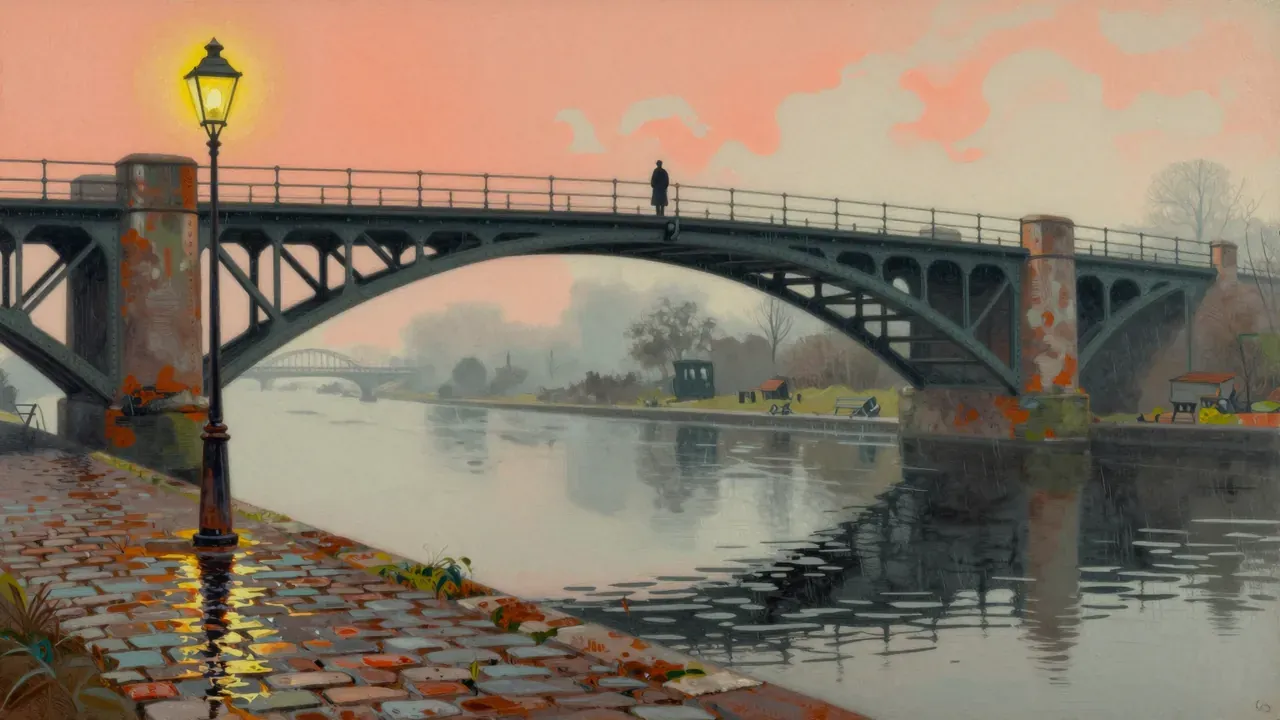
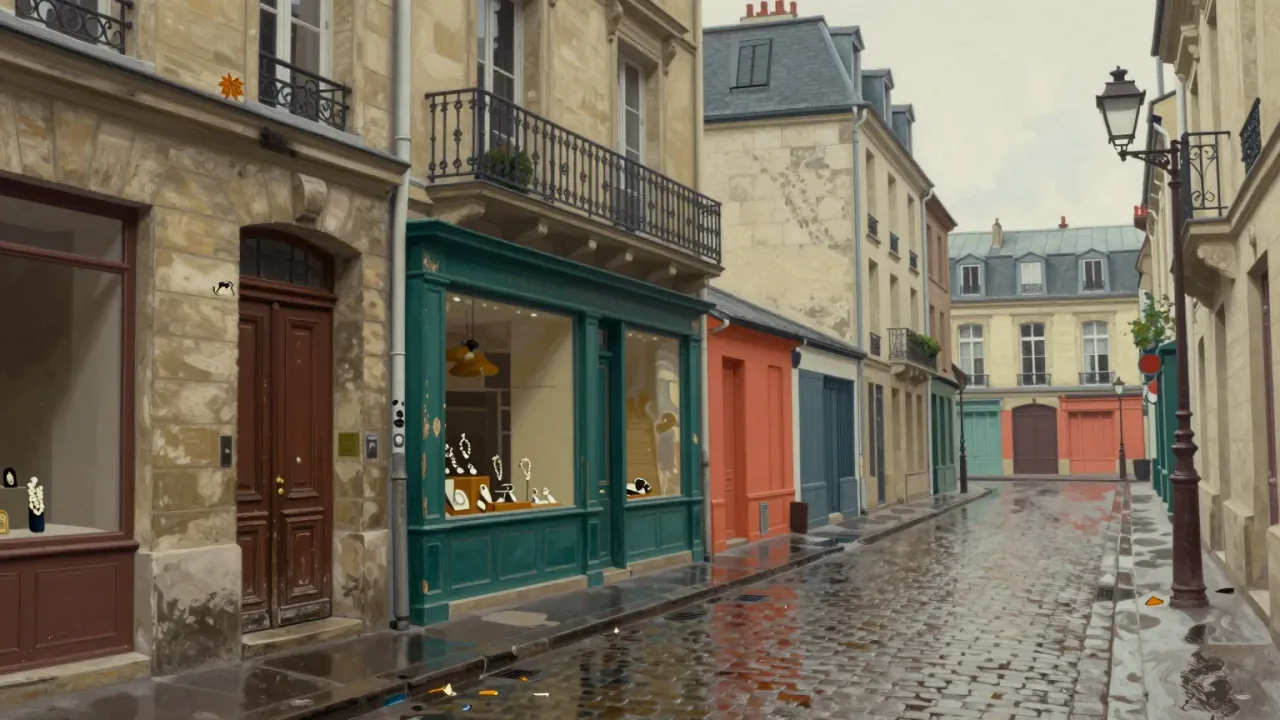
The story follows Tony, an ageing ex-convict who reassembles three men for one job: Jo the Swede, Mario the Italian, and César the safecracker—played by Dassin himself. Philippe Agostini’s cinematography uses real Paris locations shot in winter grey, avoiding studio gloss or expressive lighting; interiors are functional, streets damp and unromantic. Roger Dwyre’s editing sustains rhythm without flourish—cuts are clean, durations precise, especially during the heist, where sound design replaces music: drills, footsteps, falling plaster, a dropped screw, breathing. Performances are muted and weathered: Jean Servais moves with the weight of exhaustion and regret; Carl Möhner conveys loyalty as quiet habit; Magali Noël’s Viviane sings the title song once, then recedes. Georges Auric’s score is sparse and tonally neutral outside the heist, where its absence becomes the dominant compositional choice. There are no close-ups for emphasis, no reaction shots for reassurance—the camera observes, never interprets.
How it holds your attention
What lands is the heist sequence: thirty minutes of wordless, unscored action, filmed in real time across multiple floors of a jewellery shop in the Rue de la Paix. Every tool, every risk, every contingency is shown—drilling through a ceiling, lowering a man on ropes, catching debris with an umbrella, disabling alarms with wax and wire. It lands because it refuses to flatter the viewer’s intelligence: no shortcuts, no cuts to suspense, no music to tell you when to lean in. The silence forces attention to texture—the scrape of metal, the creak of floorboards, the hiss of a gas lamp. What also lands is the aftermath: the slow disintegration of trust, the banality of betrayal, the physical toll of guilt made visible in Tony’s hands, his posture, his silences. The film’s moral architecture is not stated but embodied—in the way César’s mustache twitches before he speaks, in the way Tony pauses before pulling the trigger, in the way the final shot holds on an empty street at dawn, indifferent. These are not gestures of style but of accumulated cause and effect.
Where it loosens its grip
What does not land is the framing device—the opening and closing scenes involving a nightclub singer performing the theme song, which feels detached from the film’s gravity and serves only to explain the untranslatable title. The character of Viviane remains underwritten, her function limited to exposition and aesthetic contrast. The subplot involving the rival gang, Grutter and his men, lacks dimension: they exist only as a narrative pivot, not as people, and their presence sharpens the film’s moral clarity but dulls its psychological range. Some performances falter under the film’s austerity—Robert Hossein’s Mido, for instance, registers more as schematic menace than lived threat. The dialogue, while deliberately flat and procedural, occasionally slips into exposition so blunt it undermines the otherwise rigorous economy: motivations are named rather than inferred, relationships sketched in shorthand. And though Dassin’s decision to cast himself as César avoids star power, it also limits the role’s ambiguity—the director’s own presence makes the character feel like a cipher for authorial intent rather than an autonomous figure.
What it says without speaking
The themes that matter are silence as both discipline and failure, professionalism as a fragile substitute for morality, and the impossibility of exit. The thieves’ code—no talking, no violence, no personal gain—is not noble but pragmatic; its breach does not provoke outrage but quiet recalibration. Ageing is treated without sentiment: Tony’s body betrays him before his will does, and his authority erodes not through challenge but through attrition. The film’s cold-war context is not allegorical but atmospheric—the blacklist, the naming of names, the fear of contamination—all inform the central act of betrayal, where César breaks silence not for money but for survival, and Tony kills him not for vengeance but to preserve the illusion of order. There is no redemption arc, no reformist impulse—only cause, effect, and the grey persistence of consequence. The city itself is a theme: Paris is not picturesque but functional, damp, indifferent, a network of stairwells, rooftops, and alleyways that offer no sanctuary, only temporary cover.
Who it is for, and who it is not
It is for viewers who value precision over propulsion, who find tension in duration rather than acceleration, and who accept that moral weight need not be signalled by music or close-up. It is for those willing to sit with stillness, to parse sound as narrative, and to treat craft decisions—as in the heist’s silence—as arguments in themselves. It is not for viewers who require emotional scaffolding, narrative symmetry, or character arcs that resolve. Those expecting noir glamour, romantic intrigue, or cathartic violence will find Rififi withholding, even austere. Some critics have argued its influence has ossified into cliché—the ‘silent heist’ now a trope—but that misreads the film’s purpose: it was never about innovation for its own sake, but about stripping away artifice to expose the mechanics of failure. A viewer who needs motivation spelled out, or closure affirmed, will leave unsatisfied; the film offers neither. Its verdict is implicit in its structure, not its ending.
Why it stays with you
Yes, it is worth your evening—not as diversion, but as calibration. Its 115 minutes recalibrate what film can do with time, sound, and consequence. It repays attention not through revelation but through accumulation: each detail in the heist gains meaning only in retrospect, each silence deepens the next. It is not ‘entertaining’ in the conventional sense, but it is rigorously, unrelentingly engaged with its own terms. Those who dismiss it as ‘slow’ mistake pace for purpose—the film moves exactly as its logic demands. Others may argue its moral bleakness is alienating, or its lack of psychology limiting; such viewers would prefer Melville’s Le Samouraï or Bresson’s Pickpocket, where interiority is rendered through gesture, not omission. But Rififi’s power lies precisely in what it refuses: music to soothe, light to flatter, dialogue to explain. Its worth is in its discipline—and discipline, on screen, is rare.