The look of it
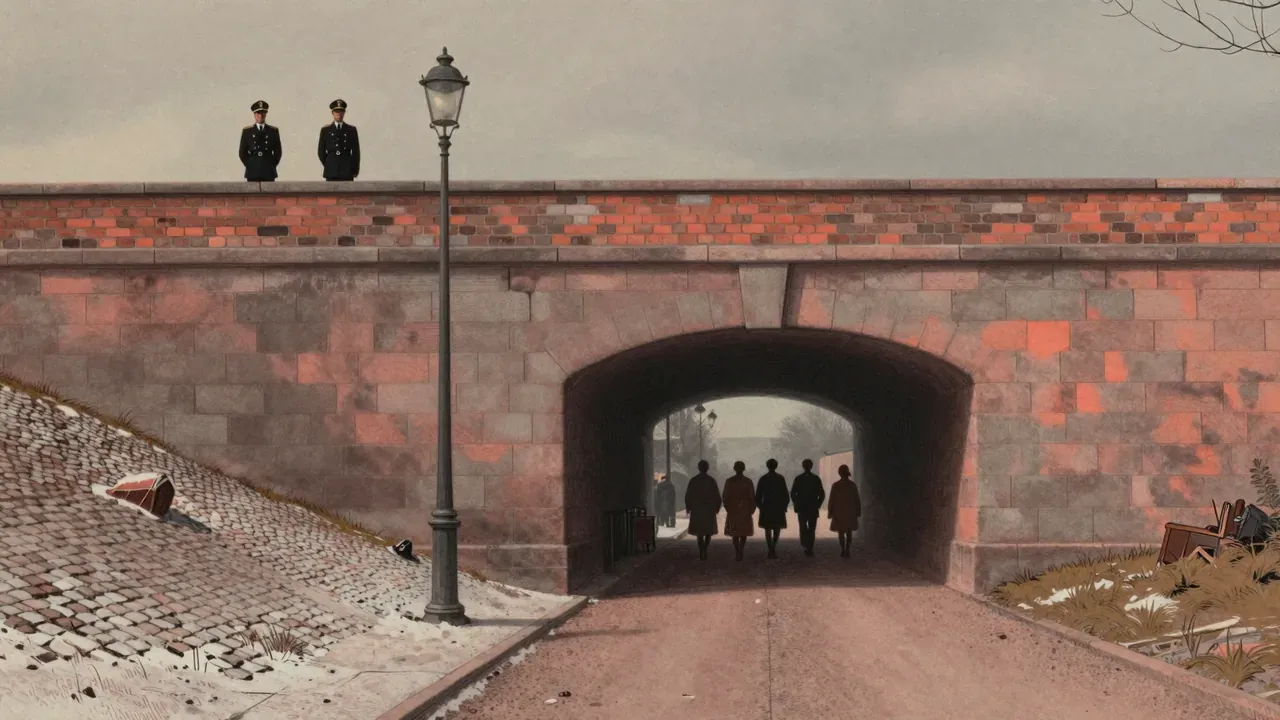
Mona Lisa is a British neo-noir crime drama from 1986 that sets out to rework familiar genre templates — the ex-con redemption arc, the doomed romance across class lines, the underworld thriller — through psychological restraint and social texture rather than plot mechanics. It avoids the moral clarity of American noir and the operatic fatalism of French poetic realism, opting instead for a muted, rain-slicked London where motive is obscured by habit and feeling is buried under layers of performance: George’s bluster, Simone’s cultivated poise, Mortwell’s weary authority. Neil Jordan and David Leland do not aim for expositional neatness; they treat the criminal milieu as ambient fact, not spectacle. The film’s ambition lies in holding two contradictory impulses at once: to render the grime and transactional violence of prostitution and small-time racketeering without sensationalism, and to sustain a slow-burning, unspoken romantic current between characters who barely permit themselves vulnerability. It is less about what happens than how much is withheld — how silence, posture, and glance carry weight when dialogue is sparse or evasive. The title song recurs not as irony but as a tonal anchor, a melancholy refrain against which all action is measured.
The pace of it
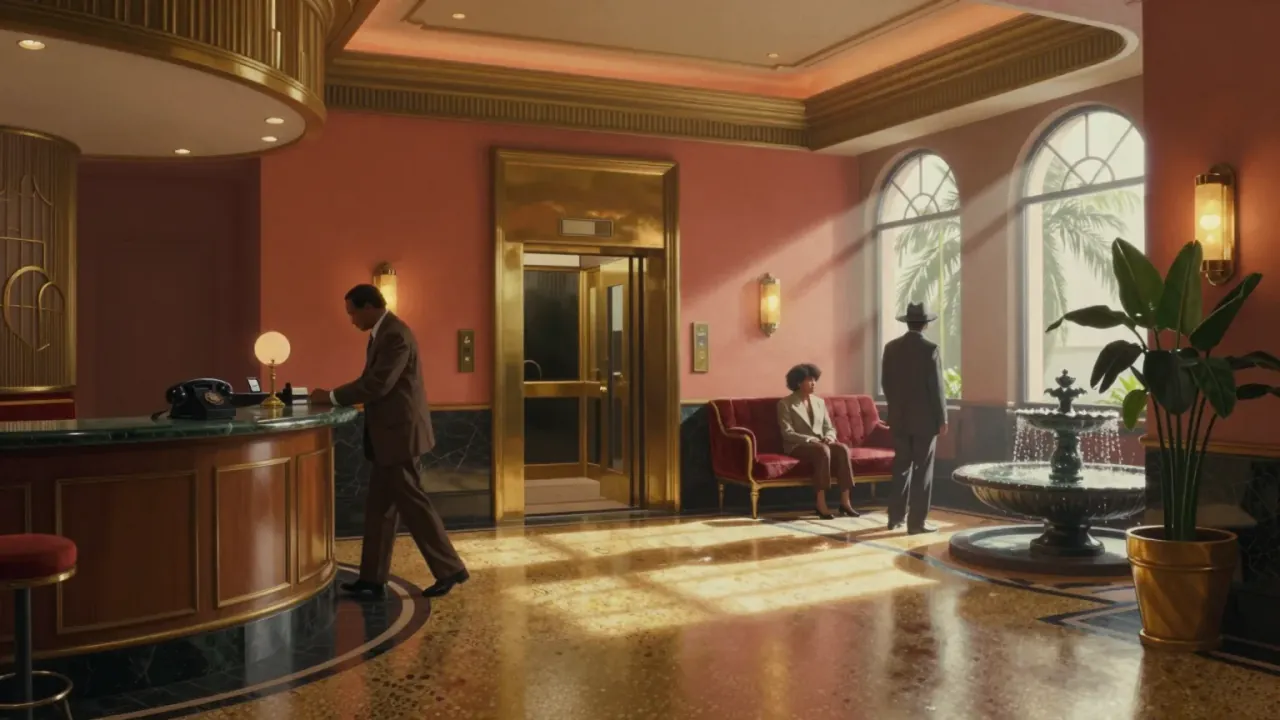
The story unfolds with deliberate pacing, its structure built on accumulation rather than escalation: George’s return from prison, his uneasy assignment to Simone, their gradual, halting alignment, then the slow collapse of that alignment under pressure from Mortwell, Anderson, and Simone’s own guarded history. Bob Hoskins grounds the film in physical specificity — his walk, his pauses, the way he holds his shoulders — making George’s emotional shifts legible without exposition. Cathy Tyson matches him in stillness and precision, her Simone never reducible to victim or femme fatale. Michael Caine’s Mortwell is all clipped vowels and lowered lids, a man whose power resides in knowing when not to act. Roger Pratt’s cinematography favours tight interiors lit with low-contrast sources, keeping faces half in shadow, while Lesley Walker’s editing sustains rhythm through duration rather than cut: long takes in cars, in hotel rooms, in garages. Michael Kamen’s score avoids leitmotif, using piano and strings to underscore mood without dictating it. The craft serves restraint, not flourish.
The space between them
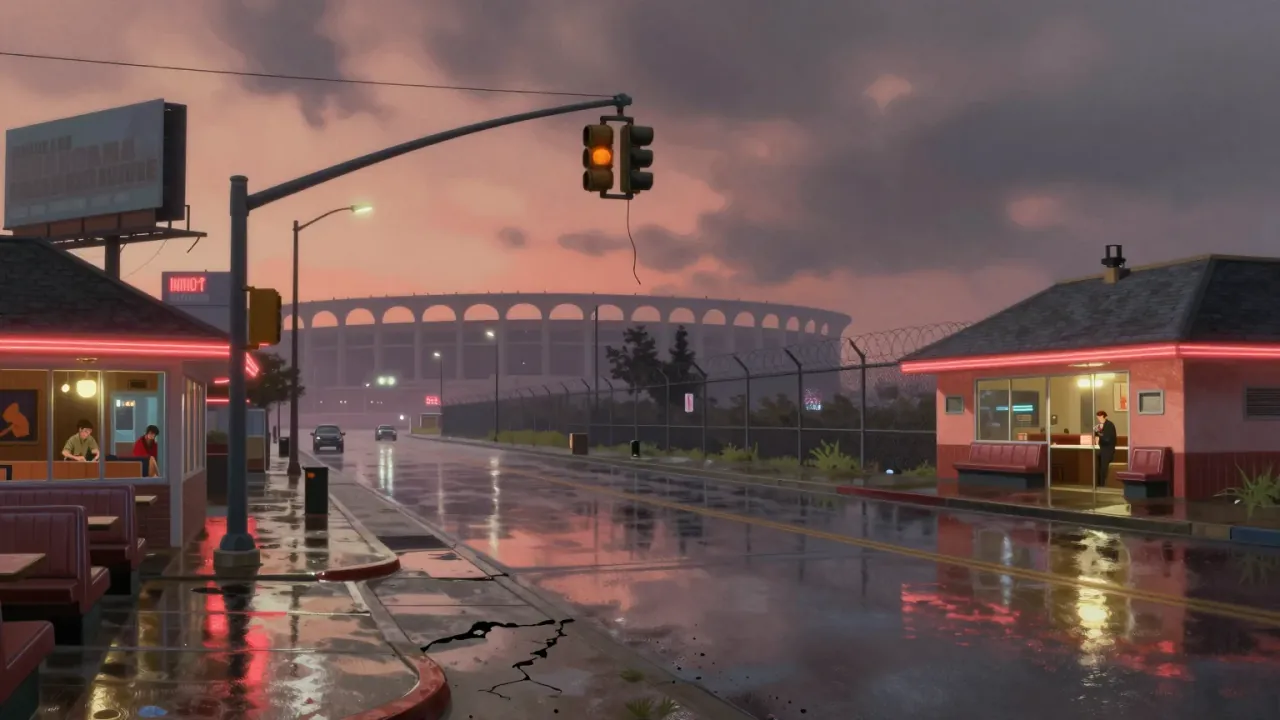
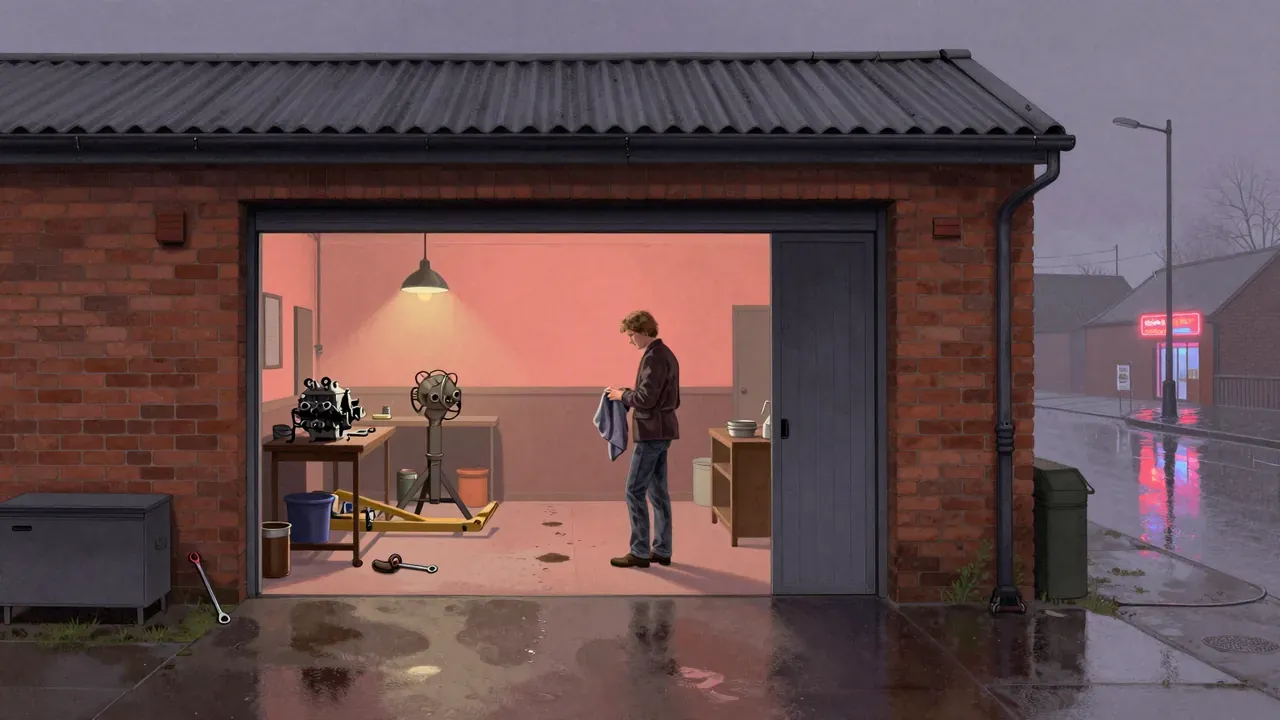
What lands most firmly is the central relationship — not as romance in any conventional sense, but as mutual recognition between two people who have spent years performing versions of themselves for survival. George sees past Simone’s veneer not because he is perceptive, but because he shares her condition: both are skilled at mimicry, both wear roles like ill-fitting suits. Their scenes together gain quiet force from what remains unsaid — a shared cigarette, a glance held too long in a rear-view mirror, the way George adjusts his jacket before entering Simone’s flat for the first time. The film’s London feels lived-in and unvarnished: no establishing shots of landmarks, just wet pavements, peeling paint, and the hum of traffic heard through thin walls. The performances avoid grand gestures; even violence arrives with a kind of weary inevitability. The ending does not resolve emotionally but settles — George returns to Thomas’s garage, not as escape, but as return to a space where performance is unnecessary. That final image of him working, calm and unhurried, lands with understated weight.
The view from the back seat
What does not land is the film’s attempt to frame Simone’s sexuality and agency as self-determined within a structure that ultimately denies her full narrative autonomy. Her relationship with Cathy is introduced late, revealed only after George has already assumed protective control, and its significance is subsumed by the male-driven climax. The script gives her intelligence and wit but few moments of decisive action outside crisis — she fires the gun, yes, but only after being cornered, disarmed, and physically threatened. Anderson functions more as plot device than character: his menace is credible but thinly sketched, his motivations reduced to brute possessiveness. The subplot involving Jeannie, though tender, remains underdeveloped; her mother’s opposition is stated but never dramatised, leaving George’s paternal struggle unresolved in emotional terms. Some viewers may find the film’s refusal to clarify Simone’s inner life — beyond what George perceives — frustrating rather than respectful. Others will argue this opacity is the point; the film’s limitation is that it never quite reconciles its empathy for Simone with its structural reliance on George’s perspective.
The weight of it
The themes that matter are performance as survival, the weight of unspoken class codes, and the difficulty of authentic connection in a world governed by transaction. George and Simone both speak carefully, modulate tone, suppress reaction — not out of calculation alone, but because authenticity has been dangerous or punished. Their London is stratified not just economically but linguistically and gesturally: the way Simone corrects George’s grammar, the way Mortwell measures a room before speaking, the way Thomas’s garage operates on unspoken rules. Race enters obliquely — Clarke Peters’ Anderson and Sammi Davis’ Cathy are Black characters embedded in a white-dominated underworld, yet the film declines to name systemic forces, treating racial tension as ambient rather than structural. Loneliness is pervasive but never sentimentalised; it lives in the pauses between lines, in the way characters occupy space without occupying each other’s attention. The film treats love not as revelation but as erosion — the slow wearing away of pretence until only something raw, unpolished, and finally ordinary remains.
Who it is for
This is for viewers who value psychological texture over plot propulsion, who respond to actors’ physical choices as much as their dialogue, and who accept ambiguity as a condition of realism rather than a failure of storytelling. It rewards patience, attention to framing and sound design, and tolerance for endings that settle rather than conclude. It is not for those who require clear moral positions, tightly wound plotting, or protagonists whose interiority is verbally articulated. Viewers expecting a straightforward crime thriller or a conventional romance will find it withholding; those who expect political commentary on race or sex work may find its approach too elliptical. A viewer who values Hoskins’ performance but dislikes the film’s pacing might prefer The Long Good Friday — faster, sharper, more certain of its own tone. What would change the verdict? A tighter focus on Simone’s subjectivity, or a more explicit engagement with the material conditions shaping her choices — but that would be a different film, not this one.
What it asks of you
Yes, it is worth your evening — not as light diversion, but as a precisely calibrated study in restraint, anchored by one of the most physically intelligent lead performances in British cinema. Its 104 minutes unfold with unhurried gravity, trusting the viewer to register meaning in gesture, silence, and composition rather than exposition. It repays attention not with twists or revelations but with cumulative emotional weight — the kind that lingers in the throat, not the memory. Some will find its pace too deliberate, its ending too quiet, its politics too muted. Others will recognise in it a rare fidelity to how people actually move through compromised worlds: not with declarations, but with small adjustments of posture, voice, and distance. It does not ask for admiration, only for presence. To watch it is to spend time with characters who feel real not because they are explained, but because they are observed — closely, without judgment, and with unmistakable care. That care is the film’s quiet achievement, and its lasting claim on your time.