The premise
Classe tous risques is a French crime film from 1960 that sets out to tell the story of a man whose loyalty has outlived its usefulness. It adapts José Giovanni’s novel not as stylised myth but as procedural realism: Abel Davos returns to France not for glory or revenge, but because his money is gone and his family is exposed. The film treats the gangster genre as a vessel for moral accounting — less about heists than about who pays when old debts are called in. Sautet avoids the New Wave’s self-conscious rupture; instead, he works within classical narrative grammar, using tight cause-and-effect logic and sustained psychological continuity. The ambition is neither formal innovation nor social exposé, but fidelity to a particular kind of exhaustion — the weariness of a man who has already lost, and keeps moving only because stopping would mean admitting it. This is not noir as fatalism, but as arithmetic: every favour extracted, every life risked, every silence kept adds up to a balance sheet no one else will audit.
The acting
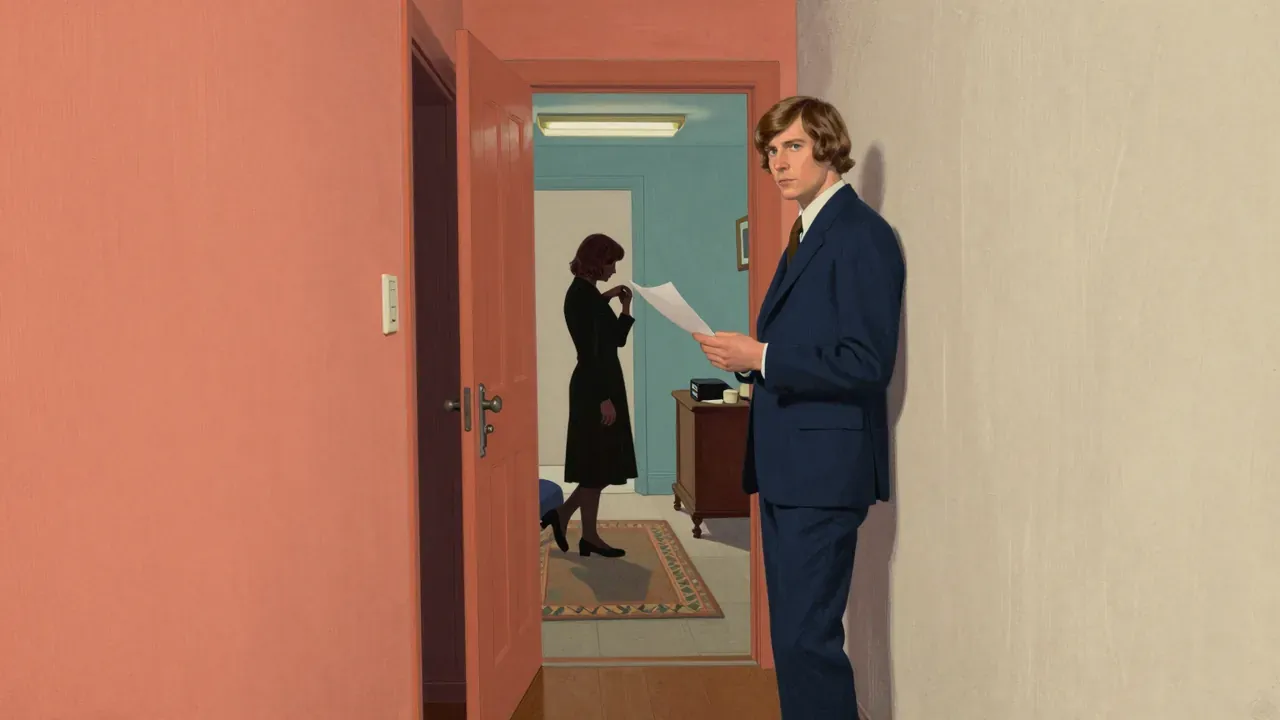
The story unfolds with quiet inevitability, each decision narrowing Abel’s options until only one path remains open: self-erasure. Lino Ventura grounds the film with physical presence and minimal inflection — his Abel speaks little, reacts less, and carries weight not through menace but through the sheer density of lived consequence. Jean-Paul Belmondo’s Éric is all nervous goodwill, a contrast that never tips into caricature. Ghislain Cloquet’s cinematography favours mid-range lenses and natural light, keeping faces legible even in shadow; interiors in Paris are shot with the muted palette of damp plaster and unvarnished wood. Georges Delerue’s score avoids leitmotif, offering instead sparse, melancholic piano phrases that underscore duration rather than drama. Albert Jurgenson’s editing sustains rhythm without flourish — cuts land where breath would pause, not where emphasis demands. There is no visual irony, no rhetorical camera movement. Every craft choice serves the slow accumulation of consequence.
The rhythm
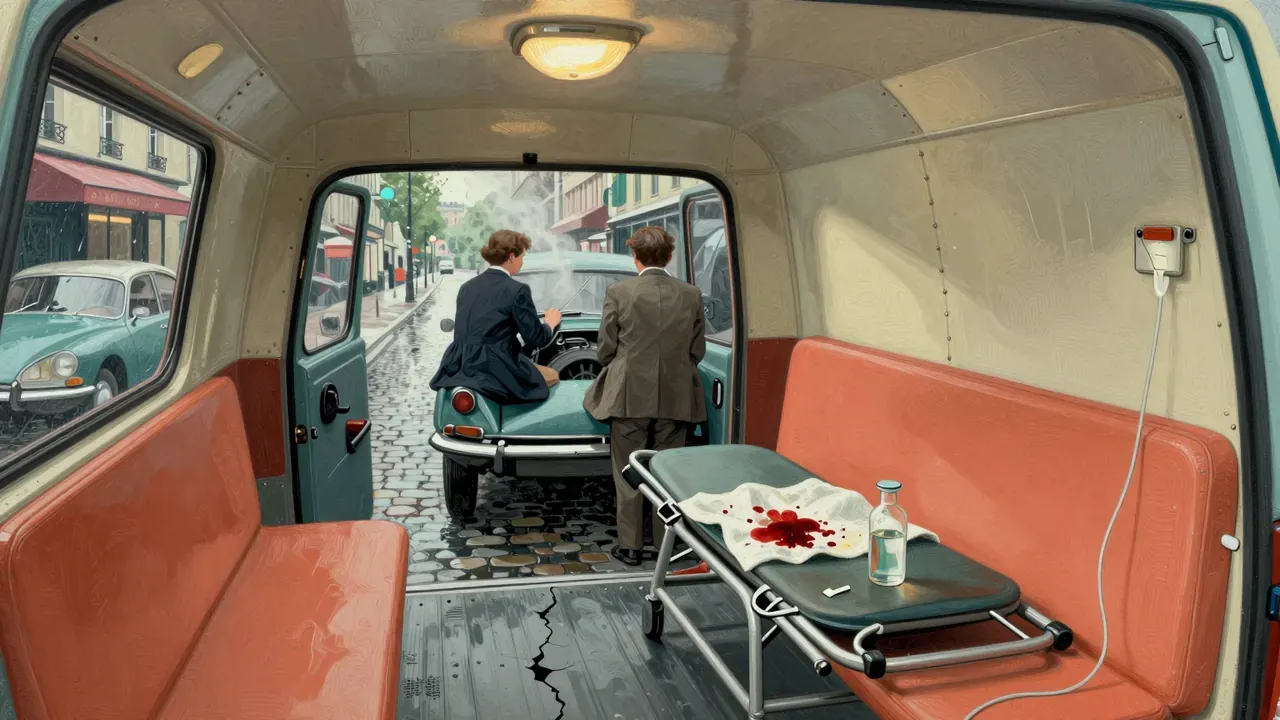
What lands is the cumulative weight of small betrayals. Riton’s hesitation before picking up the phone, Fargier’s glance at his wife before refusing Abel, Éric’s quiet disappointment when he realises he is being used as a stand-in — these moments register not as plot points but as moral weather. The film trusts the audience to read motive in posture, in timing, in who looks away first. The beach scene — Abel and his sons sleeping under a tarp while police search nearby — works because it shows vulnerability without sentimentality. The ambulance sequence feels plausible not because it is clever, but because it is clumsy and barely successful. Even the voice-over ending lands: it does not explain, but closes the ledger. The film’s emotional honesty rests on its refusal to flatter any character, including Abel. He is neither noble nor pathetic, just terminally out of time — and that specificity makes the tragedy land with the dull thud of something inevitable, not theatrical.
The gaps
What does not land is the framing device of Liliane the actress. Her insertion feels functional rather than felt: a narrative convenience to ease the journey to Paris, not a character with interiority. Her presence introduces a note of lightness that sits uneasily beside the film’s prevailing gravity, and her arc resolves without resonance. Similarly, the Italian prologue — the Milan robbery, the customs shootout — establishes stakes efficiently but lacks the textural precision of the Paris sections. The locations feel more like signposts (Nice, Ventimiglia, Menton) than lived spaces; their geography serves exposition more than atmosphere. The film also assumes familiarity with French postwar criminal hierarchies — the weight of ‘Carlingue’ or ‘collaboration’ convictions is left unspoken, which may blunt the force of Abel’s backstory for viewers unfamiliar with that history. These are not flaws in execution, but limits in scope: the film chooses focus over context, and sometimes the cost is clarity.
The code
The themes that matter are loyalty as debt, friendship as liability, and survival as subtraction. The film treats criminal fraternity not as brotherhood but as a binding contract written in mutual exposure — to break it is to invite chaos, but to uphold it is to court ruin. Abel’s return is not an act of defiance but of calculation: he knows his former associates have settled, and he calculates they will pay to keep him quiet. What undoes him is not betrayal per se, but the asymmetry of risk — he asks others to gamble everything while he retains the option to vanish. The film’s moral centre lies in Éric, who enters the story without history and exits with injury and uncertainty; his decency is not heroic but structural, a reminder that honour among thieves depends on shared stakes, not shared ideals. Class is present not as sociology but as texture: the bistro, the hotel, the maid’s room — each space marks a different tier of safety, and Abel moves downward through them all.
The audience
This film is for viewers who value narrative patience, moral ambiguity without moralising, and performances that withhold rather than declare. It suits those accustomed to French postwar cinema’s restrained tone — fans of Melville’s later work, or of early Chabrol — and those who find tension in silence and implication. It is not for viewers who require clear antagonists, rapid pacing, or cathartic resolution. Anyone expecting the kinetic energy of Breathless or the symbolic density of Hiroshima Mon Amour will find Classe tous risques too methodical, too grounded. Its pace assumes attention, not immersion; its rewards accrue slowly, not instantly. A viewer who prefers exposition to inference, or who finds ambiguity frustrating rather than fertile, will leave impatient. The film’s power depends on willingness to sit with discomfort without explanation — and that is a preference, not a deficiency.
The aftertaste
Yes, it is worth your evening — not as diversion, but as calibration. It occupies ninety minutes with the quiet insistence of a clock ticking down, and leaves behind a sense of moral residue rather than emotional release. Its value lies in its refusal to flinch from consequence: every action here has a measurable cost, and no character escapes unmarked. That rigour makes it feel less like entertainment and more like observation — of how systems hold, how they crack, and how individuals move through the gaps. Someone who watches for plot mechanics alone may find it slow; someone who watches for how people behave under pressure will find it exacting and precise. The verdict does not change if the film were shorter or faster — its power is in its tempo. It earns its length by making every minute count toward the same quiet conclusion: that some endings are not dramatic, but simply overdue.