The place it holds
Lone Wolf and Cub: Baby Cart in the Land of Demons is the fifth of six 1970s Japanese samurai films adapting Kazuo Koike’s manga. It follows Ogami Ittō — a disgraced former shogunate executioner turned freelance assassin — as he travels the ‘Demon Path in Hell’ with his three-year-old son Daigoro, pushing a baby cart that doubles as weapon storage and tactical cover. The film aims to sustain the series’ core proposition: a stoic, ritual-bound warrior navigating moral ambiguity not through introspection but through calibrated violence. It does not seek psychological realism or historical fidelity, but rather a mythic compression of duty, filial loyalty, and systemic corruption within Edo-period power structures. Its formal economy — 89 minutes, five sequential duels, one central conspiracy — reflects a serial logic where each instalment refines the same architecture: confrontation, revelation, resolution. The title’s ‘Land of Demons’ names neither geography nor metaphysics, but the social terrain where legitimacy is forged in blood and silence.
The look of it
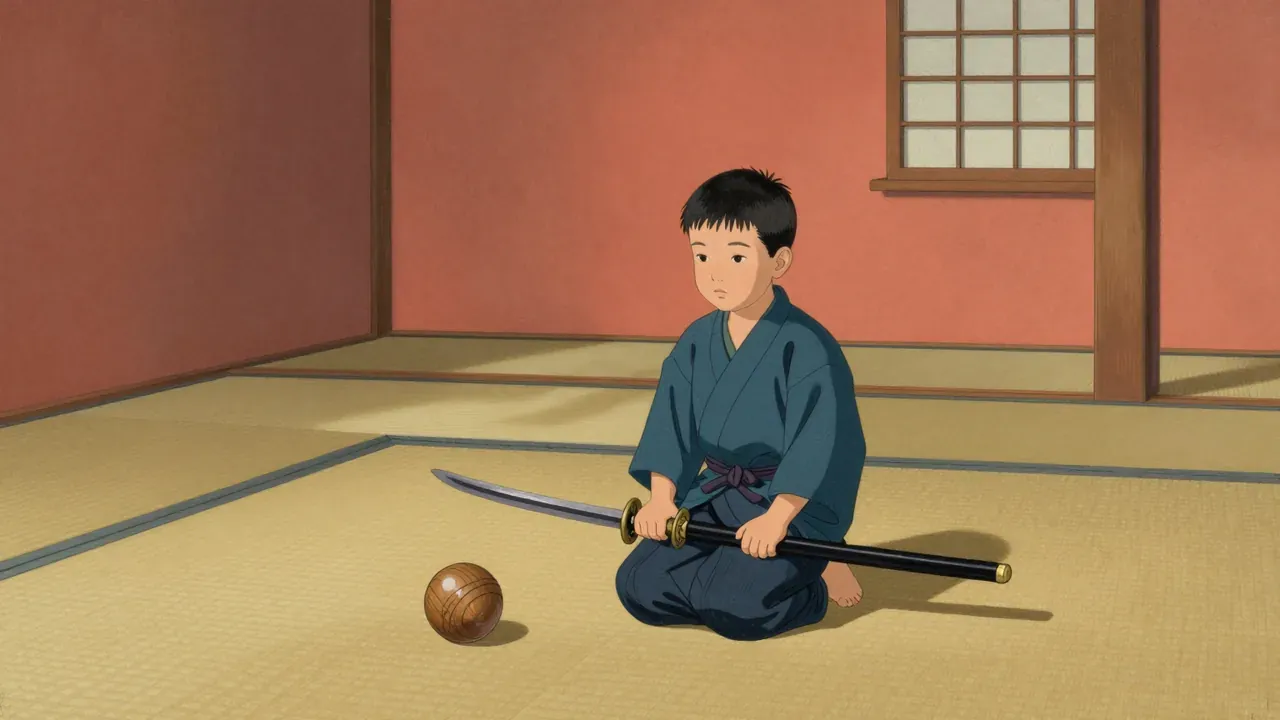
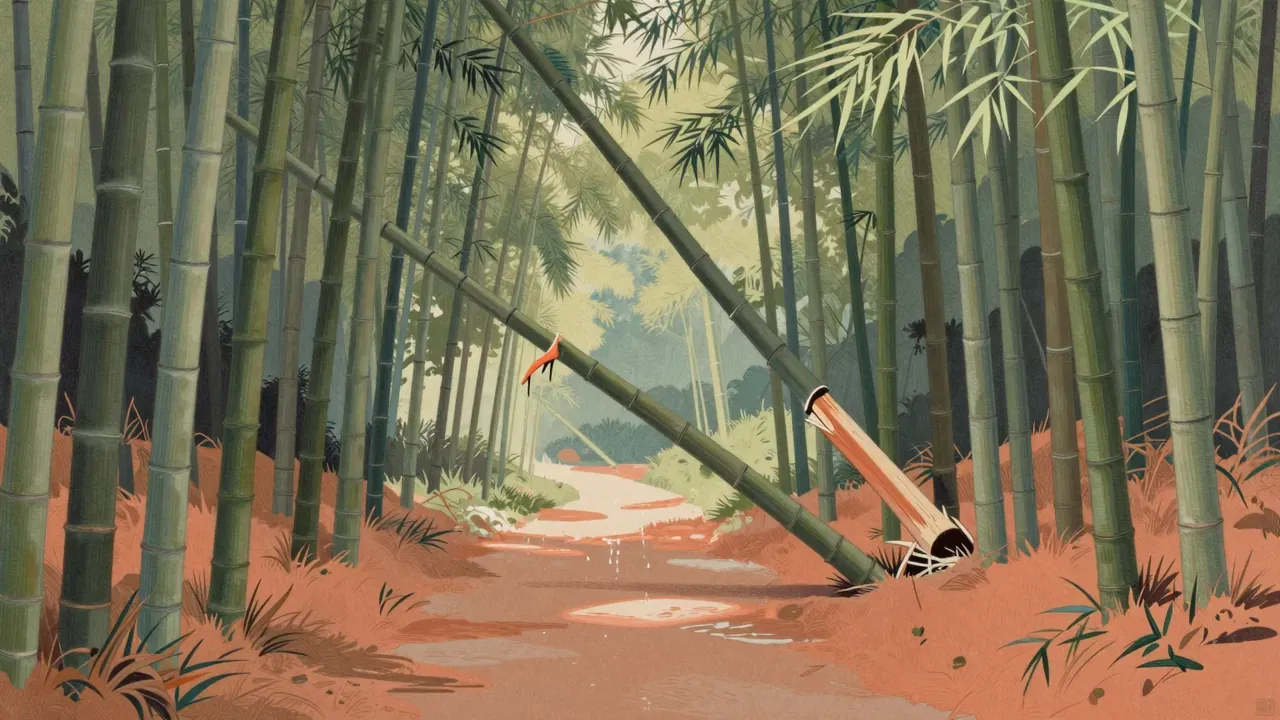
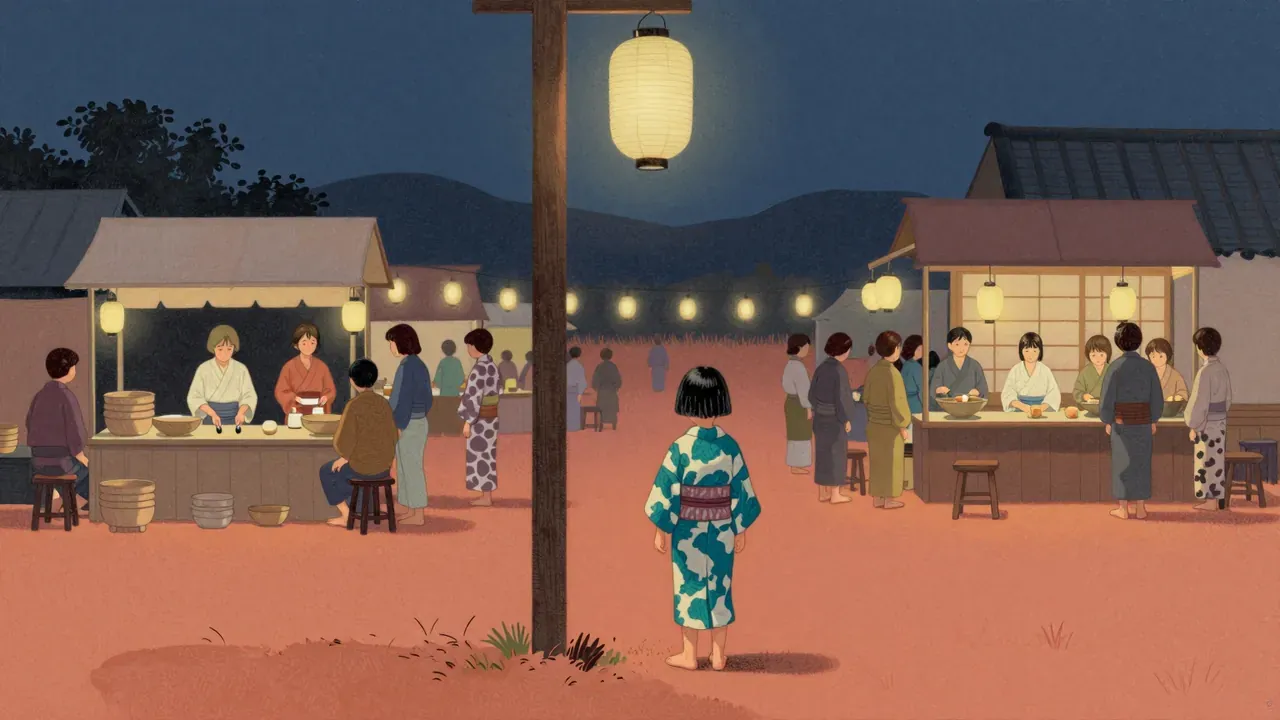
The story unfolds in two interwoven strands: Ogami’s contractual path through five messengers — each a distinct fighter representing a different school or weapon — and Daigoro’s brief, unsupervised episode at a town festival, where he endures public flogging without breaking a promise to a pickpocket. Tomisaburō Wakayama’s performance anchors the film in stillness: minimal inflection, deliberate movement, eyes rarely blinking. Shingo Yamashiro and Eiji Okada lend weight as opposing lords; Michiyo Ōkusu’s Shiranui introduces quiet tension as a client whose motives remain opaque until the final act. Kenji Misumi directs with surgical pacing: fight choreography favours tight framing and abrupt cuts, avoiding lingering spectacle. The baby cart’s mechanics are shown plainly — no glamour, just function. Sets are sparse, interiors dimly lit, exteriors washed in flat daylight. Sound design privileges silence between blows, and the clack of wooden sandals on stone recurs as rhythmic punctuation. There is no score beyond diegetic taiko drums during the festival scene.
What sticks
What lands most firmly is the film’s unblinking commitment to its own logic. Ogami’s code — demanding partial payment and partial truth from each messenger — functions as both plot engine and ethical compass, and the incremental disclosures build a coherent political picture: not personal vendetta, but institutional rot masked as succession. Daigoro’s festival sequence works precisely because it refuses sentimentality: his endurance is presented as fact, not triumph, and his silence under punishment carries no didacticism — it simply is. The underwater theft of the letter is staged with tactile clarity: submerged breath, muffled light, the physical effort of swimming while holding a scroll. Even minor roles register with economy: Bin Amatsu’s Inspector Senzo has two scenes and three lines, yet his bureaucratic weariness conveys an entire stratum of local authority. The film trusts its audience to follow cause and effect without exposition, and that trust is repaid in narrative momentum and tonal consistency.
Where it slips
What does not land is the late introduction of Shiranui’s contract, which arrives without sufficient groundwork to make her request feel like anything more than a narrative detour. Her motivation remains vague, and the subsequent killing of Lord Kuroda and his seven bodyguards feels structurally redundant — a second climax that dilutes the precision of the earlier five-test arc. The film’s refusal to clarify whether Ogami accepts her commission out of pragmatism, pity, or something closer to paternal instinct leaves the sequence emotionally inert. Similarly, the presence of Yagyū Retsudō — Ogami’s arch-enemy — is reduced to a name dropped in dialogue; his absence from the action weakens the stakes of the priest-interception mission. The film’s austerity becomes a limitation here: where ambiguity serves the theme elsewhere, it undermines consequence in this stretch. A viewer expecting escalation finds repetition instead.
What it says
The themes that matter are inheritance, silence as agency, and the corrosion of legitimacy. Daigoro is not a child but a vessel — for memory, for witness, for continuity — and his enforced silence during the flogging is less about obedience than about the transmission of unspoken knowledge. Ogami’s path is not redemption but recalibration: he does not seek to restore honour, only to enforce contracts with absolute fidelity, making him both product and critic of the system he serves. The conspiracy — disguising a girl as a boy heir — exposes how lineage is performative, not biological; power resides not in blood but in documentation, secrecy, and controlled narrative. The ‘Demon Path’ is not metaphorical: it is the route taken by those who know the state’s official story is a forgery, and who move through its margins to correct or exploit the gap. Ritual — bowing before battle, naming weapons, counting breaths — is not tradition for its own sake, but the only grammar available to speak truth in a world where language has been weaponised by the powerful.
Who it’s for
This film is for viewers who value narrative discipline over exposition, who find moral weight in restraint, and who accept that a sword drawn slowly can be more consequential than one swung wildly. It suits those familiar with the series’ rhythms or with Japanese genre conventions — particularly the jidaigeki emphasis on posture, timing, and consequence over psychology. It is not for viewers who require character backstories, emotional catharsis, or thematic signposting. Those expecting the operatic scale of Kurosawa or the surreal texture of Suzuki will find it too lean; those seeking moral clarity or progressive politics will note its tacit acceptance of feudal hierarchy. A viewer who values thematic density over plot complexity may find its repetitions frustrating. The film assumes patience — not as a virtue to be rewarded, but as a condition of engagement. Without that baseline, its rigour reads as austerity, not intention.
What it costs
Yes, it is worth your evening — provided you watch it as part of the sequence, not in isolation. Its power accumulates across instalments: the baby cart’s design, Daigoro’s growing competence, Ogami’s narrowing field of choice — none land fully without context. Watching it standalone risks misreading its minimalism as emptiness. Someone who prefers tightly plotted thrillers may find its procedural pacing slow; someone drawn to visual spectacle may miss the absence of elaborate sets or colour grading. But for those willing to sit with its silences and follow its logic, it delivers a rare kind of coherence: every frame serves the central question — what does fidelity cost when the system you serve is rotten? That question remains urgent, and the film answers it not with speeches, but with a cart, a sword, and a child’s unbroken silence.