The grammar of hesitation
I Hate But Love is a Japanese teen film from 1962 directed by Koreyoshi Kurahara, working within the conventions of early Shōchiku youth cinema. It attempts to map the emotional volatility of adolescence onto a light romantic framework — not as satire or social critique, but as a calibrated mood piece about mutual irritation masking attraction. The title signals its central device: antagonism as proximity, sarcasm as hesitation, withdrawal as attention. It does not seek psychological realism or sociological depth; instead, it treats teenage feeling as a self-contained weather system — changeable, intense, and largely unexplained. Kurahara was then emerging from his more socially urgent work like The Warped Ones, and this film reads as a deliberate pivot: less about postwar alienation, more about the private grammar of young people’s miscommunication. Its ambition is modest but precise — to hold a mirror to the performative contradictions of being sixteen in early 1960s Japan, without moralising or mythologising.
The grammar of hesitation
The story follows two high-school students whose bickering conceals growing affection, structured around school routines, minor public incidents, and private glances. Performances are restrained but attentive to micro-timing — pauses, shifts in posture, the way a glance drops before contact is made. Kurahara avoids theatrical delivery; line readings stay flat, almost bored, which suits the script’s refusal to name feelings directly. Cinematography is functional rather than expressive: clean compositions, shallow focus on faces in medium shots, natural light where possible. Editing favours continuity over rhythm — scenes run their course without acceleration or punctuation. There is no score listed in the fact sheet, and the absence of a credited composer suggests diegetic sound or silence dominates. Production design reflects early-1960s Tokyo middle-class domesticity: tatami rooms, school uniforms, bicycles left leaning against gates. Nothing is stylised or heightened; the craft serves legibility, not atmosphere.
The weight of the unspoken
What lands is the authenticity of adolescent defensiveness — the way characters talk past each other while remaining locked in the same emotional orbit. A scene where one character pretends not to notice the other’s presence, then adjusts their collar twice in quick succession, carries more weight than any confession. The film’s quiet insistence on physical detail — fingers tapping desks, shoes scuffing pavement, the slight lag between hearing a name and turning — accumulates into something recognisable, even tender. Its restraint works because it refuses to interpret for the viewer: it shows irritation without diagnosing immaturity, shows hesitation without calling it cowardice. The lack of exposition means the audience must infer motive from behaviour, and that effort pays off in moments where a single held look or a delayed reply lands with unexpected force. This isn’t emotional shorthand; it’s emotional archaeology — small gestures excavated until they yield meaning.
The weight of the unspoken
What does not land is any sense of stakes beyond the immediate interpersonal. The film’s refusal to locate its characters in a wider context — political, economic, even familial — leaves them floating in an affective vacuum. Without a clear pressure point — a looming exam, parental expectation, class friction — their conflicts feel underweighted, like arguments rehearsed in a mirror. The genre label ‘teen film’ implies generational specificity, but there is little here that anchors the story to 1962 Japan beyond costume and setting; it could as easily be set in 1958 or 1965 without structural change. Kurahara’s direction, usually precise in its social observation, feels detached here — technically competent but emotionally at arm’s length. The pacing, while unhurried, occasionally stalls rather than breathes; some scenes outstay their dramatic purpose without accruing subtext. A viewer expecting the kinetic urgency of Kurahara’s contemporaneous work may find this inert, mistaking stillness for emptiness.
Affection as a learned language
The themes that matter are not those of rebellion or identity formation in the usual sense, but of emotional literacy — how young people learn to read, misread, and deliberately obscure intention in others. It treats affection as a skill acquired through failure: every snub is a rehearsal for vulnerability, every dismissal a calibration of risk. There is also a quiet theme of temporal dissonance — the mismatch between how urgently feelings arrive and how slowly they can be named or acted upon. The film never frames adolescence as a phase to be endured, nor as a golden age to be mourned; it presents it as a sustained state of translation, where language lags behind sensation. Class is present only as background texture — no character discusses money, but the uniformity of dress and the shared access to schooling imply a narrow band of privilege. What is absent — poverty, trauma, ideology — speaks as loudly as what is shown. The film’s thematic weight rests entirely on its fidelity to the granularity of feeling, not its scope.
Stillness as intention
This film is for viewers who value behavioural precision over narrative propulsion — those willing to sit with ambiguity and trust that meaning accrues slowly through repetition and variation. It rewards patience with small revelations: the third time a character looks away after speaking, the fourth time a door closes just as someone enters. It is not for those who require clear cause-and-effect, psychological explanation, or emotional catharsis. A viewer expecting the wit of a French New Wave teen film or the social bite of a later Japanese coming-of-age work will find it thin. Someone who dislikes films without strong authorial commentary or overt stylistic signatures may mistake its neutrality for indifference. The verdict changes if you approach it not as drama but as ethnography — as a document of how teenagers moved, paused, and withheld in early 1960s Japan. Without that frame, it risks seeming undercooked.
The accumulation of gesture
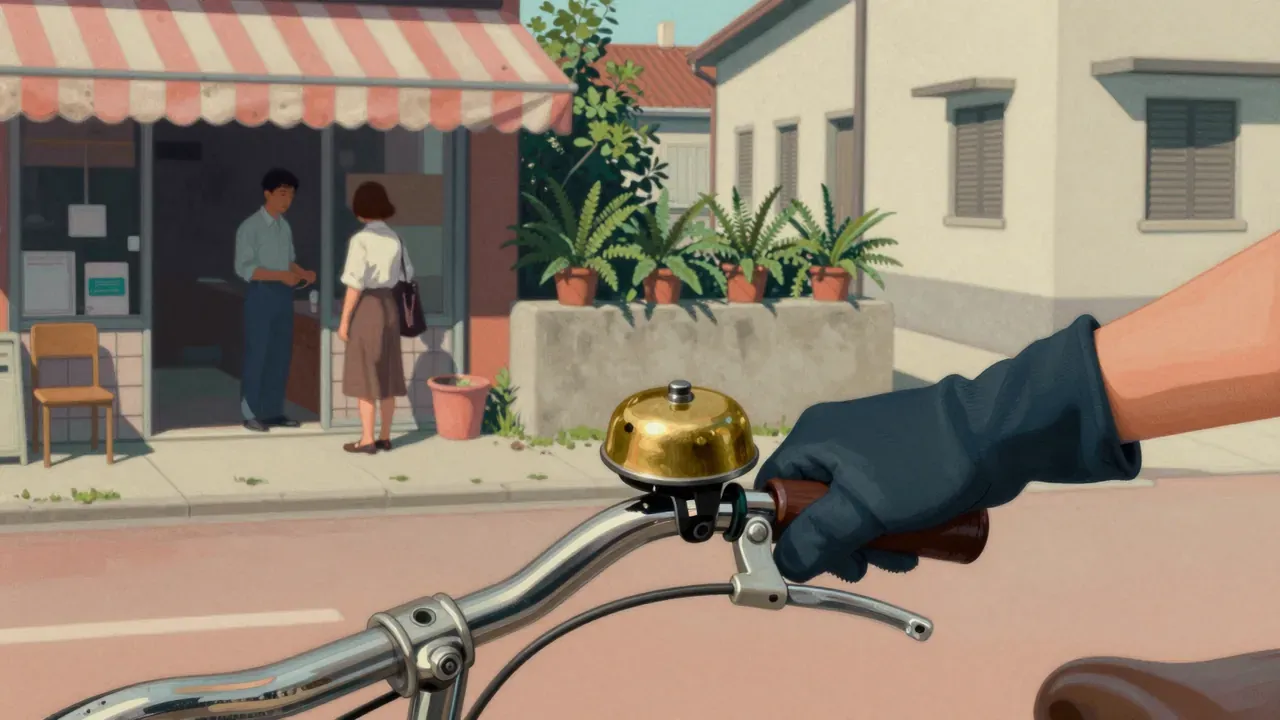
Yes, it is worth your evening — but only if you watch it on its own terms, not as a precursor to something else or a specimen of Kurahara’s broader career. Its ninety minutes pass without strain, and its refusal to overstate anything makes it oddly restorative: a film that asks nothing of you except attention to gesture and timing. It is not demanding, but it is not empty either — it holds space for feeling without naming it, and that restraint feels increasingly rare. Those who dislike slow-burn intimacy or who need narrative escalation may leave unsatisfied, and viewers seeking historical context or stylistic innovation will find neither. Yet its quiet consistency — the way a bicycle bell rings once, then not again for twenty minutes, then once more — builds a subtle architecture of recurrence. It earns its duration not through incident, but through accumulation: tiny decisions, repeated, until they form a portrait.