The setting is the subject
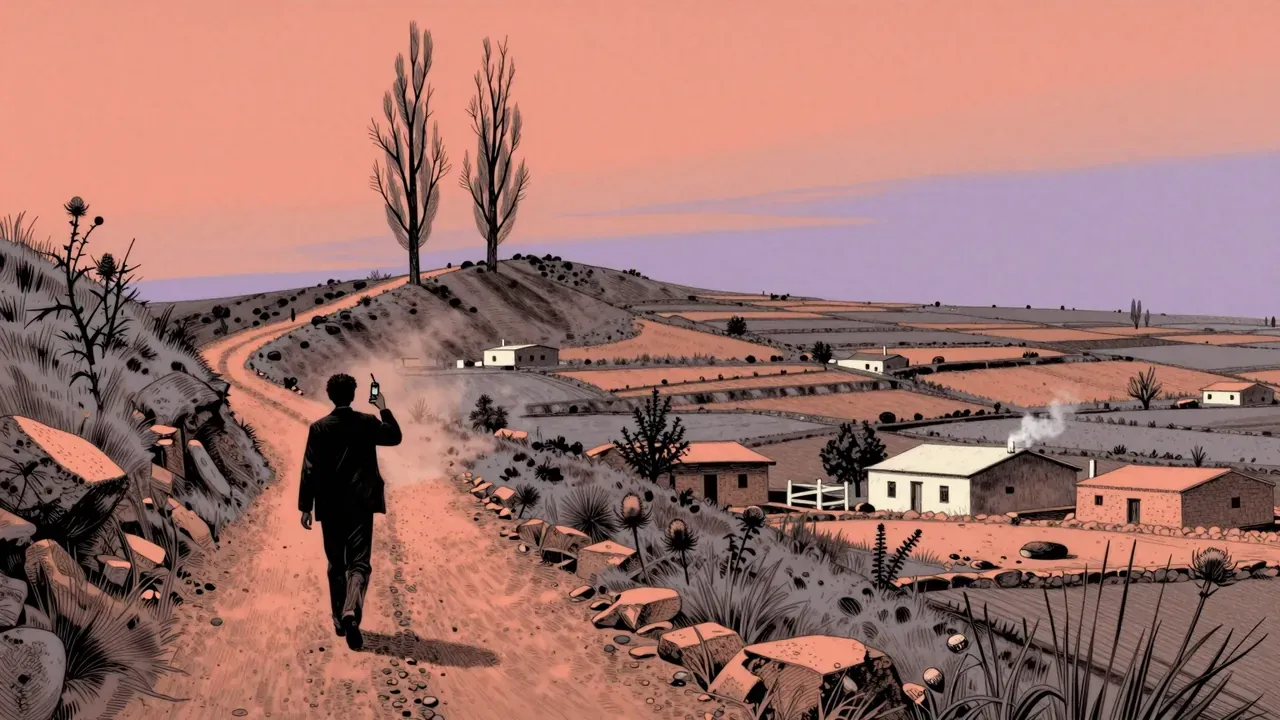
Through the Olive Trees is a film about making a film, set in the rubble and olive groves of northern Iran after the 1990 Manjil-Rudbar earthquake. Abbas Kiarostami does not aim to reconstruct trauma or deliver exposition; instead, he constructs a layered frame — the shoot of And Life Goes On — within which real uncertainty unfolds. The film watches people rehearse roles while living lives that resist scripting: a stonemason’s courtship, a student’s quiet resistance, a director’s quiet interventions. It treats fiction not as escape but as a testing ground for attention, persistence, and ethical hesitation. There is no voiceover, no score to cue feeling, no editorial emphasis on ruin or recovery. What matters is how people move through space, speak haltingly, look away, pause mid-sentence — all rendered without hierarchy between ‘real’ and ‘rehearsed’. Kiarostami’s method is structural restraint: he lets scenes run long, keeps shots static, refuses to resolve what the script does not resolve. The ambition is modest in form but exacting in demand — that the viewer attend, without guidance, to the weight of a glance, the duration of a walk, the silence between proposals. (158 words)
The line between role and person
The story follows Hossein Rezai — a non-professional actor playing a version of himself — as he pursues Tahereh, a young woman cast opposite him. Their dynamic is never staged for clarity: her evasions are understated, his persistence unheroic, their dialogue often interrupted by wind, passing carts, or the director’s off-camera instructions. Mohammad-Ali Keshavarz appears briefly as the film’s director, a stand-in for Kiarostami, whose interventions are minimal, observational, never corrective. Hossein Jafarian’s cinematography favours medium distances and shallow focus; olive trees and cracked earth dominate the frame, not faces. Editing by Kiarostami avoids continuity cuts — scenes bleed into one another with ambient sound carrying over, reinforcing temporal slippage. Performances are unmodulated, grounded in gesture rather than expression: a hand brushing dust from a wall, a foot shifting weight, a head turned just beyond the lens. There are no close-ups to decode intention. The film’s rhythm comes from repetition — takes, retakes, walks down the same slope — each iteration altering context more than content. This is not realism as fidelity to life, but realism as fidelity to the conditions under which meaning is made, deferred, or abandoned. (159 words)
The final walk
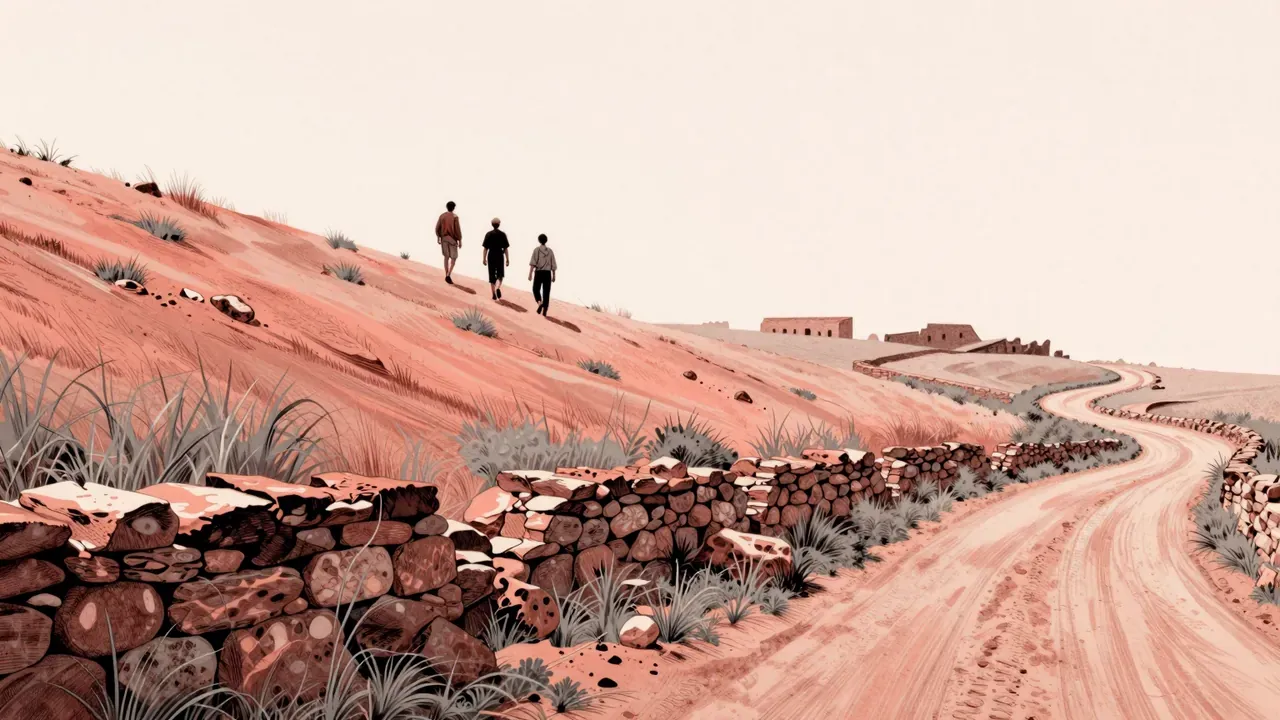
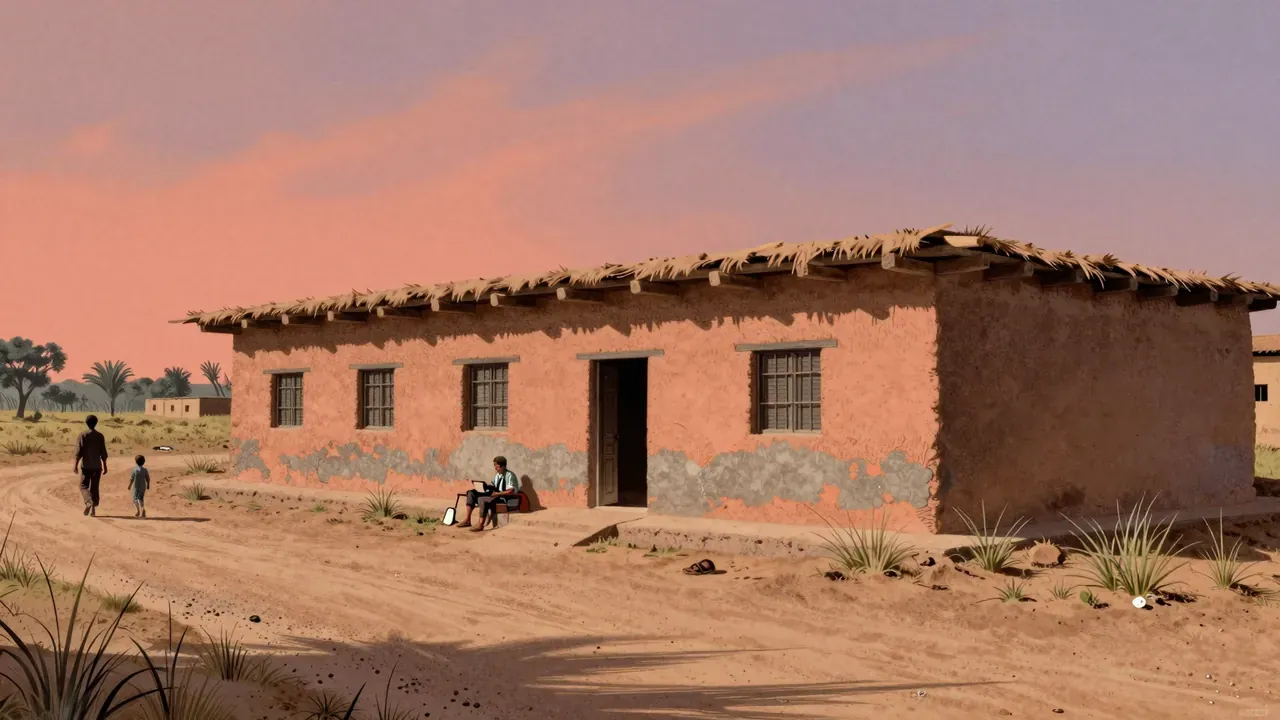
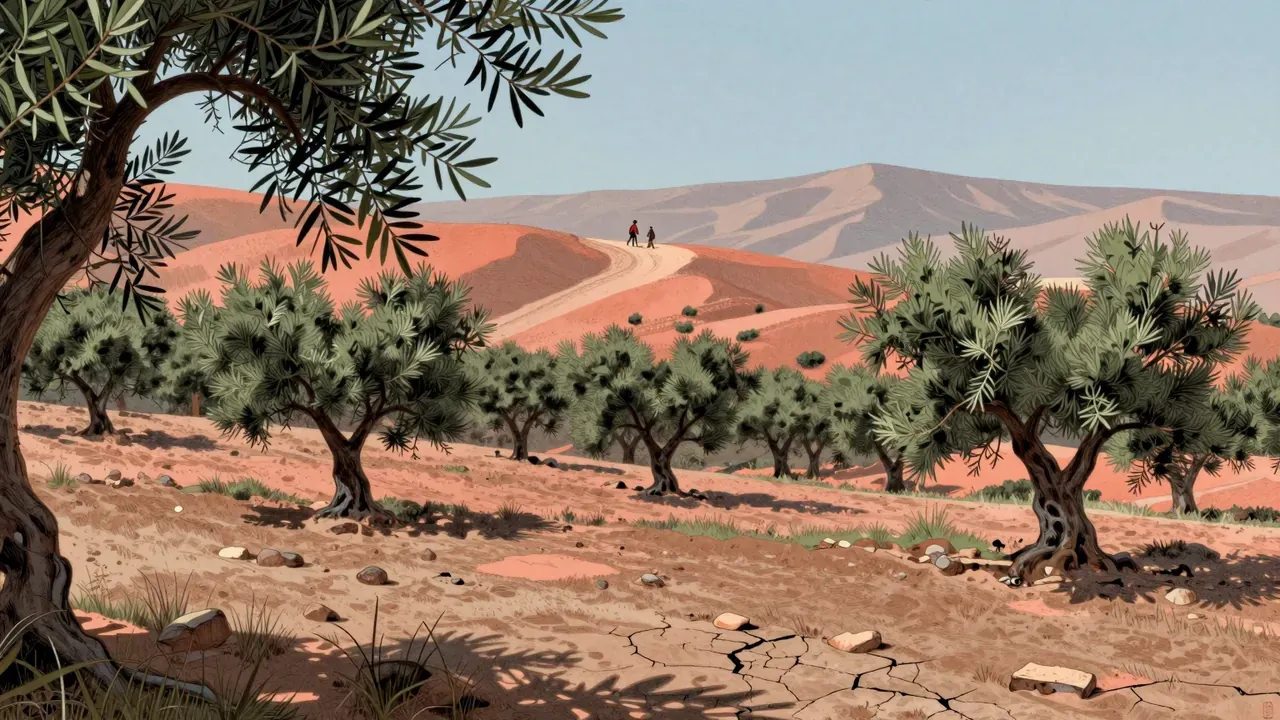
What lands is the cumulative pressure of unresolved desire — not as melodrama, but as physical fact. Hossein’s running after Tahereh across uneven ground, his breath audible, his posture slackening with each stride, becomes a study in endurance without promise. The final sequence — distant, silent, shot from a hillside — works because it refuses resolution while refusing indifference: the camera holds, the olive grove remains, the field stays green, and the act of watching becomes inseparable from waiting. The film’s structure — nested fictions, repeated motifs, overlapping diegetic layers — lands not as cleverness but as necessity: only this architecture allows the question ‘What did she say?’ to carry moral and formal weight. The natural light, the unvarnished textures of mud-brick walls and rough-hewn stone, the absence of musical punctuation — all serve the same end: to make the ordinary feel charged with consequence. Even minor characters — a boy fetching water, an elder correcting pronunciation — register with quiet authority, not because they advance plot but because their presence asserts continuity. The film trusts that attention, sustained without reward, is itself a kind of engagement — and that trust pays off in moments where stillness feels like tension, and silence like speech. (157 words)
What does not land
What does not land is the assumption that all viewers will accept its refusal of narrative closure as generative rather than withholding. Some may find the pacing inert, mistaking deliberation for drift — especially in sequences where characters walk without destination or repeat lines without variation. The film offers no psychological exposition, no backstory beyond what is spoken in passing, no visual shorthand for emotion: grief, shame, or hope must be read in posture, pace, and proximity, not in expression or editing. Those accustomed to causal plotting or character arcs may feel stranded, particularly in the middle stretch, where rehearsals blur with reality and distinctions between ‘scene’ and ‘life’ dissolve without comment. The lack of translation for Persian dialogue beyond subtitles means idioms, hesitations, and tonal shifts are flattened — a limitation the film neither acknowledges nor compensates for. Its faith in observation as interpretation assumes a viewer willing to sit with ambiguity for extended stretches, and that faith breaks down if the viewer expects signposting, emotional escalation, or even consistent spatial logic. The film’s integrity lies in its consistency; its limitation is that consistency demands patience it does not earn for everyone. (156 words)
The ground beneath the story
The themes that matter are not abstracted but embedded: the labour of attention, the ethics of representation, the porous boundary between care and intrusion. Kiarostami examines how power operates in small increments — a director’s glance, a family’s veto, a proposal made without literacy or wealth. Class is present not as thesis but as texture: Hossein’s hands are calloused, Tahereh’s textbooks are worn, the film crew’s equipment is sparse and second-hand. Language figures as both barrier and bridge: mispronunciations are corrected on set, but no one translates the deeper gaps between intention and reception. The earthquake is never shown, yet its aftermath structures every scene — in rebuilt walls, orphaned children, and the persistent question of who gets to tell which stories. The olive grove recurs not as symbol but as condition: sheltering, obstructing, indifferent. Most centrally, the film asks what responsibility art bears when it borrows from life — whether filming a proposal is distinct from witnessing one, whether rehearsal can prepare someone for real consequence, and whether distance — aesthetic, geographic, linguistic — can ever be ethically neutral. These questions do not resolve; they accumulate, like stones in a dry riverbed. (154 words)
Who watches with whom
This film is for viewers who treat cinema as a practice of attention, not consumption — those who value duration over exposition, implication over explanation, and quiet persistence over dramatic payoff. It rewards patience, tolerates ambiguity, and assumes familiarity with the conventions it suspends. It is not for those who require narrative propulsion, psychological clarity, or emotional catharsis within a defined arc. Viewers who rely on music, editing rhythms, or facial close-ups to orient themselves may feel disoriented or alienated. Those seeking historical context about post-earthquake Iran will find none beyond what is visible in landscape and gesture. It is also unlikely to satisfy fans of Kiarostami’s earlier work who expect the tighter formalism of Where Is the Friend’s House? — this film’s looseness is deliberate, not unfinished. A viewer who finds the final scene frustrating rather than resonant would likely find the entire structure unsatisfying. That verdict would change only if the film offered more scaffolding — clearer transitions, explanatory dialogue, or a stronger internal logic — but such additions would undermine its central proposition: that meaning resides in the unmediated encounter, not the frame around it. (158 words)
Is it worth your evening
Yes, it is worth your evening — provided you watch it as an act of sustained looking, not passive reception. Its 103 minutes unfold at the pace of walking, thinking, hesitating — and that pace is the point. It repays attention not with revelation but with recalibration: after it, a pause feels heavier, a glance more consequential, a landscape more legible. It is not ‘entertaining’ in the conventional sense, nor does it seek to instruct; it invites participation in a mode of perception that privileges duration over delivery. Those who leave disappointed likely expected a story about love or recovery, not a meditation on how stories are built, broken, and carried forward. Its value lies in its refusal to simplify — a refusal that some will read as austerity, others as generosity. It asks nothing of the viewer except time and willingness to sit with uncertainty — and that ask, though modest, is absolute. To decline it is not to misread the film, but to opt out of its terms. Its worth is not in what it gives, but in what it preserves: the right of a moment to remain unresolved. (159 words)