What it shows
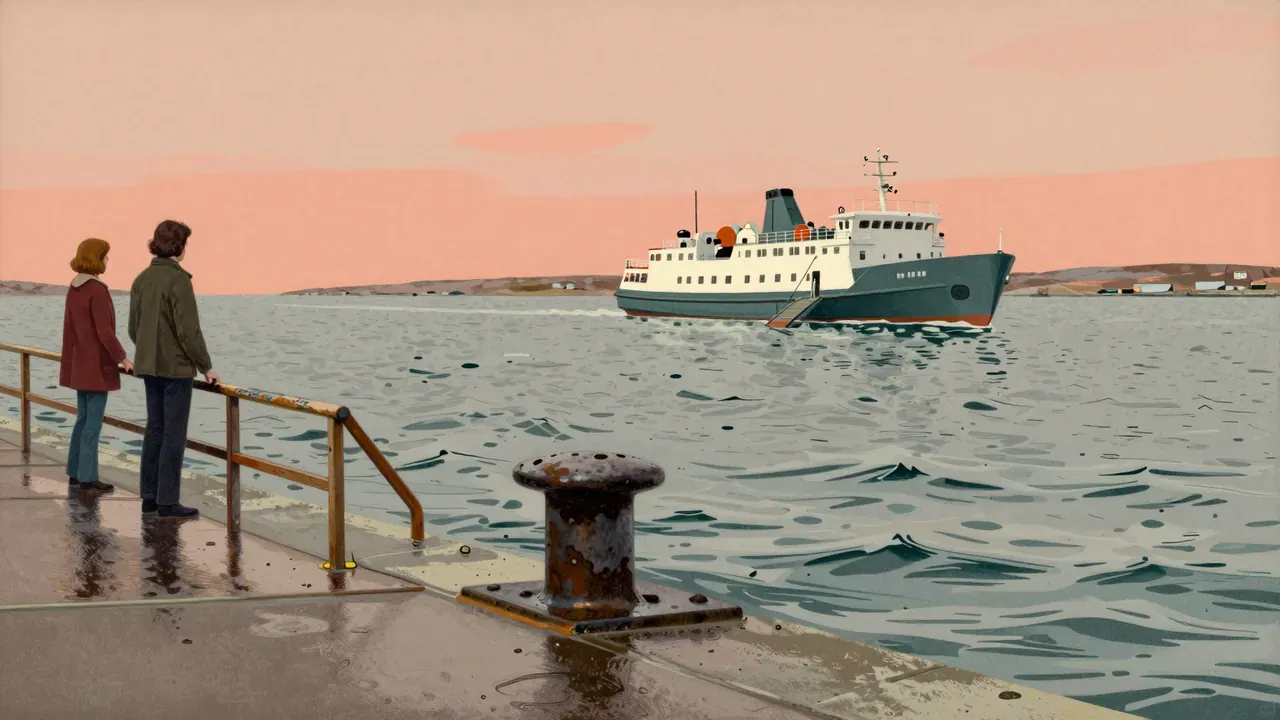
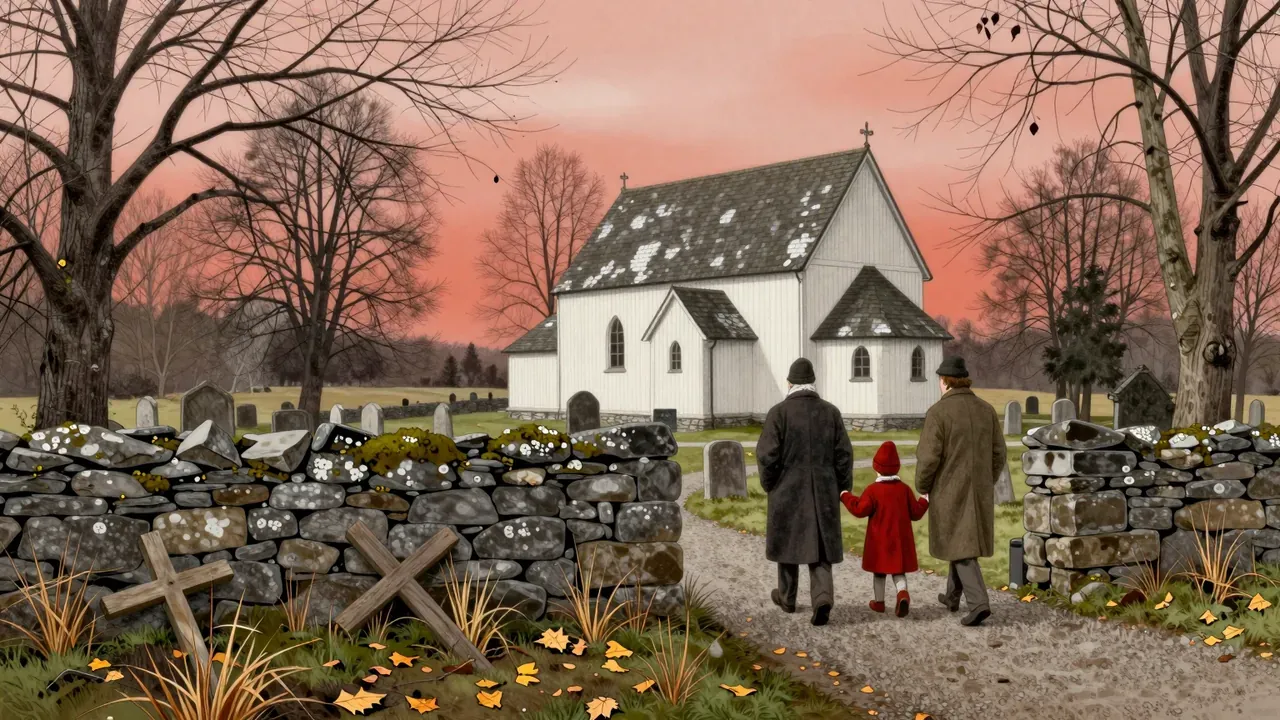
Fårö Document 1979 is a documentary film shot on the Swedish island of Fårö, directed and written by Ingmar Bergman. It records daily life in the island’s small communities over several months in 1979 — fishing, farming, school lessons, church services, repairs to boats and houses, conversations among elders and children. Bergman does not narrate, does not intervene, does not frame interviews as testimony or argument. He treats the island not as a subject to be explained but as a place to be observed with sustained attention: its rhythms, silences, weathered faces, and unremarkable routines. The film makes no claim to comprehensiveness; it avoids surveying geography or history, and omits any contextualising text or voiceover. Its aim is not exposition but presence — to hold time steady long enough for habit to reveal itself as form, and for repetition to acquire gravity. It is less a record of Fårö than an act of patient witness, one that assumes the value of looking without needing to conclude. Arne Carlsson’s cinematography follows this principle: fixed frames, natural light, minimal movement, no score. (158 words)
How it holds time
The film works through accumulation rather than progression: scenes follow one another without narrative linkage, chronology loosely observed but never enforced. There are no protagonists, no arcs, no stated conflicts — only people engaged in tasks, often wordless, often repeated across shots. Performances are not performances at all, but unscripted conduct: a boy mending nets, a woman kneading dough, a teacher writing sums on a blackboard. Bergman’s direction is entirely structural — he chooses where to point the camera, when to start and stop rolling, how long to hold a take. Carlsson’s cinematography keeps the image grounded: medium distances, shallow depth of field only where practical, interiors lit by windows or lamps, exteriors under overcast Baltic light. No slow motion, no close-ups for emphasis, no music to cue response. Editing is sparse and functional: cuts mark shifts in location or activity, rarely in time. The craft serves refusal — refusal of interpretation, of hierarchy among moments, of editorial commentary. Every decision defers meaning to the viewer’s own attention, not the film’s guidance. (156 words)
Where it rests
What lands is the weight of ordinary duration. A sequence of three minutes watching an old man sharpen a scythe — the rasp of metal, the tilt of his wrist, the pause to test the edge — acquires a quiet authority because nothing else competes for attention. The film’s stillness allows peripheral details to register: the grain of wood in a doorframe, the way light falls across a child’s shoulder during arithmetic, the rhythm of oars dipping into grey water. These are not ‘beautiful’ in a compositional sense, but they are precise, unvarnished, and felt as lived. The absence of explanation does not produce confusion but a different kind of clarity: one in which actions speak plainly because nothing is asking them to mean more than they do. Bergman’s restraint means the film never flinches from boredom, fatigue, or monotony — and in doing so, it dignifies those states as part of human continuity. The cumulative effect is not emotional catharsis but a recalibration of attention: the eye learns to stay with what is before it, not scan for significance. That shift, subtle and irreversible, is the film’s strongest achievement. (159 words)
Where it refuses
What does not land is any sense of revelation about Fårö itself. The film offers no historical background, no demographic data, no indication of economic pressures or political change affecting the island in 1979. Viewers unfamiliar with Swedish rural life may find the repetitions opaque rather than resonant — the same boat launch, the same hymn, the same stove being lit, recur without variation in framing or context. There is no attempt to distinguish individual voices or perspectives; speech is often muffled, untranslated, or cut off mid-sentence. The refusal of narration risks flattening difference: a young fisherman’s pragmatism and an elder’s resignation register with equal visual weight, but the film gives no tools to parse their divergence. Some sequences — particularly interior shots in dim light — suffer from low contrast and soft focus, not as aesthetic choice but as technical limitation, making faces indistinct and gestures ambiguous. Without subtitles for Swedish dialogue, non-Swedish speakers lose access to even the modest verbal texture the film permits. These are not flaws in intent, but limits in reach: the film assumes a viewer already attuned to its terms, and offers little bridge to those who are not. (157 words)
What it returns to
The themes that matter are endurance, continuity, and the quiet persistence of craft. Not craft as artistry, but as embodied knowledge: how to splice rope, how to read cloud formations before setting out, how to stack hay without rot. Time is treated not as linear but cyclical — seasons return, tides rise and fall, children replace adults in the same tasks. Ageing appears not as decline but as sedimentation: wrinkles, stoops, and pauses are shown as accumulated experience, not loss. Silence is thematic, not atmospheric — it is the space between instructions, the gap after a question, the pause before a decision is voiced. The film resists the idea that meaning must be spoken or named; instead, meaning resides in repetition, in the hand’s memory, in the body’s adaptation to wind and salt and cold. There is no overt engagement with modernity, yet its absence is palpable: no cars dominate the roads, no radios interrupt conversations, no electricity hums beneath the floorboards. This is not nostalgia, but observation — a recording of what remains when the noise of progress is simply left out of the frame. (155 words)
Who it meets
This film is for viewers who trust duration as a mode of understanding — those accustomed to the pacing of observational documentaries like those of Frederick Wiseman or the early work of Wang Bing, or to the stillness of certain Béla Tarr films. It rewards patience, familiarity with Swedish cultural context, and tolerance for ambiguity. It is not for viewers seeking narrative propulsion, psychological insight, or social analysis — anyone expecting explanation, argument, or even consistent legibility will find it withholding, inert, or obscure. Those who rely on subtitles or clear audio will struggle, as will viewers unused to extended takes without editorial signposting. A teacher using it in a film studies class might need to prepare students with scaffolding: Bergman’s method is not self-evident. Someone who values clarity over contemplation, or who associates documentary with advocacy or revelation, will likely reject it as inconsequential. Its value depends entirely on whether you accept that watching someone tie a knot, slowly and correctly, can be an ethical and aesthetic act in itself. (159 words)
What it leaves
Yes, it is worth your evening — but only if you approach it as you would sit with a person in silence, not as you would watch a story unfold. It asks for surrender to its tempo, not engagement with its content. You will not learn facts about Fårö, nor be moved in the conventional sense, but you may notice how your own attention changes over ninety minutes: where it wanders, where it settles, what it resists. That recalibration is rare, and deliberate. Those who dismiss it as ‘just footage’ have missed Bergman’s central proposition — that seeing, sustained and unguided, is already an interpretive act. Detractors will call it inert or elitist; they are not wrong about its difficulty, only about its intent. If the film were shorter, or punctuated with narration, it would fail its own premise. Its length and austerity are not obstacles to be overcome, but conditions of its integrity. To ask whether it is ‘worth it’ is to misunderstand its terms: it does not offer value in exchange for time, but invites time itself as material. (158 words)