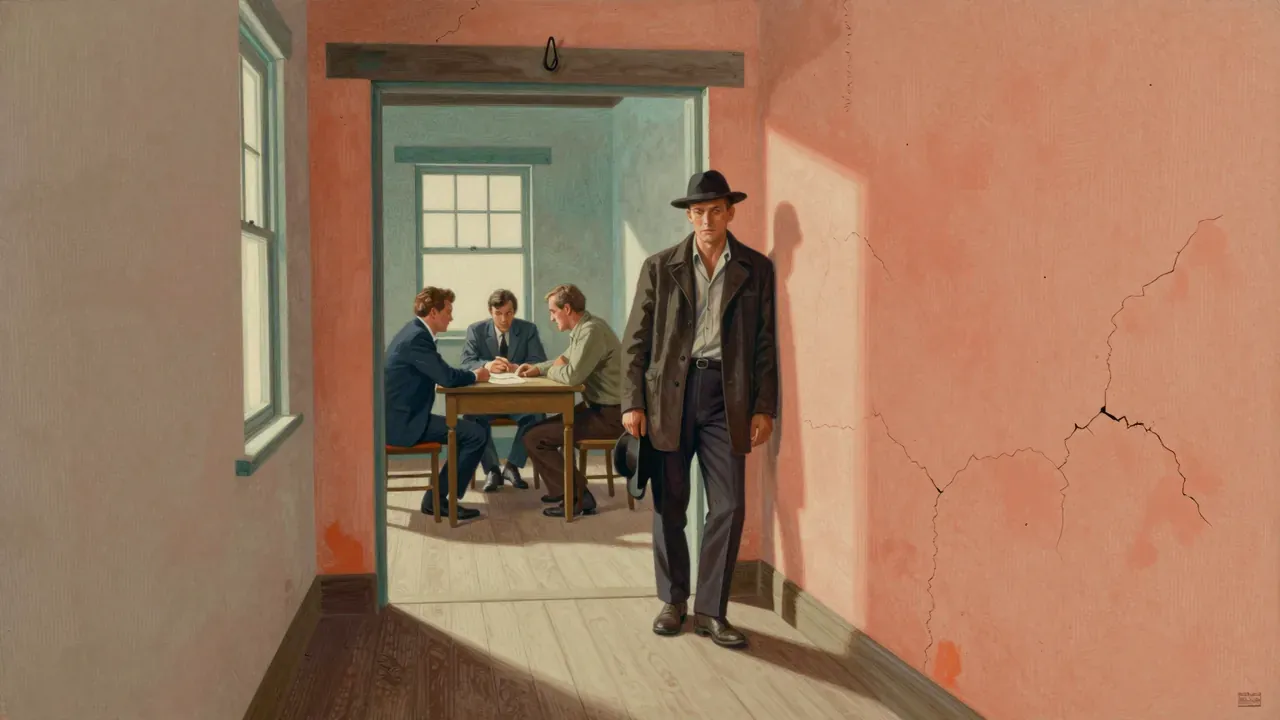
The rifle’s path
Winchester ’73 is a 1950 American Western that uses a single firearm—the ornate, serial-numbered ‘One in One Thousand’ Winchester 1873—as a narrative pivot to trace intersecting paths of violence, inheritance, and moral erosion across the post-Civil War frontier. It is not a mythic origin story nor a straightforward revenge quest, but a structural experiment: the rifle passes through seven owners, each encounter revealing how possession corrupts, distracts, or destroys. Anthony Mann and writers Borden Chase and Robert L. Richards reworked Fritz Lang’s original conception—where the rifle symbolised existential dependency—into something more socially grounded: a contested object whose journey exposes fault lines of greed, cowardice, racial hostility, and fraternal betrayal. The film aims for psychological density within genre constraints, treating the Western not as backdrop but as diagnostic tool. Its ambition lies in showing how a single object can refract character, motive, and consequence without recourse to exposition or voiceover. It assumes viewers will track cause and effect across discontinuous episodes, trusting rhythm, composition, and performance to sustain coherence. Word count: 142
The look of it
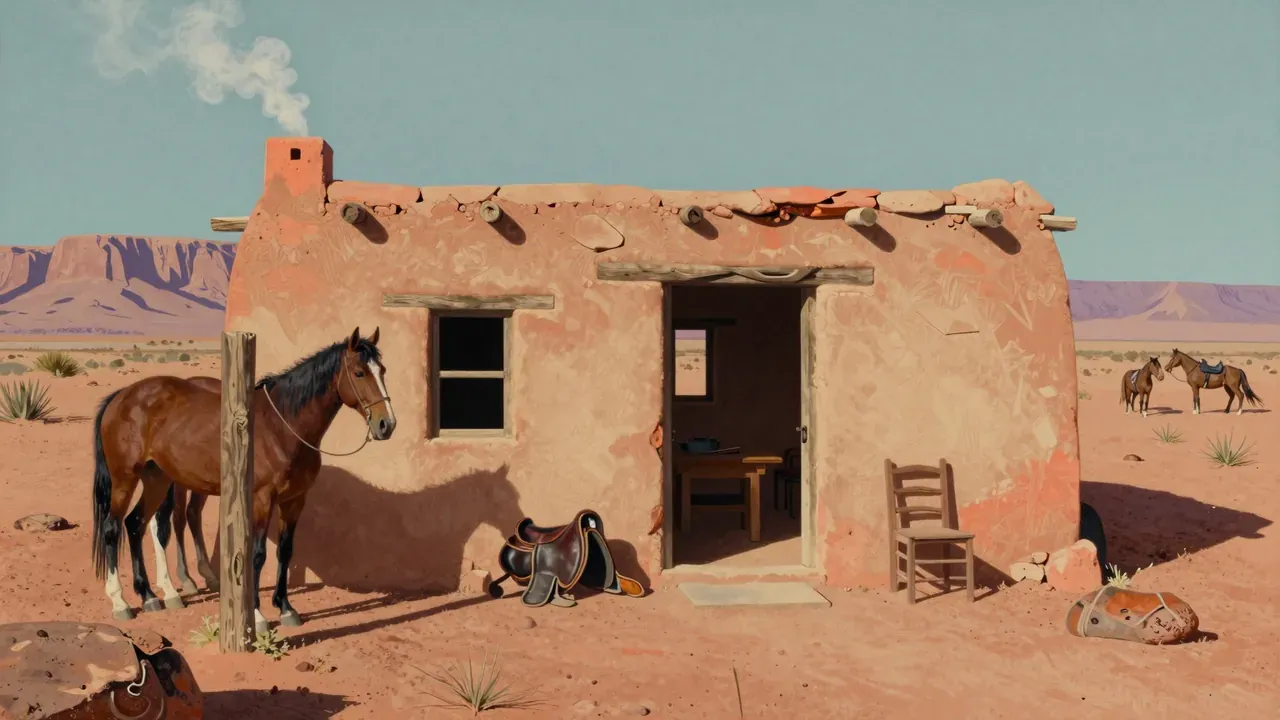
The film works through tight, economical storytelling and disciplined visual economy. William H. Daniels’ cinematography avoids grandeur: exteriors are shot on location in Mescal and Old Tucson, with dust, heat haze, and cramped interiors lending tactile authenticity; interiors are often low-contrast, lit for legibility rather than atmosphere. James Stewart’s Lin McAdam moves with quiet physical certainty—his rifle-handling trained by Winchester expert Herb Parsons—and his restraint makes eruptions of violence land with jarring weight. Dan Duryea’s Dutch Henry Brown is coiled menace, Stephen McNally’s Steve brittle and weak, Shelley Winters’ Lola pragmatic and unromanticised. Editing by Edward Curtiss maintains brisk pacing without sacrificing spatial logic: chases, shoot-outs, and poker games unfold with clear geography and consequence. Walter Scharf’s score is functional, underscoring tension without emoting for the characters. The script’s interlocking structure—each owner’s segment self-contained yet thematically resonant—relies on repetition (the rifle’s appearance, its engraved inscription) and variation (tone, stakes, outcome) to build cumulative meaning. Word count: 156
What sticks
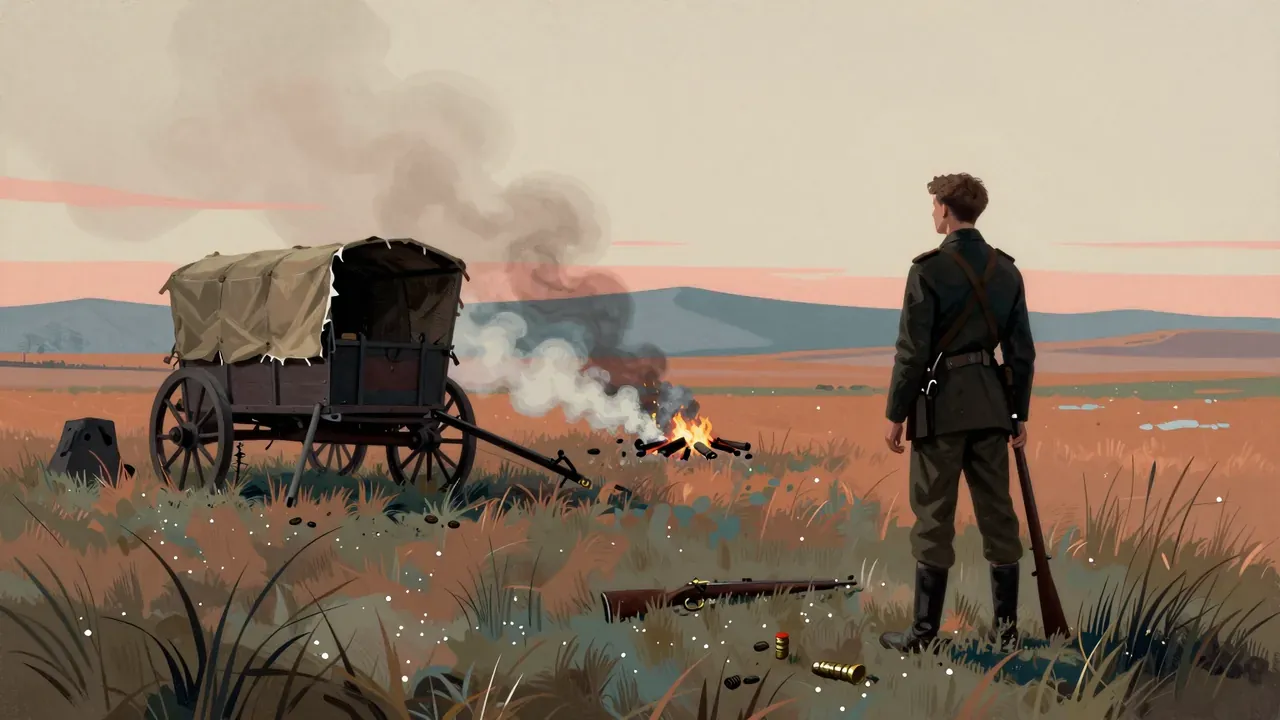
What lands is the film’s structural rigour and its refusal to flatter its protagonists. Lin McAdam is neither noble nor stoic in the traditional sense; his pursuit is dogged, sometimes petty, always personal. His final confrontation with Dutch is stripped of catharsis—no speech, no reckoning beyond the act itself. The rifle’s passage through hands—Dutch’s gang, the trader Joe Lamont, the Native leader Young Bull, the cowardly Steve—feels inevitable, not symbolic. Each transfer is earned: Dutch loses it through arrogance, Lamont through avarice, Young Bull through cultural misreading, Steve through moral failure. Even minor roles register: Will Geer’s Wyatt Earp is laconic authority, Millard Mitchell’s High-Spade Frankie Wilson dryly loyal, Rock Hudson’s Young Bull physically imposing but narratively circumscribed. The battle at the cavalry camp lands because it is brief, chaotic, and tactically specific—Lin’s instruction to Lola about the last bullet is practical, not poetic. The film trusts its audience to infer motivation from gesture and timing, not explanation. Word count: 152
What slips
What does not land is the film’s treatment of Indigenous characters as plot devices rather than agents. Young Bull’s seizure of the rifle and subsequent attack on the wagon train follow no internal logic beyond narrative convenience; his motives are opaque, his presence framed solely as threat. The film offers no counterpoint to this flattening—no dialogue, no cultural context, no perspective outside Lin’s line of sight. Similarly, Shelley Winters’ Lola remains underwritten: her agency is limited to survival choices, never insight or influence over events. Her saloon-pianist role feels like set dressing, not character. Tony Curtis’ cavalry trooper and Jay C. Flippen’s Sergeant Wilkes appear briefly, their contributions functional rather than dimensional. The film’s tight structure also means some transitions feel abrupt—Steve’s abandonment of Lola, for instance, lacks psychological preparation, relying instead on situational urgency. These omissions do not undermine the film’s craft, but they limit its ethical scope. Word count: 153
What stays with you
The themes that matter are inheritance—not of land or title, but of violence and grievance—and the illusion of control in a contingent world. The rifle is not power made manifest, but power deferred, misdirected, and ultimately hollow: no owner wields it to lasting effect. Lin’s quest begins as filial duty but becomes ritualised obsession; Dutch’s claim to it is rooted in theft and bloodline, not skill or right. The film interrogates masculinity as performance: men define themselves through marksmanship, dominance, and possession, yet none achieve stability or peace. Class and commerce intrude constantly—Lamont’s price-gouging, the bank robbery, the staged heist—suggesting that frontier individualism is already subsumed by transactional logic. There is no redemption arc, only accumulation of consequence: Lin survives, but his brother dies, his friend is wounded, and the rifle ends where it began—not with him, but with a soldier who has no stake in its history. Word count: 151
Who it’s for
This film is for viewers who value structural precision over emotional hand-holding, and who accept that a Western need not affirm frontier mythologies to be compelling. It rewards attention to composition, editing rhythm, and the subtle recalibration of Stewart’s persona—from amiable everyman to morally ambiguous avenger. It is not for those seeking coherent moral resolution, historical nuance in its depiction of Indigenous peoples, or sustained romantic or comic relief. Anyone expecting the lyrical fatalism of later Mann-Stewart films like The Naked Spur may find Winchester ’73 too episodic, too lean. Those who dislike ellipsis—moments where motivation is withheld or consequence left unspoken—will struggle. Its value lies in what it refuses: exposition, sentiment, and easy closure. A viewer who prefers thematic clarity over formal ingenuity would likely find it unsatisfying. Word count: 150
Is it worth your evening?
Yes, it is worth your evening—not as comfort viewing, but as a masterclass in economical genre storytelling. At ninety-two minutes, it sustains momentum without padding, advances character through action rather than speech, and builds thematic weight through recurrence rather than declaration. Its influence is visible in everything from Peckinpah’s fragmented timelines to the object-driven narratives of modern crime thrillers. That said, its dated racial framing and thin secondary characters mean it cannot be recommended uncritically. Someone who prioritises ethical consistency over formal achievement might reasonably set it aside. Its endurance rests not on timelessness, but on its uncompromising execution of a specific, historically situated idea: that objects travel faster than justice, and men chase them longer than they understand why. Word count: 149