The shape of the work
A Constant Forge is a two-hundred-minute documentary portrait of John Cassavetes, structured around archival footage and interviews conducted before his death in 1989 and after. It does not aim to survey his filmography chronologically or assess his influence on American independent cinema as a historical phenomenon. Instead, it seeks to reconstruct his working temperament — how he rehearsed, argued, edited, funded, and recut; how he treated actors not as interpreters but as co-authors; how he resisted distributors’ demands for trims and reshot endings. The film treats Cassavetes’s life as inseparable from his method: the long takes, the overlapping dialogue, the visible rewinds and retakes in dailies, the way he would shoot a scene twenty times until something ‘true’ emerged. It assumes familiarity with at least one of his films — Shadows, Faces, or A Woman Under the Influence — not as reference points but as shared ground. There is no voiceover narration, no timeline graphics, no contextualising intertitles about 1970s studio economics. What it attempts is not explanation but proximity: to place the viewer inside the rehearsal room, the editing suite, the argument over lunch.
The rhythm of testimony
The film works through accumulation rather than argument. Kiselyak edits interview segments not by topic but by rhythm: a pause from Gena Rowlands, then a matching silence from Seymour Cassel, then Ben Gazzara leaning forward mid-sentence — all held just long enough to register physical presence, not just testimony. Gordon Willis appears only in still photographs; no cinematographer is named in the credits beyond Cassavetes himself, who shot much of Husbands on 16mm with available light and handheld cameras. The sound design avoids smoothing over background noise: coffee cups clink during Penn’s recollection of Cassavetes’s tirades; a plane passes overhead while Carol Kane describes his impatience with ‘pretty’ acting. There are no re-enactments, no dramatised letters or diary readings. The craft lies in selection and juxtaposition: a clip from Minnie and Moskowitz cuts to Lelia Goldoni describing how Cassavetes would stop filming to ask her what she’d really say in that moment — then back to the same shot, now with her revised line. Performance is treated as process, not product: we see Cassavetes directing Carlin in Faces not once but three times, each take diverging further from scripted intention.
The texture of endurance
What lands is the texture of labour — the exhaustion, repetition, and stubbornness required to sustain a practice outside institutional support. The film makes visible how Cassavetes’s films were built from accumulated hours of improvisation, then pared down in the editing room not to narrative clarity but to emotional fidelity. When Jon Voight recalls Cassavetes cutting an entire subplot because ‘it didn’t hurt enough’, the phrase lands not as anecdote but as operating principle. The repeated shots of Cassavetes smoking, pacing, rewinding tape, scribbling on script pages — these are not biographical colour but evidence of a consistent physical grammar. The film also lands its refusal of closure: no final summation, no posthumous rehabilitation, no attempt to reconcile his contradictions — the generosity and volatility, the loyalty and cruelty. Instead, it holds them in tension, letting Rowlands’s quiet certainty sit beside Falk’s exasperated admiration. That refusal feels earned, not evasive, because the film never pretends to resolve what Cassavetes himself refused to resolve.
The limits of proximity
What does not land is the assumption that access equals insight. The film includes extensive footage of Cassavetes speaking directly to camera in unstructured interviews, often repeating phrases — ‘I don’t care about story’, ‘Acting is listening’ — without context or challenge. These moments accumulate without deepening: they state positions rather than test them. The absence of critical distance becomes most apparent when discussing financing. We hear Al Ruban describe mortgaging his house to fund Gloria, but there is no examination of how that debt shaped the film’s structure or compromised its ending. Similarly, the film presents Cassavetes’s rejection of Hollywood distribution as moral certainty, without showing how that stance limited audience reach or altered his later work’s tone. The interviews with admirers — Sean Penn, Annette Insdorf — add weight but not counterpoint; their reverence functions as reinforcement, not interrogation. The film never asks whether his methods were replicable, sustainable, or even desirable outside his specific constellation of talent, privilege, and timing.
The site of authorship
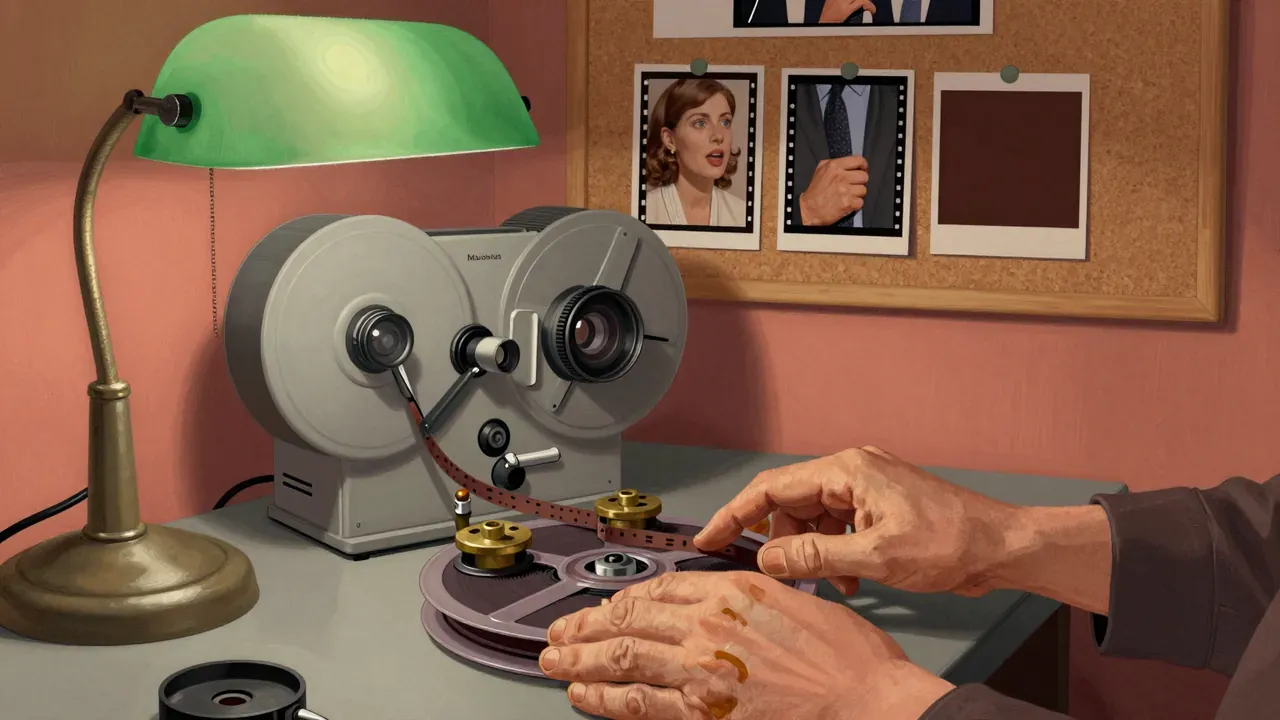
The themes that matter are authorship as endurance, performance as ethical choice, and filmmaking as embodied resistance. Cassavetes is shown not as a visionary who imposed a style, but as someone who insisted on duration — of rehearsal, of shooting, of editing — as the only way to bypass habit and reach something unguarded. His insistence that actors ‘do less, not more’ is framed not as technique but as politics: a refusal of the industry’s demand for legible emotion, its preference for reaction over response. The film returns repeatedly to his editing process — the physical act of splicing, looping, discarding — treating it as the true site of authorship, more than writing or directing. Ageing matters too, not as decline but as intensification: the later interviews show Cassavetes slower, hoarser, more deliberate in speech, and the film treats that change not as diminishment but as deepening of his central concern — how people hold themselves together under pressure. There is no theme of legacy; the film ends where Cassavetes’s last completed film ends, with no epilogue about festivals, restorations, or academic reassessments.
Who this film presumes
This film is for viewers who have already watched at least two Cassavetes features and felt the disorientation of his pacing, the discomfort of his close-ups, the weight of his silences — and want to understand how those effects were produced, not just experienced. It is also for film students who have transcribed scenes from Husbands and now want to see the raw material those scenes were cut from. It is not for casual viewers seeking an introduction to Cassavetes, nor for those who prefer documentaries with clear narrative arcs, explanatory graphics, or contextual framing. Someone who found Faces emotionally exhausting or Love Streams structurally frustrating will find little here to soften that response. A critic who values formal analysis over process documentation may consider the film overly reverential. The verdict would shift if Kiselyak had included even one extended sequence showing Cassavetes collaborating with a non-actor, or negotiating with a distributor, or revising a script with a writer — but he does not, and that omission defines the film’s limits as much as its strengths.
The weight of two hundred minutes
Yes, it is worth your evening — provided you are prepared to spend two hundred minutes inside a single creative methodology without resolution or summary. Its value lies in specificity, not synthesis: it shows how a particular kind of attention — to gesture, hesitation, vocal crack — can become structural principle. It rewards patience not with revelation but with density: the third time you hear Cassavetes say ‘I’m not interested in characters, I’m interested in people’ it carries different weight because you’ve just watched him direct Carlin through seven takes of the same line, each time altering her posture, not her words. Those who would disagree include viewers accustomed to documentary as exposition, or those who believe biography should clarify rather than complicate. The film would be less compelling if it offered a definitive account of Cassavetes’s ‘genius’ — but it does not, and that restraint is its strongest argument.