The shape of the plot
Notorious is a 1946 American spy film built around moral compromise, emotional restraint, and the slow suffocation of love under political duty. It does not aim to depict espionage as action or procedure but as a psychological transaction — one in which affection is weaponised, intimacy becomes surveillance, and trust is measured in seconds of hesitation. Hitchcock structures it as a tightening coil: Alicia Huberman is recruited not for skill but for her compromised past; Devlin directs her not with briefing notes but with silence and withheld approval; Sebastian’s household operates on unspoken rules, its wine cellar holding uranium not as plot device but as metaphor for buried, radioactive consequence. The film attempts something rare for its time: a romance where desire and danger are inseparable, where every glance carries tactical weight and every embrace risks exposure. It treats loyalty not as fidelity but as endurance — of doubt, of distance, of waiting for a signal that may never come. Its ambition lies not in scale but in compression: how much tension can be held in a single staircase, a single glass of champagne, a single close-up of a key turning in a lock.
The weight of silence
The story moves with surgical precision: Devlin recruits Alicia, she seduces Sebastian, they marry, she gains access to the cellar, then is slowly poisoned. There are no digressions, no subplots, no comic relief. Cary Grant plays Devlin with a stillness that borders on coldness — his charm is present but withheld, his affection expressed only through small physical interventions: a hand on a shoulder, a pause before speaking, a refusal to look away. Ingrid Bergman’s Alicia shifts from brittle defiance to exhausted resolve without melodrama; her performance lives in the space between what she says and what she swallows. Claude Rains gives Sebastian pathos without apology — his insecurity is palpable, his cruelty banal. Ted Tetzlaff’s cinematography uses deep focus and low-key lighting to make interiors feel both opulent and airless; the famous crane shot over the party — descending from ceiling to key in Alicia’s palm — is not spectacle but syntax. Roy Webb’s score avoids leitmotif in favour of sustained, dissonant strings that hover just below audibility. Theron Warth’s editing sustains rhythm through duration: scenes breathe, linger, refuse to cut away from discomfort.
The language of things
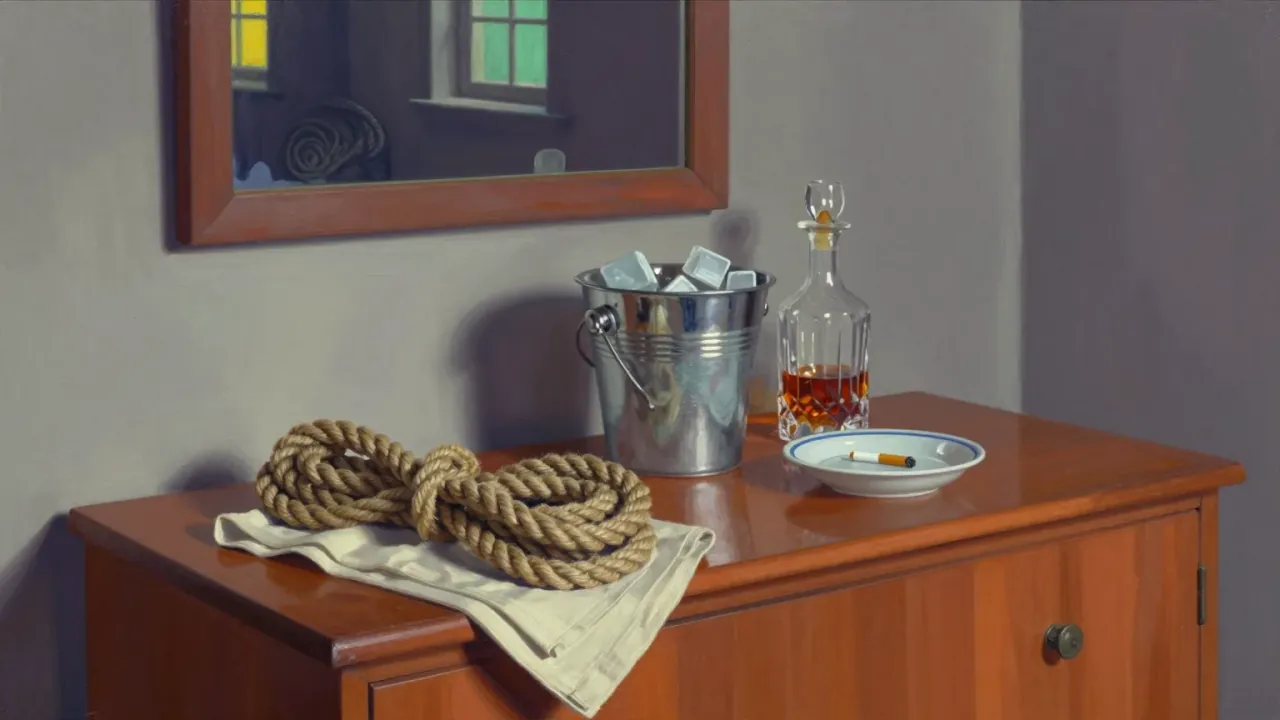
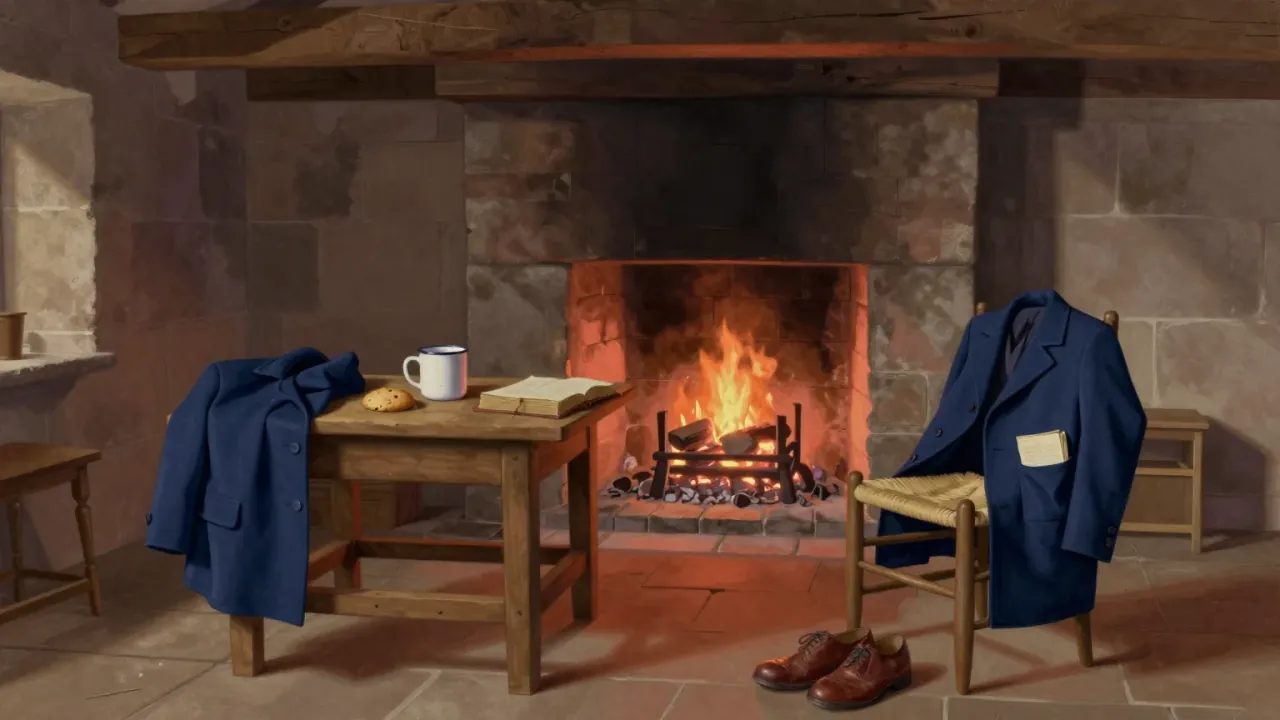
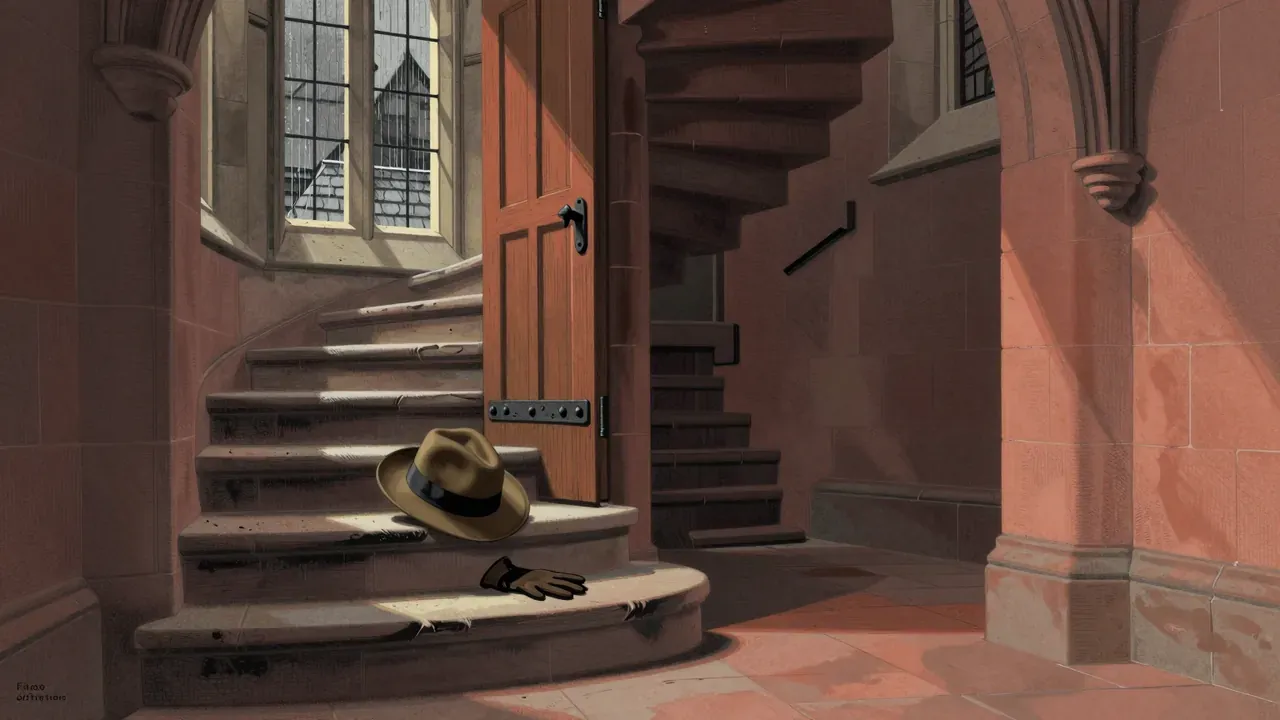
What lands most firmly is the film’s architecture of restraint. The three central performances cohere without overlap: Grant’s control, Bergman’s vulnerability, Rains’s quiet desperation form a triangle of mutual dependence and mutual betrayal. The visual grammar — long takes, deliberate camera movements, compositions that trap characters within doorways or stairwells — reinforces the theme of entrapment without stating it. The use of objects as emotional conduits works consistently: the key, the coffee cup, the wine bottle, the staircase — each acquires weight through repetition and context, not exposition. The film’s pacing, often mistaken for slowness, is in fact calibrated to mimic the psychology of espionage: long stretches of waiting punctuated by moments of irreversible decision. Even the MacGuffin — uranium — functions not as science but as symbolic payload: inert, invisible, lethal only when activated by human choice. The final sequence, in which Devlin carries Alicia out of the house, lands not as rescue but as delayed recognition — of love, of cost, of time already spent in suspension.
The edges left blurred
What does not land is the secondary cast’s function beyond exposition. Characters like Calhern’s government handler or Schünzel’s Nazi associate remain schematic — necessary cogs, not people. The film’s commitment to interiority means little room for social texture: Rio de Janeiro exists only as backdrop, its streets and light rendered via rear projection with no sense of place beyond décor. Some narrative logic strains under scrutiny: Alicia’s rapid recruitment, Devlin’s inconsistent authority, Sebastian’s willingness to marry despite knowing her history — these are not flaws in execution but choices that serve mood over plausibility. The script’s reliance on implication occasionally tips into opacity: Devlin’s motives remain deliberately vague, which works dramatically but risks alienating viewers seeking clear moral coordinates. And while the film’s emotional austerity is its strength, it also denies catharsis — there is no reckoning, no confession, no release beyond physical removal from the house. That is intentional, but it leaves some viewers stranded in the silence after the final frame.
The cost of endurance
The themes that matter are complicity, endurance, and the corrosion of self under assigned identity. Alicia is not a spy by vocation but by inheritance — her father’s treason defines her eligibility. Devlin’s professionalism demands he treat her as asset, yet his love forces him to witness her degradation. Sebastian’s tragedy is not villainy but fragility: he loves Alicia precisely because she is unknowable, and his attempt to possess her destroys them both. The film interrogates whether love can survive instrumentalisation — not as abstract question but as lived condition, where every gesture is monitored, every word parsed, every intimacy surveilled. It treats patriotism as a blunt instrument, diplomacy as coercion dressed in civility. The uranium is less about atomic physics than about latent threat: how easily ordinary life — a cellar, a marriage, a shared meal — becomes a vessel for destruction. And the film’s quietest theme is time: not as duration but as erosion — of health, of trust, of certainty — measured in sips of coffee, in footsteps on marble, in the slow dimming of a chandelier.
Who it asks to meet it
This film is for viewers who value precision over pace, implication over explanation, and emotional economy over catharsis. It rewards attention to gesture, to framing, to silence between lines. It suits those familiar with mid-century studio craft — who recognise how much meaning resides in a dissolve, a shadow, a held breath. It is not for viewers who require narrative transparency, moral clarity, or character backstories; nor for those who expect genre conventions — chase sequences, double-crosses with fanfare, villains who monologue. Anyone needing reassurance that good triumphs, or that love resolves conflict, will find the ending unsatisfying. Those who dislike films where atmosphere outweighs action, or where protagonists act against their own interest without explicit motivation, should pass. A viewer who values psychological realism over plot mechanics, or who finds tension in stillness rather than motion, will find it compelling. Change the pacing or add exposition, and it would cease to be Notorious.
What remains after the credits
Yes, it is worth your evening — provided you watch it as a study in controlled intensity, not as entertainment in the conventional sense. Its 102 minutes unfold with the weight of a held note: demanding, unhurried, exacting. It repays close viewing not because it hides clues but because it layers meaning in composition, timing, and restraint. You do not need prior knowledge of Hitchcock or 1940s espionage to follow it, but you do need willingness to sit with ambiguity — to accept that Devlin’s love is real even when unspoken, that Alicia’s courage is visible in her refusal to collapse, that Sebastian’s ruin begins the moment he believes he has secured her. It is not a film to consume but to inhabit — briefly, deliberately, attentively. Those who mistake its stillness for emptiness will leave unimpressed. Those who read its silences as language will find it unforgettable. Its value lies not in what happens, but in how long it takes to happen — and what happens inside you while it does.