The shape of the path
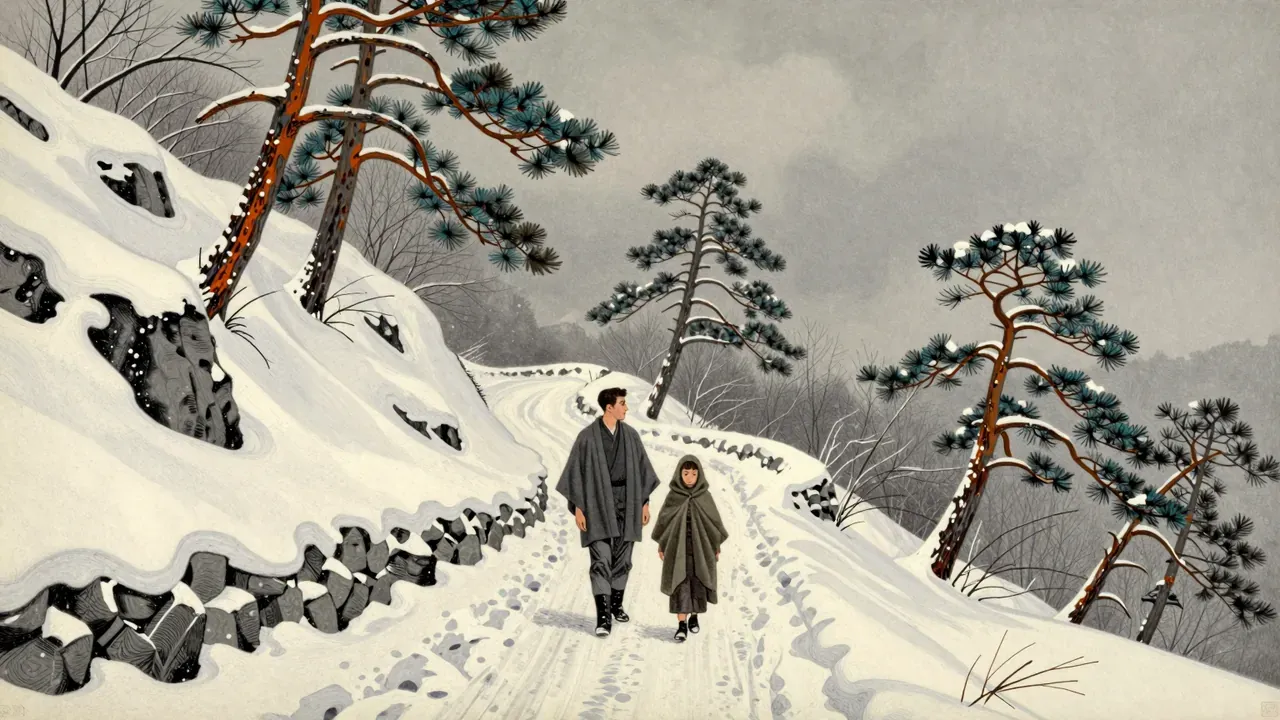
Lone Wolf and Cub: Baby Cart at the River Styx is the second of six 1970s Japanese samurai films adapting Kazuo Koike’s manga. It follows Ogami Ittō, a disgraced former shogunal executioner turned freelance assassin, as he travels with his three-year-old son Daigoro in a weaponised baby cart. The film does not seek psychological realism or moral ambiguity but commits instead to a stylised, ritualistic logic: violence as duty, parenthood as discipline, and honour as austerity. Its aim is structural and symbolic — to extend the mythos of Ittō’s path, not to explain it. It assumes familiarity with the first film’s premise and deepens the world through escalation: more assassins, more terrain, more formalised duels. There is no exposition beyond what the action requires; motivations are stated once and never revisited. The film treats its genre conventions — the lone warrior, the child witness, the rival clans — not as tropes to subvert but as architectural elements to arrange with increasing severity. It is less concerned with why Ittō kills than with how each killing confirms his unbroken line of conduct. Word count: 148
The look of it
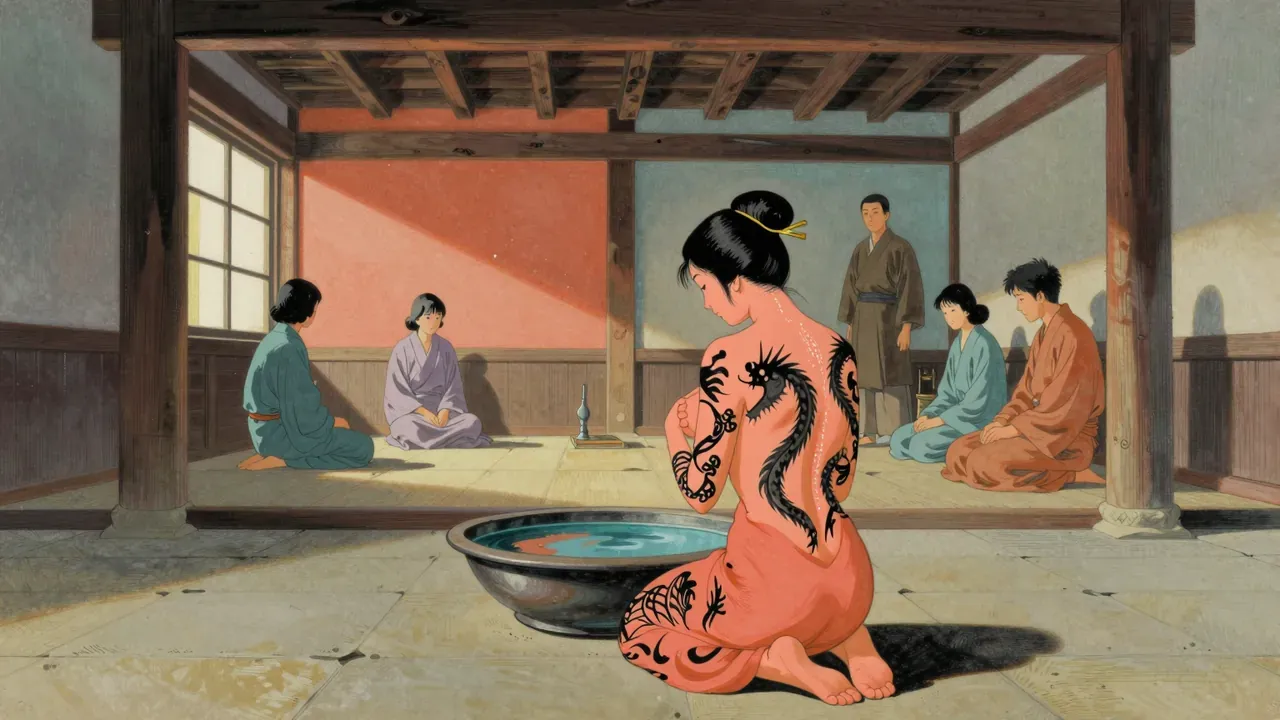
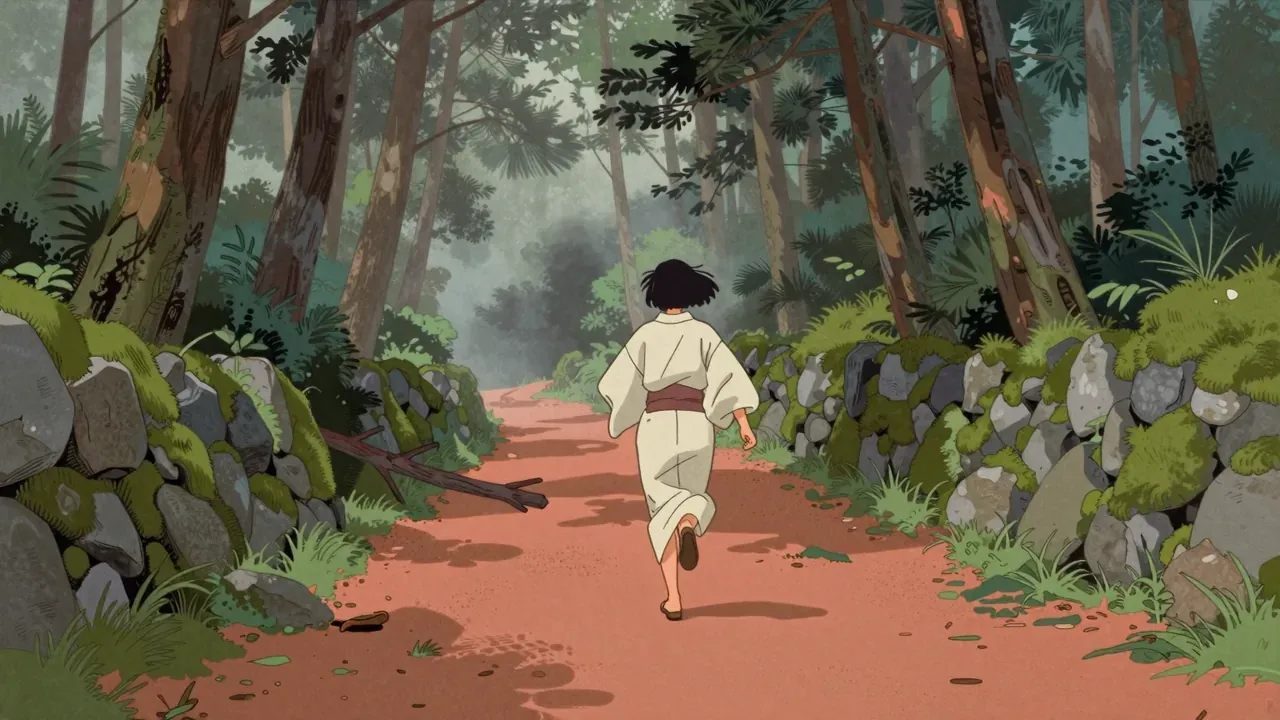
The story moves by encounter rather than causation: bathhouse, acrobats, river-washers, sand dunes, burning ship. Each sequence is choreographed with geometric precision — Kenji Misumi frames swordplay in wide shots that show full body movement and spatial consequence, not just impact. Tomisaburō Wakayama plays Ittō without inflection, his stillness calibrated against the frantic motion of enemies. Kayo Matsuo’s Sayaka is both adversary and mirror: her backward jogging, her silent retreat, her eventual undressing — all gestures that echo Ittō’s own economy of action. The baby cart functions as prop, weapon, and narrative device: its axle blades, hidden railings, and buoyancy are revealed only when needed, never explained. Editing is abrupt but never disorienting; cuts land on feet, hands, or falling sand — physical anchors in a world where dialogue is sparse and emotion withheld. The score, though not named in the fact sheet, operates like punctuation: silence before a strike, a single flute note after a death. Craft serves restraint, not flourish. Word count: 156
What sticks
What lands is the film’s unwavering tonal consistency: every frame reinforces the idea that this world runs on immutable rules — loyalty is measured in blood, respect in silence, fatherhood in endurance. The image of Daigoro spitting water into Ittō’s mouth is neither sentimental nor symbolic in the Western sense; it simply registers as necessary, and its gravity comes from its refusal to be anything else. The sand-dune battle works because it strips combat to its essentials: distance, timing, arterial spray. The ‘Mogaribue’ cut lands not as spectacle but as culmination — a named technique arriving only when its conditions are met, not for shock but for closure. Even the scene where Ittō strips Sayaka reads not as eroticism but as thermodynamics: three bodies, one shared warmth, no dialogue required. These moments succeed because they do not ask the viewer to feel something new, but to accept the film’s internal grammar as sufficient. Word count: 152
Where it falters
What does not land is the film’s reliance on repetition without variation: three sets of female assassins follow the same pattern — disguise, reveal, dispatch — and the lack of distinction between them blunts their threat. The Kurokawa clan’s leader is introduced only to be mutilated off-screen, making his presence functional rather than felt. Sayaka’s arc ends not with confrontation but withdrawal, which feels less like resolution and more like narrative exhaustion — she drops her sword because the film has run out of ways to test Ittō, not because her character has reached a point of clarity. The indigo-dye plot remains inert background; the turncoat’s identity, motive, and fate are irrelevant beyond his function as target. The ship fire sequence adds heat but no tension: Ittō’s dive with Daigoro and cart is visually coherent but emotionally detached, because the stakes have been abstracted into pure form. Word count: 154
What it’s really about
The themes that matter are filial duty as martial discipline, violence as inheritance, and austerity as integrity. Ittō does not shield Daigoro from death; he teaches him to measure well depth by dropping a sandal. Parenthood here is not tenderness but transmission — of blade, of bearing, of silence. The River Styx reference is literalised not as mythic threshold but as practical barrier: water that must be crossed, floated across, swum across. Honour is not regained but maintained — Ittō never seeks restoration, only adherence. The female assassins are not feminist counterpoints but formal opposites: their agility, concealment, and collective action contrast Ittō’s solitary, frontal, linear path — yet they operate under the same code, serving a clan, obeying a leader, accepting death as due. The film treats gender not as identity but as tactical category, and power not as domination but as calibration: how much force, where, and when. Word count: 150
Who it’s for
This film is for viewers who value precision over exposition, rhythm over revelation, and myth over psychology. It rewards attention to composition, timing, and gesture — not to plot twists or character arcs. Those who expect narrative payoff, emotional catharsis, or historical context will find it withholding. It is not for viewers who require motivation to be spoken, stakes to be named, or violence to serve thematic commentary beyond its own logic. A viewer who values the slow burn of a sword being drawn more than the reason it is drawn will find it rich; one who needs cause-and-effect storytelling or interiority will find it hollow. The film assumes patience with silence, comfort with repetition, and tolerance for unresolved threads — particularly around Sayaka’s final silence, which some may read as ambiguity but others as omission. Word count: 152
Is it worth your evening?
Yes, it is worth your evening — if you approach it as a set of formal propositions rather than a story to be followed. Its eighty-one minutes move with the weight and economy of a scroll unfurling: each sequence is self-contained, each death a punctuation mark. It repays rewatching not for hidden clues but for shifts in framing, footwork, or the angle of a blade. Those who dislike it tend to cite its coldness or its refusal to explain — fair objections, but objections to its chosen terms, not failures within them. A different verdict would follow only if the film attempted naturalism, psychological depth, or moral argument — none of which it does. Its value lies in its unwavering commitment to its own architecture. Word count: 150