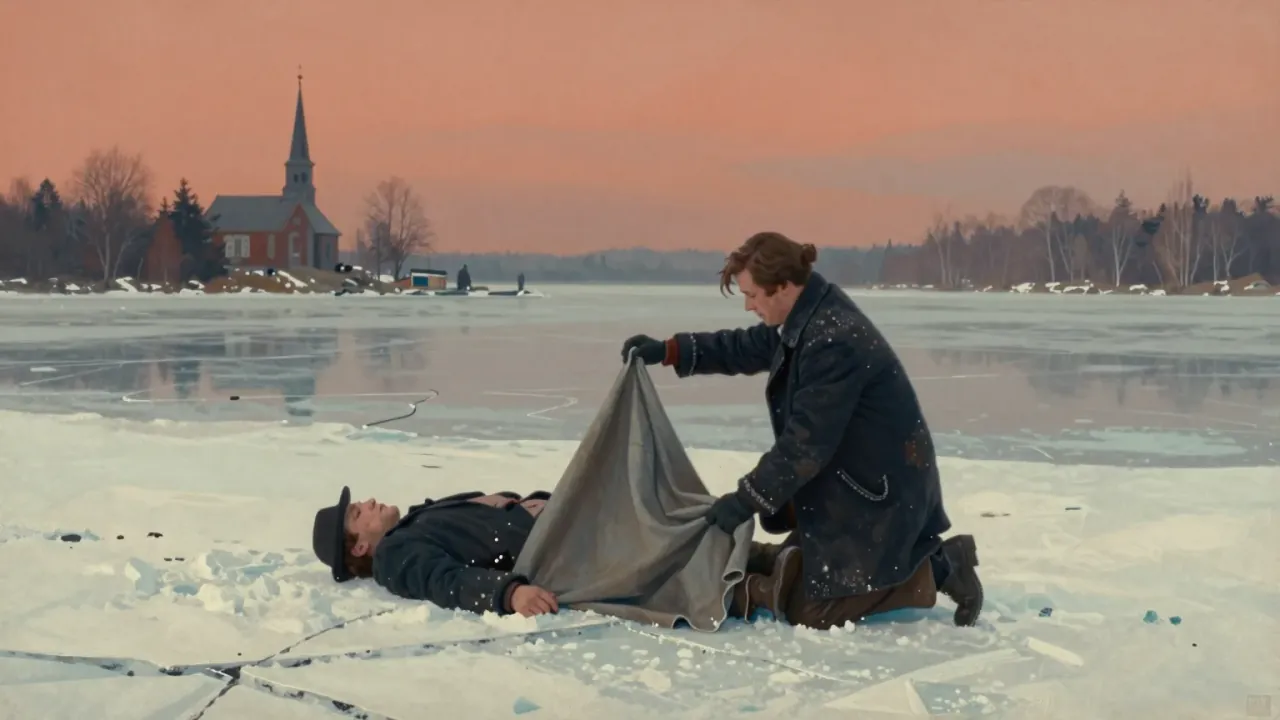
The look of it
The King of Kings is a silent, two-hour-and-thirty-seven-minute American biblical drama released in 1927, produced and largely directed by Cecil B. DeMille as the second instalment of his biblical trilogy. It sets out to depict the life of Jesus—from Mary Magdalene’s exorcism through the crucifixion and resurrection—using Gospel texts as its narrative spine while framing them with deliberate visual spectacle and emotional amplification. DeMille’s ambition was not theological neutrality but visceral persuasion: he aimed to jolt sceptics with bold imagery (a courtesan Mary Magdalene, hand-coloured torch flames, Technicolor halos), to anchor divinity in human scale (a smiling Jesus repairing a doll), and to assert spiritual authority through architectural grandeur and crowd choreography. The film operates as both devotional object and mass-market event—roadshow premieres, school-day screenings, and early sound-on-film reissues all signal its dual identity as sacred text and industrial product. Its structure abandons the modern parallel story originally planned, settling instead on a linear, episodic chronology that treats each miracle or confrontation as a set piece of moral clarity.
How it holds attention
The film works through accumulation: of scale, of gesture, of symbolic colour. John Peverell Marley’s cinematography keeps faces lit from below in key scenes—Jesus’ first appearance through a child’s eyes, Caiaphas’ conspiratorial meetings—while sepia and blue tinting carve psychological space between earthly and divine realms. H. B. Warner’s Jesus moves with quiet deliberation; his stillness reads as authority, not passivity. Jacqueline Logan’s Mary Magdalene shifts from flippant sensuality to rapt stillness without overstatement. Rudolph Schildkraut’s Caiaphas uses posture and glances more than expression to convey institutional dread. Jeanie MacPherson’s script interweaves Gospel verses with invented moments—the zebras-drawn chariot, Judas’ political ambition, the carpenter-shop foreshadowing—each calibrated for immediate legibility. Anne Bauchens’ editing sustains rhythm across 157 minutes without montage flourish; transitions are functional, often via title cards that quote scripture directly. The 1928 Photophone reissue adds thunderclaps and screams not as decoration but as punctuation—sound used to tighten emotional pressure rather than mimic reality.
What stays with you
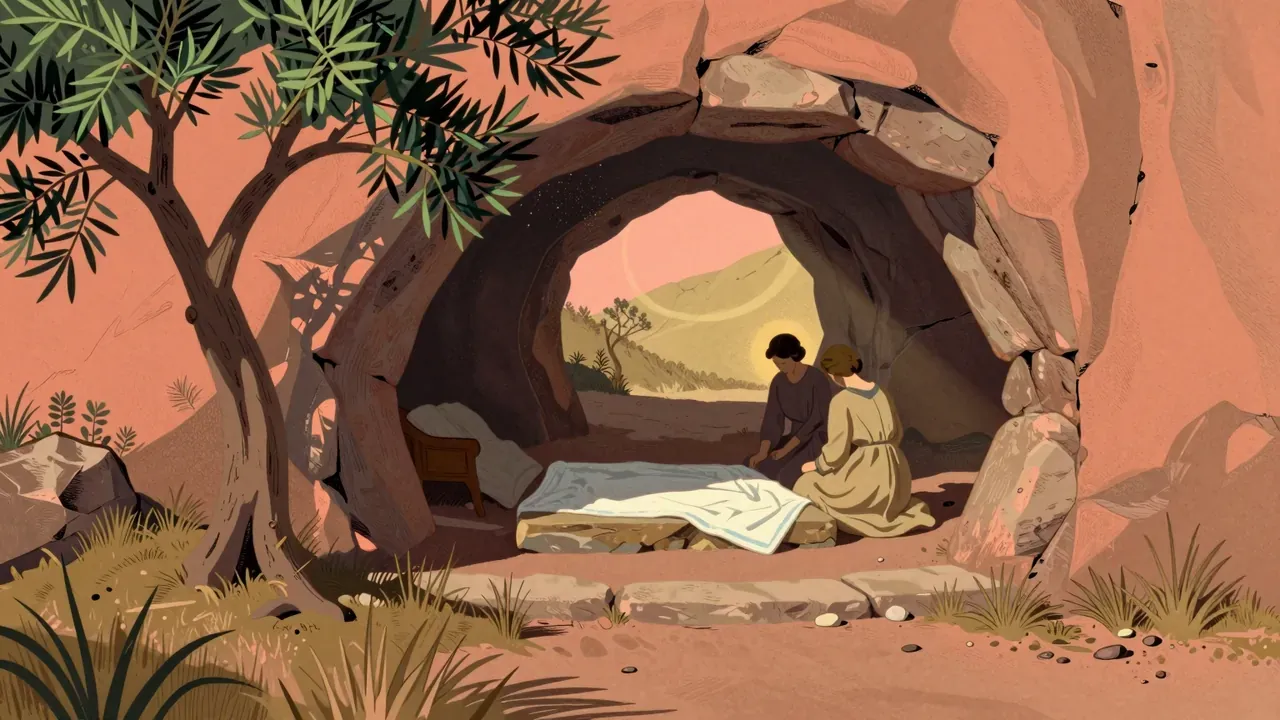
What lands is the physical presence of belief—not as doctrine, but as weight, texture, and duration. The opening sequence, where Mary Magdalene rides past Roman soldiers on a chariot drawn by zebras, establishes tone before a single title card: it is audacious, anachronistic, and impossible to ignore. The exorcism of the Seven Deadly Sins—a multiple-exposure overlay of writhing figures dissolving from her body—is technically crude by later standards but emotionally direct. Jesus’ healing of the legless doll lands because it is shown twice: once as child’s logic, once as quiet affirmation. The crucifixion avoids gore but insists on duration—the slow climb, the hammer blows held in silence, the long shot of the cross against sky—making endurance the subject, not suffering. Even the resurrection, filmed in two-colour Technicolor, gains force from restraint: no angels descend, no music swells; light simply pools around the empty tomb. These moments succeed not by realism but by fidelity to a specific emotional grammar—one where reverence is conveyed through stillness, awe through scale, and compassion through repetition of small gestures.
Where it strains
What does not land is the attempt to bind political urgency to spiritual narrative. Judas’ extrabiblical romance with Mary Magdalene feels ornamental, not clarifying; it adds psychology without deepening motive. The crowd scenes—especially the Jerusalem entry—rely on sheer numbers rather than individual reaction, flattening the tension between messianic hope and mob volatility. Some miracles verge on pantomime: Lazarus’ resurrection lacks spatial consequence, his return unmoored from grief or disbelief among those who witness it. The film’s insistence on Jesus’ ‘virility’ (per DeMille’s memoir) occasionally undermines its own emphasis on gentleness—Warner’s broad shoulders and firm jaw read as Hollywood leading-man convention, not Galilean humility. The 1928 Photophone soundtrack, though praised at the time, now feels intrusive: thunderclaps during prayer, screams during arrest, all timed to heighten drama rather than deepen meaning. And the abrupt truncation of the roadshow version—cut from 16 to 12 reels—removes connective tissue between episodes, making the narrative feel like a series of tableaux rather than a sustained arc.
What it believes in
The themes that matter are authority without coercion, presence without possession, and sacrifice as continuity rather than rupture. Jesus’ power is shown not in dominance but in refusal—to claim kingship, to evade arrest, to silence Peter’s sword. His authority resides in attention: to a child’s doll, to a mother’s grief, to the weight of a crossbeam. The film treats faith not as assent to doctrine but as embodied response—the woman who touches his robe, the centurion who looks up and says nothing, the thief who turns his head. Time itself becomes thematic: the long takes during the crucifixion, the slow pan across the empty tomb, the repeated image of hands—carpenter’s hands, healing hands, nailed hands—anchor divinity in duration and labour. Even the colour choices carry meaning: the blue-tinted arrest scene isolates Jesus within cold institutional logic, while the sepia-toned Sermon on the Mount wraps him in warmth and proximity. These are not abstract ideas but visual habits—patterns of light, pacing, and focus that make theology tactile.
Who it speaks to
This film is for viewers who value craft as argument—those who watch to see how belief is built frame by frame, not just what is believed. It rewards patience with silent-era syntax: title cards that pause thought, compositions that hold space for reflection, performances calibrated for distance rather than intimacy. It is not for those who require psychological realism, narrative economy, or theological consistency—DeMille’s Jesus is neither rabbinic teacher nor apocalyptic prophet but a composite figure shaped for mid-1920s American audiences. Anyone expecting subtlety in character motivation or historical nuance will find the film blunt. Those who dislike overt symbolism—halos, zebras, hand-coloured fire—will find its language exhausting. But for students of studio-era design, early colour processes, or the mechanics of mass religious address, it remains indispensable. A viewer who dismisses it as dated spectacle misses how deliberately its artifice serves its purpose: to make the intangible materially felt.
Why it lasts
Yes, it is worth your evening—if you watch it as artefact, not relic. Not because it holds up as seamless storytelling, but because its seams are instructive: the hand-colouring reveals labour, the tinting reveals intention, the cuts reveal editorial choice. It demands attention not for what it conceals but for what it declares—its budget, its research, its audience strategy, its understanding of reverence as spectacle. Someone who watches only for narrative flow or emotional catharsis may leave frustrated; the pacing is unhurried, the psychology simplified, the theology selective. But anyone willing to sit with its materiality—the grain of the 1928 print, the weight of Marley’s shadows, the precision of Bauchens’ cuts—will find a film that knows exactly what it is doing, and why. Its value lies not in timelessness but in its precise, unapologetic placement in 1927.