The intention behind it
Last Hurrah for Chivalry is John Woo’s third feature and his first fully authored work — written, directed, and shaped as a conscious bridge between the Shaw Brothers wuxia tradition and the moral turbulence of his later heroic bloodshed films. It is not a revisionist wuxia but a deliberate recalibration: slower in tempo than contemporaneous Golden Harvest action fare, more attentive to gesture and silence than to choreographed flurry, and built around a tripartite moral collapse rather than a clean arc of vengeance. Woo frames it as homage — to Chang Cheh’s stoic fatalism and Kurosawa’s structural rigour — yet the film’s preoccupations are local and personal: the erosion of loyalty, the transactional hollowing-out of chivalry, and the quiet violence of self-deception. Its ambition lies not in scale but in compression: every sword draw carries weight because every character has already compromised something before the blade leaves the scabbard. It attempts no myth-making; instead, it watches chivalry expire in real time, without fanfare or elegy.
The look of it
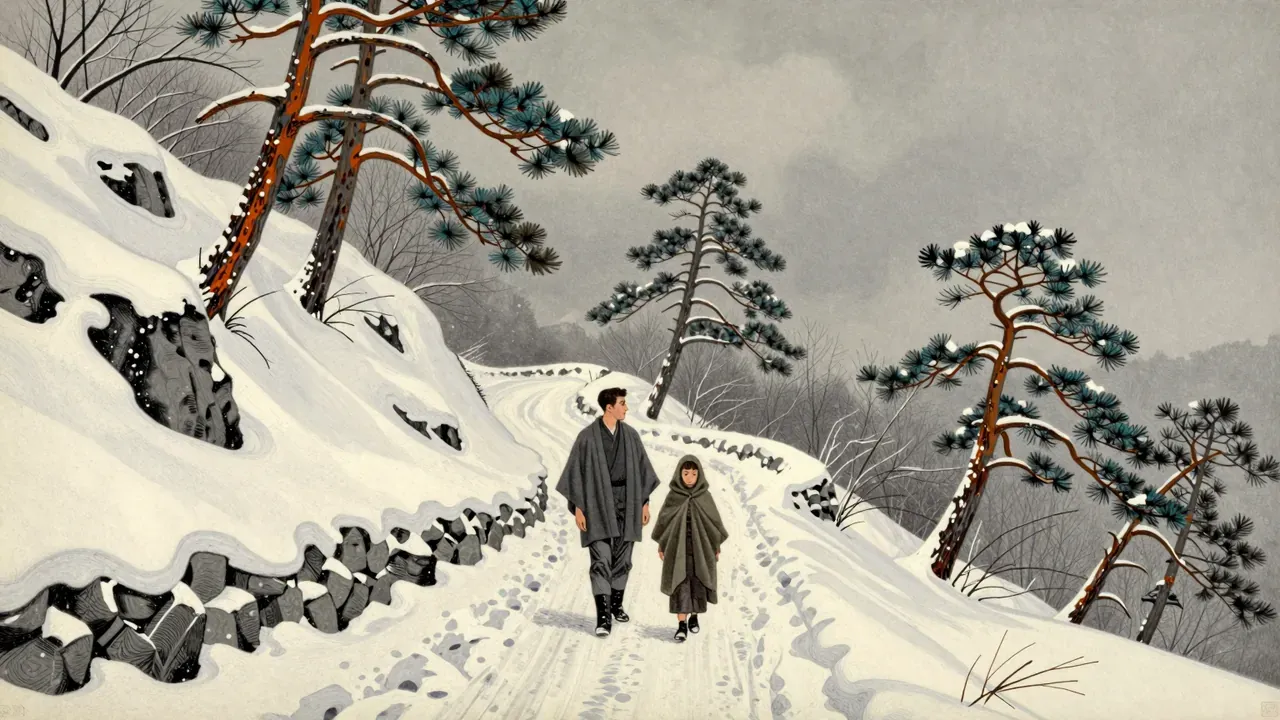
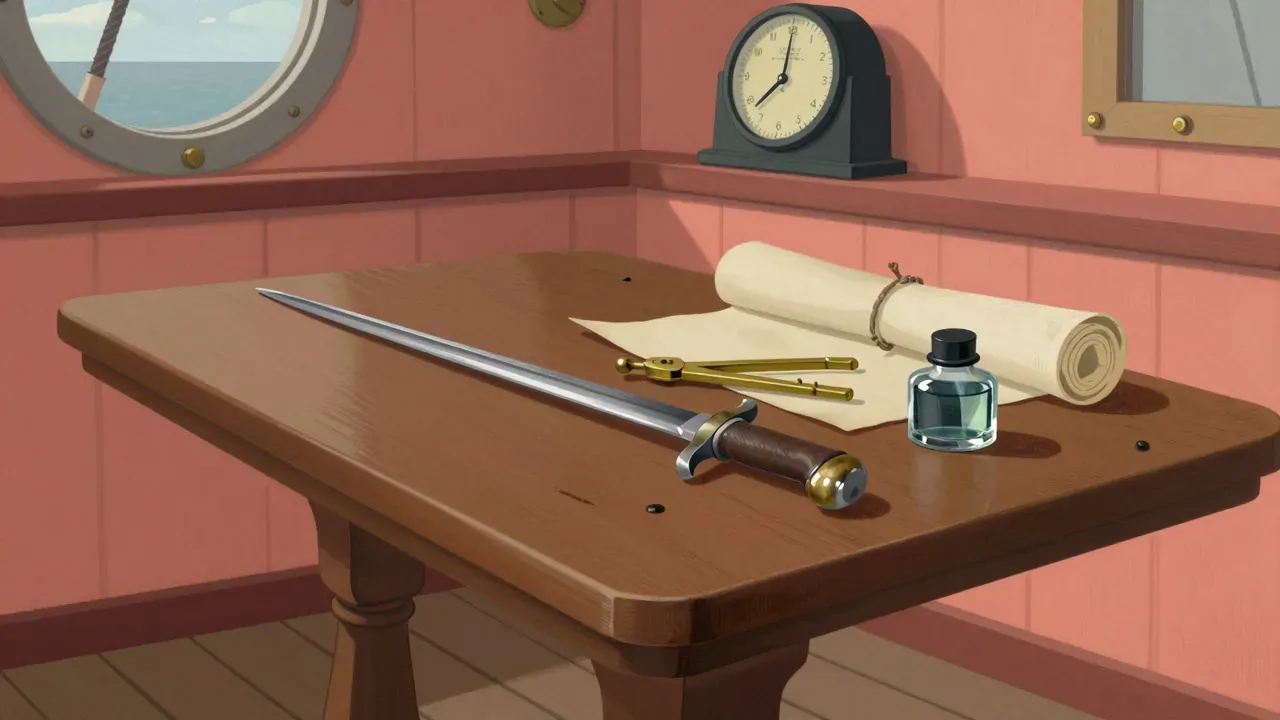
The story unfolds in measured, almost ritualistic stages: betrayal, recruitment, reconnaissance, assault, double-cross, and final confrontation. Damian Lau plays Kao Pang with restrained petulance — less a fallen heir than a man who never understood the terms of inheritance. Fung Hak-On, both actor and stunt coordinator, gives Pak Chung-tong a still, watchful menace; his henchmen move with coordinated lethality, their fights staged in tight courtyards and narrow corridors that deny flourish in favour of consequence. Gordon Willis is not involved; Roman Tam’s score uses sparse guqin and percussion, not orchestral sweep. Transitions employ Kurosawa-style wipes, but they mark psychological rupture, not narrative convenience. Action choreography — by Fung Hak-On and Alan Chui — favours weight over speed: swords bite into wood and flesh with audible resistance, and pauses between blows feel earned, not edited. The camera stays low and steady, rarely circling, rarely accelerating — it observes, rather than exhorts.
What holds its ground
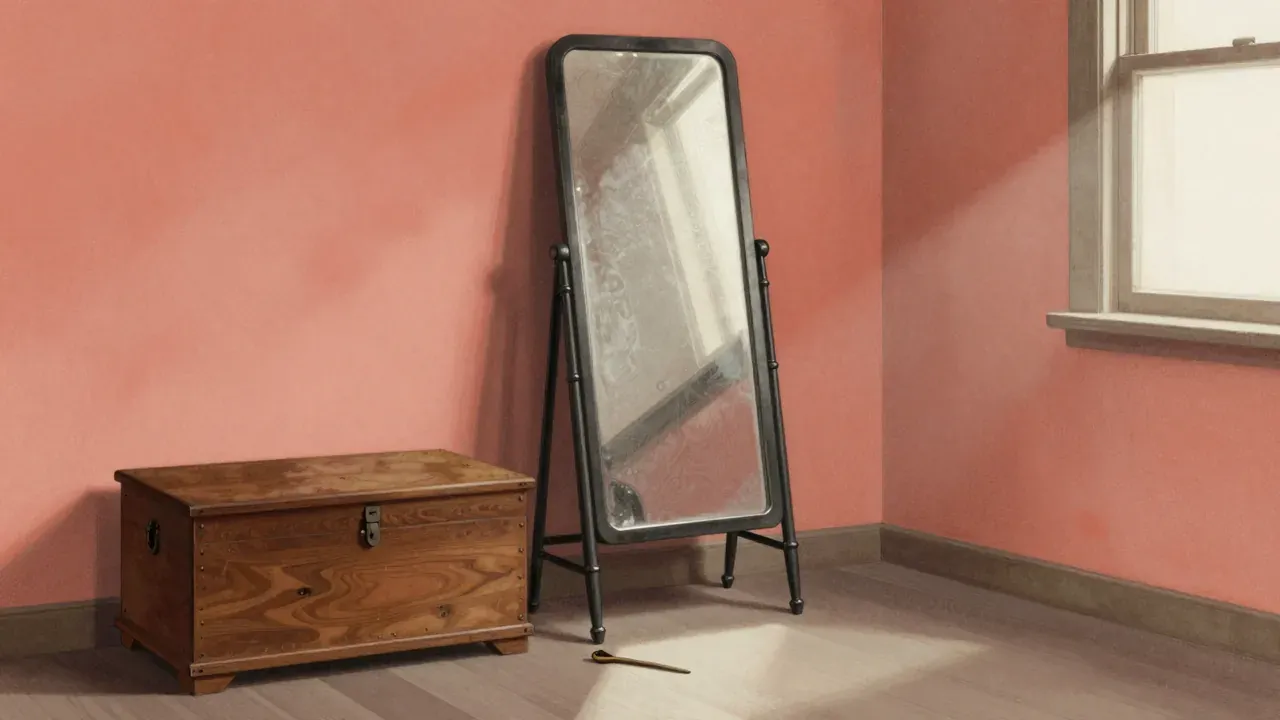
What lands is the film’s moral architecture: the way each character’s compromise compounds the next, like stones dropped into still water. Tsing-yi’s drunkenness is not comic relief but a calibrated refusal — he sees through Kao’s promises and Chang’s earnestness alike, and his final act is neither redemption nor nihilism but exhausted clarity. The courtyard sequence where he and Chang scout Pak’s men establishes tension not through music or editing but through duration and spatial awareness: we count the guards, note their positions, feel the risk of discovery in every shift of light. The magic sword’s reveal is deliberately anticlimactic — hidden behind a mirror, its power grotesque and unearned. When Kao flies, it feels less like triumph than bodily surrender to vanity. The film’s restraint makes its violence land with physical and ethical weight: no blood sprays, but when Chang falls, the silence after his body hits the floor lasts long enough to register loss, not spectacle.
Where the frame slips
What does not land is the framing device — the opening wedding — which introduces tone and theme but fails to cohere emotionally. Kao’s bride is functional, not felt; her betrayal reads as plot necessity rather than psychological inevitability. Wei Pai’s Chang San, though well-acted, remains underwritten: his devotion to family is asserted but rarely dramatised beyond transactional exchanges — medicine bought, funeral paid. The grandmaster’s denial of the sword feels abrupt, lacking the philosophical texture such a figure demands. Likewise, the servant’s late-moral pivot arrives without sufficient groundwork; his confrontation with Kao reads as exposition rather than culmination. The film’s austerity works against itself in these moments: where ambiguity serves Tsing-yi’s motives, it obscures motivation elsewhere. And while the Kurosawa homages are visible — wipes, slow motion, axial cuts — they sit uneasily beside Woo’s emerging style, as if the grammar hasn’t yet settled into syntax.
What it keeps asking
The themes that matter are the corrosion of covenant, the commodification of virtue, and the solitude of integrity. Chivalry here is not an ideal but a contract — one that unravels the moment money enters the room. Kao treats loyalty as hireable, honour as purchasable, even grief as billable (he pays for his ally’s mother’s funeral, then weaponises that debt). Tsing-yi’s drunkenness is a refusal of that economy; his final duel is not for money or glory but to close a loop he alone recognises. The film treats ‘brotherhood’ as fragile scaffolding — built on shared observation, not shared principle — and watches it dissolve under pressure of self-interest. There is no redemption arc, only arithmetic: every betrayal balances another, every life taken subtracts from the survivor’s claim to righteousness. Even the magic sword — the sole supernatural element — functions not as grace but as grotesque inflation: power without discipline, flight without direction.
Who walks with it
This film is for viewers who value moral density over kinetic momentum, who find tension in hesitation and weight in silence. It suits those familiar with early Golden Harvest output or Chang Cheh’s moral parables, and those willing to sit with ambiguity rather than seek resolution. It is not for viewers expecting the operatic gunplay or romantic fatalism of A Better Tomorrow or The Killer — this is leaner, drier, less forgiving. Those who require clear protagonists, emotional payoff, or stylistic consistency across a director’s filmography will find it withholding. Its pacing assumes patience; its ethics assume attention. A viewer who values thematic coherence over visceral thrill, or who finds meaning in what characters withhold rather than what they declare, will engage deeply. Those who associate Woo solely with balletic violence may misread its stillness as indecision — but the stillness is the point.
What remains after
Yes, it is worth your evening — but only if you approach it as a hinge, not a highlight. It rewards attention not for what it delivers, but for what it holds in abeyance: no catharsis, no hero’s return, no restored order — just one man standing amid rubble he helped build. Its 106 minutes unfold without hurry, trusting the viewer to track moral slippage across glances and silences. It is not entertaining in the conventional sense, but it is rigorously intelligent about power, performance, and the cost of pretending virtue is transferable. Those who dismiss it as ‘lesser Woo’ miss how precisely it maps the terrain he would later populate with more flamboyant figures. To call it ‘uneven’ is accurate; to call it ‘unimportant’ is to mistake craftsmanship for spectacle. Its value lies in its restraint — and in the fact that, decades later, its questions about loyalty and payment remain uncomfortably current.