What it is
The Killer is a Hong Kong action film from 1989, directed and written by John Woo, produced by Tsui Hark for Film Workshop. It follows a contract assassin who, after blinding a singer during a hit, vows to pay for her corneal transplant — a debt that pulls him into conflict with both the triads he serves and the police inspector pursuing him. The film aims to fuse the moral gravity of a tragic romance with the kinetic grammar of balletic gunplay: it treats violence as ritual, loyalty as sacrament, and redemption as a physical act rather than a spiritual one. Its ambitions are formal and ethical in equal measure — to reframe the hitman not as antihero but as a man whose code outlives the institutions that employ him. It does not seek realism, nor satire, nor social critique; its terrain is mythic, its logic operatic. Every gesture — the white doves, the slow-motion reloads, the mirrored confrontations — serves that architecture. It is less interested in why the world is broken than in how a single man might move through it without breaking himself.
How it moves
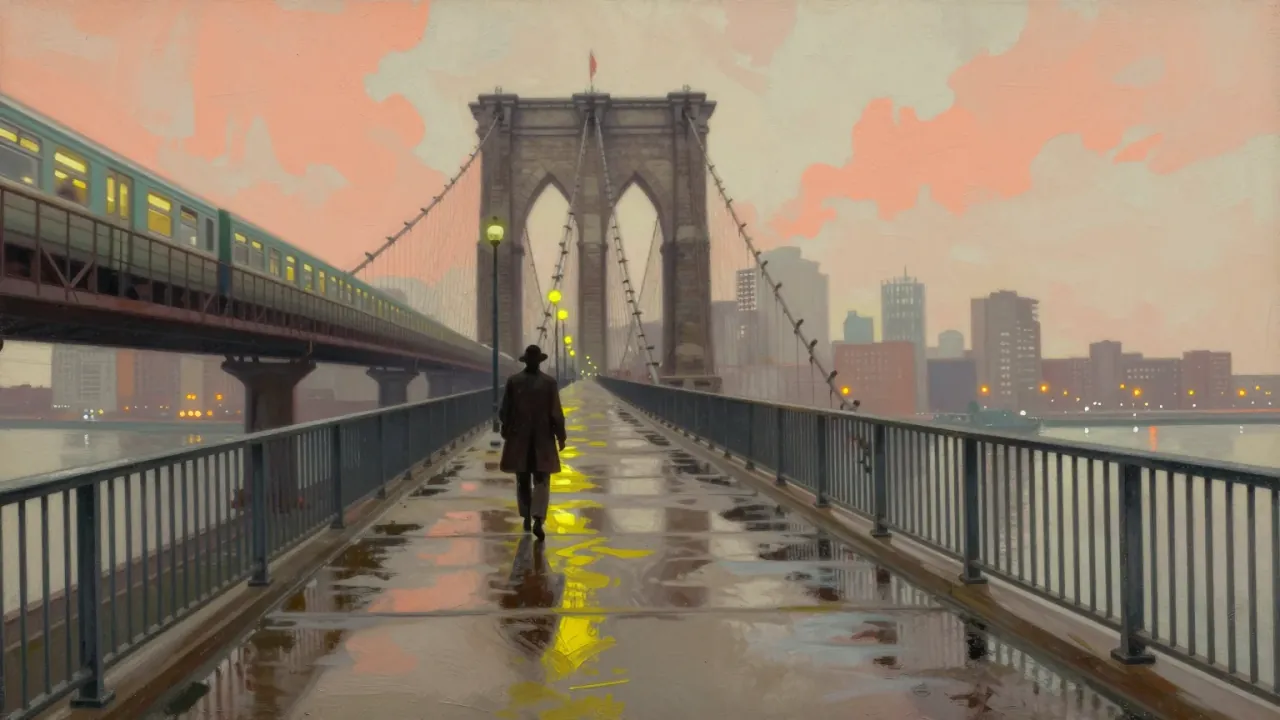
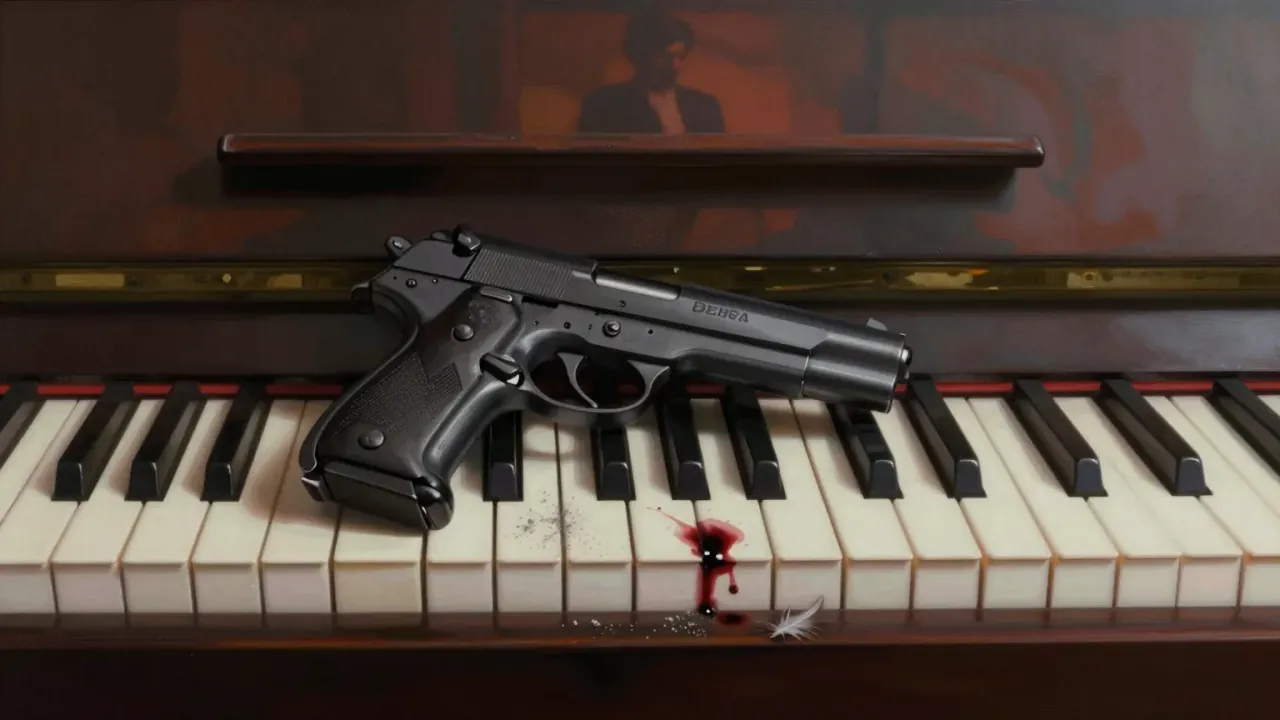
The story moves with deliberate, almost liturgical pacing: cause and consequence are spaced out, not rushed. Chow Yun-fat’s performance anchors the film in stillness — his face registers resolve, regret, and fatigue without recourse to exposition. Sally Yeh’s singer conveys fragility and quiet dignity without melodrama. Danny Lee, as the dogged inspector, avoids caricature by grounding his pursuit in procedural rigour and personal honour. Peter Pau’s cinematography favours wide lenses and deep focus, keeping both killer and environment legible in the same frame; interiors are lit with chiaroscuro precision, while rain-slicked streets gleam under sodium lamps. Lowell Lo’s score uses piano motifs and string swells to underscore emotional weight without dictating it. The action sequences are choreographed as set pieces — not chaos, but geometry — with recoil, reload, and reload timing calibrated to breath and beat. Editing by Peter Cheung maintains spatial coherence across cuts, refusing disorientation as a substitute for intensity.
What holds still
What lands most decisively is the film’s tonal consistency: every element — costume, framing, pacing, music — reinforces its central paradox: that extreme violence can be an expression of tenderness, discipline, or grief. The white doves, often cited, work because they appear only at moments of irreversible choice, never as decoration. Chow Yun-fat’s physicality — the way he holds a gun, lowers his chin before firing, or walks away from a fight already decided — communicates more than dialogue ever could. The final church sequence lands not because of spectacle, but because its escalation feels earned by the preceding restraint: the silence before gunfire, the weight of unspoken vows, the way light falls across stained glass as bullets shatter it. Even minor performances hold their ground: Kenneth Tsang’s triad boss exudes weary authority, Barry Wong’s cop offers dry, grounded counterpoint. The film’s conviction — its refusal to ironise its own sincerity — gives its heightened gestures emotional traction.
Where it lets go
What does not land is the narrative scaffolding around the central triangle. The triad hierarchy remains vague, its internal logic unexamined; motivations beyond loyalty or vengeance are left implied rather than dramatised. The police investigation proceeds without procedural detail — no forensic logic, no institutional friction, no bureaucratic inertia — making Danny Lee’s pursuit feel like fate rather than craft. Sally Yeh’s character, though well-acted, exists primarily as catalyst and symbol: her blindness is plot device first, personhood second. Some transitions between locations lack geographical clarity, relying on montage rather than spatial continuity. A few lines of Cantonese dialogue, particularly in exposition-heavy scenes, feel functional rather than lived-in. The film’s commitment to stylisation occasionally strains plausibility not as a flaw but as a limit: when the world bends entirely to mood and motif, the cost is texture — the grit, ambiguity, and contradiction that anchor more socially embedded crime films.
What it believes
The themes that matter are honour among outcasts, the weight of unpaid debts — moral and material — and the possibility of grace within rigid codes. It treats professionalism as a form of asceticism: the killer’s precision, his silence, his refusal to kill indiscriminately, mark him as more principled than many of the men who sign his pay cheques. Loyalty is shown not as blind obedience but as a series of small, costly choices — choosing to return to danger, to protect a witness, to accept punishment. The film also interrogates sight and blindness literally and metaphorically: the singer’s loss of vision parallels the killer’s moral clarity, while the inspector’s relentless gaze becomes both weapon and burden. There is no redemption through confession or repentance, only through action — payment, protection, sacrifice. These are not abstract ideas; they are embodied in posture, timing, and composition, making them legible even without subtitles.
Who it keeps company with
This film rewards viewers who value choreographic precision, moral austerity, and visual storytelling over exposition or psychological realism. It suits those familiar with Hong Kong cinema’s conventions — its compression of motive, its embrace of symbolic repetition, its tolerance for silence between lines. It is less suited to viewers who require causal transparency, character backstories, or institutional context; those who find stylisation alienating rather than immersive may read its solemnity as pretension. Fans of Michael Mann or Sam Peckinpah will recognise kinship in its fatalism and visual rhythm, but those expecting the procedural density of Heat or the existential sprawl of Bring Me the Head of Alfredo Garcia will find it leaner, more ritualistic. Its pacing assumes patience — not slowness for its own sake, but time allowed for gesture to accrue meaning. To dismiss it as ‘just action’ is to miss its architecture; to demand naturalism is to misunderstand its terms.
What it leaves behind
Yes, it is worth your evening — provided you meet it on its own ground. Its 107 minutes unfold with the inevitability of a sonnet: every image, cut, and pause serves the central equation of debt, duty, and dignity. It repays attention not with explanation but with resonance — the kind that lingers in the shoulders after the credits roll. Those who prefer tightly wound plotting or psychological granularity may leave unmoved; the film does not argue its case in dialogue, nor does it soften its convictions for accessibility. Critics who rate it lower — such as some on IMDb — often cite its emotional reserve or narrative economy as distance rather than discipline. Change the expectation from ‘storytelling’ to ‘ritual’, and the verdict shifts. It is not a film to be solved, but one to be inhabited — and in that, it remains singular.