The shape of craving
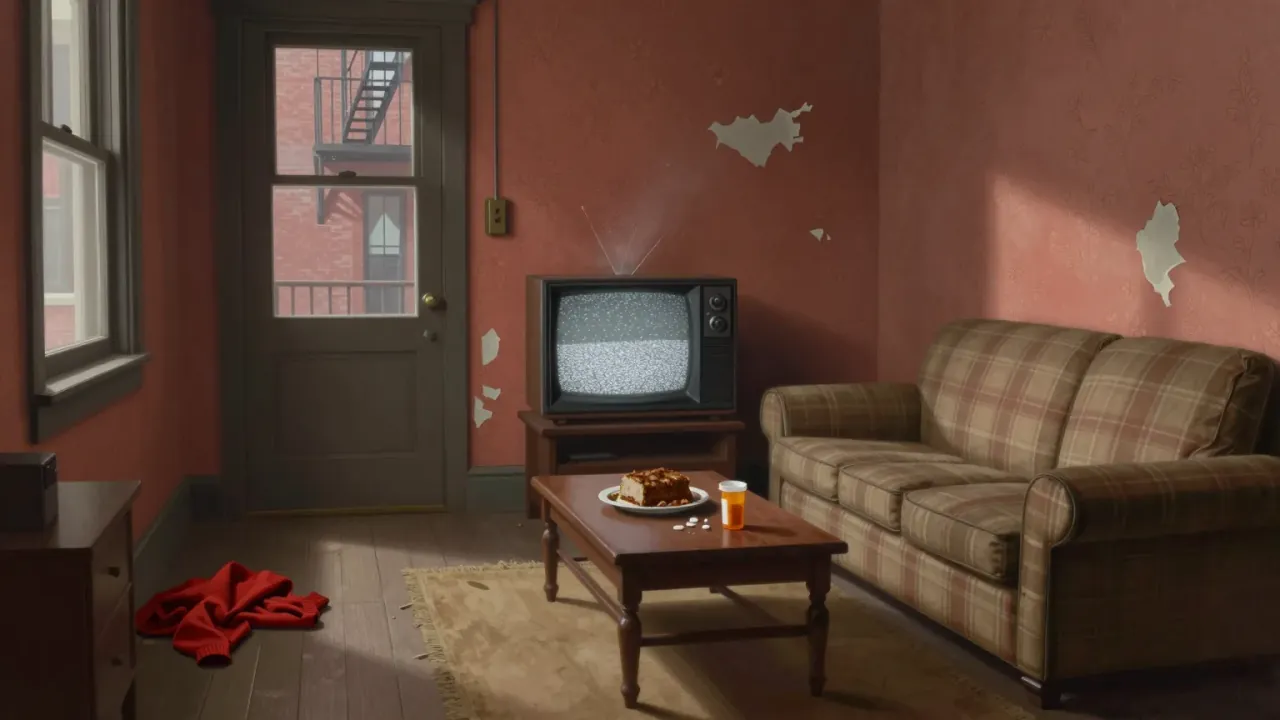
Requiem for a Dream is a tightly wound psychological drama about addiction as systemic collapse — not just of the body or will, but of time, perception, and social coherence. It adapts Hubert Selby Jr.’s 1978 novel with fidelity to its structural ferocity: four interlocking lives in Brooklyn spiral under the weight of craving — for validation, escape, love, control — each misreading desire as agency. Darren Aronofsky does not dramatise addiction as a moral failing or a medical condition alone, but as a recursive loop where fantasy and consequence feed each other until reality fractures. The film’s ambition is anatomical: to map how compulsion reshapes attention, memory, and physical presence. Its method is procedural rather than expositional — no backstory is narrated, no motive explained. Instead, it builds rhythmically, tightening shot duration, narrowing focus, accelerating editing, so that form itself becomes symptom. This is not a film about recovery or redemption. It is about the mechanics of disintegration, rendered with surgical precision and zero editorial distance. It refuses to comfort, clarify, or contextualise — treating its characters not as case studies but as vessels for an unblinking study of human fragility under pressure. (158 words)
The grammar of collapse
The story follows Sara Goldfarb’s delusional pursuit of television fame, Harry and Marion’s heroin-fuelled dream of a boutique, and Tyrone’s bid for dignity through drug dealing — all converging in mutual erosion. Ellen Burstyn anchors the film with physical commitment: her weight fluctuations, prosthetic suits, and vocal thinning are calibrated to chart cognitive unraveling. Jared Leto and Jennifer Connelly perform with controlled extremity — their gauntness, tremors, and flattened affect emerge from preparation, not gesture. Marlon Wayans brings grounded gravity to Tyrone, avoiding caricature despite the script’s tight framing. Matthew Libatique’s cinematography uses Snorricam rigs, fisheye distortion, and extreme close-ups not for effect but as perceptual reportage; Jay Rabinowitz’s editing — over two thousand cuts in 102 minutes — compresses narrative time while fracturing subjective time. Clint Mansell’s score, built around ‘Lux Aeterna’, functions as emotional architecture: strings swell not to underscore feeling but to simulate neurological overload. Every craft choice serves the same logic: to make the viewer feel the instability of the characters’ inner worlds before understanding their causes. (159 words)
The weight of form
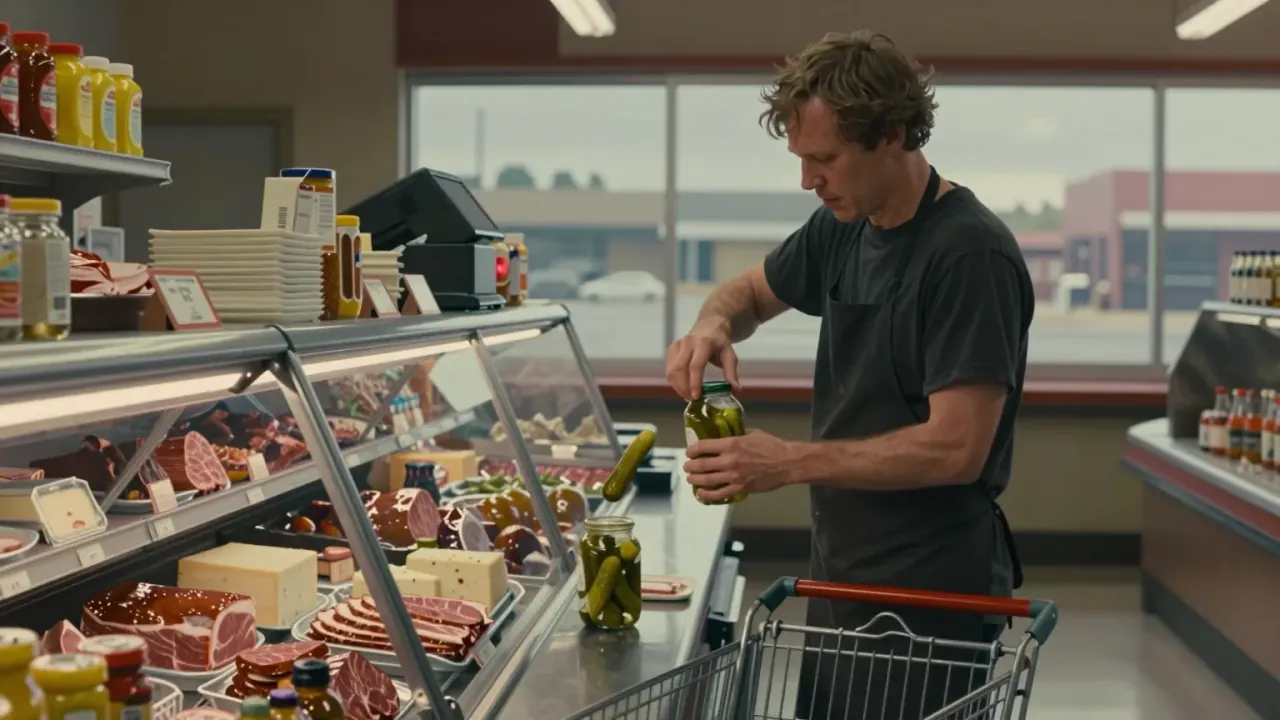
What lands is the film’s relentless formal coherence — how every stylistic device accumulates meaning without explanation. The split-screen sequences do not merely show parallel action; they expose the simultaneity of isolation, revealing how each character hallucinates connection while retreating further inward. The shrinking shot lengths mirror deteriorating impulse control: early scenes hold for ninety seconds, later ones flicker at sub-second intervals, forcing the eye into involuntary flinching. Sara’s fat suits and wigs do not signal ‘transformation’ but entrapment — her body becomes increasingly alien even to herself. The grocery store scene, filmed with real addicts as extras, gains unsettling verisimilitude not from performance but from ambient authenticity. The final montage — rapid cuts across all four storylines, scored to escalating strings — does not depict breakdown as chaos but as terrifyingly ordered collapse: each frame is legible, each cut logical, yet the cumulative effect is visceral disorientation. This is not shock for its own sake; it is syntax made physiological. The film earns its intensity because its techniques are inseparable from its subject — not metaphors, but manifestations. (157 words)
The cost of coherence
What does not land is the film’s structural rigidity when read as social portraiture. Its four-character framework flattens socioeconomic nuance: Tyrone’s arc, though performed with quiet dignity, remains hemmed in by the screenplay’s schematic symmetry — his mother’s grief, his community’s constraints, the racialised economy of Brooklyn in 1999, are present but not interrogated. The scam call that triggers Sara’s descent is never clarified as fraud, delusion, or systemic manipulation, leaving her vulnerability unmoored from context. Similarly, Marion’s trajectory from art student to sex worker unfolds without texture — her designs, her aesthetic sensibility, even her voice beyond scripted despair, remain opaque. The film’s refusal to name institutions — healthcare, policing, welfare — means its critique of late-capitalist loneliness stays abstract where it could be specific. Some viewers may find the relentlessness emotionally exhausting without sufficient variation in tone or perspective; the absence of irony, humour, or even minor digression makes the descent feel predetermined rather than contingent. This is not a flaw in execution, but a limitation of design: the film prioritises psychological inevitability over sociological granularity. (159 words)
The architecture of loneliness
The themes that matter are not addiction-as-substance but addiction-as-structure: how desire, repetition, and ritual bind perception to expectation. Sara’s fixation on a game show mirrors Harry’s belief in the ‘big score’, Marion’s faith in a boutique, Tyrone’s hope for maternal approval — all are forms of deferred salvation, sustained by micro-doses of hope that function like dopamine hits. Loneliness is not backdrop but engine: each character seeks proximity through transaction — affection for attention, sex for money, drugs for numbness — only to find the transactions hollow out the self further. The film treats time as a casualty: flashbacks are rare, futures imagined only as repetitions of the present. Memory is unreliable, anticipation distorted, duration warped — shown not in dialogue but in stuttering edits and time-lapse decay. There is no ‘outside’ to this system: no benevolent authority, no off-ramp, no alternative model of care or community. Even the hospital sequence offers not healing but containment — the white coat replaces the needle as instrument of control. The film’s deepest theme is the violence of aspiration under scarcity: how dreams become cages when they are the only thing left to hold. (156 words)
Who it asks for
This film is for viewers who value formal rigour over exposition, who accept discomfort as a mode of engagement, and who trust that a film can argue through rhythm and texture rather than speech. It suits those familiar with avant-garde editing traditions — from Vertov to Kon — and those willing to sit with sustained unease without resolution. It is not for viewers seeking psychological realism with explanatory depth, narrative breathing room, or moral ambiguity — the film offers none. Those sensitive to graphic depictions of bodily deterioration, self-harm, or clinical psychosis may find it physically distressing; the sensory assault is deliberate and unrelenting. Parents, educators, or clinicians looking for a teaching tool on addiction will find it powerful but incomplete — it shows consequence without cause, symptom without system. Critics who prize character interiority over structural metaphor may reject its austerity. A change in verdict would require either a more granular social lens — say, showing how housing policy or healthcare access shapes these trajectories — or a formal rupture: a moment of silence that lasts longer than five seconds, a cut that lingers, a character who looks directly at the camera and names what is happening. (159 words)
What remains after
Yes, it is worth your evening — but only if you approach it as a controlled experiment in cinematic physiology, not as entertainment or catharsis. Its 102 minutes operate like a stress test on attention, empathy, and endurance: the payoff is not insight delivered, but sensation absorbed and reflected upon after. It rewards rewatching not for plot revelation but for noticing how the editing tightens incrementally, how Mansell’s motifs mutate across registers, how Libatique’s lighting shifts from flat daylight to sickly neon as reality recedes. Those who dismiss it as ‘misery porn’ misunderstand its method: it withholds judgment to intensify observation. Its power lies in making abstraction visceral — turning statistics on overdose, isolation, and mental health decline into something felt in the jaw, the pulse, the gut. To skip it is to miss one of the most formally audacious American dramas of its decade. To watch it expecting solace, balance, or narrative closure is to misread its contract. Its value is in its refusal to soften — a quality that, for some, will define its necessity. (158 words)