The room
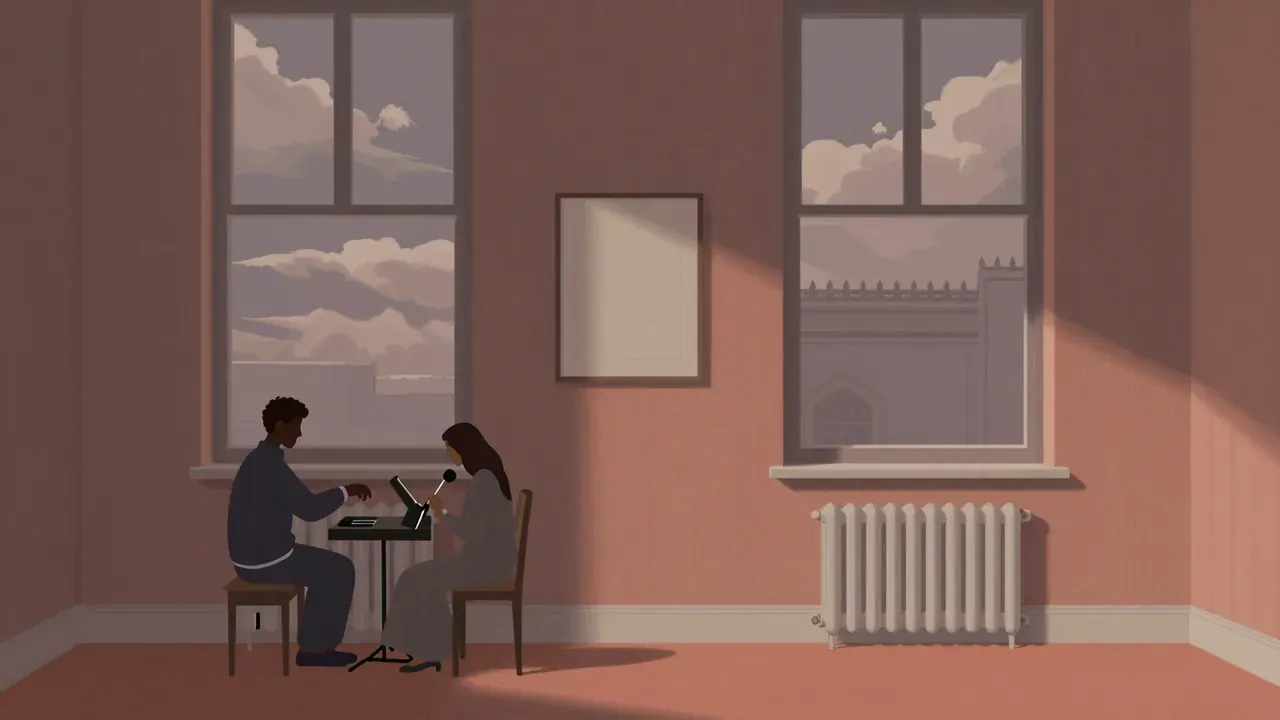
Room 666 is a documentary composed entirely of unedited, single-take interviews conducted by Wim Wenders in a hotel room during the 1982 Cannes Film Festival. It sets out to pose one central question — whether cinema is an art form in terminal decline — and records how fourteen directors respond, each given roughly eleven minutes on a single 16 mm reel. There is no narration beyond Wenders’s brief introduction, no cutaways, no illustrative footage, no contextualising voiceover. The film does not seek to answer the question itself but to hold space for divergent, often contradictory, convictions about film’s material basis, its cultural standing, and its future viability. It treats the director not as a celebrity but as a witness: someone whose practice embodies cinema’s present condition. The choice of location — Room 666 at the Hotel Martinez — is literal, not symbolic; the number appears in the title and credits but receives no commentary. The film’s ambition is narrow and procedural: to gather testimony, not to interpret it.
The frame
The film works through strict formal constraint: static camera, fixed frame, natural light from a single window, no editing within each director’s segment. Agnès Godard’s cinematography keeps exposure low and grain visible, with shadows pooling around faces and shoulders. Sound is direct, unprocessed, occasionally muffled by door closings or distant festival noise. Each director sits alone, facing the lens, speaking German, French, English or Turkish — subtitles are provided without stylistic flourish. There is no performance in the theatrical sense, yet posture, hesitation, cigarette smoke, and off-camera glances become expressive units. Wenders does not intervene, though his presence is implied by the list of questions handed to each guest. Bernard Herrmann’s music appears only in the opening and closing titles, sparse and unresolved. The editing between segments is abrupt, with black leader and simple intertitles naming each speaker. This austerity avoids hierarchy: Spielberg follows Fassbinder; Godard precedes Morrissey. No director is granted more time, emphasis, or visual privilege than another.
The voices
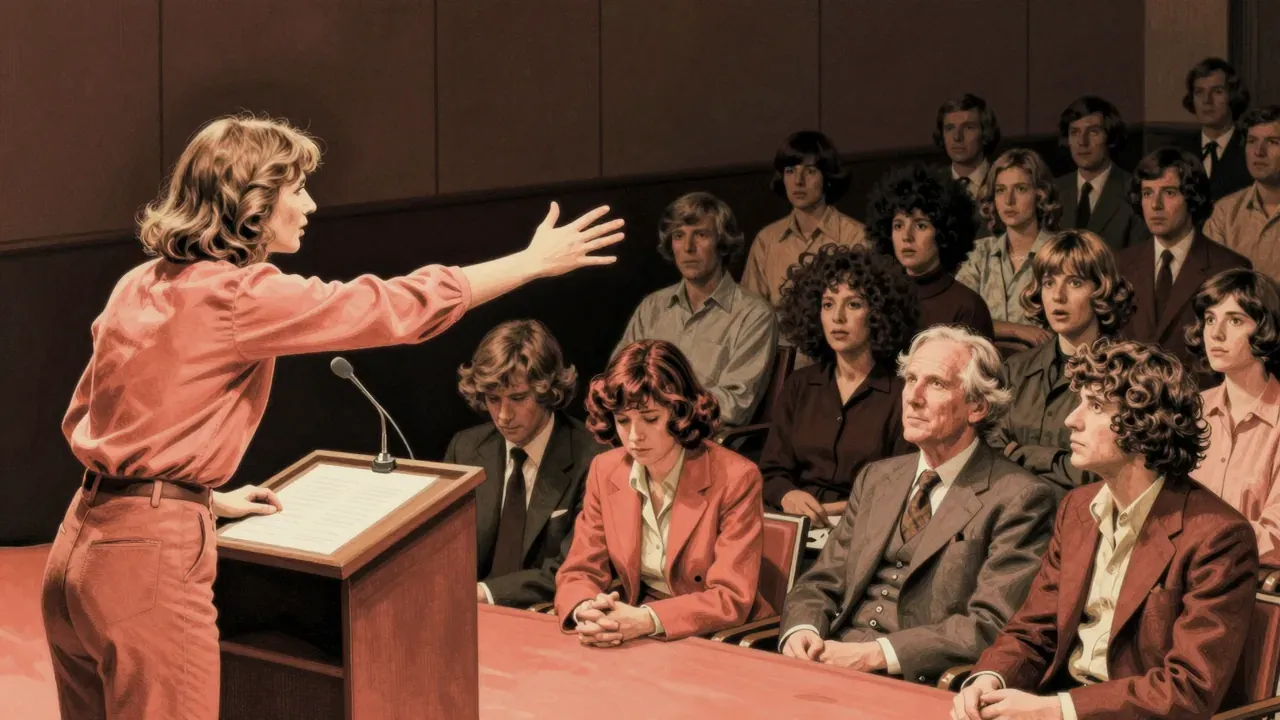
What lands is the palpable weight of historical moment. Several contributors — Fassbinder, Antonioni, Godard — speak from positions of deep authority and evident fatigue; Fassbinder died less than a month after filming, and his segment carries an unspoken finality. The contrast between responses is stark and revealing: Spielberg’s pragmatic optimism about technology sits uneasily beside Herzog’s metaphysical dread, while Akerman’s quiet insistence on duration and attention feels like quiet resistance to the very format of the film. The static frame forces attention onto micro-expressions — a blink, a pause before answering, fingers tightening on a chair arm — that would vanish in a conventional interview. The absence of reaction shots or cutaways means no editorial nudge toward irony or agreement. What remains is the texture of conviction: how ideas take shape in real time, how doubt and certainty occupy the same breath. The film lands not as argument but as archive — a snapshot of a profession holding its breath.
The silence between answers
What does not land is any sustained coherence across the whole. The film’s structure resists synthesis: there is no thematic threading, no attempt to group answers by stance or generation, no coda that draws lines between them. Some directors treat the question literally — citing television, video, or funding shifts — while others deflect into autobiography or polemic. Goupil’s political urgency, Seidelman’s generational pragmatism, and Kramer’s Marxist framing sit side by side without friction or resolution. The uniformity of framing begins to feel less like discipline and more like limitation — the lack of variation in angle, lighting, or pacing flattens tonal difference. Without voiceover or text to clarify context — why these fourteen, why this question, what was happening in world cinema in May 1982 — the film assumes too much prior knowledge. A viewer unfamiliar with Güney’s imprisonment or De Leon’s work in Philippine cinema may register only surface disagreement, missing the subterranean pressures shaping each answer.
The conditions
The themes that matter are not abstract but embodied: the physicality of film stock, the economics of distribution, the politics of authorship, and the shifting relationship between image and time. The question ‘Is cinema dying?’ is never unpacked, but the answers expose fault lines beneath it — between industrial and artisanal practice, between European auteurism and Hollywood infrastructure, between state-supported production and independent survival. Language itself becomes thematic: the film is in German, yet contributors speak in multiple tongues, their words translated without gloss or interpretation. This highlights cinema’s status as both universal medium and locally bound craft. Mortality recurs — not just Fassbinder’s, but the death of celluloid, of theatrical exhibition, of collective viewing. Yet the film avoids nostalgia; its tone is diagnostic, not elegiac. What matters most is how each director locates themselves within systems larger than intention: censorship, exile, union rules, studio contracts, technological obsolescence. The theme is not cinema’s fate, but how artists reckon with conditions they did not choose.
The audience
This film is for viewers who value primary sources over synthesis — those willing to sit with unresolved arguments and tolerate repetition across fourteen variations on a single question. It suits film students examining directorial voice, historians studying early 1980s European and American cinema culture, and practitioners curious about how peers articulate craft under pressure. It is not for viewers seeking narrative momentum, emotional arc, or explanatory clarity — there is no through-line, no resolution, no summary. Those expecting analysis or context will find the film withholding; those impatient with silence or hesitation may mistake stillness for emptiness. A critic who values rhetorical polish over raw testimony might judge it underdeveloped. But if the purpose is to hear directors speak plainly, without mediation, then the film delivers exactly that — and nothing more. Its value lies in its refusal to translate conviction into consensus.
The date
It is worth your evening if you approach it as a document rather than a film to be consumed. Forty-five minutes passes quickly, but only because the format denies conventional pacing — there are no peaks or lulls, only accumulation. You leave not with answers but with a sharper sense of the terms of debate in 1982: the anxiety over video, the reverence for celluloid, the tension between national cinema and global markets. It repays attention not for what it explains but for what it preserves — the timbre of a voice, the rhythm of thought, the gravity of a pause. Someone who prefers tightly argued essays or visually rich documentaries may find it austere. But for those who believe cinema’s history lives in its practitioners’ own words — uncut, uncurated, unflinching — Room 666 remains singular. Its worth lies in its restraint, not its revelation.