The shape of it
Intolerance is a four-strand silent film, released in 1916, that intercuts stories set in Babylon (539 BC), Judea (c. AD 27), France (1572), and contemporary America (c. 1914) to argue that intolerance is a constant across human history. D. W. Griffith conceived it partly as a response to criticism of The Birth of a Nation — not as an apology, but as a rebuttal: he sought to show that moral rigidity, sectarian violence, and institutional cruelty recur regardless of era or creed. The film’s subtitle — Love’s Struggle Throughout the Ages — signals its ambition: to treat love and mercy as fragile, recurring forces besieged by dogma, power, and mob logic. It does not ask the viewer to identify with any one time or character, but to recognise structural repetition — in how authority silences dissent, how rumour becomes verdict, how economic coercion wears the mask of virtue. Its scale is literal and rhetorical: the Babylon set rose 300 feet; the editing rhythm accelerates across centuries until all four timelines converge in parallel crisis. This is not historical survey but historical counterpoint — a fugue in image and motif.
The look of it
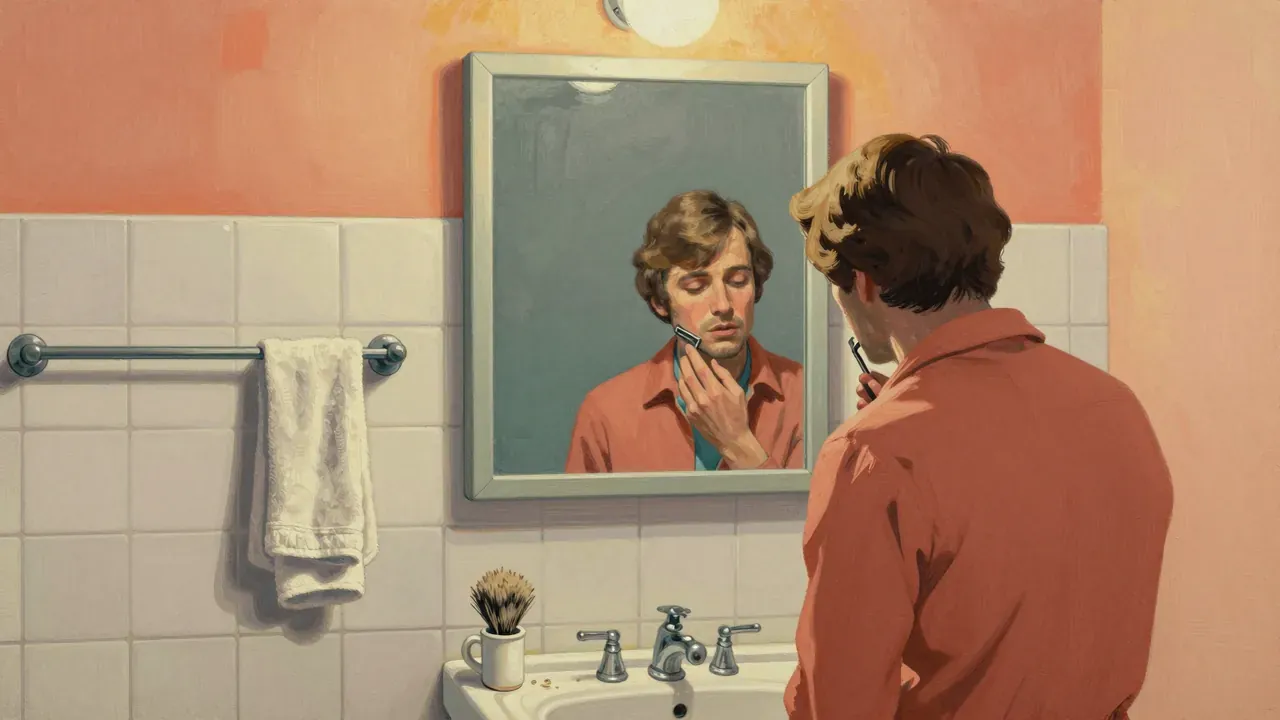
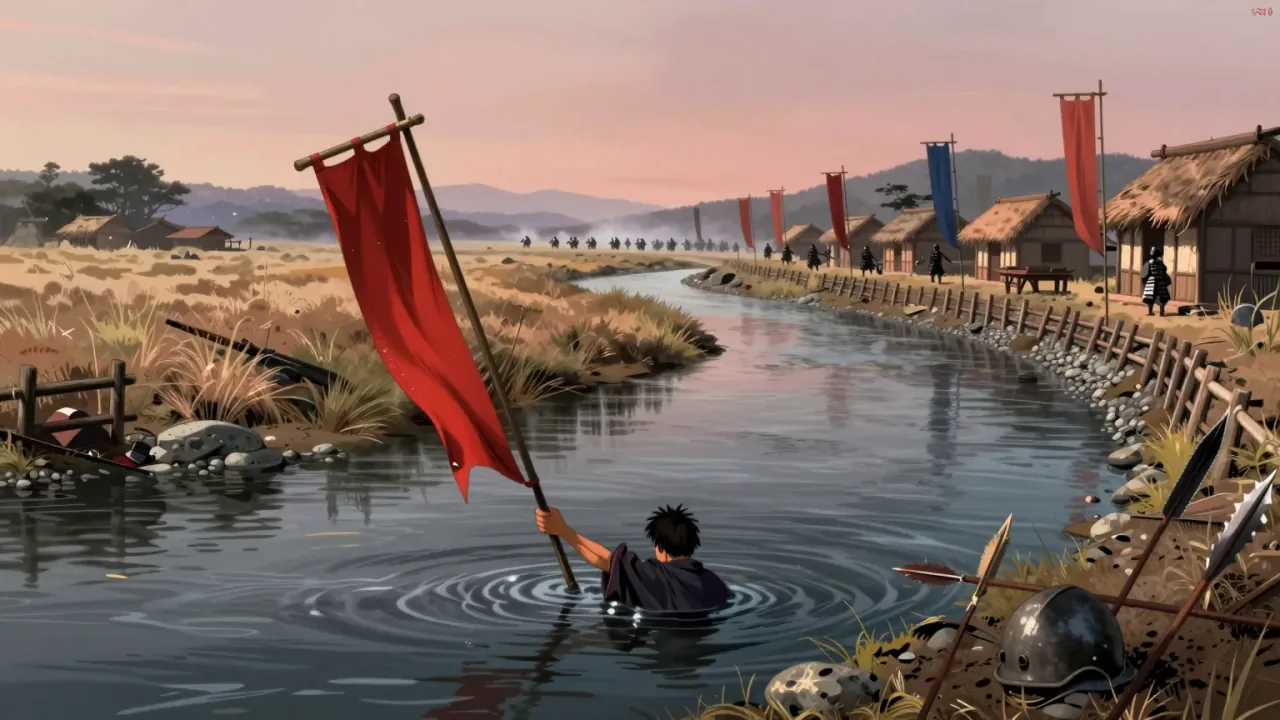
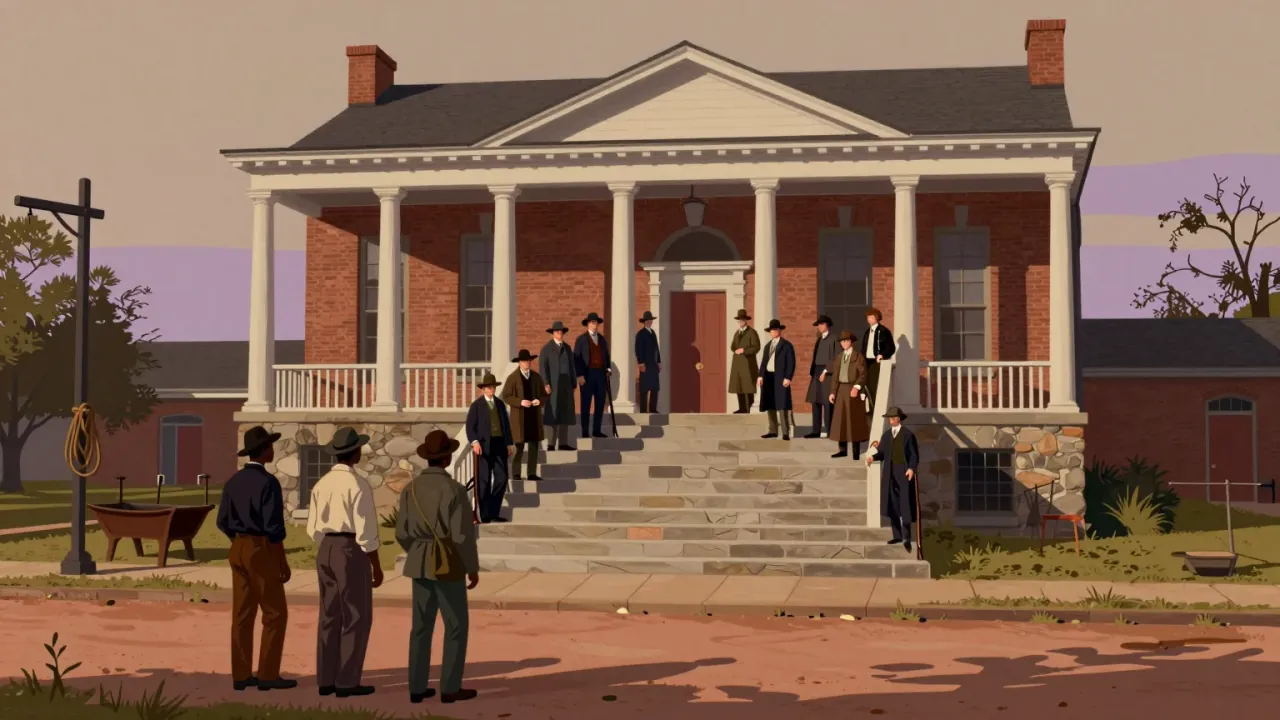
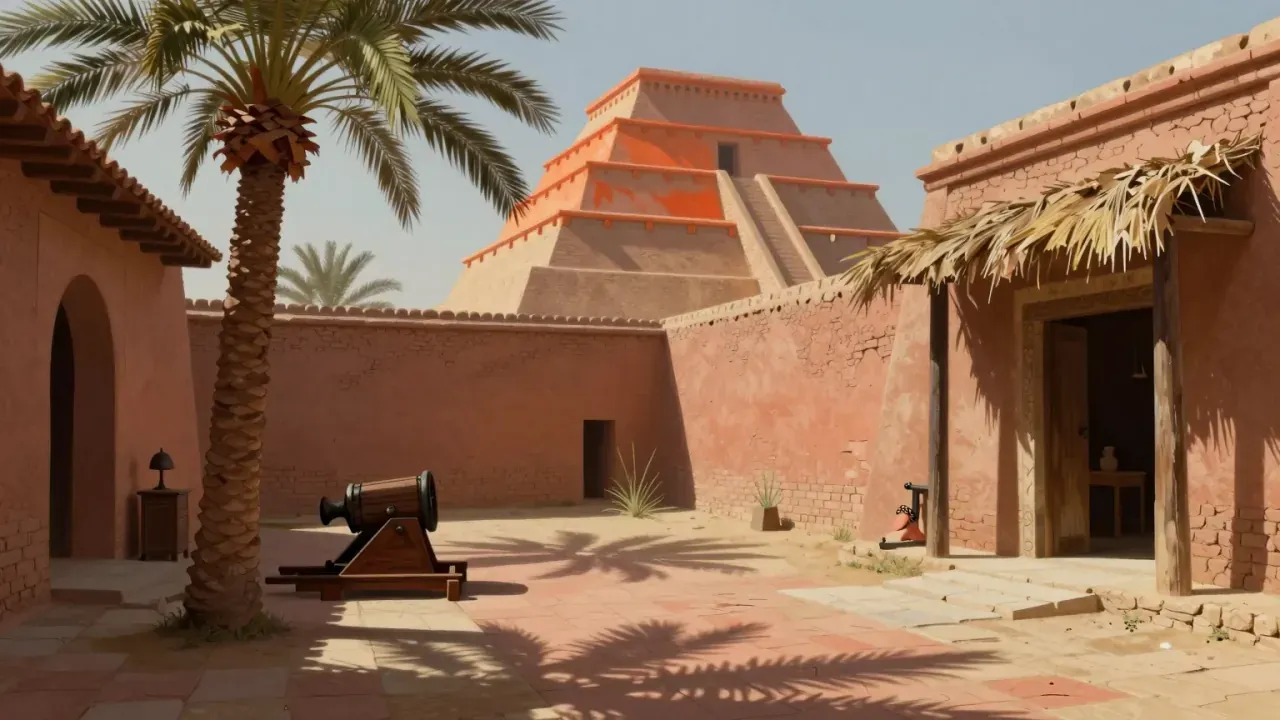
The film works through rhythmic editing, symbolic naming, and chromatic differentiation: each story was originally tinted a distinct colour — amber for Babylon, blue for Judea, sepia for France, green for the Modern story — reinforcing separation while enabling swift visual recognition. Billy Bitzer and Karl Brown’s cinematography favours deep staging and lateral movement, especially in crowd scenes, where composition conveys hierarchy and panic without dialogue. Performances are stylised but precise: Mae Marsh’s Dear One registers exhaustion and resolve in micro-gestures; Lillian Gish’s Eternal Motherhood appears only in static, sculptural tableaux, rocking a cradle between cuts. Griffith, James Smith, and Rose Smith edited over 50 transitions between strands, tightening cross-cutting as tension mounts — the final stretch interweaves all four narratives in under ten minutes. Joseph Carl Breil’s score, composed for full orchestra, was unprecedented in scope for cinema and underscored emotional continuity across eras. The script, co-written by Griffith, Tod Browning, Anita Loos, and Frank E. Woods, avoids exposition, relying instead on visual parallels — a raised hand, a closed door, a fleeing figure — to bind the strands.
What holds
What lands most firmly is the formal audacity: the sheer confidence of its architecture. The cradle motif recurs with quiet insistence, not as sentiment but as temporal anchor — a reminder that each story unfolds within the same biological and social continuum. The Babylonian sequence achieves monumental clarity: Belshazzar’s feast, the rival priests, the siege walls, and Cyrus’s advance are rendered with spatial coherence rare for 1916. In the Modern story, the moral hypocrisy of the ‘moral uplift society’ reads plainly — their intervention triggers the very ruin they claim to prevent. The St. Bartholomew’s Day Massacre sequence gains force from restraint: the camera stays wide, observing the slow, inevitable tightening of the net around the Huguenots rather than dramatising gore. Even the shortest strand — Christ’s crucifixion — lands through omission: no close-ups of suffering, no miracles, just a steady progression from acceptance to abandonment, framed by crowds whose expressions shift from curiosity to complicity. These choices do not flatter the viewer; they require attention to pattern, not plot.
What slips
What does not land consistently is the Biblical strand’s dramatic weight. At under fifteen minutes, it functions more as punctuation than narrative — its theological stakes remain unexamined, its characters underdeveloped relative to the others. The Judean story’s brevity makes it feel like citation rather than contribution, weakening the film’s claim to equal treatment across ages. Similarly, the French story, though visually rich, suffers from thin motivation: Catherine de’ Medici’s turn toward massacre arrives without psychological scaffolding, reducing her to archetype. Some performances falter under the weight of symbolic naming — ‘The Musketeer of the Slums’ and ‘The Boy’ work as types, but their lack of interiority makes later emotional pivots feel unearned. The editing, while revolutionary, occasionally sacrifices clarity: early intercuts can confuse chronology, particularly for viewers unfamiliar with the historical reference points. And the film’s refusal to name its modern protagonists — a deliberate choice to universalise — risks flattening specificity: the mill owner’s cruelty feels abstract where it should feel visceral, and the ‘moral uplift society’ lacks the texture of real institutions.
The weight of it
The themes that matter are not abstract ideals but operational patterns: how power consolidates through moral certainty; how institutions weaponise care; how economic pressure migrates into social control. Intolerance treats class conflict, religious persecution, imperial conquest, and judicial failure not as discrete phenomena but as variations on a single mechanism — the displacement of ambiguity onto scapegoats. The film’s central irony is structural: each story shows intolerance being justified by appeals to tradition, scripture, law, or progress — yet the film itself offers no corrective doctrine, only juxtaposition. It implies that endurance, not victory, is love’s only form — seen in the Dear One’s persistence, the Mountain Girl’s loyalty, the Bride’s quiet presence at Cana. There is no redemption arc, only interruption: the governor’s pardon arrives seconds before the gallows; Cyrus enters Babylon as Belshazzar falls; the Nazarene walks away from the adulteress — all moments of suspended consequence, not resolution. The theme is not tolerance as policy, but the fragility of mercy amid systems designed to exclude.
Who it is for
This film is for viewers who approach silent cinema as architecture, not nostalgia — those willing to read image rhythm as meaning, and who value formal innovation over emotional immediacy. It rewards patience with structural insight, not catharsis. It is not for viewers who need clear cause-and-effect storytelling, psychological realism, or sustained identification with a protagonist. Those who find historical allegory opaque or who expect moral clarity will leave frustrated — Griffith refuses to assign blame to individuals, preferring systemic critique. Anyone expecting the pacing or narrative economy of later cinema will find its 197-minute duration demanding. A viewer who values character depth over compositional logic, or who requires explicit thematic signposting, would be better served elsewhere. The film assumes familiarity with its historical touchstones; without that, the French and Babylonian strands lose much of their charge. Its value lies in how it thinks, not what it says — and that thinking requires active, unhurried engagement.
What it costs
Yes, it is worth your evening — but only if you watch it as a work of cinematic syntax, not as drama in the modern sense. Its influence is undeniable: the cross-cutting technique reshaped editing worldwide, and its ambition redefined what film could attempt. Yet its power resides less in emotional impact than in intellectual resonance — in how its structure enacts its thesis. To watch it expecting immersion is to misread its purpose. Those who appreciate Eisenstein or Godard for their argumentative form will find kinship here. Those who seek narrative propulsion or psychological nuance may feel distanced. The film’s length is not indulgence but necessity: its point emerges only across duration, repetition, and contrast. It asks for time not as concession but as condition. If you accept that, the evening repays itself in perspective — not because it moves you, but because it recalibrates how you see time, power, and recurrence in every film that followed.