The look of it
Heaven’s Gate is a Western film set in 1890s Wyoming, loosely anchored to the Johnson County War but unmoored from historical fidelity. Michael Cimino wrote and directed it as an epic about class conflict: land barons hiring mercenaries to eliminate immigrant homesteaders they deem trespassers and thieves. It attempts scale — not just in geography or runtime, but in moral weight — treating its central figures as archetypes rather than individuals: the idealistic Harvard-educated sheriff James Averell; the ruthless enforcer Nate Champion; the French émigré Ella Watson caught between them. Cimino sought to reframe the Western not as mythic frontier justice but as systemic violence masked by law and property rights. The film opens at Harvard in 1870, then moves westward over two decades, using time itself as a structural device — not to chart character development, but to measure the slow, grinding expansion of capital into land and life. Its ambition is operatic: to render class war as landscape, as weather, as choreographed movement across vast terrain. It does not ask whether the homesteaders are right, but whether the system permits them to be.
The way it moves
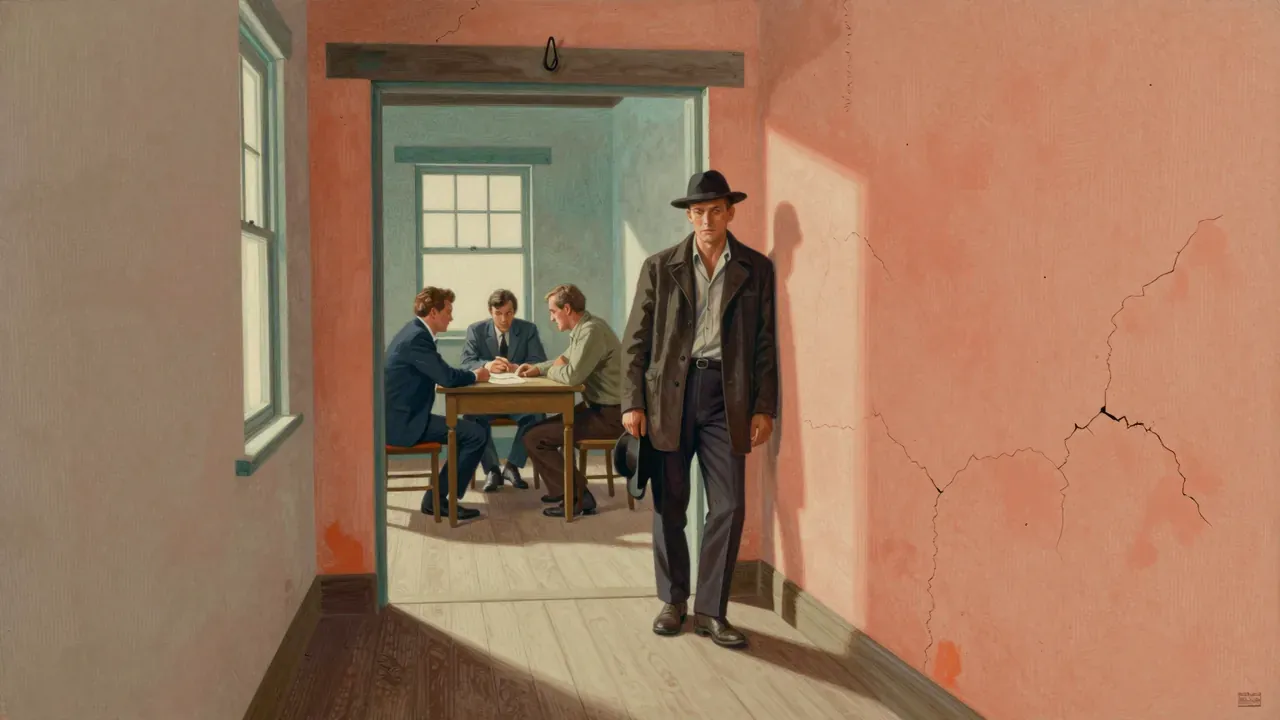
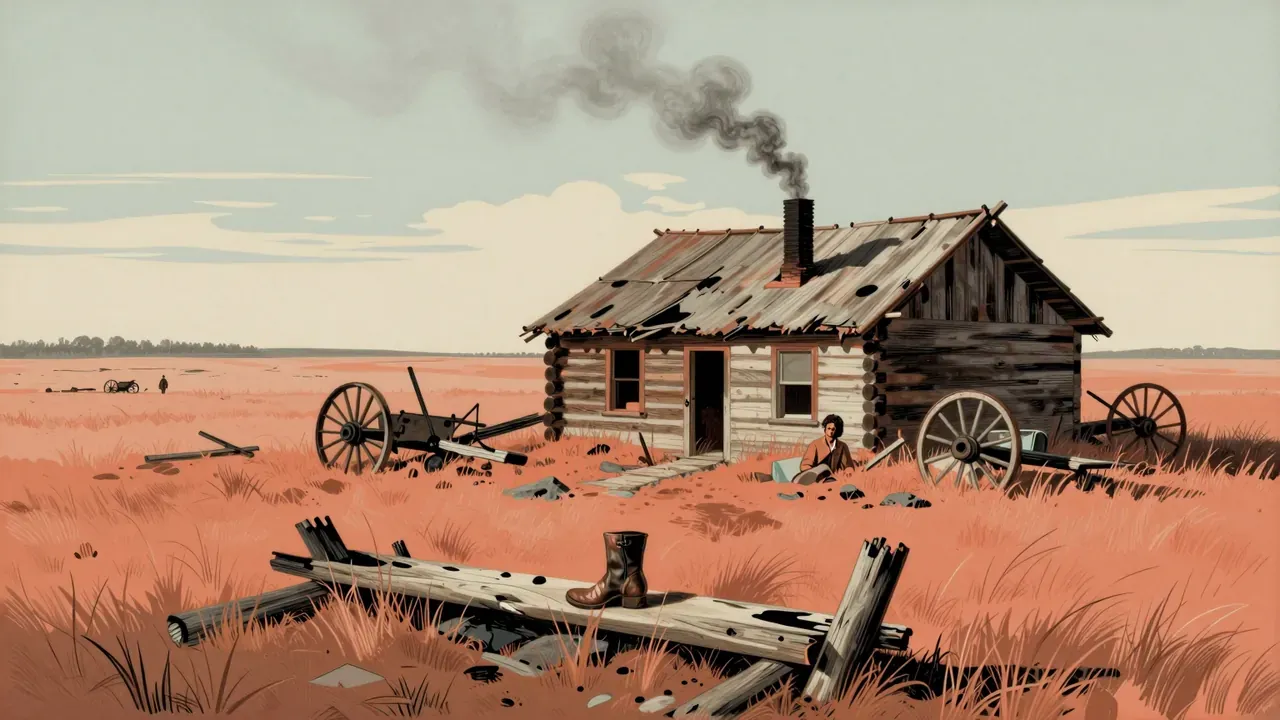
The story unfolds with glacial pacing and minimal exposition, relying on visual recurrence — repeated motifs of dancing, firelight, train tracks, and wide shots that dwarf figures against prairie or snow. Performances are restrained, often muted: Kristofferson’s Averell speaks little and rarely reacts; Walken’s Champion carries menace without shouting; Huppert’s Ella is present but rarely granted interiority. Vilmos Zsigmond’s cinematography favours soft focus, shallow depth, and natural light — interiors under-lit, exteriors washed in haze or golden-hour diffusion. David Mansfield’s score blends folk instrumentation with dissonant strings, avoiding leitmotif in favour of ambient unease. Lisa Fruchtman’s editing in the original 219-minute cut avoids conventional continuity, favouring juxtaposition over causality: a dance sequence cuts to slaughter; a close-up of a hand holding a letter dissolves into smoke rising from a burning cabin. The craft is unified in its resistance to narrative efficiency — every decision serves duration, texture, and tonal gravity over clarity or momentum.
What stays with you
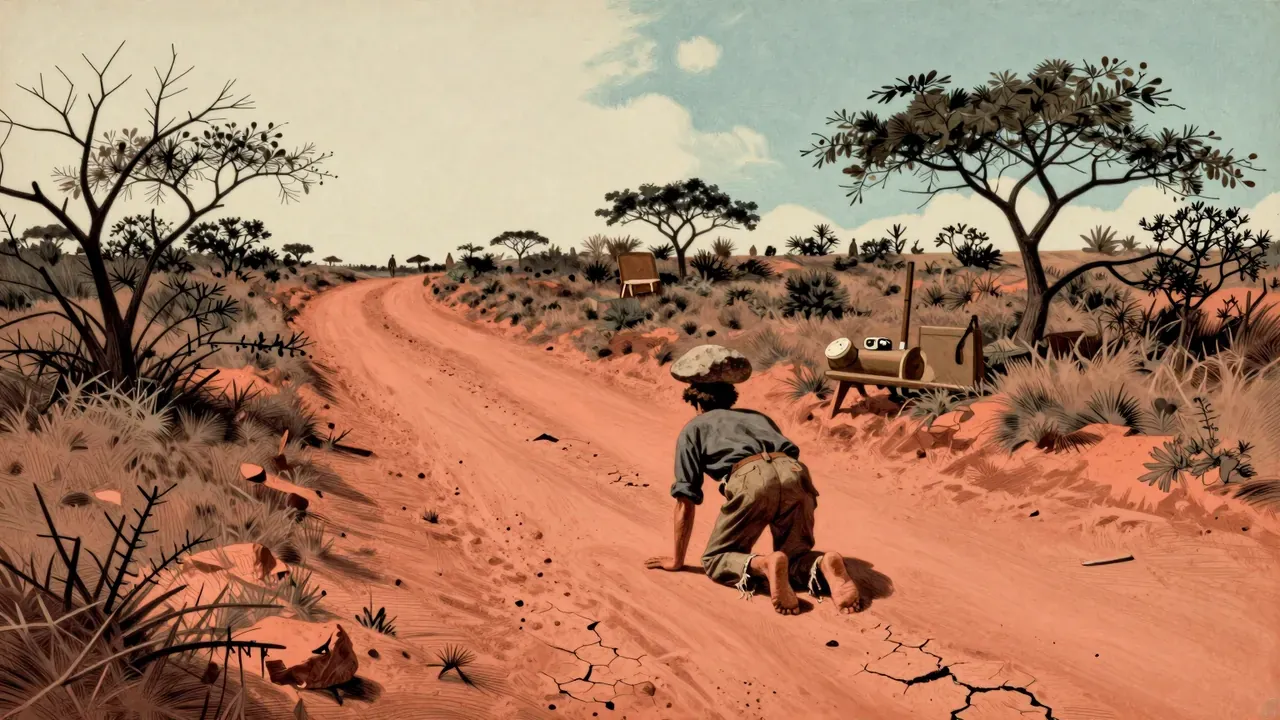
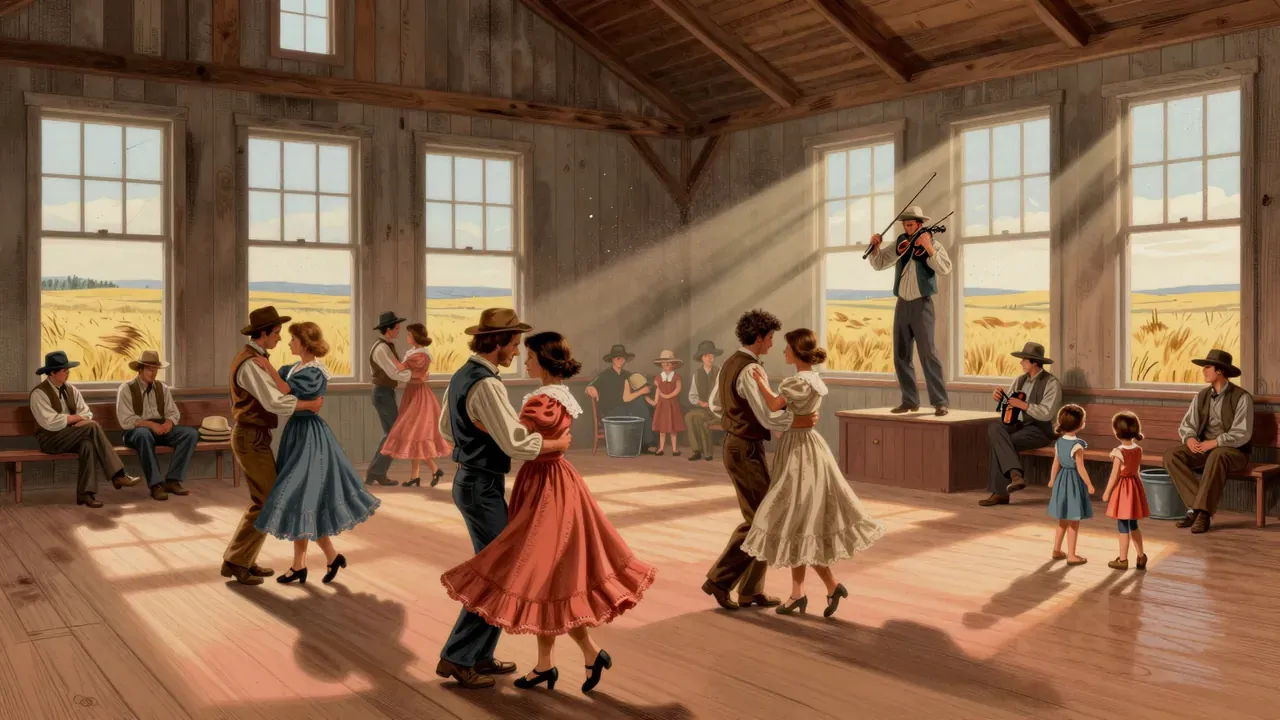
What lands is the film’s physical presence: the weight of cloth, the chill of wind across open land, the sound of hooves sinking into mud. The opening Harvard graduation scene establishes tone through composition alone — young men in black gowns moving like figures in a frieze, their voices muffled, their futures already abstracted. Later, the Fourth of July dance sequence holds sustained attention not through plot but through choreographic precision and lighting that turns sweat and silk into something ritualistic. The battlefield sequence — filmed on irrigated grass to keep it unnervingly green — works as pure image: bodies falling in slow motion against vivid colour, the red of blood and the green of earth locked in unnatural contrast. These moments do not advance story but deepen atmosphere, making ideology palpable as texture. The film’s refusal to explain or justify gives certain scenes a haunting autonomy — particularly those involving horses, children, or silent crowds — where meaning resides in posture, timing, and space rather than dialogue or motivation.
Where it slips away
What does not land is the film’s attempt to sustain emotional investment in its characters. Averell remains indistinct beyond his education and uniform; Champion’s shift from hired gun to tragic figure feels unearned, lacking psychological scaffolding; Ella’s arc collapses under the weight of symbolic function. Dialogue is sparse and often elliptical, leaving relationships opaque — alliances, betrayals, and affections arrive without preparation or consequence. The historical liberties undermine credibility without replacing it with persuasive allegory: the homesteaders’ poverty is asserted but rarely dramatised; the stockmen’s power is shown but never dissected. Cimino’s insistence on visual fidelity — rebuilding streets, relocating trees — produces beauty but not coherence. Scenes repeat without variation or escalation, mistaking repetition for resonance. The film’s length becomes a barrier not to engagement but to comprehension: by the second hour, cause and effect dissolve, replaced by mood and motif, and the viewer is left watching surfaces rather than following sense.
What it’s really about
The themes that matter are not those of the Johnson County War but of cinematic authority and economic scale. Heaven’s Gate is less about 1890s Wyoming than about the cost — financial, temporal, human — of insisting on a singular, uncompromised vision. Class appears not as social analysis but as spatial division: the camera lingers on fences, rail lines, and property markers, treating land as contested syntax. Immigration is rendered as aesthetic displacement — European faces in American landscapes, foreign music over American soil — but never as lived experience. Violence is systemic, not personal: no villain monologues, no righteous speeches, only the quiet mechanics of eviction, surveillance, and armed incursion. The film’s most persistent idea is exhaustion — of bodies, budgets, editors, critics, audiences. It treats production itself as subject: the labour of building, waiting, cutting, reshooting, recutting becomes the film’s buried narrative, visible in every frame’s meticulous grain and every pause’s unbearable length.
Who it’s for
It is for viewers who value duration as argument, who find meaning in repetition, who accept that a film may withhold empathy to make room for scale. It rewards patience with texture, not payoff — those who watch films to feel understood will leave alienated; those who watch to feel immersed in a world’s material reality may stay. It is not for viewers who require narrative propulsion, psychological clarity, or moral resolution. Anyone expecting a Western with clear heroes and villains, or a historical drama with explanatory dialogue, will find it impenetrable. Those who admire Zsigmond’s work or Mansfield’s score may tolerate its slowness, but only if they accept that the film’s craft serves atmosphere over accessibility. A viewer who values editing as rhythm rather than exposition will hear its structure; one who reads cinema as storytelling will hear silence.
What it costs you
Yes, it is worth your evening — but only if you approach it as a document of ambition made manifest, not as entertainment or instruction. Its value lies in its extremity: a $44 million studio film that refuses to flatter audience expectations, that treats budget and runtime as expressive materials. Those who dismiss it as self-indulgent overlook how precisely its flaws are chosen — the long takes, the muted performances, the unresolved tensions are all consistent with its thesis about power’s opacity. Critics who called it ‘incoherent’ in 1980 were not wrong about its difficulty, but they misread difficulty as failure. A modern viewer accustomed to algorithmic pacing may need to adjust their metabolism — but doing so reveals a film that still unsettles, not because it shocks, but because it insists on being seen on its own terms. To skip it is to miss a pivot point in American film history, not just in reputation but in form.