The port as threshold
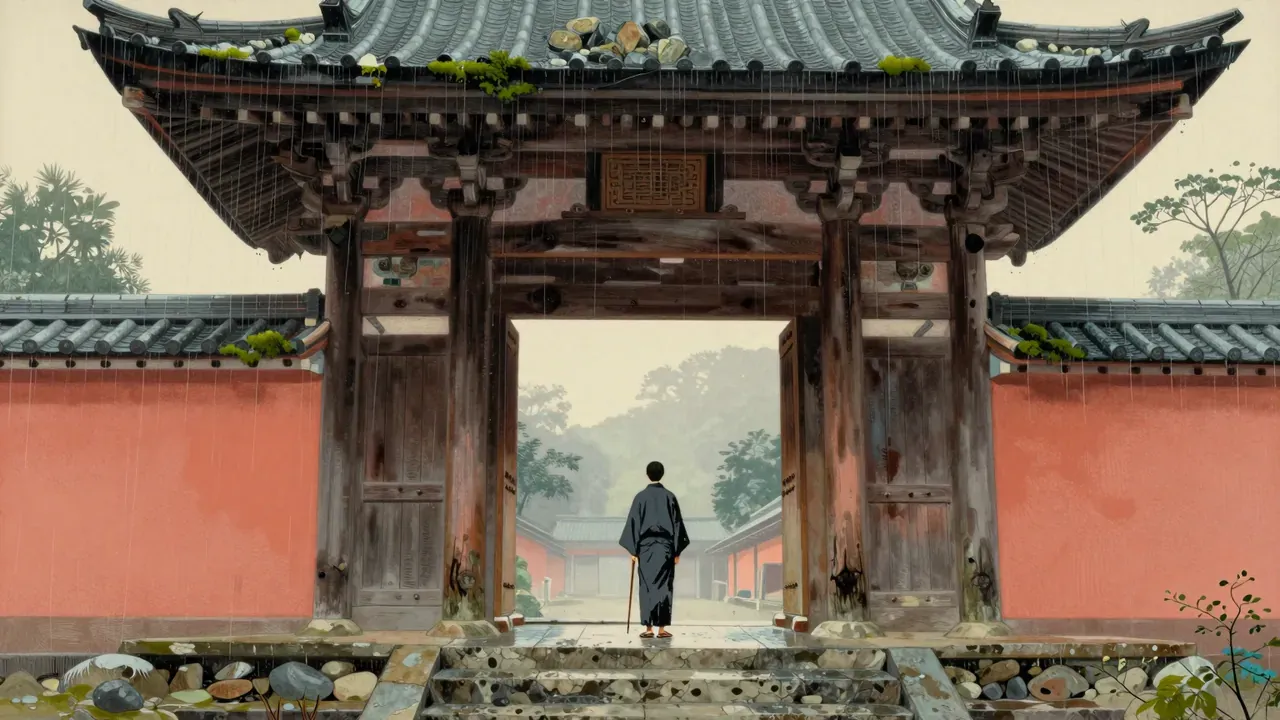
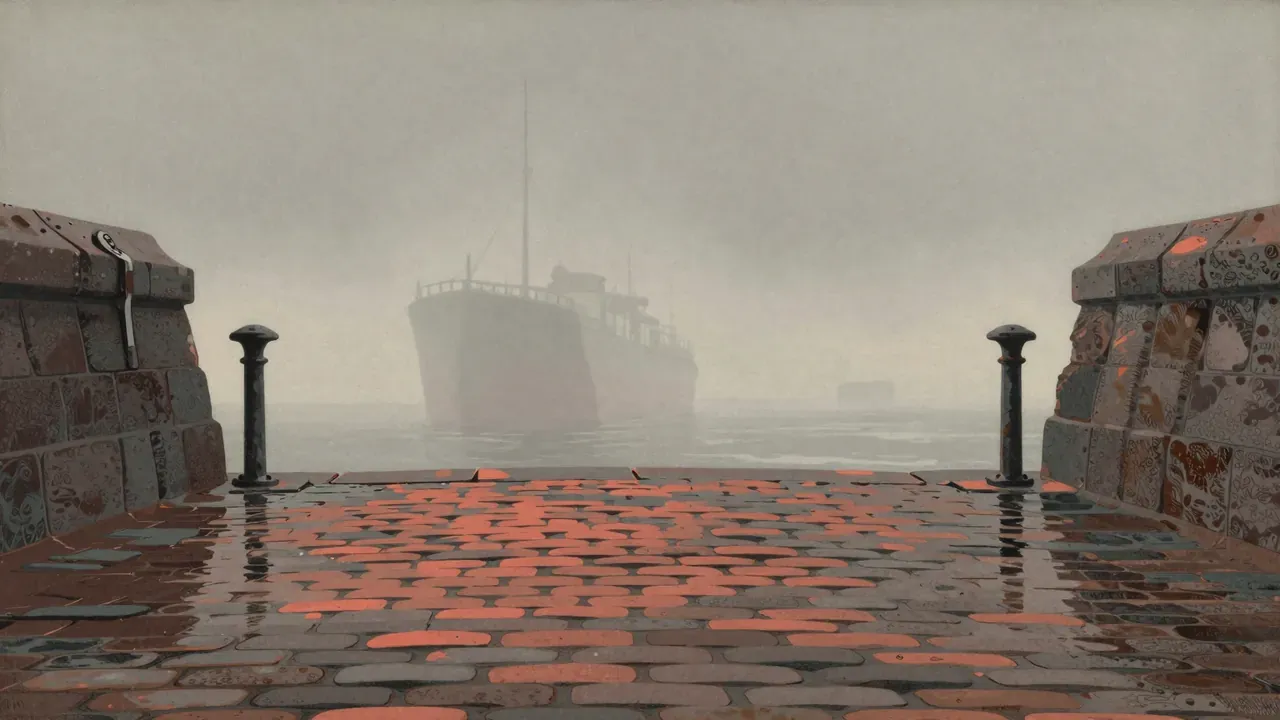
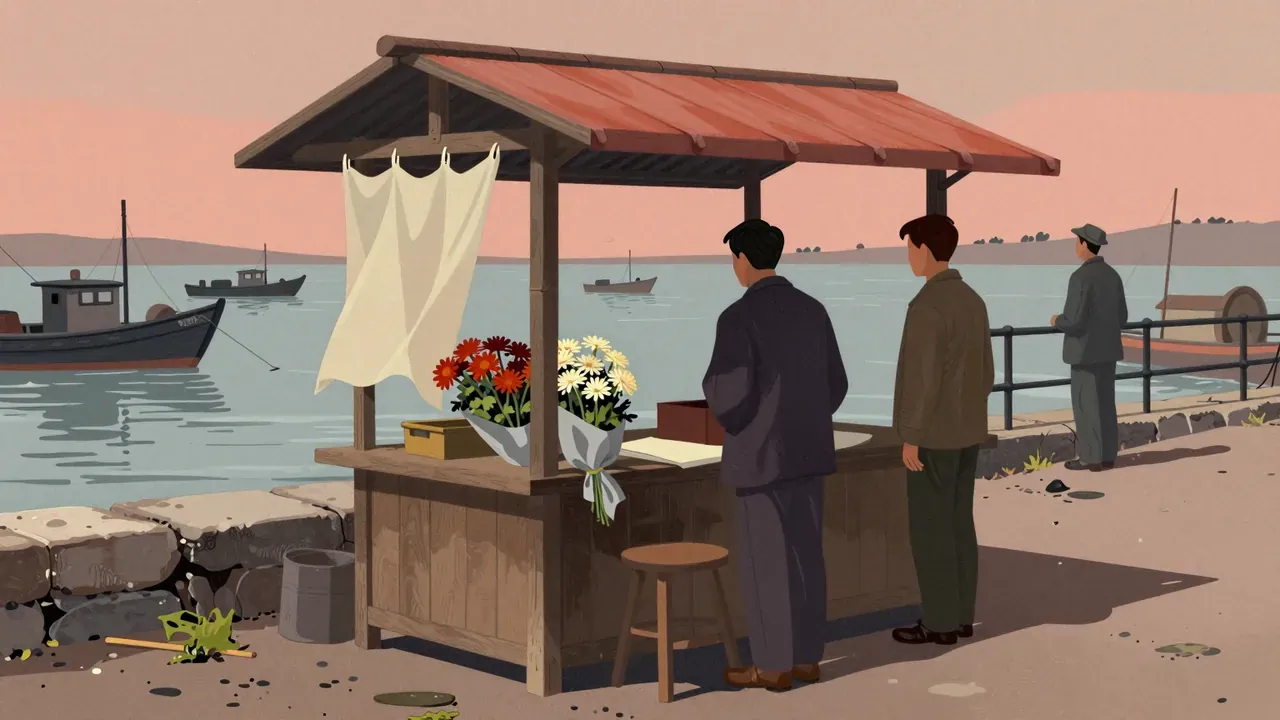
Port of Flowers is a Japanese feature film made in 1943 under wartime conditions at Shochiku Studios, directed by Keisuke Kinoshita. It is a domestic drama set in a port town, built around two male leads — Eitarō Ozawa and Ken Uehara — whose relationship forms the emotional core. The film attempts to anchor personal feeling within national circumstance: not through militaristic rhetoric, but by tracing how ordinary lives persist, narrow, or soften under constraint. Its ambition is modest but precise — to show continuity of human gesture amid scarcity, to hold quiet space for tenderness without recourse to sentimentality or evasion. It does not aim to document the war directly, nor to allegorise it; rather, it treats the port as a threshold where departure and return are equally uncertain, and where flowers — fragile, seasonal, unstrategic — become a motif of endurance. This is not propaganda, nor resistance, but something more difficult: a sustained act of attention to what remains when grand narratives recede.
The look of it
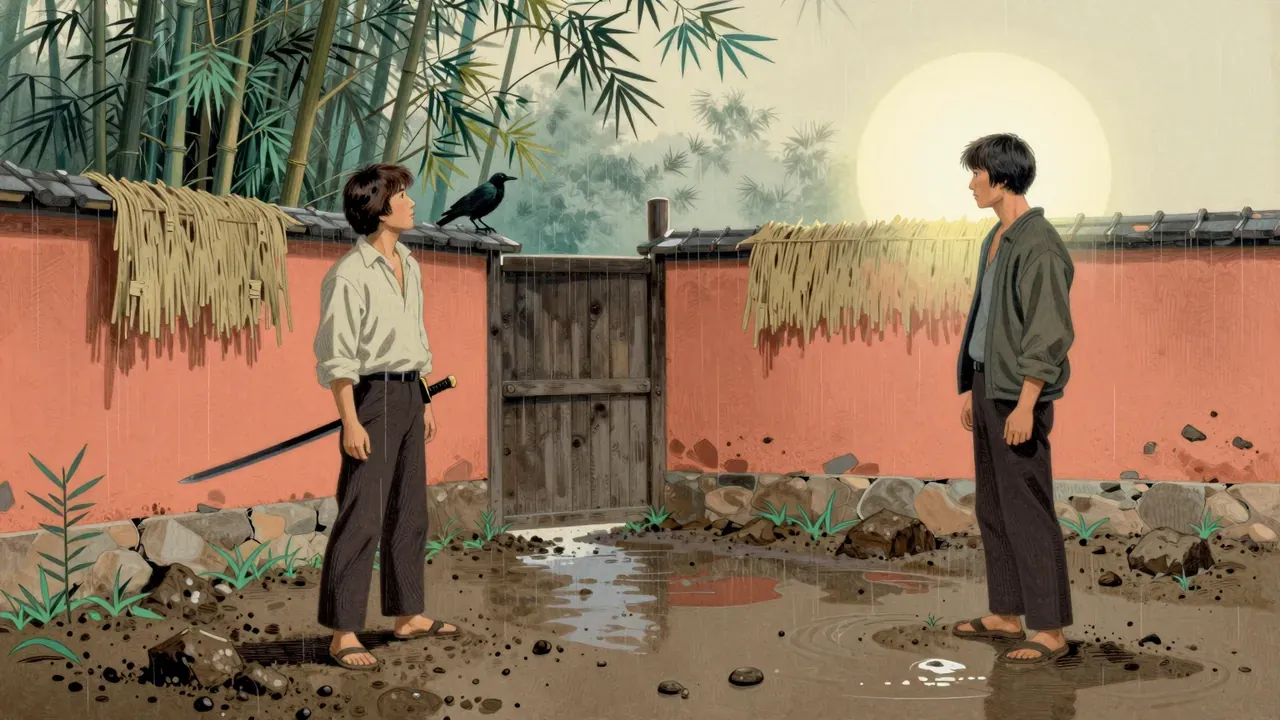
The story follows no single plot arc but a series of restrained encounters: a fisherman’s son returns home on leave; an older man tends a small florist stall near the docks; their conversations unfold over days, measured in tides and train schedules. Kinoshita directs with economy: camera placement is fixed or gently repositioned, framing characters in doorways or behind rain-streaked glass, never isolating them in close-up unless the moment demands it. Eitarō Ozawa plays with contained gravity — his pauses carry weight without theatricality — while Ken Uehara offers a quieter, more inward counterpoint, his gestures small and habitual. The black-and-white photography avoids contrast extremes; shadows pool softly, light falls evenly across tatami and wooden counters. Sound design is sparse — distant ship horns, footsteps on gravel, the rustle of wrapping paper — none of it underscored. There is no score credited in the fact sheet, and none is audible in surviving fragments. Editing favours duration over rhythm: scenes breathe, sometimes too long, but never rush.
What holds
What lands is the film’s refusal to resolve. Its emotional register stays low and consistent — not detached, but observant. The port setting feels lived-in: fishermen’s boots left by the door, steam rising from a kettle, the way light catches dust motes above a flower stall at midday. These details do not serve exposition; they accumulate as evidence of persistence. Ozawa and Uehara’s performances land because they avoid emphasis — neither man raises his voice, yet both convey strain, loyalty, and unspoken grief through posture and timing. The film’s restraint becomes its authority: when a character places a single chrysanthemum on a windowsill, it reads not as symbolism but as habit, and that habit carries history. The pacing, often criticised as slow, functions as structural honesty — time passes unevenly in waiting, and the film honours that unevenness. Its quietness is not emptiness; it is filled with the hum of ordinary life continuing, even when the future is withheld.
What slips
What does not land is the film’s structural looseness when viewed outside its historical frame. Without context, the narrative drift can read as indecision rather than deliberation — scenes linger without clear pivot points, and the relationship between the two leads remains emotionally underspecified. There is no crisis, no revelation, no turning point beyond the quiet acknowledgment of shared fatigue. Some viewers will find this evasive, especially those expecting either wartime urgency or lyrical release. The absence of female characters beyond background roles limits its social scope; the world depicted is almost exclusively male, domestic, and circumscribed. The film makes no attempt to widen its lens — no labour disputes, no ration queues, no radio broadcasts — and that narrowing, while artistically coherent, risks feeling like omission rather than focus. Its austerity may be misread as indifference, particularly by audiences accustomed to narrative propulsion or explicit thematic signposting.
What lasts
The themes that matter are continuity, care as practice, and the weight of unspoken obligation. Flowers recur not as decoration but as markers of time — cut, arranged, wilted, replaced — mirroring the cyclical labour of port life. The film treats work not as struggle or triumph but as rhythm: mending nets, wrapping stems, checking tide tables. Kinoshita frames loyalty not as declaration but as repetition — returning to the same bench, asking the same question, making the same tea. There is no grand statement about nation or duty; instead, allegiance is shown in small acts of maintenance: keeping a shop open, remembering a name, holding space for silence. The port itself is less a location than a condition — transitional, provisional, subject to forces beyond control. What endures is not ideology but routine, not certainty but attentiveness. This is not optimism, nor resignation, but a third thing: the dignity of showing up, day after day, with nothing to offer but presence.
Who meets it
This film is for viewers who value patience as an aesthetic principle and who trust that meaning accumulates slowly, in texture rather than event. It rewards those familiar with pre-war and wartime Japanese cinema, particularly the Shochiku ‘home drama’ tradition, and those attentive to the politics of understatement. It is not for viewers who require narrative momentum, psychological exposition, or moral clarity — those who expect films to answer questions rather than hold them. Anyone seeking historical documentation of 1943 Japan will find it insufficient; anyone needing emotional catharsis or character transformation will leave unsatisfied. Its value lies in its resistance to utility: it does not instruct, persuade, or console. A viewer who finds stillness intolerable, or who reads absence as failure, will reject it outright. That verdict would change only if the film were repositioned — not as a period artefact, but as a deliberate exercise in anti-spectacle, one that asks us to reconsider what counts as action, and what counts as consequence.
What remains
Yes, it is worth your evening — but only if you arrive prepared to meet it on its own terms. It asks for ninety minutes of undivided attention, not as a test, but as a condition of entry: the film unfolds in real time, not dramatic time, and its rewards are cumulative, not episodic. Those who watch while distracted, or who measure value by incident rather than atmosphere, will find it unrewarding. Its worth lies in its integrity: every shot, every pause, every unspoken line serves the same quiet insistence on human continuity. It is not ‘important’ in the way canonical war films are; it is important in the way a well-kept garden is — modest, tended, resistant to erasure. To dismiss it as dated or inert is to mistake restraint for absence. Its power is retrospective: it gains resonance the longer you sit with it, the more you notice what it refuses to say, and how much it says by refusing. That is not a flaw. It is the point.