The shape of the story
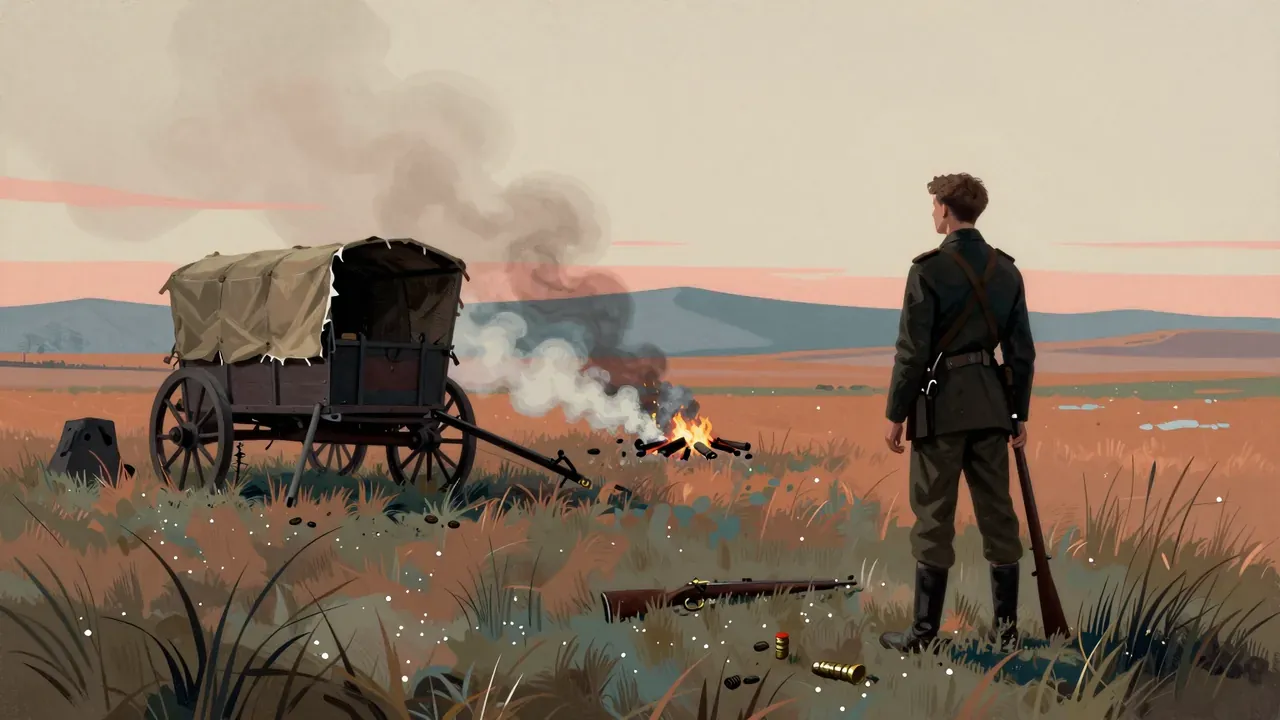
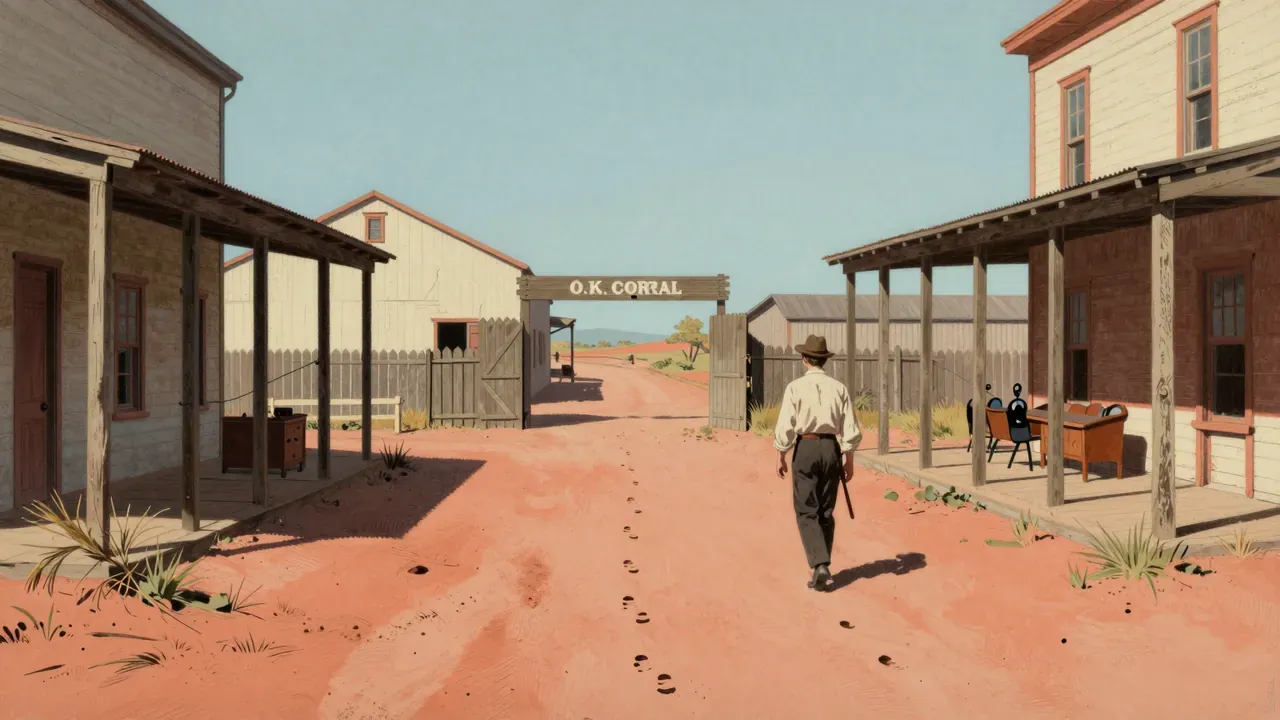
My Darling Clementine is a studio Western made under contractual obligation, not personal passion: John Ford accepted the assignment reluctantly, and 20th Century Studios intervened heavily in post-production, cutting thirty minutes and reshooting scenes. It sets out to dramatise the O.K. Corral gunfight as myth rather than record — not as history, but as civic parable. The film treats Tombstone as a blank slate on which order must be inscribed by solitary moral authority; Wyatt Earp arrives not as lawman but as accidental architect of civilisation. Its ambition is structural and tonal: to build a Western where landscape, silence, and ritual gesture carry more weight than exposition or psychology. It borrows its title from a lullaby, not a battle cry, and its pacing reflects that — long takes, deliberate pauses, architecture over action. It is less about what happens than how it settles into memory: a formal experiment in gravitas, dressed as genre fare. The script adapts Stuart Lake’s biography, but discards its factual scaffolding entirely, replacing real people with archetypes — Clementine as composite ideal, Doc Holliday as doomed intellect, the Clantons as undifferentiated menace. This is myth-making by subtraction.
The look of it
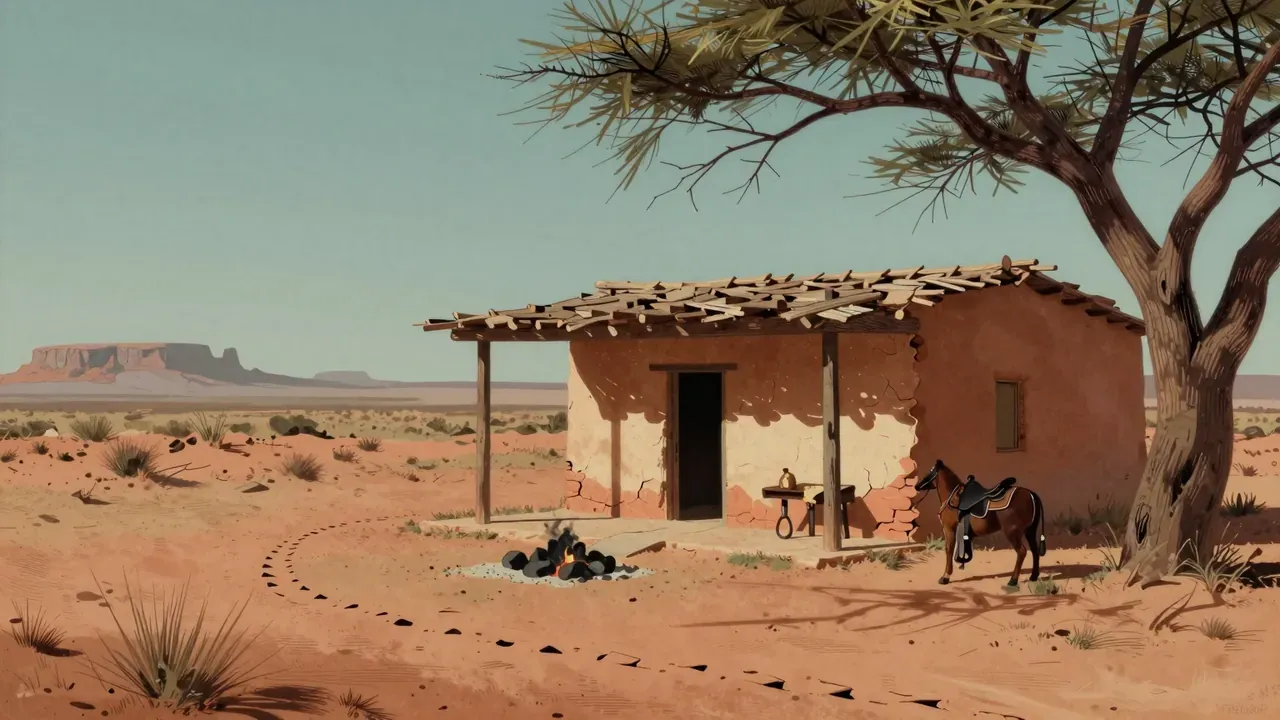
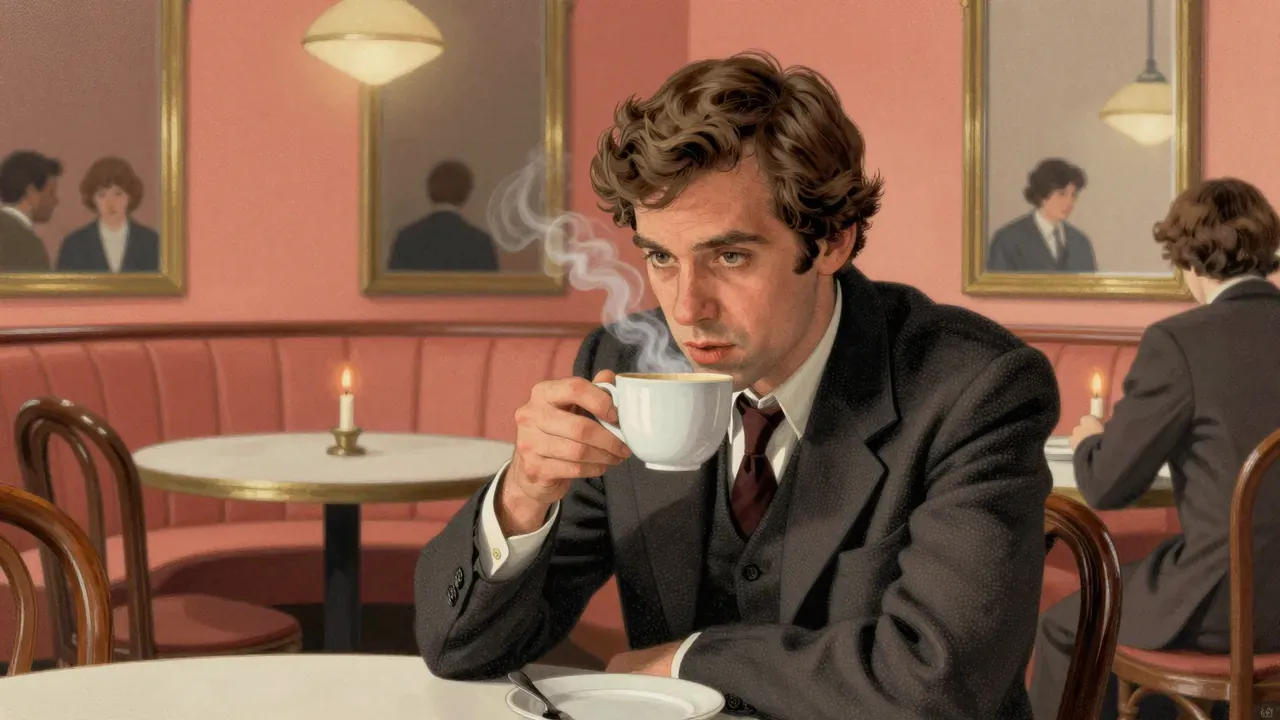
The story unfolds in measured, almost liturgical stages: arrival, violation, appointment, confrontation, preparation, reckoning. Henry Fonda’s Wyatt is restrained to the point of vacancy — he speaks little, moves slowly, absorbs violence without flinching. Victor Mature’s Doc is physically frail but verbally sharp, his tuberculosis a quiet counterpoint to the town’s feverish energy. Linda Darnell’s Chihuahua is volatile and vivid, the only character who registers pain in real time. Joseph MacDonald’s cinematography avoids Monument Valley’s grandeur in favour of low-contrast interiors: saloons dimly lit, schoolrooms washed in flat daylight, streets shot at eye level, never heroic. Dorothy Spencer’s editing sustains duration — shots hold past comfort, dialogue lingers, silences are unbroken. Cyril J. Mockridge’s score is sparse, mostly piano and strings, used only to punctuate transitions, never to underscore emotion. Walter Brennan’s Old Man Clanton is all implication: no ranting, just stillness and a single, slow blink before murder. The craft serves restraint: every decision deflates theatricality, insisting instead on gravity as a physical condition.
What stays
What lands is the weight of consequence. When Virgil’s body is dumped in the street, the camera does not cut away; it holds on the dust settling around his boots. When Doc walks toward the O.K. Corral, his gait is uneven, his breath audible — not a hero’s stride but a man choosing alignment over survival. The schoolhouse farewell works because it refuses catharsis: Wyatt does not kiss Clementine, does not vow return, does not even look at her for long — he mounts, rides, and names her name aloud as if testing its shape in the air. The film’s most resonant moments are those of withheld release: the unspoken grief between brothers, the unreturned glance between Wyatt and Clementine, the way Doc’s hand trembles not before the fight but while stitching Chihuahua’s wound. These are not gestures of character but of form — the film trains attention on what remains unsaid, unacted, unresolved. Even the gunfight itself is brief, chaotic, and morally unclarified: no slow-motion, no close-ups on faces, just smoke, recoil, and bodies falling out of frame. Its power lies in refusal.
What slips
What does not land is the historical pretence. The film’s invented Clementine — part Boston schoolteacher, part stand-in for Josephine Earp and Big Nose Kate — has no interior life beyond function: she exists to be admired, displaced, and ultimately left behind. Her presence flattens Doc’s complexity, turning his illness and exile into mere romantic obstacle. The Clanton family are monolithic villains with no discernible motive beyond malice; their deaths feel procedural, not earned. James Earp’s fictional murder — placed first to ignite Wyatt’s arc — contradicts both chronology and character: historically the eldest, here he is the youngest, killed offscreen, his death serving only as plot catalyst. The film’s moral clarity collapses under scrutiny: Wyatt assumes authority without mandate, enforces laws he did not help write, and kills men whose crimes are implied, not adjudicated. The courtroom scene is absent; justice is performed, not deliberated. Some viewers will find this simplification elegant; others will hear its silences as evasion. The film offers no reckoning with its own omissions — it simply proceeds as if they do not matter.
What it means
The themes that matter are not frontier justice or manifest destiny but stewardship and silence. Wyatt does not seek power; he accepts responsibility for communal space — the saloon, the school, the street — and treats each as sacred ground. His authority emerges from endurance, not charisma: he stands longest, watches longest, speaks least. The film treats language as unreliable — promises are broken (Doc’s vow to leave), confessions recanted (Chihuahua’s), names erased (Josephine Earp’s absence). What endures is gesture: a handshake, a hat tip, a shared cigarette. Landscape functions as moral register: the open desert is indifferent; Tombstone’s wooden facades are provisional; the schoolhouse is the only structure built for duration. Time itself is thematic — not linear progression but cyclical return: the Earps arrive as cowboys, depart as ghosts, and the town remains, unchanged in its need for order. The film asks not who wins, but what persists after the gunfire stops — and answers with dust, light, and an unspoken name.
Who it’s for
This film is for viewers who value composition over exposition, who find tension in stillness, and who accept myth as a legitimate mode of truth-telling. It rewards patience, familiarity with Ford’s visual grammar, and tolerance for ambiguity in motivation and resolution. It is not for those who require psychological realism, narrative efficiency, or historical fidelity — nor for those who expect Westerns to clarify good and evil. A viewer seeking moral certainty or emotional payoff will find it withholding; a student of mid-century studio craft will find it revelatory. Those who dislike long takes, minimal scoring, or protagonists who rarely emote may disengage early. Its pace assumes shared cultural literacy — the O.K. Corral is known, the Earp legend familiar — so newcomers may miss the weight of omission. Its appeal narrows with expectation: the more you demand from it, the less it gives back. But that is its design, not its failure.
Is it worth your evening
Yes, it is worth your evening — provided you watch it as a formal object, not a biographical one. Its ninety-two minutes unfold with the inevitability of weather: slow, atmospheric, consequential. You will not leave energised, but recalibrated — aware of how much meaning resides in a pause, a glance held half a second too long, a door left ajar. It repays rewatching not for plot revelation but for compositional discovery: how MacDonald frames a doorway, how Spencer lets a silence breathe, how Ford places a man’s shadow against adobe at dawn. Some will call it stately; others, inert. Those who prefer tighter narratives or clearer stakes may find it diffuse. But its power is cumulative, not immediate — it settles like dust after a storm. To dismiss it as dated is to mistake restraint for absence. It is not a film about action, but about the gravity that follows it.