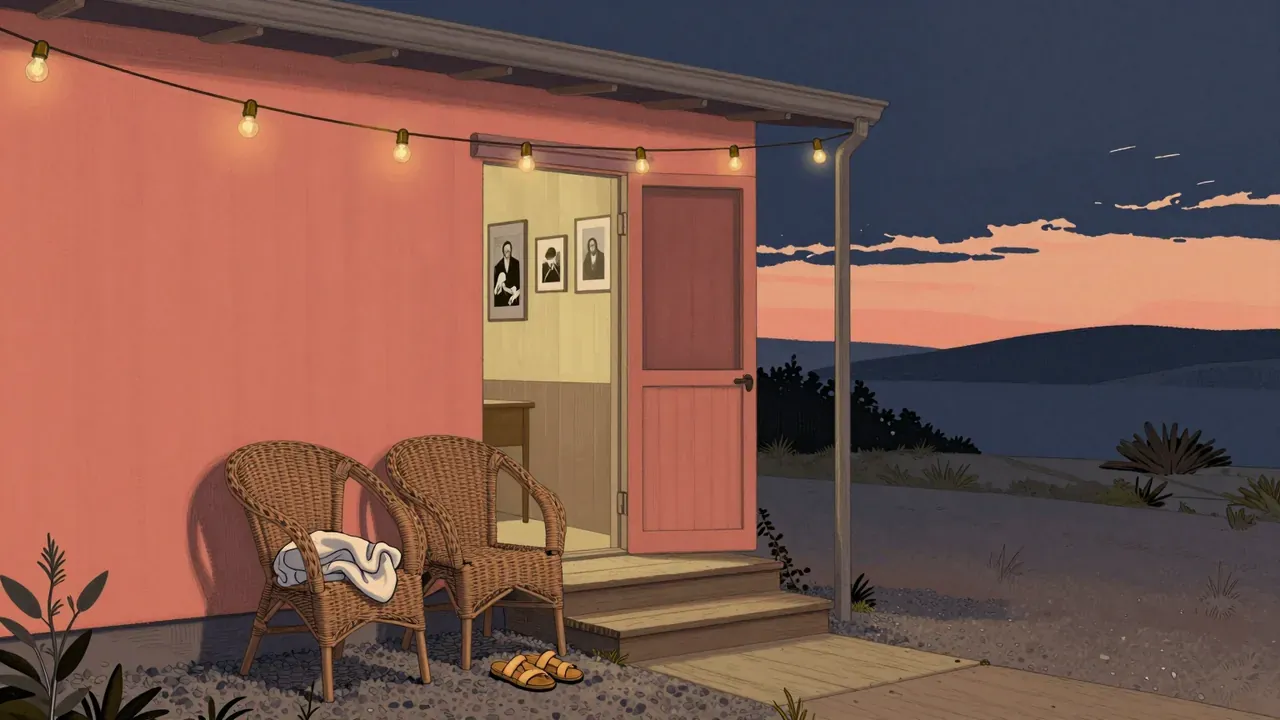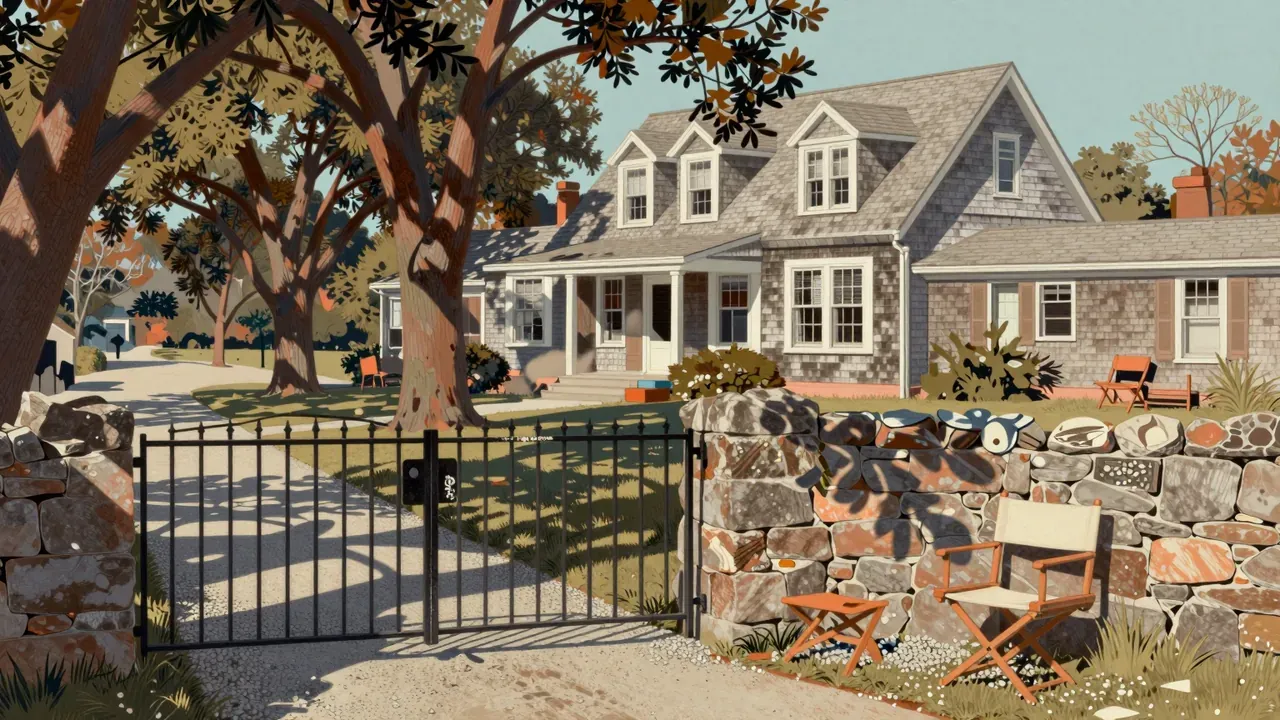
The look of it
Maidstone is a self-reflexive, semi-improvised American independent film made in 1968–69 and released in 1970. It attempts to fuse political satire, media critique and avant-garde performance by casting Norman Mailer as Norman T. Kingsley — a narcissistic, Buñuel-adjacent filmmaker running for US president while directing a brothel-themed drama on his East Hampton estate. The film tries to stage the collapse of authorial control: no script was used, actors were prodded into unscripted reactions, and multiple camera teams followed action across four rented Hamptons estates. Its ambition is structural and philosophical — to expose the theatricality of power, celebrity and filmmaking itself through documentary-style immediacy and deliberate chaos. It borrows from cinéma vérité not for realism but for friction: the grain, the interruptions, the unresolved arguments. Mailer’s stated aim was to make a film that could not be made by anyone else — one that risked incoherence to avoid artifice. That risk is built into its form, not added as commentary.
The way it moves
The film works through accumulation rather than progression: twelve loosely linked chapters, each with shifting focal points — auditions, campaign strategy sessions, drunken debates, PAX,C assassination talk, domestic squabbles. Rip Torn plays Kingsley’s volatile brother Raoul; Isabelle Collin Dufresne (Ultra Violet) appears as a performer-cum-foil; Harris Yulin as a journalist or operative. Richard Leacock and D. A. Pennebaker operate handheld cameras that linger on faces mid-thought or drift away from dialogue entirely. Isaac Hayes’s soul tracks — ‘Precious, Precious’, ‘I Just Want to Make Love to You’ — score scenes with ironic gravity. Mailer’s direction relies on provocation: he assigns roles on set, interrupts takes, invites real anger. The result is a texture of unease — performances feel raw not because they are truthful, but because they are under pressure. There is no editing rhythm to soothe; cuts land like dropped plates. Sound is often unbalanced, dialogue overlaps or cuts out. This is not incompetence but method: the craft serves the premise that authority — political, artistic, patriarchal — is always provisional, always being tested.
The moment it breaks
What lands is the sheer physical presence of the thing — the heat of argument, the weight of silence after an insult, the discomfort of watching Mailer stare down actresses during auditions. The fight between Mailer and Torn remains legible not as spectacle but as rupture: two men calling each other by name, escalating past character into something unmediated and dangerous. That sequence endures because it refuses resolution — no cutaway, no music swell, no moral framing. The film also lands its portrait of late-1960s political exhaustion: the way radical rhetoric curdles into private grievance, how media scrutiny flattens conviction into caricature. Jean Cardigan’s faux-BBC voiceover, delivered with deadpan intimacy, works precisely because it treats Kingsley’s candidacy as both absurd and inevitable. And the Hamptons locations — manicured lawns, sun-dappled interiors, sudden views of water — ground the abstraction in a specific, privileged geography. These are not backdrops but active participants: wealth as condition, not setting.
The cost of control
What does not land is the film’s claim to political or feminist critique. Its treatment of women — reduced to auditioning bodies, mocked for intelligence or appearance, excluded from decision-making even when present — reads not as exposure but as enactment. Mailer’s self-portrait as narcissist does not inoculate the film against misogyny; it rehearses it. Similarly, the African-American radicals who question Kingsley appear only as rhetorical devices, their lines functional rather than felt. The PAX,C assassination plot evaporates without consequence or development, leaving thematic scaffolding without weight. The improvisation too often yields tedium: long stretches where characters circle the same complaint without variation or escalation. The lack of script becomes indistinguishable from lack of shape. And the film’s self-consciousness curdles — what begins as interrogation of ego ends up reinforcing it, with Mailer’s face, voice and will dominating every frame, every edit, every pause. There is no counterpoint strong enough to hold it in check.
The politics of the frame
The themes that matter are the instability of authorship, the theatre of American politics, and the violence embedded in creative control. Maidstone treats filmmaking not as craft but as conquest — over actors, over narrative, over reality itself. Kingsley’s presidential run is less satire than mirror: both enterprises depend on charisma, myth-making and the suspension of disbelief. The film also insists on the material conditions of power — the Hamptons estates, the Village Voice stake, the $200,000 budget — refusing to treat ideology as disembodied. Race and gender are not abstract concerns here but lived constraints: the film’s failure to engage them substantively becomes part of its subject, exposing how countercultural projects can replicate the hierarchies they claim to oppose. Its most persistent theme is exhaustion — of language, of trust, of the belief that any system, artistic or political, can contain contradiction without breaking. That fatigue is historical (filmed months after King and Kennedy’s assassinations) and personal (Mailer’s near-bankruptcy), and it gives the film a worn, unvarnished texture few American films of the period possess.
Who it is for
This film is for viewers who want to see how a major literary figure tried — and failed — to reinvent cinema on his own terms, and who value process over polish. It suits students of documentary history, scholars of 1960s counterculture, or those tracking the limits of male-authored avant-gardism. It is not for viewers seeking narrative coherence, psychological consistency or ethical clarity — nor for those unwilling to sit with sustained discomfort, both aesthetic and moral. Anyone expecting satire with bite or political analysis with rigour will leave frustrated. Those who believe formal experimentation excuses thematic carelessness will find it indefensible. A viewer who values Mailer’s writing may still reject this film: its flaws are not incidental but structural, tied to his assumptions about authority and attention. Change the power dynamic — cast women or Black artists as co-authors, share editorial control — and the film becomes something else entirely. As it stands, it demands endurance, not enjoyment.
What it asks of you
It is worth your evening only if you approach it as a document of ambition gone awry — not as entertainment, instruction or catharsis. Its 110 minutes test patience deliberately: long silences, repetitive arguments, footage that feels unrehearsed to the point of vacancy. Yet it rewards close attention to gesture, to how light falls on a face mid-rant, to the way sound drops out just as tension peaks. It is worth watching once, slowly, with notes — not for what it achieves, but for what it reveals about the cost of trying to make a film that refuses all conventions at once. Anyone who watches it expecting a coherent story or a resolved argument will feel short-changed. But those who watch it as evidence — of Mailer’s limits, of 1960s cinematic crisis, of how easily critique collapses into complicity — will find it singular. It is not good, but it is necessary: a warning etched in celluloid.