filmbriefs
Newest

All briefs

2035 briefs · 26452 min · 769–864 on page 9 of 22
13:00

Native Land

Leo Hurwitz, Paul Strand · 1942

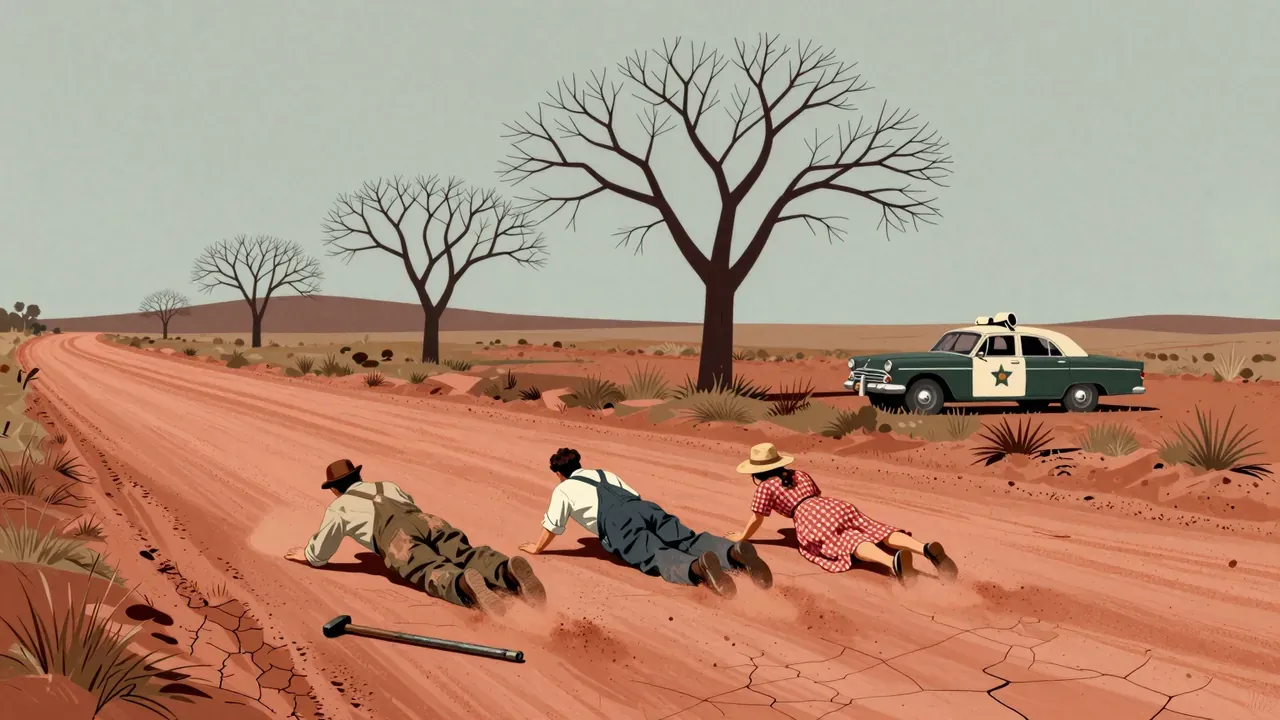
A 1942 American docudrama co-directed by Leo Hurwitz and Paul Strand, Native Land combines archival footage and staged reenactments to document corporate suppression of union organising in the 1930s, drawing on the La Follette Committee’s findings. Paul Robeson narrates and sings; Marc Blitzstein scores; Strand photographs. Restored in 2011 from original nitrate elements, it remains a rigorous, austere, and politically uncompromising work of activist cinema.
13:00

Nayak

Satyajit Ray · 1966

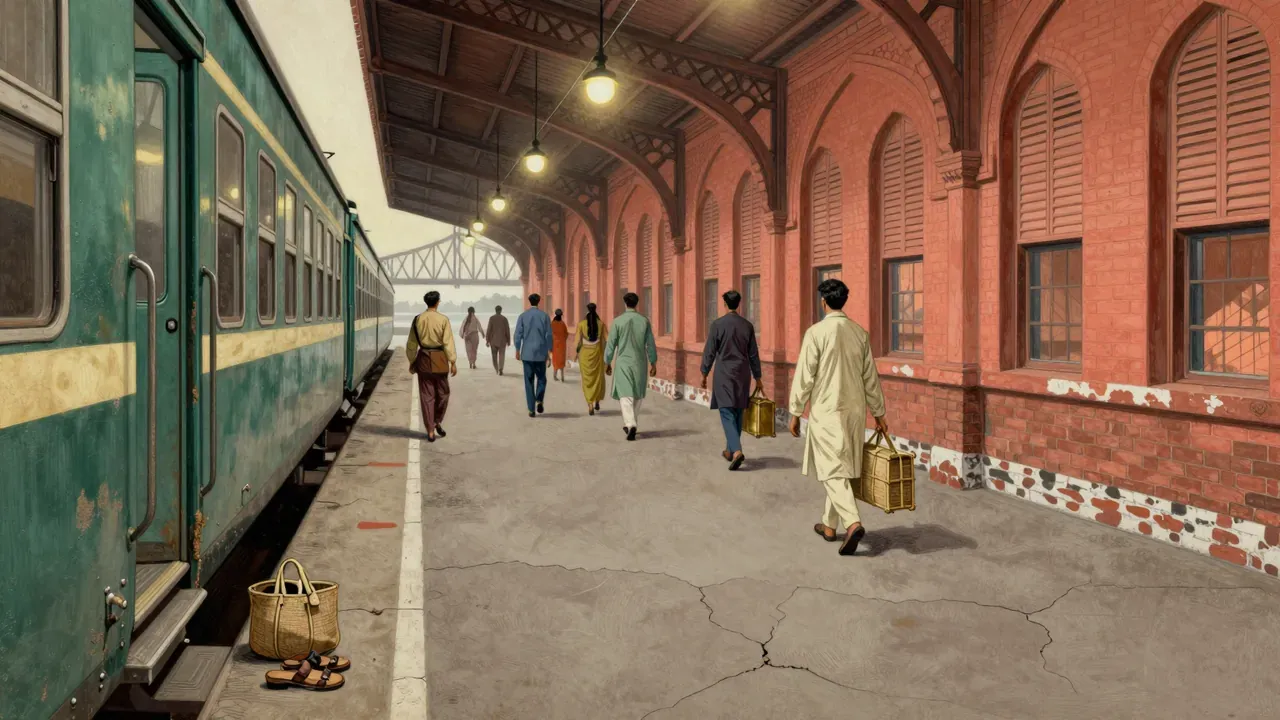
Satyajit Ray’s 1966 drama follows Bengali film star Arindam Mukherjee on an overnight train to receive a national award. Over 113 minutes, he unravels in conversation with a young journalist, revealing insecurities, regrets, and contradictions beneath his celebrity facade. Shot in studio-built train compartments with precise, unhurried craft, the film treats fame as erosion rather than triumph — and intimacy as fleeting, not redemptive.

13:00

New Tale of Zatoichi

Tokuzō Tanaka · 1963

New Tale of Zatoichi (1963), directed by Tokuzō Tanaka, is the third and first colour entry in Daiei Film’s Zatoichi series. Shintarō Katsu returns as the blind masseur and swordsman Ichi, who attempts to live by a vow of non-violence — only to face moral collapse in his old village, where his former master has allied with criminals and his childhood friend’s family lives in poverty. Structured around restraint rather than action, the film uses muted colour, sparse dialogue, and deliberate pacing to explore fidelity, quiet corruption, and the asymmetry of mercy. It ends not with resolution but with solitary departure at dawn.

13:00

News from Home

Chantal Akerman · 1976

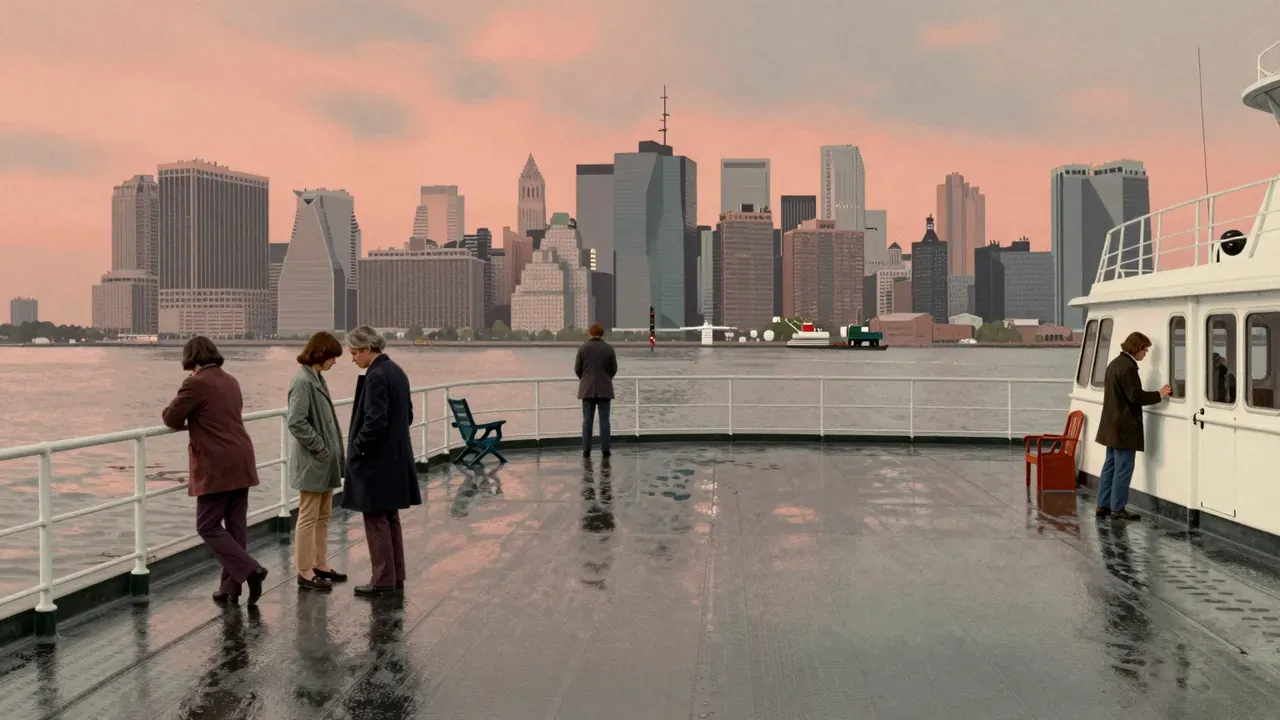
News from Home (1976) is a French-language documentary by Chantal Akerman, composed of extended static shots of New York City locations — subway platforms, ferry decks, city streets — accompanied by Akerman’s voice reading letters from her mother written between 1971 and 1973. Shot by Babette Mangolte and edited by Francine Sandberg, it is a study in duration, alienation, and the quiet labour of correspondence across distance.

13:00

Night and Fog

Alain Resnais · 1956

Alain Resnais’s 1956 documentary Night and Fog uses stark juxtaposition — new colour footage of abandoned camps alongside archival black-and-white material — to dissect the concentration camp as a functional extension of fascism. Written by survivor Jean Cayrol and Chris Marker, and scored by Hanns Eisler, it avoids sentimentality in favour of structural analysis: architecture, logistics, bureaucracy, and the diffusion of responsibility. Commissioned for the tenth anniversary of camp liberation, it remains a foundational essay film, rigorous, unsettling, and deliberately unresolved.

13:00

Night and the City

Jules Dassin · 1950

Jules Dassin’s 1950 London-set noir follows American tout Harry Fabian as he schemes to corner the city’s wrestling trade, only to be undone by his own miscalculations, betrayals, and the implacable logic of the underworld he misunderstands. Shot on location and at Shepperton Studios, it features Richard Widmark in a tightly coiled performance, Mutz Greenbaum’s precise cinematography, and Franz Waxman’s urgent score. Unsentimental and structurally rigorous, it ends not with reflection but with finality.

13:00

Night Games

Mai Zetterling · 1966

A 1966 Swedish drama directed by Mai Zetterling, Night Games traces a man’s return to his childhood home and the memories it unleashes — particularly of his charismatic, neglectful mother and the sexual and emotional confusions of adolescence. Shot by Rune Ericson and scored by Georg Riedel and Jan Johansson, it uses restrained visuals and elliptical editing to render memory as sensory residue rather than narrative. Starring Ingrid Thulin and Jörgen Lindström, it avoids moral framing, opting instead for psychological fidelity. Controversial on release, it remains a tightly controlled study of inherited trauma.

13:00

Night Moves

Arthur Penn · 1975

Arthur Penn’s 1975 neo-noir follows LA private investigator Harry Moseby (Gene Hackman) as he searches for a missing teenager, only to uncover layers of smuggling, infidelity, and paternal violation across Los Angeles, New Mexico, and the Florida Keys. With Bruce Surtees’ sun-bleached cinematography, Michael Small’s vibraphone-led score, and Dede Allen’s unhurried editing, the film sustains a mood of quiet disillusionment. It offers no resolution—its final image is a bleeding man aboard a boat that circles endlessly—making it less a thriller than a study in moral suspension and psychological erosion.

13:00

Night of the Living Dead

George A. Romero · 1968

Night of the Living Dead (1968) is a black-and-white American horror film directed by George A. Romero, shot on 35mm with a $114,000 budget. Nine people take refuge in a rural Pennsylvania farmhouse as flesh-eating ghouls close in. Duane Jones stars as Ben, the de facto leader whose authority is tested by both the dead outside and the living within. The film avoids exposition, embraces technical limitation, and treats social breakdown as an observable process. It entered the public domain due to a missing copyright notice, enabling wide distribution and lasting influence. Preserved in the National Film Registry in 1999.

13:00

Night on Earth

Jim Jarmusch · 1991

Night on Earth (1991) is Jim Jarmusch’s anthology film following five taxi rides across Los Angeles, New York, Paris, Rome, and Helsinki, all occurring over the same night. Each vignette centres on a temporary, often fraught, bond between driver and passenger. Shot on location with minimal intervention, it prioritises quiet observation over plot, using natural light, sparse music by Tom Waits, and unhurried performances to explore miscommunication, class, mortality, and fleeting kinship. Though uneven in impact—its Paris and Rome segments falter linguistically and tonally—the film’s cumulative power lies in its restraint and specificity.

13:00

Night Train to Munich

Carol Reed, Edward Black, Sidney Gilliat, Frank Launder · 1940

Night Train to Munich (1940) is a British spy thriller directed by Carol Reed, written by Sidney Gilliat and Frank Launder. It follows a British agent’s mission to rescue a Czech scientist and his daughter from Nazi custody, culminating in a tense train journey to Munich and a daring escape across the Alps. Starring Margaret Lockwood and Rex Harrison, it balances suspense with wry humour and prioritises plot logic over psychological depth or historical detail.

13:00

Nightmare Alley

Edmund Goulding · 1947

Nightmare Alley (1947) follows carnival barker Stanton Carlisle as he masters deception, rises in Chicago society, and implodes under the weight of his own fabrications. Directed by Edmund Goulding from Jules Furthman’s adaptation of William Lindsay Gresham’s novel, it stars Tyrone Power in a career-defining turn away from romantic leads. Shot by Lee Garmes and edited by Barbara McLean, the film balances studio polish with unflinching thematic rigour — though its softened ending and underdeveloped urban milieu dilute its fatalism. It remains a landmark of psychological crime cinema, less for its shocks than for its sustained, unsentimental scrutiny of self-deception.

13:00

Nineteen Eighty-Four

Michael Radford · 1984

Michael Radford’s 1984 is a literal, location-precise rendering of Orwell’s novel, filmed in London and Wiltshire during April–June 1984. With John Hurt as Winston Smith and Richard Burton’s final performance as O’Brien, it uses bleach bypass cinematography to create a desaturated, airless world. The film prioritises textual fidelity over interpretation, building dread through accumulation rather than spectacle. Though criticised for emotional reserve and ideological flatness, it remains a benchmark of disciplined adaptation.

13:00

No Bears

Jafar Panahi · 2022

Jafar Panahi’s No Bears (2022) is a self-reflexive Iranian drama shot secretly in rural Iran. Playing a fictionalised version of himself, Panahi directs a docudrama remotely from a border village while becoming embroiled in a local scandal over a rumoured photograph. The film intercuts this with footage of the actors he oversees — a couple attempting to flee the country — and holds both narratives in unresolved tension. It explores censorship, communal control, and the ethics of representation without recourse to exposition or resolution.

13:00

No Blood Relation

Mikio Naruse · 1932

Mikio Naruse’s 1932 silent drama No Blood Relation follows actress Tamae’s return to Japan after five years abroad, hoping to reclaim her daughter Shigeko from the stepmother Masako, with whom the child has formed a deeper bond through shared hardship. Built on restraint and repetition rather than exposition or climax, it examines kinship as practice, not biology — a foundational work of Japanese realism whose quiet authority grows with attention.

13:00

Not a Pretty Picture

Martha Coolidge · 1976

Martha Coolidge’s 1976 debut is a rigorously constructed docudrama that reconstructs her teenage rape through dramatisation, direct address, and interviews. Shot on 16mm, edited by Coolidge herself, and scored with restraint, it treats memory as contested and testimony as relational—not cathartic, but constitutive.

13:00

Not on Your Life

Luis García Berlanga · 1963

The Executioner (1963), directed by Luis García Berlanga, follows an undertaker who marries the daughter of a state executioner, then reluctantly assumes the role himself to secure housing. Shot in black and white, it uses deadpan comedy and precise, unadorned craft to examine moral compromise under Francoist bureaucracy — not as ideology, but as paperwork, pension rules, and quiet family negotiations.

13:00

Nothing but a Man

Michael Roemer · 1964

Nothing but a Man (1964), directed by Michael Roemer, follows Duff Anderson, a Black railroad worker in Alabama, as he marries a preacher’s daughter and confronts systemic racism, economic precarity, and fractured fatherhood. Made independently on a $300,000 budget, it uses Motown’s early 1960s hits as diegetic sound and relies on understated performances—especially Ivan Dixon’s and Abbey Lincoln’s—to trace dignity as quiet persistence. Though initially overlooked, it entered the National Film Registry in 1993 and now stands as a landmark of American neorealism.

13:00

Notorious

Alfred Hitchcock · 1946

Alfred Hitchcock’s 1946 spy thriller follows an American agent who recruits the daughter of a Nazi sympathiser to infiltrate a German exile network in Rio. What unfolds is less a tale of espionage than a precise, emotionally restrained study of love under surveillance — where every glance is tactical, every touch conditional, and every silence charged with consequence. Shot on RKO soundstages with meticulous control, it relies on performance, composition, and pacing to build tension without action.

13:00

Nouvelle Vague

Richard Linklater · 2025

Richard Linklater’s Nouvelle Vague dramatises the 23-day production of Jean-Luc Godard’s Breathless in 1959, using black-and-white 35 mm film, the Academy ratio, and a script by Laetitia Masson. Starring Zoey Deutch as Jean Seberg and Guillaume Marbeck as Godard, it focuses on logistical friction, creative disagreement, and the material conditions of a film that would redefine cinema — not as myth, but as work.

13:00

Now, Voyager

Irving Rapper · 1942

Now, Voyager (1942) follows Charlotte Vale’s transformation from a cowed Boston heiress into a composed, quietly autonomous woman, guided by therapy, a transatlantic cruise, and a chaste, enduring bond with a married architect. Directed by Irving Rapper and starring Bette Davis, it avoids melodrama in favour of psychological precision, using Sol Polito’s lighting, Max Steiner’s score, and Casey Robinson’s adaptation to sustain tension in restraint. Its power lies in what it withholds — resolution, romance, catharsis — and what it insists upon: dignity as practice, care as continuity, and healing as ongoing recalibration.

13:00

Nowhere

Gregg Araki · 1997

Gregg Araki’s 1997 surrealist teen film Nowhere follows a day in the lives of Los Angeles college students whose realities blur with alien visitations, televised sermons, and violent ruptures. Stylised, saturated, and deliberately unmoored from narrative cause and effect, it is the final chapter of Araki’s Teenage Apocalypse trilogy — a controlled descent into emotional and visual extremity, sustained by tight editing, a defining alt-rock soundtrack, and a cast performing in tones of weary detachment.

13:00

Oedipus Rex

Pier Paolo Pasolini · 1967

Pier Paolo Pasolini’s 1967 Oedipus Rex reframes Sophocles’ tragedy as a Freudian myth-cycle, bookended by a 1920s Italian prologue and epilogue and centred on a stylised Moroccan-Greek middle. Starring Franco Citti and scored with Romanian folk music, Japanese gagaku, and Mozart, it rejects psychological realism for ceremonial repetition — using costume, sound, and landscape as structural grammar rather than decorative detail.

13:00

Okja

Bong Joon-ho · 2017

A teenage girl in the South Korean mountains raises Okja, a genetically modified 'super pig'. When the Mirando Corporation claims Okja as winner of its global breeding contest, Mija follows her to New York, aided by the Animal Liberation Front. What unfolds is a tonally restless adventure that maps the infrastructure of industrial meat — from farm to lab to slaughterhouse — while holding fast to the physical, emotional reality of one human-animal bond.

13:00

Old Joy

Kelly Reichardt · 2006

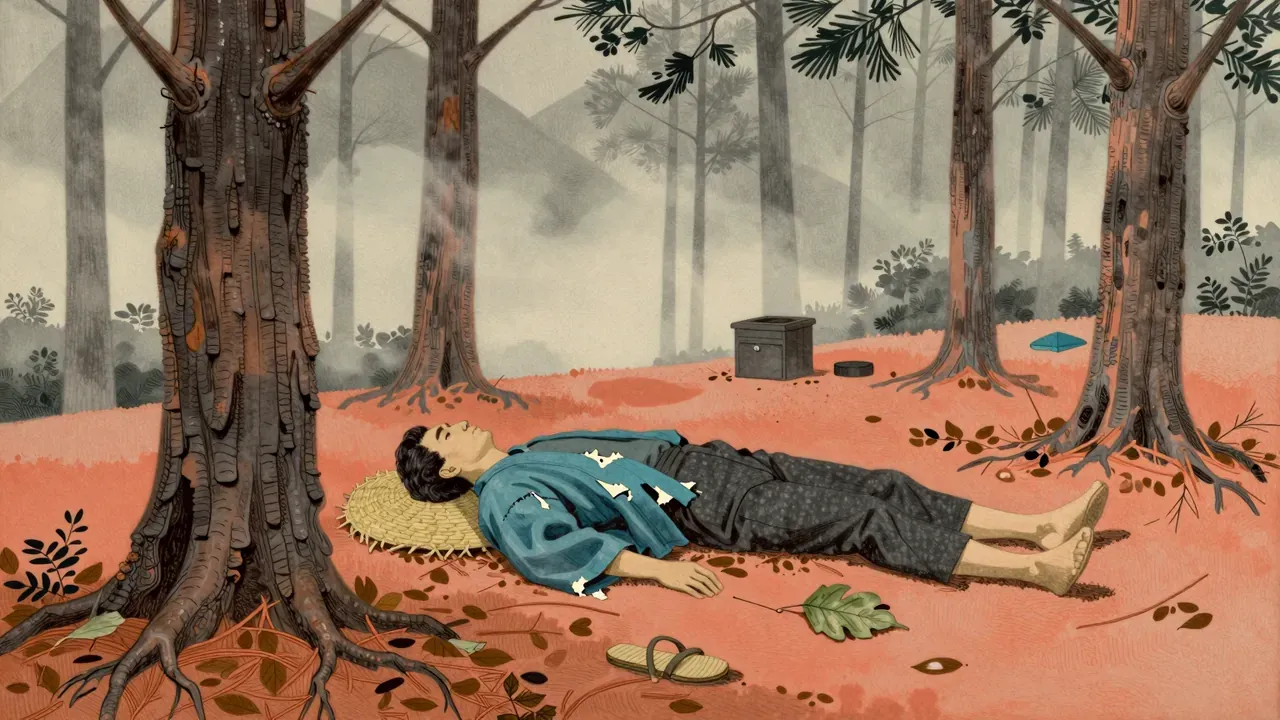
Kelly Reichardt’s 2006 debut follows two old friends, Mark and Kurt, on an overnight camping trip to Bagby Hot Springs in Oregon. Mark is settling into domestic life and impending fatherhood; Kurt remains rootless, spiritually adrift. Their conversation circles shared history and unspoken distance, culminating not in reconciliation but in quiet, mutual departure. Shot on a $30,000 budget, the film relies on understated performances, natural light, and ambient sound to trace the subtle erosion of intimacy across divergent adult paths.

13:00

Oliver Twist

David Lean · 1948

David Lean’s 1948 Oliver Twist is a tightly controlled, visually rich adaptation of Dickens’s novel, notable for Guy Green’s cinematography, Alec Guinness’s controversial portrayal of Fagin, and its unflinching depiction of institutional cruelty. Though acclaimed for its craft and ranked among the greatest British films, its reliance on antisemitic visual tropes has drawn sustained criticism since release — leading to bans, edits, and protests. It remains essential viewing, not despite its flaws, but because they are so deeply embedded in its form and purpose.

13:00

On the Waterfront

Elia Kazan · 1954

On the Waterfront (1954), directed by Elia Kazan and written by Budd Schulberg, follows ex-prizefighter Terry Malloy as he confronts his complicity in union violence on the Hoboken docks. Shot on location in black-and-white by Boris Kaufman, with a sparse score by Leonard Bernstein, it charts Terry’s slow, painful shift from silence to testimony. Marlon Brando’s performance redefined screen acting through physical restraint and vocal hesitation. Though anchored in 1950s labour politics, its concerns — loyalty, shame, dignity, and the bodily reality of conscience — remain immediate.

13:00

Once Upon a Time in China II

Tsui Hark · 1992

Tsui Hark’s 1992 sequel follows Jet Li’s Wong Fei-hung through 1895 Canton, where acupuncture seminars are stormed by cultists, British consulates are breached by Qing soldiers, and revolution is passed hand-to-hand on a scrap of cloth. With Arthur Wong’s restrained cinematography and Yuen Woo-ping’s grounded choreography, it frames wuxia not as fantasy but as embodied history — urgent, unresolved, and materially precise.

13:00

Once Upon a Time in China III

Tsui Hark · 1993

Once Upon a Time in China III (1993), directed by Tsui Hark, follows Wong Fei-hung to Beijing for a state-sponsored lion dance competition meant to restore Chinese prestige amid foreign imperialism. Jet Li anchors a tightly plotted narrative where choreography, moral choice, and historical constraint converge — culminating in a scaffold battle and a rejected medal. Andrew Lau’s cinematography and Marco Mak’s editing serve clarity over flourish. The film works best when action carries meaning and falters when plot relies on underdeveloped antagonists or external conspiracies.

13:00

Once Upon a Time in China IV

Yuen Bun · 1993

Once Upon a Time in China IV (1993) replaces Jet Li with Vincent Zhao and Tsui Hark with Yuen Bun, shifting focus from moral authority to symbolic performance. Set in Beijing during the Boxer Rebellion, it pits Wong Fei-hung against a xenophobic cult and an international lion dance competition rigged by colonial powers. Arthur Wong’s functional cinematography and Yuen Bun’s weapon-focused choreography anchor a thin script, where political stakes remain vague but physical detail — rope, lantern smoke, masked formations — carries real weight.

13:00

One-Eyed Jacks

Marlon Brando · 1961

Marlon Brando’s 1961 Western One-Eyed Jacks follows Rio, a bandit seeking revenge on his former mentor Dad Longworth, now sheriff of Monterey. Shot in VistaVision across California and Mexico, it foregrounds psychological tension over action, with Brando starring and directing. Though critically mixed on release and commercially disappointing, its reputation has deepened over decades for its atmospheric realism, complex male relationships, and formal restraint. Restored in 4K in 2016, it remains Brando’s only film behind the camera.

13:00

One False Move

Carl Franklin · 1992

One False Move (1992) is a tightly wound neo-noir crime film directed by Carl Franklin and written by Billy Bob Thornton. Three Los Angeles criminals flee to Star City, Arkansas, triggering a quiet, inevitable convergence with the town’s police chief — a man whose authority is rooted in local knowledge, not jurisdiction. Shot on location in Arkansas and California, the film avoids genre clichés in favour of psychological precision, restrained performances, and a morally complex portrait of place, race, and consequence.

13:00

One Hour with You

Ernst Lubitsch, George Cukor · 1932

One Hour with You (1932) is a Paramount romantic musical comedy directed by Ernst Lubitsch with George Cukor, starring Maurice Chevalier and Jeanette MacDonald. Adapted from Lothar Schmidt’s play and Lubitsch’s own 1924 film, it follows a Parisian doctor whose marital calm is gently disrupted by his wife’s flirtatious friend. With Oscar Straus’s score and Samson Raphaelson’s script, it prioritises wit, timing, and surface elegance over psychological depth — a polished, pre-Code exercise in controlled charm.

13:00

One Hundred and One Nights

Agnès Varda · 1995

Agnès Varda’s One Hundred and One Nights (1995) is a French comedy essay-film set over 101 nights at a château belonging to Simon Cinéma, a centenarian film veteran whose fading memory blurs reality and reel. Starring Michel Piccoli and featuring cameos from Marcello Mastroianni, Anouk Aimée, Alain Delon, and others, it weaves scripted scenes with archival clips and playful allusion to celebrate cinema’s first hundred years — not as chronicle, but as collective, tactile memory.

13:00

One Night in Miami...

Regina King · 2020

Regina King’s directorial debut adapts Kemp Powers’s play into a contained, dialogue-driven drama set in a Miami motel room on 25 February 1964. Kingsley Ben-Adir, Eli Goree, Aldis Hodge and Leslie Odom Jr. portray Malcolm X, Cassius Clay, Jim Brown and Sam Cooke, debating faith, art, politics and legacy in the wake of Clay’s title win. Shot by Tami Reiker and scored by Terence Blanchard, it prioritises voice and presence over exposition or visual flourish.

13:00

One Sings, the Other Doesn't

Agnès Varda · 1977

One Sings, the Other Doesn’t (1977) follows Pomme and Suzanne across fourteen years of personal and political change in France. Directed and written by Agnès Varda, it charts their friendship through illegal abortion, protest, motherhood, clinic work, and reunion — all rendered with quiet precision, natural light, and minimal score. Charles Van Damme’s cinematography and Varda’s narration structure the story around letters, songs, and real-life activism, including a recreation of the 1972 Bobigny abortion trial demonstration. The film avoids didacticism, treating feminism as daily practice rather than theory.

13:00

One Wonderful Sunday

Akira Kurosawa · 1947

One Wonderful Sunday (1947) follows a young Tokyo couple through a single Sunday with thirty-five yen between them. Shot on location in occupied Japan with unknown actors and makeshift equipment, it blends neorealist observation with imaginative interludes—including a famous fourth-wall-breaking finale. Directed and edited by Akira Kurosawa, with script by Kurosawa and Keinosuke Uekusa, it is a quiet, resilient portrait of love as daily practice amid scarcity.

13:00

Onibaba

Kaneto Shindō · 1964

Set in 14th-century Japan amid civil war, Onibaba follows two unnamed women who kill stray soldiers in a vast reed field to trade armour for food. When a masked samurai dies in their pit, the older woman takes his hannya mask — and finds it will not come off. Kaneto Shindō’s 1964 film uses stark black-and-white cinematography, minimal dialogue, and physical performance to explore moral erosion, interdependence, and the bodily cost of fear.

13:00

Only Angels Have Wings

Howard Hawks · 1939

Howard Hawks’ 1939 drama follows Geoff Carter, manager of a perilous South American air freight operation, as he balances a government contract deadline against the lives of his pilots. Starring Cary Grant and Jean Arthur, it builds its world through procedural clarity, not psychology — valuing competence over confession, restraint over revelation. Joseph Walker’s cinematography, Dimitri Tiomkin’s score and Viola Lawrence’s editing sustain a single, unwavering tone: fatalism as honour, risk as routine.

13:00

Opening Night

John Cassavetes · 1977

John Cassavetes’ 1977 film follows actress Myrtle Gordon through a week of mounting disintegration before her Broadway premiere. Shot on location in California, it stars Gena Rowlands in a performance of extraordinary physical and psychological fidelity. With no exposition, no score to guide feeling, and no narrative resolution, it treats performance, grief, and ageing as overlapping states of being — not problems to solve, but conditions to inhabit.

13:00

Orderly or Disorderly

Abbas Kiarostami · 1981

Orderly or Disorderly is a seventeen-minute 1981 Iranian short film by Abbas Kiarostami. Using a single courtyard, two groups of children and young adults, and a static camera, it compares structured and unstructured movement — one group walking in line, the other moving freely. There is no dialogue beyond instruction, no music, no editing within sequences. The film is a precise, quiet study of social patterning, asking what emerges when rules are given, withdrawn, or merely drawn on the ground.

13:00

Ordet

Carl Theodor Dreyer · 1955

A 1955 Danish film by Carl Theodor Dreyer, adapted from Kaj Munk’s play, about a rural family whose faith is tested when a daughter-in-law dies in childbirth — and returns to life. Shot in long takes, with meticulous lighting and near-silence, it treats resurrection not as doctrine but as domestic event.

13:00

Original Cast Album: Company

D. A. Pennebaker · 1970

D. A. Pennebaker’s 1970 documentary observes the marathon studio session for the original cast album of Stephen Sondheim’s Company. Filmed over two days at Columbia Records’ 30th Street Studio, it captures singers, musicians, and producers wrestling with fatigue, pitch, and timing — most memorably Elaine Stritch’s repeated attempts at 'The Ladies Who Lunch'. Unvarnished, chronological, and devoid of narration or context, it treats recording as craft rather than spectacle.

13:00

Orlando, My Political Biography

Paul B. Preciado · 2023

Paul B. Preciado’s 2023 documentary brings together 26 trans and non-binary participants—from age eight to seventy—to collectively reinterpret Virginia Woolf’s Orlando. Shot in France and structured around testimony, reenactment, and mythic staging, it treats gender transition as inseparable from law, medicine, and power. Victor Zébo’s cinematography and Yotam Ben-David’s editing sustain a deliberate, unhurried rhythm that privileges multiplicity over singularity. The film premiered at Berlinale, where it won the Teddy Award for Best Documentary.

13:00

Ornamental Hairpin

Hiroshi Shimizu · 1941

Set entirely at a remote Japanese hot-spring resort in 1941, Ornamental Hairpin follows a group of guests — a soldier, a geisha, two boys, a professor, an old man — whose intersecting stays are extended by a single lost hairpin. Directed by Hiroshi Shimizu and starring Kinuyo Tanaka, it is a quiet, observational drama that finds emotional weight in routine, restraint, and unspoken connection, refusing both wartime urgency and narrative resolution.

13:00

Orpheus

Jean Cocteau · 1950

Jean Cocteau’s 1950 Orpheus recasts the Greek myth as a post-war Parisian fable, where poetry, death and mirrors operate under shared, unspoken rules. Jean Marais stars as a poet drawn into a bureaucratic underworld by María Casares’ enigmatic Princess of Death. Shot in ruined academies and Paris streets, with practical effects that foreground craft rather than conceal it, the film sustains a poetic logic across 95 minutes — demanding attention, not explanation.

13:00

Osaka Elegy

Kenji Mizoguchi · 1936

A 1936 Japanese drama directed by Kenji Mizoguchi, following telephone operator Ayako Murai as she navigates debt, exploitation and social censure in Osaka. With Isuzu Yamada in a defining early role, the film traces how family, workplace and law converge to strip her of autonomy — not through violence, but through quiet, systemic pressure. Shot by Minoru Miki and written by Mizoguchi and Yoshikata Yoda, it is a tightly controlled, unsentimental study of gendered constraint.

13:00

Ossos

Pedro Costa · 1997

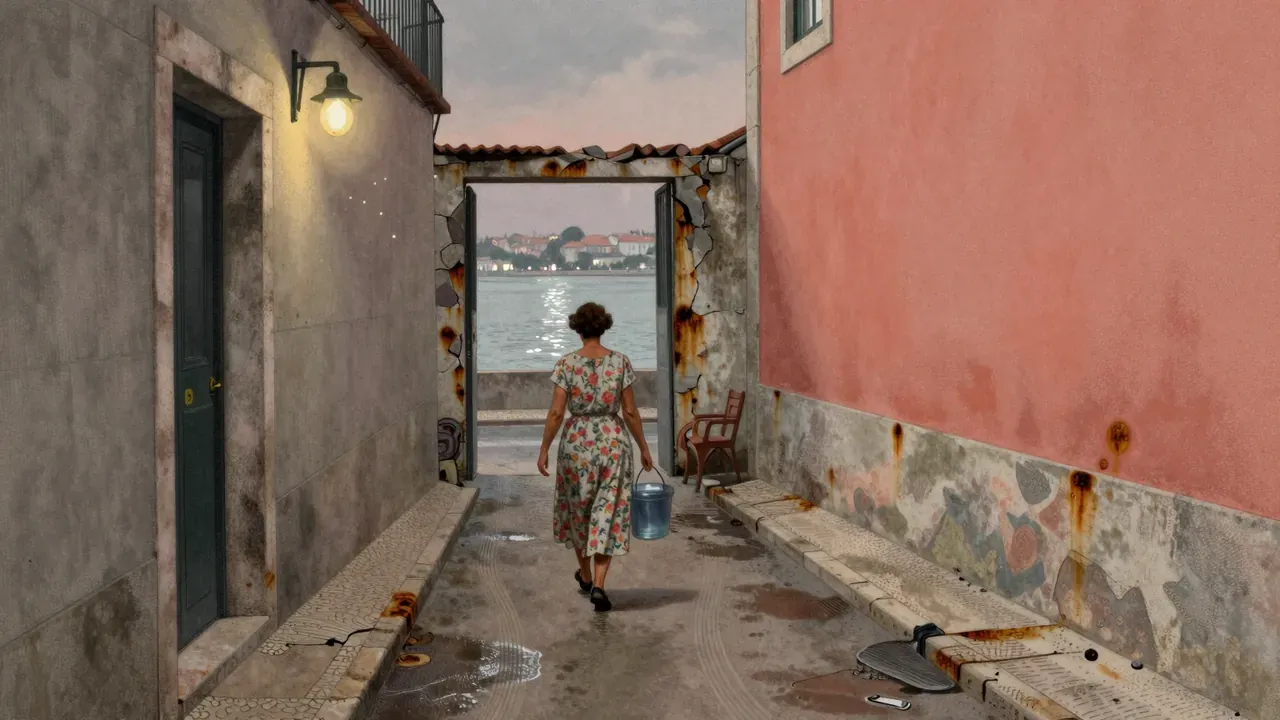
Pedro Costa’s 1997 debut Ossos observes life in Lisbon’s Fontainhas shanty district with austere, long-take precision. Set among residents of African descent living in precarious conditions, it follows Tina, a young mother in crisis; her unnamed partner; her sister Clotilde; and Eduarda, a woman who gradually assumes responsibility for the baby. There is little dialogue, no exposition, and no narrative resolution — only sustained attention to gesture, silence, and endurance. Emmanuel Machuel’s grainy, low-light cinematography and Jackie Bastide’s unhurried editing reinforce the film’s ethical commitment to presence over interpretation.

13:00

Othello

Orson Welles · 1951

Orson Welles’s 1951 Othello is a self-financed, erratically shot adaptation of Shakespeare’s tragedy, filmed across Morocco, Venice and Rome between 1949 and 1951. Starring Welles as Othello and Micheál Mac Liammóir as Iago, it won the Palme d’Or in 1952 but reached US audiences only in 1955 — in a heavily altered version. A 1992 restoration, supervised by Welles’s daughter, became the default home-video release despite widespread criticism of its dubbing, re-recorded score and departures from Welles’s original cut. The film’s power lies in its stark, discontinuous style and unwavering focus on the mechanics of belief and betrayal.

13:00

Overlord

Stuart Cooper · 1975

Overlord (1975) is a British black-and-white film written and directed by Stuart Cooper, blending newly shot drama with archival footage from the Imperial War Museum and German sources. It traces the brief life of Thomas Beddows, a conscripted soldier, from call-up to death on D-Day at Sword Beach. Shot on period lenses and edited to match the grain and rhythm of wartime film, it avoids heroism and exposition in favour of quiet accumulation — of gesture, texture, silence. Awarded the Silver Bear Grand Jury Prize at Berlin in 1975, it was later championed by Roger Ebert and added to the Criterion Collection.

13:00

Paddle to the Sea

Bill Mason · 1966

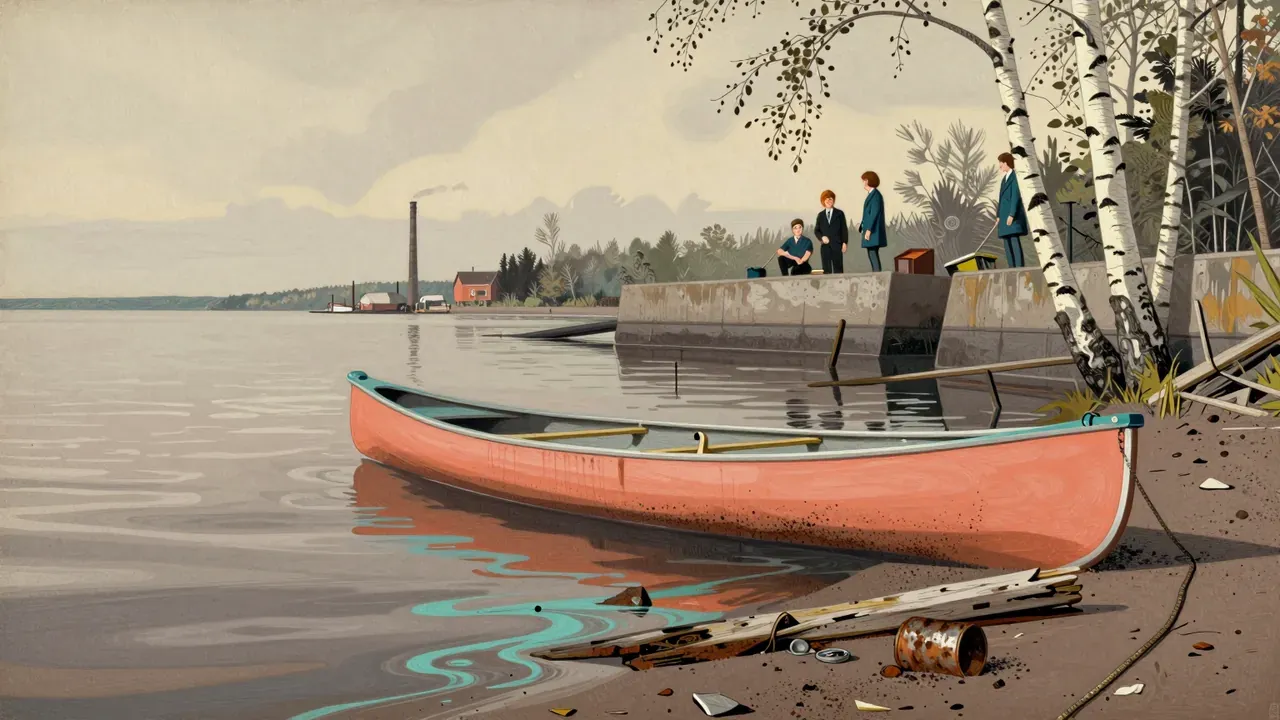
Bill Mason’s 1966 NFB short follows a hand-carved wooden canoe from Lake Nipigon to the Atlantic, using real locations, minimal narration and patient observation. Based on Holling C. Holling’s book but expanded with a quiet critique of water pollution, it is a documentary-fiction hybrid that treats geography as ethics and time as texture.

13:00

Paisà

Roberto Rossellini · 1946

Roberto Rossellini’s 1946 neorealist film Paisà unfolds in six loosely connected episodes set during the Allied campaign in Italy, from Sicily to the Po delta. Using non-professional actors, real locations, and untranslated dialogue, it captures moments of miscommunication, fleeting connection, and quiet devastation — not as drama but as record. Its power lies in restraint: in what is withheld, misunderstood, or left unsaid.

13:00

Pale Flower

Masahiro Shinoda · 1964

Masahiro Shinoda’s 1964 yakuza drama follows Muraki, a hitman released from prison, drawn into a fatal attraction with Saeko, a thrill-seeking gambler. Set against Tokyo’s underground gambling dens and nocturnal streets, the film replaces plot with rhythm, silence with tension, and character psychology with physical precision. Tōru Takemitsu’s dissonant score and Shinsaku Himeda’s restrained cinematography deepen its mood of existential exhaustion. It is a foundational Japanese New Wave work — austere, hypnotic, and unrelenting in its formal control.

13:00

Pandora's Box

Georg Wilhelm Pabst · 1929

Georg Wilhelm Pabst’s 1929 silent adaptation of Wedekind’s Lulu plays stars Louise Brooks as a woman whose unmediated presence unravels men, laws, and institutions. Shot in Berlin with precise, unsentimental craft, it treats desire as social force rather than personal failing. Though dismissed on release and heavily censored abroad, it is now regarded as a cornerstone of Weimar cinema — austere, unsparing, and formally exact.

13:00

Panique

Julien Duvivier · 1946

Julien Duvivier’s 1946 Panique adapts Simenon to trace how a small French town turns a reclusive man into a scapegoat for a murder he did not commit. With Michel Simon as the doomed Monsieur Hire and Viviane Romance as the compromised Alice, the film uses precise staging, restrained performances, and a suffocatingly ordinary setting to dramatise the mechanics of collective suspicion—less a thriller than a forensic study of moral contagion in the immediate postwar years.

13:00

Paper Moon

Peter Bogdanovich · 1973

Paper Moon (1973), directed by Peter Bogdanovich, follows Moses Pray and Addie Loggins — a grifter and a sharp-witted orphan — as they travel across Depression-era Kansas and Missouri, running small scams to survive. Shot in black-and-white by László Kovács, it stars Ryan and Tatum O'Neal in performances defined by restraint and reciprocity. Adapted by Alvin Sargent from Joe David Brown’s novel, it avoids moral framing in favour of behavioural accuracy, treating fraud as labour and kinship as negotiation. Tatum O'Neal won the Academy Award for Best Supporting Actress at age ten.

13:00

Parade

Jacques Tati · 1974

Made for Swedish television in 1974, Parade is Jacques Tati’s final film — a low-budget, studio-bound circus revue starring Tati as Monsieur Loyal. Filmed at Stockholm Cirkus using mixed video and film stocks, it abandons narrative for a sequence of gags, mime, juggling, music and audience interaction. Gunnar Fischer’s unshowy cinematography and Charles Dumont’s light score support Tati’s precise physical comedy. Though slender in scope compared to PlayTime or Trafic, it is a deliberate return to fundamentals: gesture, timing, shared attention.

13:00

Pariah

Dee Rees · 2011

Dee Rees’s 2011 debut feature follows Alike, a 17-year-old Black lesbian in Brooklyn, as she navigates family tension, friendship, first intimacy and self-assertion. Shot by Bradford Young and anchored by Adepero Oduye’s restrained, luminous performance, the film treats identity as embodied practice—not crisis or climax—but as accumulation of small, consequential choices. It premiered at Sundance, won the John Cassavetes and NAACP Image Awards, and was added to the National Film Registry in 2022.

13:00

Paris Belongs to Us

Jacques Rivette · 1961

Jacques Rivette’s 1961 debut is a slow-burning, enigmatic drama set among Parisian artists haunted by unexplained deaths and whispered conspiracies. Shot in natural light and real locations, it sustains a mood of existential and political unease without offering explanations — treating paranoia as ambient, collective, and structurally embedded.

13:00

Paris Is Burning

Jennie Livingston · 1990

Paris Is Burning is a 1990 documentary filmed over seven years in New York City, centring on Black and Latino gay and transgender participants in the city’s ball scene. Directed by Jennie Livingston and edited by Jonathan Oppenheim, it combines vérité footage of balls with intimate interviews, letting subjects define terms like ‘house’, ‘shade’, and ‘realness’ on their own terms. It documents voguing’s origins, the formation of chosen families, and the material realities of poverty, AIDS, and transphobic violence. Funded through ten separate sources and shot on 16mm, it was awarded the Sundance Grand Jury Prize for Best Documentary in 1991 and added to the US National Film Registry in 2016.

13:00

Passing Fancy

Yasujirō Ozu · 1933

A 1933 Japanese silent film directed by Yasujirō Ozu, Passing Fancy follows Kihachi, a widowed brewery worker in Tokyo, as he shelters a destitute young woman and navigates care for her and his young son. With minimal intertitles, restrained performances, and Hideo Shigehara’s understated cinematography, the film traces quiet shifts in dignity, class, and paternal love — all within the confines of everyday spaces and routines.

13:00

Pat Garrett and Billy the Kid

Sam Peckinpah · 1973

Sam Peckinpah’s 1973 revisionist Western follows Pat Garrett’s reluctant pursuit of Billy the Kid, framed by Garrett’s own assassination. Shot in Durango with John Coquillon, scored by Bob Dylan, and written by Rudy Wurlitzer, it rejects heroic narrative in favour of cyclical fatalism—where lawmen are hired hands, outlaws are inconveniences, and violence serves capital, not justice.

13:00

Patriotism

Yukio Mishima, Masaki Dōmoto · 1965

Patriotism (1966) is a thirty-minute silent black-and-white short directed by Yukio Mishima and Masaki Dōmoto, adapting Mishima’s 1960 story. It depicts the final hours of a young army officer and his wife after the 1936 Tokyo coup attempt, culminating in their joint suicide. Shot in two days with stark Noh-influenced staging, it uses static frames, high-contrast cinematography by Kimio Watanabe, and intertitles to render devotion, ritual, and mortality as inseparable. Richard Wagner’s music accompanies some screenings, though the film itself is silent. Rediscovered in 2005 after Mishima’s widow ordered its destruction, it remains a singular, uncompromising work of formal and philosophical austerity.

13:00

Paul Robeson: Tribute to an Artist

Saul J. Turell · 1979

Saul J. Turell’s 1979 Oscar-winning short documentary focuses on Paul Robeson’s evolving performances of 'Ol’ Man River' across three decades, using archival footage and Sidney Poitier’s restrained narration to trace artistic and political transformation without biographical exposition. It is a precise, austere act of reclamation — less a life story than a sustained listening.

13:00

Pearls of the Crown

Sacha Guitry, Christian-Jaque · 1937

Pearls of the Crown (1937) is a French historical comedy co-directed by Sacha Guitry and Christian-Jaque, tracing the fictional journey of seven pearls across four centuries and three languages. Guitry plays four roles, and much of the cast doubles or triples up, reinforcing the film’s theme of history as repetition. Shot at Billancourt Studios and on location—including Royaumont Abbey and the S.S. Normandie—it balances theatrical artifice with tangible settings. Jean Françaix’s score and Jules Kruger’s cinematography support a light, neoclassical tone. Though structurally inventive and intellectually agile, its pacing and linguistic layering may alienate some viewers. It is arthouse comedy with scholarly poise, not populist appeal.

13:00

Pearls of the Deep

Věra Chytilová, Jan Němec, Jiří Menzel, Jaromil Jireš · 1966

Pearls of the Deep (1966) is a Czechoslovak anthology film comprising five short segments, each directed by a different filmmaker — Věra Chytilová, Jan Němec, Jiří Menzel, Jaromil Jireš and Evald Schorm — and all adapted from short stories by Bohumil Hrabal. Shot in naturalistic style by Jaroslav Kučera, with sparse scores by Jan Klusák and Jiří Šust, the film resists thematic or tonal unity in favour of fidelity to Hrabal’s voice: his fascination with minor lives, unremarkable epiphanies, and the comic gravity of everyday speech. Though uneven in execution, its collective stance — against grand narrative, against didacticism, against the idea that meaning must be earned — makes it a defining work of the Czechoslovak New Wave.

13:00

Peau d'Âne

Jacques Demy · 1970

Jacques Demy’s 1970 musical fantasy Peau d’Âne adapts Perrault’s Donkeyskin with meticulous visual and musical precision. Catherine Deneuve stars as a princess who flees her father’s incestuous proposal by donning a magic donkey skin, finding refuge and love in disguise. Shot across historic French châteaux, scored by Michel Legrand, and designed with sumptuous, symbolic costumes, the film treats folklore as a self-contained system of rules, colour, and ritual — not a psychological case study. Its power lies in consistency, not catharsis.

13:00

People on Sunday

Curt Siodmak, Robert Siodmak, Edgar G. Ulmer, Fred Zinnemann · 1930

A 1930 German silent film shot on location over several Sundays, People on Sunday follows five Berliners — a wine seller, a taxi driver, a record clerk, a film extra, and a model — through a weekend of minor encounters, quiet arguments, and lakeside leisure. Made by a collective of young filmmakers including Billy Wilder and the Siodmak brothers, it uses non-professional actors playing versions of themselves, and relies on observation rather than plot. Its power lies in its unadorned realism, its rhythmic editing, and its poignant, unsentimental view of ordinary life in the final years of the Weimar Republic.

13:00

Pépé le Moko

Julien Duvivier · 1937

Julien Duvivier’s 1937 French crime film follows Jean Gabin as Pépé le Moko, a celebrated thief holed up in Algiers’ Casbah, where he rules a labyrinthine enclave but cannot step beyond it. When a glamorous Parisian visitor arrives, his carefully maintained stasis unravels. Built on a studio set and defined by its moody, shadow-drenched cinematography, the film is a landmark of poetic realism — less a thriller than a slow, fatal meditation on exile, desire and the illusion of control.

13:00

Perfect Days

Wim Wenders · 2023

Perfect Days is a 2023 Japanese-language drama directed by Wim Wenders, following Hirayama (Kōji Yakusho), a public toilet cleaner in Tokyo. Shot over 17 days in Shibuya, it observes his precise, repetitive routine — cleaning, listening to cassettes, photographing trees — with Ozu-inspired stillness and a 4:3 frame. Co-written with Takuma Takasaki, it avoids exposition and backstory, instead anchoring meaning in gesture, light, and quiet fidelity to small acts. Yakusho won Best Actor at Cannes; the film was Japan’s Oscar submission, the first by a non-Japanese director selected as such.

13:00

Performance

Donald Cammell, Nicolas Roeg · 1970

A violent East London gang enforcer, on the run after killing a rival, hides in the Notting Hill home of a reclusive rock star. What follows is less a thriller than a psychological and formal investigation into performance, identity, and the porous line between role and self. Directed by Donald Cammell and Nicolas Roeg, and starring James Fox and Mick Jagger, the 1970 British film uses fractured editing, dissonant sound, and deliberate ambiguity to unsettle narrative expectation and challenge assumptions about masculinity, class, and authenticity.

13:00

Personal Shopper

Olivier Assayas · 2016

Olivier Assayas’s Personal Shopper stars Kristen Stewart as Maureen, an American personal shopper in Paris awaiting a sign from her deceased twin. As texts arrive from an unknown number and spectral events unfold, the film sustains deliberate ambiguity: is she contacting the dead, being manipulated by the living, or unravelling under grief? Shot by Yorick Le Saux and edited by Marion Monnier, it favours restraint over exposition, making uncertainty its central subject.

13:00

Peter Hujar’s Day

Ira Sachs · 2025

Set in a SoHo apartment in 1974, Peter Hujar’s Day reconstructs a single day in the photographer’s life through his real-time recollection for writer Linda Rosenkrantz. Directed by Ira Sachs and starring Ben Whishaw and Rebecca Hall, it unfolds almost entirely in one room, trusting the rhythms of speech, silence, and memory over conventional narrative. Shot by Alex Ashe and edited by Affonso Gonçalves, the film honours the granularity of artistic labour — developing film, negotiating commissions, navigating fame — without embellishment or explanation.

13:00

Petite Maman

Céline Sciamma · 2021

Petite Maman is a 2021 French drama written and directed by Céline Sciamma, following eight-year-old Nelly as she encounters her mother as a child in the woods near her grandmother’s empty house. Using a simple, unexplained time-loop, the film explores intergenerational grief, memory, and the quiet continuities between mothers and daughters. Shot by Claire Mathon and scored by Para One, it features twin sisters Joséphine and Gabrielle Sanz in the lead roles, alongside Nina Meurisse, Stéphane Varupenne, and Margot Abascal. Released by France 3 Cinéma, it premiered at the Berlin Film Festival and received widespread critical acclaim.

13:00

Phantom India

Louis Malle · 1969

Louis Malle’s 1969 seven-part documentary Phantom India is a 378-minute observational record of India, filmed over four months in 1968 with a crew of two. Shot in French, it avoids narration, explanation, or advocacy, relying instead on long takes, ambient sound, and unmediated presence. Though praised as Malle’s most personal work, it drew criticism from the Indian government and diaspora for its focus on poverty and ritual at the expense of modernity and agency. Its endurance lies not in completeness but in its unwavering, ambiguous attention.

13:00

Phoenix

Christian Petzold · 2014

Set in ruined Berlin in 1945, Phoenix follows Nelly Lenz, a Jewish Holocaust survivor with a reconstructed face, as she seeks out her husband Johnny — who fails to recognise her. When he asks her to impersonate his presumed-dead wife to claim her inheritance, she agrees, becoming ‘Esther’. Under his direction, she rehearses her old self: voice, mannerisms, songs. But as the charade deepens, so does the tension between resemblance and reality, memory and convenience, love and complicity. Christian Petzold’s tightly controlled drama rests on Nina Hoss’s physically precise performance and a script that treats identity as surface, history as burden, and recognition as moral choice.

13:00

Picnic at Hanging Rock

Peter Weir · 1975

Peter Weir’s 1975 drama follows the unexplained disappearance of three schoolgirls and their teacher during a Valentine’s Day picnic at Hanging Rock, Victoria, in 1900. Using soft-focus cinematography, restrained performances, and a haunting pan flute score, it sustains a mood of suspended time and quiet disintegration. Rather than solving the mystery, it traces its ripple effects across a rigid boarding school and the surrounding community — making absence the film’s central, unyielding presence.

13:00

Pigs and Battleships

Shohei Imamura · 1961

Shohei Imamura’s 1961 film Pigs and Battleships follows Kinta, a low-level yakuza operative in post-occupation Yokosuka, and Haruko, his girlfriend, as both are ground down by intersecting systems of crime, military presence, and poverty. Shot by Shinsaku Himeda and scored by Toshiro Mayuzumi, it uses satire not for laughter but for forensic clarity — tracking how pigs, corpses, yen, and bodies circulate under the same logic. Its climax releases hundreds of pigs into city streets during a gang confrontation, culminating in chaos that kills the syndicate but leaves Haruko to walk away, unaccompanied and unexplained, towards an uncertain future.

13:00

Pigsty

Pier Paolo Pasolini, Sergio Citti · 1969

Pigsty is a 1969 dual-narrative allegory co-directed by Pier Paolo Pasolini and Sergio Citti. One strand follows a mute, cannibalistic youth on Mount Etna around 1500; the other traces Julian, a listless German industrialist’s son who retreats into a pigsty in 1967. Shot in Italy and Germany with stark cinematography and near-silent editing, the film draws a structural parallel between premodern violence and postwar consumer fascism — not through argument, but through relentless, unrelieved juxtaposition.

13:00

Pina

Wim Wenders · 2011

Wim Wenders’ 2011 3D documentary Pina records performances by Tanztheater Wuppertal of four major works by Pina Bausch — Le sacre du printemps, Café Müller, Kontakthof (across three age groups), and Vollmond — filmed shortly after her death in 2009. Intercut are outdoor solos and duets around Wuppertal, accompanied by dancers’ voice-over reflections. Shot by Hélène Louvart and edited by Toni Froschhammer, the film treats choreography as living structure, not historical artefact.

13:00

Pink Flamingos

John Waters · 1972

John Waters’ 1972 cult landmark Pink Flamingos stars Divine as Babs Johnson, a self-proclaimed criminal who must defend her title as 'the filthiest person alive' against rivals. Filmed in Baltimore on a $10,000 budget, it uses deliberate crudeness — in performance, editing, sound, and subject matter — as both aesthetic and ethical stance. Though notorious for its extremity, its power lies in its unwavering consistency: every frame, line, and edit serves the same uncompromising logic.

13:00

Pitfall

Hiroshi Teshigahara · 1962

Hiroshi Teshigahara’s 1962 debut, written by Kōbō Abe, follows a miner murdered in a Kyūshū ghost town, then resurrected as a silent ghost while a man in white manipulates evidence to frame a union leader. Shot in stark black-and-white with Tōru Takemitsu’s percussive score, it uses surreal structure and deliberate opacity to articulate systemic erasure — not as metaphor but as lived, repeatable condition.

13:00

Pixote

Héctor Babenco · 1980

A 1980 Brazilian crime drama directed by Héctor Babenco, based on José Louzeiro’s non-fiction book. It follows Pixote, a ten-year-old boy navigating juvenile detention, street crime, and exploitation in São Paulo and Rio. Cast largely with non-professionals whose lives mirrored their roles, it uses documentary-like methods to depict systemic abandonment without moral framing or narrative relief.

13:00

Place de la République

Louis Malle · 1974

Louis Malle’s 1974 documentary Place de la République observes daily life at its namesake Paris square with fixed cameras, natural sound, and no narration. Eschewing context or commentary, it treats duration and routine as primary subjects — a rigorous, unsentimental study of public space as lived, uninterpreted time.

13:00

Playtime

Jacques Tati · 1967

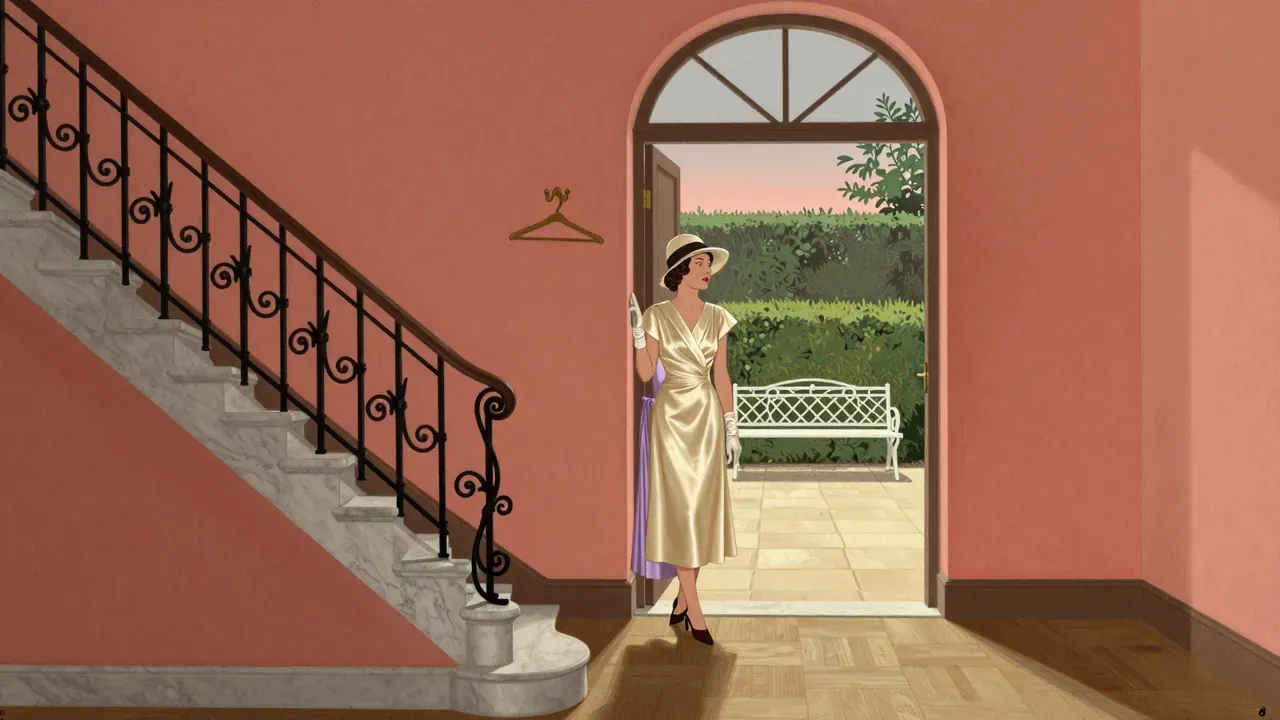
Jacques Tati’s 1967 film Playtime is a meticulously constructed satirical comedy set on a vast, purpose-built 70 mm stage. It follows Monsieur Hulot and an American tourist, Barbara, across six architecturally defined sequences — airport, offices, trade fair, apartments, restaurant, roundabout — using movement, sound and colour to explore how modern design conditions human behaviour. With minimal dialogue, no close-ups and a near-monochrome palette punctuated by deliberate accents of red and green, it privileges spatial logic over narrative. Though commercially disastrous on release, it is now regarded as a landmark of arthouse cinema.
13:00

Poetic Justice

John Singleton · 1993

Poetic Justice is John Singleton’s 1993 romantic road film following Justice (Janet Jackson), a grieving poet and hairdresser, on a journey from South Los Angeles to Oakland with friends and postal workers Lucky (Tupac Shakur) and Chicago (Joe Torry). Shot by Peter Lyons Collister and scored by Stanley Clarke, it attempts to centre Black women’s emotional lives within the ‘hood film’ tradition. Though criticised for narrative slack and exposition-heavy writing, it endures for its textured portrayal of grief, care and quiet connection — anchored by Jackson and Shakur’s restrained, resonant performances.

13:00

Point Blank

John Boorman · 1967

Point Blank (1967), directed by John Boorman and starring Lee Marvin, is a formally radical crime film adapted from Donald E. Westlake’s novel The Hunter. It follows Walker’s relentless, non-linear quest to reclaim $93,000 after being betrayed and left for dead on Alcatraz. Rejecting exposition and psychology, it builds tension through spatial rigour, elliptical editing, and Marvin’s physically commanding stillness. Shot in stark black-and-white with Johnny Mandel’s atonal score, it privileges structure over sentiment — a cold, coherent system of cause and effect. Preserved in the US National Film Registry, it remains a benchmark of arthouse crime cinema.
13:00

Police Story 2

Jackie Chan · 1988

Jackie Chan’s 1988 sequel trades the first film’s procedural texture for streamlined stunt logic: Ka-kui is demoted, provoked, resigns, then re-enters a bomb plot that culminates in the mall explosion and fireworks warehouse finale. Written by Chan and Edward Tang, shot by Arthur Wong, and awarded Best Action Choreography at the 1989 Hong Kong Film Awards, it delivers physical clarity over psychological depth — a film where every punch lands because the ground beneath it was measured first.

13:00

Polyester

John Waters · 1981

John Waters’s 1981 satire Polyester mimics Douglas Sirk’s melodramas to lampoon suburban life, moral panic, and the ‘woman’s picture’ genre. Starring Divine as a crumbling housewife in Baltimore, it deploys Odorama — a scratch-and-sniff gimmick — as both narrative device and audience provocation. With precise lighting, deadpan performances, and a tightly wound plot, it sustains a tone of controlled absurdity. Its final act falters under cartoonish violence, but its formal rigour and thematic bite make it a singular, unsentimental portrait of consumption masquerading as care.

13:00

Port of Call

Ingmar Bergman · 1948

Set in postwar Gothenburg, Port of Call follows Berit, a young woman recovering from a suicide attempt, and Gösta, a sailor choosing to stay on land. Their relationship unfolds without melodrama, anchored in small gestures, unspoken histories, and the quiet persistence of daily life. Shot by Gunnar Fischer and scored sparingly by Erland von Koch, it is Bergman’s first sustained engagement with psychological realism—grounded, restrained, and resolutely unmetaphorical.

13:00

Port of Flowers

Keisuke Kinoshita · 1943

Port of Flowers (1943), directed by Keisuke Kinoshita for Shochiku, is a restrained domestic drama set in a Japanese port town during wartime. Starring Eitarō Ozawa and Ken Uehara, it traces quiet exchanges between two men bound by memory, duty, and proximity rather than plot. With no credited score and minimal sound design, the film relies on duration, composition, and performance to evoke continuity amid uncertainty. Its themes — care as routine, loyalty as repetition, time as tide — emerge through accumulated detail, not exposition. It is neither propaganda nor protest, but a sustained act of attention to what endures when history narrows.

13:00

Port of Shadows

Marcel Carné · 1938

Marcel Carné’s 1938 French drama Port of Shadows follows a deserter and a runaway girl in Le Havre, where love and escape are undermined by circumstance, jealousy, and inevitability. With Jean Gabin, Michèle Morgan, and Michel Simon, and written by Jacques Prévert, it exemplifies poetic realism through restrained performances, Schüfftan’s low-lit cinematography, and a fatalistic structure that privileges mood over momentum.

13:00

Portrait of a Lady on Fire

Céline Sciamma · 2019

Set in late-eighteenth-century Brittany, Portrait of a Lady on Fire follows Marianne, a painter commissioned to secretly paint Héloïse, a woman resisting an arranged marriage. Over five days, their relationship deepens through shared walks, quiet observation, and a single, charged bonfire. Directed by Céline Sciamma, the film uses restrained performances, cool natural light, and near-total absence of score to build emotional intensity through attention, not exposition.

13:00

Powaqqatsi

Godfrey Reggio · 1988

A 1988 non-narrative documentary directed by Godfrey Reggio, Powaqqatsi observes labour, ritual and urban flux across Africa, Asia and Latin America, scored by Philip Glass. With no dialogue or exposition, it builds meaning through rhythm, scale and repetition — proposing transition, not progress or decay, as its central condition.

13:00

Prince of Broadway

Sean Baker · 2008

Sean Baker’s 2008 debut Prince of Broadway follows Lucky, a New York street vendor, after his ex-girlfriend brings their young son into his life. Shot on digital with minimal resources, it relies on behavioural nuance and environmental texture rather than plot mechanics. Though its second act sags and some relationships remain underdeveloped, the film’s commitment to quiet observation — and Adu’s understated performance — yields moments of genuine, unforced emotional weight.

13:00

Prisioneros de la tierra

Mario Soffici · 1939

Prisioneros de la tierra (1939), directed by Mario Soffici, follows Esteban Podeley, a mensú labourer trapped on a remote yerba mate plantation owned by the ruthless Köhner. Through restrained performances, dense cinematography by Pablo Tabernero, and Lucio Demare’s austere score, the film renders systemic oppression as bodily fact — heat, debt, silence, and jungle as active forces. Its tragedy lies not in grand betrayal but in accumulated erosion: a father’s drunken misstep, a lover’s missed rendezvous, a bullet that ends not a struggle but a question. Restored in 2019 from prints held abroad, it remains a foundational work of Argentine social realism — uncompromising, unsentimental, and enduringly urgent.